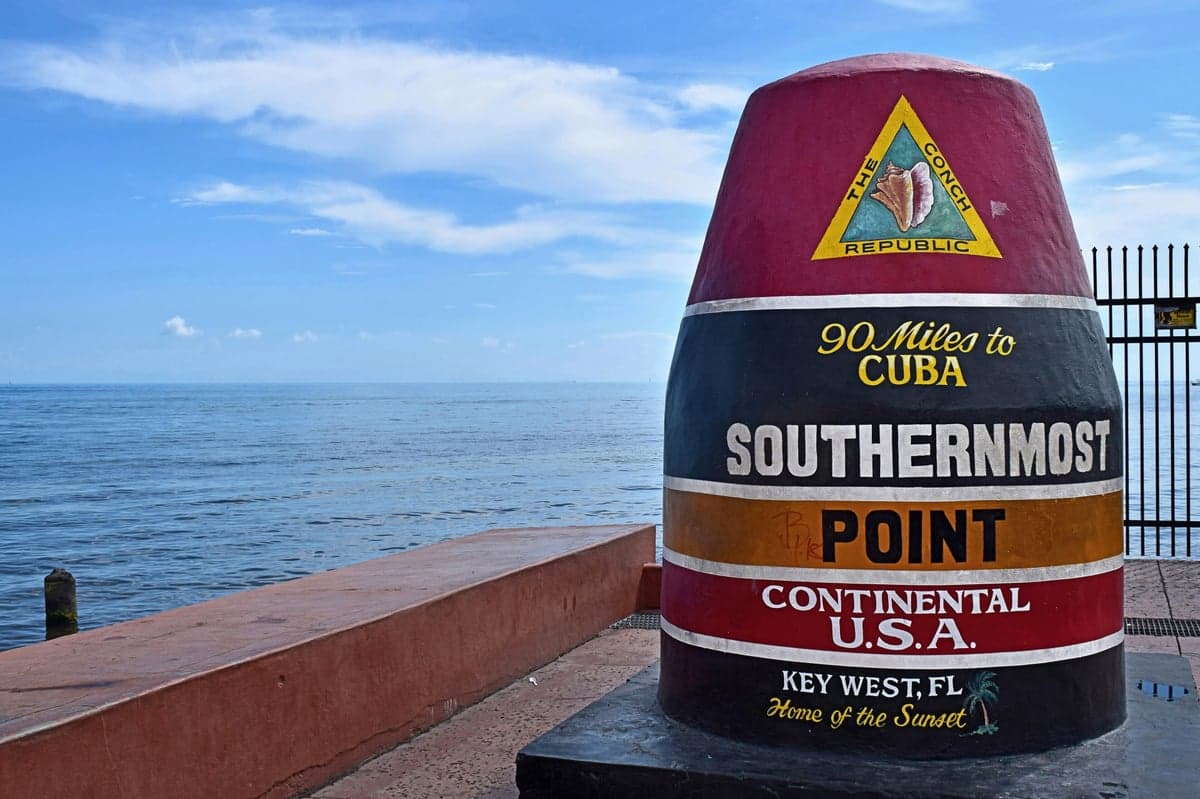
Photo: Wikipedia
Political ClimatePolitical Climate in Key West, FL
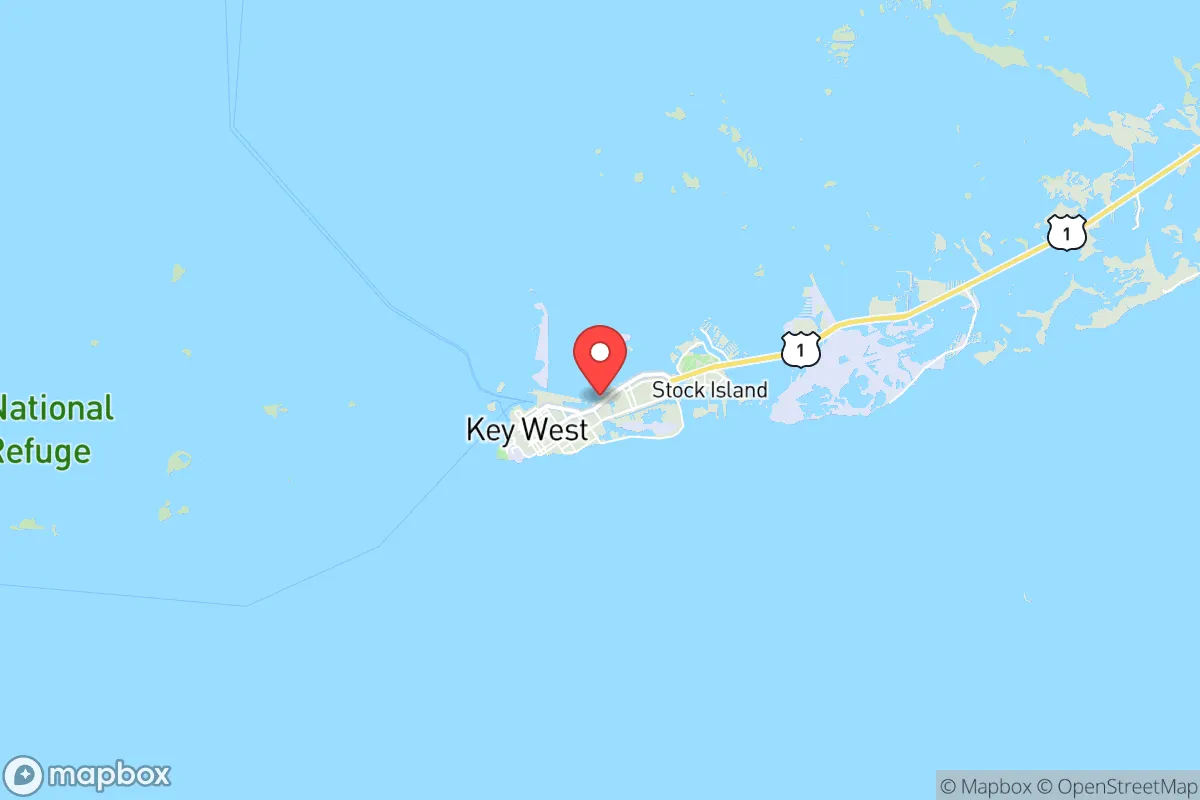
District shown is the primary district for this city’s centroid. Cities may span multiple districts.
Local Political AnalysisPolitical Analysis of Key West, FL
Key West has long been a political outlier in Florida, and honestly, it’s a bit of a head-scratcher if you value traditional conservative principles. While the surrounding Florida Keys and Monroe County as a whole have a solid Republican lean—the Cook PVI for the area is R+10, meaning it’s ten points more Republican than the national average—Key West itself has drifted noticeably leftward over the past decade. The city council and local politics are increasingly dominated by progressive voices, pushing policies that feel more like a small coastal enclave than the rest of the state. It’s a stark contrast to places like Marathon or Islamorada, where you’ll find a much stronger conservative backbone and a general skepticism of government overreach.
How it compares
When you stack Key West against the rest of Florida, the difference is night and day. The state as a whole has a Cook PVI of R+5, meaning it’s moderately Republican-leaning, but Key West’s local government often acts like it’s in a blue bubble. For example, while Florida has been rolling back COVID-era mandates and protecting parental rights in education, Key West’s city commission has pushed for stricter short-term rental regulations and even toyed with ideas like a local minimum wage hike that goes beyond state law. Compare that to nearby Key Largo or even the more rural parts of the Upper Keys, where residents are far more likely to vote for limited government and lower taxes. The contrast is sharp: you can drive 20 miles north and feel like you’ve entered a different political universe.
What this means for residents
For a conservative-leaning resident, living in Key West means constantly watching your back against government overreach. The city has a history of aggressive code enforcement, from noise ordinances to parking restrictions, and the current council seems eager to expand that reach into personal freedoms. There’s a growing concern about how local policies—like the push for more bike lanes and pedestrian-only zones—are being used to subtly restrict car usage and personal mobility. It’s not the Keys I remember from 20 years ago, when the attitude was more “live and let live.” Now, you’ve got to worry about whether your rental property will be regulated out of existence or if a new progressive tax will hit your small business. The trajectory is concerning, and many long-time residents are either moving to the mainland or just hunkering down, hoping the pendulum swings back.
Culturally, Key West has always had a quirky, independent streak, but that’s been co-opted by a more activist, progressive crowd in recent years. The city’s famous “One Human Family” ethos has morphed into a platform for identity politics and top-down social engineering. You’ll see more pride flags than American flags in some neighborhoods, and the local paper is filled with letters demanding more government intervention on everything from climate change to housing. It’s a far cry from the laid-back, libertarian-leaning vibe that used to define the island. If you value personal responsibility and minimal government interference, you’ll find yourself increasingly at odds with the local political machine. My advice: keep your head down, vote in every local election, and maybe start looking at property in the Lower Keys if you want to stay in the area but escape the worst of it.

State Political ClimatePolitical Climate in Florida
State Political AnalysisPolitical Environment in the State
Florida has shifted from a classic swing state to a solidly Republican-leaning powerhouse, carrying a Cook PVI of R+5 and delivering decisive wins for Donald Trump in both 2020 and 2024. The state’s political transformation over the past two decades has been dramatic—driven by a massive influx of conservative-leaning transplants from the Northeast and Midwest, a growing Hispanic electorate that has moved rightward, and a state GOP that has aggressively consolidated power. Today, Florida is defined by a dominant Republican trifecta in Tallahassee, a policy environment that prioritizes low taxes and parental rights, and a cultural war that has made it a national laboratory for conservative governance.
Urban vs. rural divide
The political map of Florida is a study in stark contrasts. The deep-red rural Panhandle—places like Panama City and Pensacola—vote Republican by margins of 30-40 points, while the I-4 corridor counties like Hillsborough (Tampa) and Orange (Orlando) remain competitive but have shifted right. The biggest Democratic strongholds are Miami-Dade County and Broward County (Fort Lauderdale), but even here the trend is telling: Miami-Dade, once a Democratic bastion, flipped to Trump in 2020 and again in 2024, driven by Cuban-American and Venezuelan voters who reject socialism. Meanwhile, Jacksonville (Duval County) has become a bellwether—it voted for Trump in 2024 after backing Biden in 2020, reflecting the broader suburban shift. The real story is the collapse of Democratic margins in the suburbs: places like St. Johns County (south of Jacksonville) and Collier County (Naples) are now reliably red, while once-purple Pinellas County (St. Petersburg) is trending Republican. The rural-urban divide is alive and well, but the urban cores are shrinking politically as the suburbs and exurbs explode with conservative newcomers.
Policy environment
Florida’s policy environment is a conservative’s dream—and a progressive’s nightmare. The state has no personal income tax, a low corporate tax rate (5.5%), and a homestead exemption that keeps property taxes manageable for primary residences. Governor Ron DeSantis and the Republican legislature have passed a series of laws that define the state’s posture: the Parental Rights in Education Act (HB 1557, the “Don’t Say Gay” law) restricts classroom instruction on sexual orientation and gender identity through third grade; the Stop WOKE Act (HB 7) bans mandatory diversity training and critical race theory in schools and workplaces; and the Election Integrity Act (SB 90) tightened voter ID requirements, limited drop boxes, and banned ballot harvesting. On healthcare, Florida did not expand Medicaid under the ACA and has passed laws restricting transgender medical treatments for minors. The state also preempted local governments from passing their own gun control ordinances, ensuring uniform Second Amendment protections. For a new resident, this means lower taxes, fewer regulations, and a government that actively pushes back against federal overreach—especially on COVID mandates and vaccine passports, which DeSantis banned outright.
Trajectory & freedom
Florida is arguably becoming more free for those who value personal responsibility and limited government, but the definition of “freedom” depends on your perspective. On the plus side for conservatives: the state expanded constitutional carry (permitless carry of firearms) in 2023, passed a 15-week abortion ban (HB 5) that was later strengthened to a six-week ban (HB 7) in 2024, and enacted a school choice expansion that allows nearly all families to use state funds for private or homeschool education. Property rights were bolstered by a law limiting homeowners’ association fines and a ban on local rent control. On the concerning side for liberty-minded folks: the state has aggressively used its power to punish corporations that “discriminate” against gun owners or that require COVID vaccines—which some see as government overreach into private business. The DeSantis administration’s feud with Disney over the “Don’t Say Gay” law led to the dissolution of the Reedy Creek Improvement District, a clear example of the state using its authority to retaliate against a political opponent. Overall, Florida is trending toward a model of “ordered liberty”—more freedom from federal intrusion and progressive social engineering, but with a strong state hand in enforcing conservative cultural norms.
Civil unrest & political movements
Florida has seen its share of political flashpoints, but they tend to be more organized and less chaotic than in states like Oregon or New York. The 2020 Black Lives Matter protests in Miami, Tampa, and Orlando were large but largely peaceful, with some property damage in downtown areas. The state’s response was swift: DeSantis signed the Combating Violence, Disorder and Looting and Law Enforcement Protection Act (HB 1) in 2021, which enhanced penalties for rioting, blocking roads, and attacking police—a direct response to the unrest. Immigration politics are a constant undercurrent, especially in South Florida, where the “sanctuary city” debate has been fierce. The state passed a law (SB 168) banning sanctuary policies and requiring local law enforcement to cooperate with ICE, and DeSantis has bused migrants to Martha’s Vineyard and California as a political statement. Election integrity remains a hot topic: the 2020 and 2022 elections in Florida were widely seen as smooth and secure, but the state’s new election police force (Office of Election Crimes and Security) has been active in investigating voter fraud cases, which has drawn both praise and criticism. A new resident will notice that political activism is visible but not overwhelming—you’ll see Trump flags in rural areas and Pride flags in urban ones, but the culture war is mostly fought in the legislature and on cable news, not in the streets.
Projection
Over the next 5-10 years, Florida is likely to become even more Republican and more culturally conservative. The in-migration pattern is clear: the state is gaining roughly 1,000 new residents per day, and the vast majority are coming from high-tax, high-regulation states like New York, California, and Illinois. These transplants tend to be older, wealthier, and more conservative—or at least more libertarian on taxes and regulations. The Hispanic vote, which now makes up over 25% of the electorate, is shifting rightward, particularly among Cuban-Americans in Miami-Dade and Puerto Ricans in Central Florida. The Democratic Party in Florida is in disarray, with no clear statewide leader and a shrinking base in the Panhandle and rural counties. However, there are two wild cards: the growing population of young, diverse voters in Orlando and Tampa could eventually moderate the state if they turn out, and the effects of climate change (rising sea levels, stronger hurricanes) could strain state resources and shift political priorities. But for now, the trajectory is clear: Florida will remain a red state with a conservative policy agenda, and anyone moving here should expect that trend to continue.
Bottom line for a new resident: If you’re moving to Florida for lower taxes, less government intrusion, and a culture that values traditional family structures and personal responsibility, you’re making a smart bet. The state is actively pushing back against progressive overreach, and the political winds are at your back. Just be prepared for a government that is not shy about using its power to enforce its vision—whether that’s on education, healthcare, or corporate behavior. It’s a trade-off: more freedom from federal control, but less tolerance for local dissent. For most conservatives, that’s a deal worth taking.
* Values derived from national, state, county, city and local statistics and may differ in a specific area. Last updated: 2026-05-13T16:54:09.000Z
Narrative content on this page is AI-generated and may contain mistakes. Verify any details that matter before acting on them.
ReloMaps may earn a commission from affiliate links at no extra cost to you.

