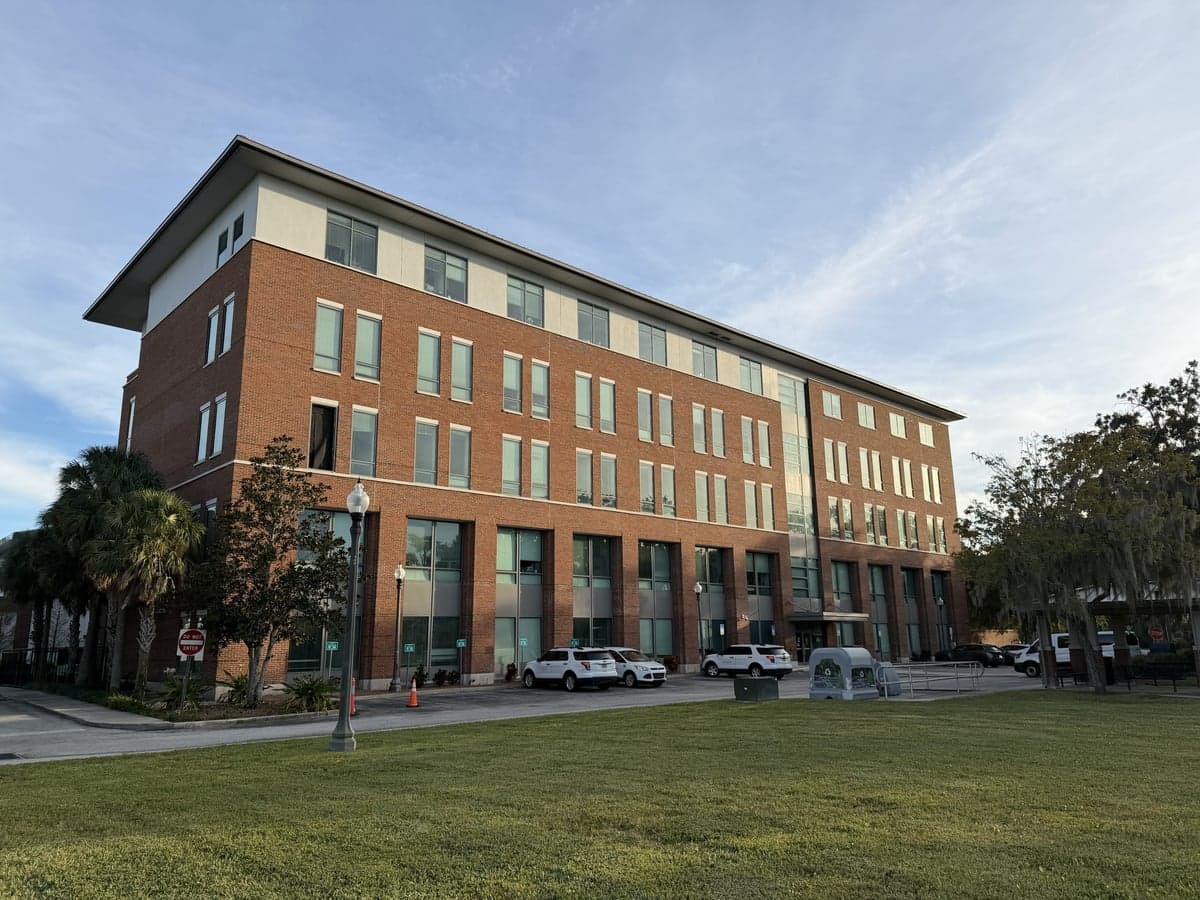
Photo: Wikipedia
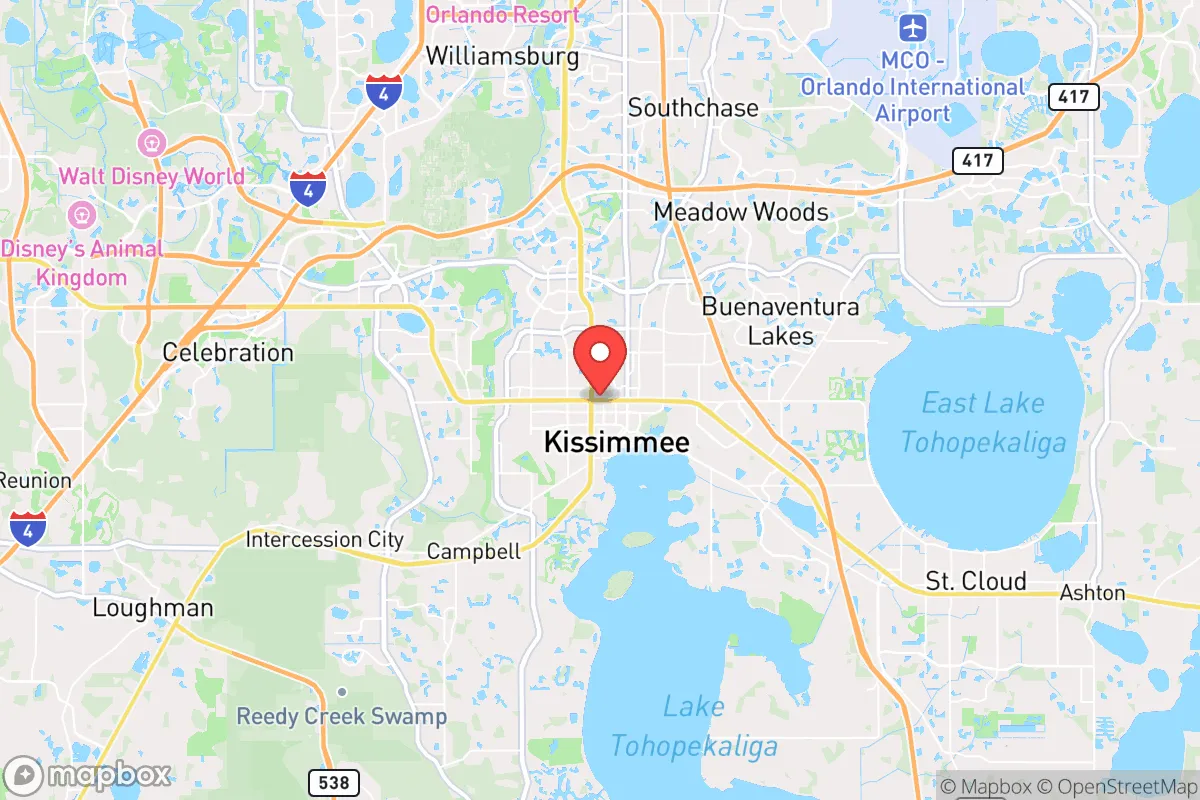
Personal Sovereignty in Kissimmee, FL
Viable for self-reliance. Generally workable, though some barriers may limit total independence.
What does Personal Sovereignty tell us?
Personal Sovereignty measures your capacity for self-reliance and independence with minimal government friction. Higher scores mean fewer barriers between you and the way you want to live... but it assumes you have the space you need and good neighbors.
What does this tell us?
Personal Sovereignty measures your capacity for self-reliance and independence with minimal government friction. Higher scores mean fewer barriers between you and the way you want to live... but it assumes you have the space you need and good neighbors.
State Policy
Energy independence: Importer (10% of energy produced in-state)
Personal Liberty
Homesteading

Personal Liberty Analysis
Kissimmee, Florida, offers a mixed bag for those prioritizing personal sovereignty, with the state’s strong preemption laws and low tax burden providing a solid foundation, but local growth pressures and proximity to Orlando’s regulatory orbit creating friction points. For a survivalist or prepper mindset, the real question isn’t whether Florida is a free state—it largely is—but whether Kissimmee specifically allows you to live without government overreach into your daily life, your property, and your family’s decisions. The answer is nuanced: you’ll find more autonomy here than in most blue states, but you’ll need to navigate a rapidly urbanizing environment that tests self-reliance at every turn.
Tax burden and regulatory posture in Kissimmee compared to other Florida cities
Florida’s lack of a state income tax is a major win for personal sovereignty, putting more money directly in your pocket and reducing the government’s claim on your labor. Kissimmee’s combined state and local sales tax rate is 7.5% (6% state plus 1.5% county), which is on par with Orlando but higher than rural Florida counties like Okeechobee (7%). Property taxes in Osceola County average about 1.1% of assessed value, slightly above the state median of 0.83%, driven by school district and infrastructure bonds tied to rapid population growth. The regulatory posture here is generally business-friendly, but local zoning and building codes have tightened as the city expands—permitting for sheds, fences, or alternative structures can take weeks, and HOAs in newer subdivisions often impose restrictions that feel like petty tyranny. For a prepper, the key takeaway is that while Florida’s state-level regulatory climate is among the best in the nation, Kissimmee’s local bureaucracy is thicker than in smaller, more rural towns like St. Cloud or Kenansville.
Self-defense rights and gun law specifics in Kissimmee and Osceola County
Florida is a “stand your ground” state with constitutional carry for law-abiding residents, meaning you can carry a concealed firearm without a permit as of July 2023. This is a bedrock of personal sovereignty for those who view self-defense as a non-negotiable right. Kissimmee itself has no local gun ordinances that exceed state law—Florida preempts firearm regulation, so city or county officials cannot ban open carry, restrict magazine capacities, or impose waiting periods beyond what the state mandates. However, Osceola County has seen a rise in property crime (up 12% from 2020 to 2024 per FDLE data), which makes the ability to defend your home and family more than theoretical. The sheriff’s office is generally pro-Second Amendment, but response times in unincorporated areas can stretch to 15–20 minutes, reinforcing the need for personal readiness. For a survivalist, the legal framework is solid, but the practical reality is that you’re on your own in the gap between a threat and law enforcement arrival—which is exactly why constitutional carry matters.
Self-reliance and homesteading viability: lot sizes, zoning, and off-grid feasibility
This is where Kissimmee’s sovereignty profile takes a hit. The city and its immediate suburbs are dominated by quarter-acre lots or smaller, with many newer developments packing homes on 5,000–7,000 square foot parcels. Zoning in most residential areas prohibits livestock, and even backyard chickens are restricted to certain districts with a permit. Off-grid living—solar panels, rainwater collection, composting toilets—is technically allowed under Florida building codes, but Osceola County requires permits for any electrical or plumbing work, and HOAs often ban visible solar arrays or clotheslines. For true homesteading, you’d need to look at unincorporated areas east of Kissimmee toward Holopaw or south near Yeehaw Junction, where lot sizes jump to 1–5 acres and zoning is more permissive. Even there, well and septic systems are regulated by the county health department, and burning trash or brush is restricted during dry season. The bottom line: Kissimmee proper is not a place to live off the land—it’s a bedroom community where self-reliance means stockpiling supplies and maintaining a low profile, not raising goats or drilling a well.
Personal liberties: parental rights, medical autonomy, speech, and property
Florida has been a battleground for parental rights, with the 2022 Parental Rights in Education Act (HB 1557) and subsequent laws giving parents more say in their children’s education and medical decisions. In Kissimmee, this translates to school boards that are more responsive to conservative concerns than in many parts of the country, though Osceola County’s school district is large and bureaucratic. Medical autonomy is strong: Florida does not have a state-level vaccine mandate for adults, and the 2023 law banning COVID-19 vaccine mandates for private employers (HB 1) reinforces individual choice. However, property rights face erosion from eminent domain and overzealous code enforcement—the city has used redevelopment powers to acquire land near the lakefront for commercial projects, and code officers can fine homeowners for overgrown grass or unregistered vehicles without a court hearing. Free speech is protected under the First Amendment, but local noise ordinances and parade permit requirements can be used to stifle protests or gatherings. For a prepper, the balance is positive overall: you can speak your mind, keep your kids out of controversial curricula, and refuse medical mandates, but you must be vigilant about property encroachments and local ordinances that can be weaponized against nonconformists.
Compared to other areas in the Sun Belt, Kissimmee offers a moderate-to-strong sovereignty environment that is clearly superior to blue states like New York or California, but it lags behind more rural, less regulated parts of Florida like the Panhandle or the interior ranchlands. The state’s preemption laws and tax structure give you a sturdy platform, but the local reality is one of increasing urbanization, HOA oversight, and permitting delays that chip away at total autonomy. For a single individual or family with a survivalist mindset, Kissimmee works best as a base of operations—not a retreat. You can secure your home, carry a firearm, and keep your finances out of the state’s hands, but you’ll need to accept that true self-reliance requires either buying land farther out or fighting the local bureaucracy tooth and nail. If you’re willing to do that, Kissimmee is a workable option; if not, look toward the rural counties to the north and west where the government footprint is lighter and the land is cheaper.

* Values derived from national, state, county, city and local statistics and may differ in a specific area. Last updated: 2026-04-21T17:13:34.000Z
Narrative content on this page is AI-generated and may contain mistakes. Verify any details that matter before acting on them.
ReloMaps may earn a commission from affiliate links at no extra cost to you.

