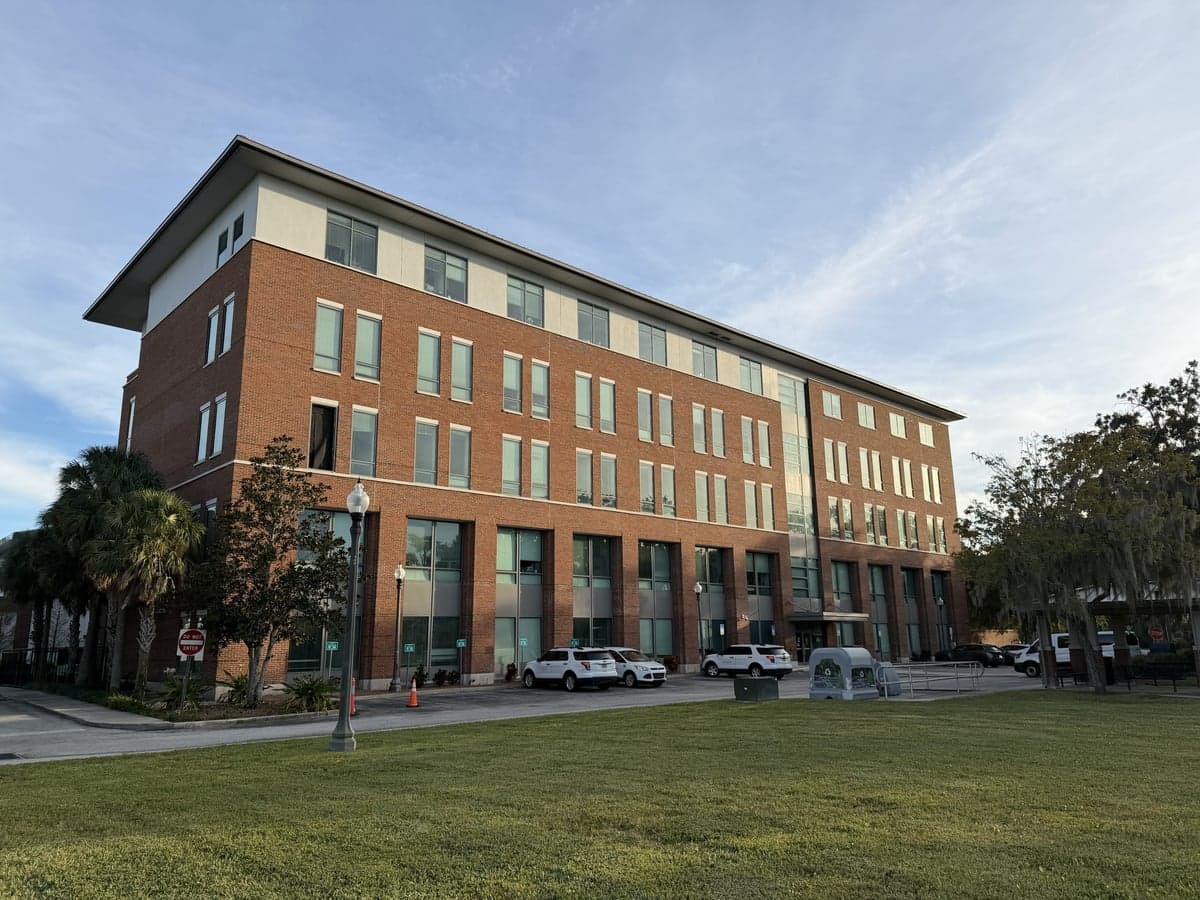
Photo: Wikipedia
Political ClimatePolitical Climate in Kissimmee, FL
District shown is the primary district for this city’s centroid. Cities may span multiple districts.
Local Political AnalysisPolitical Analysis of Kissimmee, FL
Kissimmee’s political climate has shifted noticeably over the past decade, and if you’ve lived here as long as I have, you’ve felt it. The area now carries a Cook PVI of D+4, meaning it leans about four points more Democratic than the national average—a far cry from the reliably conservative town I remember from the 1990s and early 2000s. The change is driven largely by rapid population growth from Puerto Rican and other Hispanic transplants, plus younger families moving in from Orlando’s orbit, and it’s showing up in local elections and policy debates. If you’re someone who values limited government and personal freedoms, the trajectory here is something to watch closely.
How it compares
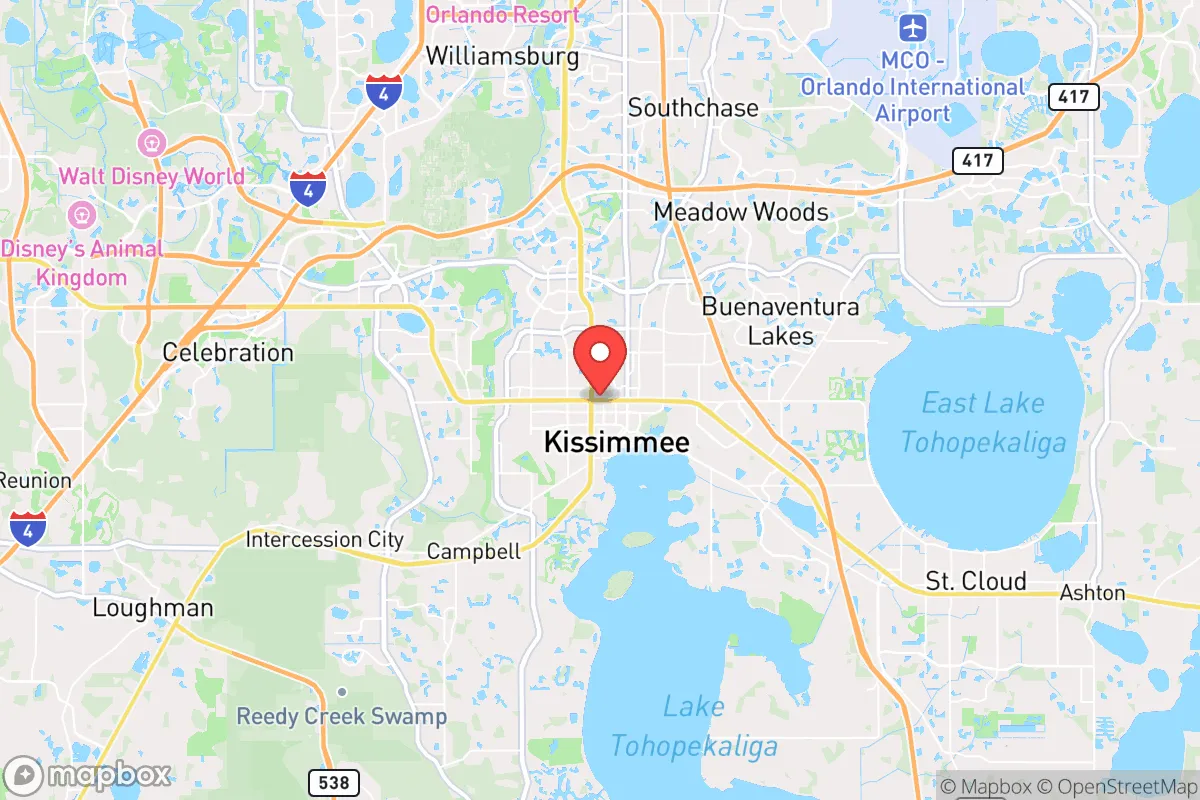
Kissimmee sits in Osceola County, which has become one of the most Democratic-leaning counties in Central Florida outside of Orlando proper. Drive 15 minutes north to Celebration or 20 minutes west to the Four Corners area, and you’ll find a similar political vibe—more progressive, more government-friendly. But head just 20 miles northwest to the city of St. Cloud, and the contrast is stark: St. Cloud remains a solidly conservative stronghold, with a city council that’s pushed back on mask mandates and kept property taxes lower. Even closer, the unincorporated parts of Osceola County—like the rural areas around Holopaw and Kenansville—vote red by wide margins. So Kissimmee is the urban core of a county that’s trending blue, while its immediate neighbors offer a reminder of what the area used to be.
What this means for residents
For folks who moved here to escape high taxes and heavy regulation elsewhere, the shift is concerning. The local government has gotten more comfortable with what I’d call overreach—things like stricter short-term rental rules that hit Airbnb hosts hard, and a push for more public spending on transit and affordable housing projects that come with strings attached. The school board has also moved left, with curriculum debates that feel imported from bigger cities. On the plus side, property taxes in Kissimmee are still lower than in Orange County, and the city hasn’t gone as far as Orlando on things like rent control or business mandates. But the trend line is clear: each election cycle brings more candidates who see government as the solution, not the problem.
One cultural distinction that stands out is the strong influence of the Puerto Rican community, which has brought a vibrant food scene and family-oriented festivals—but also a voting bloc that tends to favor bigger government and social programs. That’s not inherently bad, but it does mean local politics increasingly reflect priorities like expanded Medicaid and public-sector union support. If you’re a conservative who values individual responsibility and minimal interference, you’ll find yourself in the minority more often than not at the ballot box. The long-term outlook? Unless the growth pattern changes or a major economic downturn reshuffles priorities, Kissimmee will likely keep drifting left. My advice: get involved in local precinct meetings and school board races—those are where the real battles over your freedoms are being fought, and they’re still close enough to influence.

State Political ClimatePolitical Climate in Florida
State Political AnalysisPolitical Environment in the State
Florida has transformed from a classic swing state into a solidly Republican-leaning powerhouse over the past decade, with a registered Republican voter advantage of over 600,000 as of 2026 and a 2024 presidential margin of roughly +13 points for the GOP. The dominant coalition is a blend of conservative retirees, Hispanic voters (especially in Miami-Dade and the I-4 corridor), and a massive influx of domestic migrants from blue states seeking lower taxes and fewer restrictions. The trajectory has been a steady rightward shift since 2016, accelerating after the 2020 pandemic-era migration wave, making Florida arguably the most politically consequential state in the nation for conservative policy experimentation.
Urban vs. rural divide
The political map of Florida is a study in stark contrasts. The major metros of Miami-Dade County and Orlando (Orange County) have historically been Democratic strongholds, but Miami-Dade has been trending right dramatically—Donald Trump won it in 2024 by about 11 points, a seismic shift from Hillary Clinton’s 29-point win there in 2016. This flip is driven by Cuban-American, Venezuelan-American, and Nicaraguan-American voters who are fiercely anti-socialist and respond to Republican messaging on freedom and economic opportunity. Meanwhile, the sprawling suburban and exurban counties like St. Johns (St. Augustine), Collier (Naples), and Lee (Fort Myers) are deep red and growing fast. The rural Panhandle—places like Liberty County and Holmes County—vote 80%+ Republican, while the only remaining blue strongholds are urban cores like Tampa’s Hillsborough County (which is purple but trending right) and Broward County (Fort Lauderdale), which remains reliably Democratic but is losing population share. The I-4 corridor from Tampa to Daytona Beach is the classic battleground, but even there, the GOP edge has widened.
Policy environment
Florida’s policy environment under Governor Ron DeSantis has been aggressively conservative since 2019, with a focus on limiting government overreach into personal and family life. The state has no personal income tax, a constitutional cap on property tax increases (the Save Our Homes amendment), and a right-to-work law that keeps union power weak. Education policy is a flagship: the Parental Rights in Education Act (HB 1557), passed in 2022, prohibits classroom instruction on sexual orientation and gender identity in grades K-3, and was expanded to all grades in 2023. The state also has a robust school choice program—the Family Empowerment Scholarship—which allows any family to use tax dollars for private or homeschool expenses. Healthcare policy is mixed: Florida did not expand Medicaid under Obamacare, and the state has some of the most restrictive abortion laws in the country (a 6-week ban signed in 2023). Election integrity saw major reforms with SB 90 (2021), which tightened drop box rules, required ID for mail ballots, and banned ballot harvesting—measures that survived court challenges and are credited with boosting voter confidence.
Trajectory & freedom
Florida is unequivocally becoming more free in the areas that matter most to conservatives: fiscal freedom, educational freedom, and Second Amendment rights. The state passed constitutional carry (permitless carry) in 2023, allowing law-abiding adults to carry a concealed firearm without a government-issued permit. Property rights were strengthened with the Live Local Act (2023), which preempts local zoning restrictions to allow more housing development, though this has created tension with local control advocates. On medical autonomy, the state banned COVID-19 vaccine mandates for private employers and government workers in 2021, and passed a law prohibiting mask mandates in schools. The Stop WOKE Act (2022) restricted critical race theory training in workplaces and schools, though parts were struck down in court. The trajectory is clearly toward expanding personal liberty from government overreach, with the notable exception of the 6-week abortion ban, which some conservatives see as a necessary protection of life rather than a restriction of freedom.
Civil unrest & political movements
Florida has seen relatively little civil unrest compared to states like Oregon or New York, but there have been flashpoints. The 2020 George Floyd protests in Miami, Tampa, and Jacksonville saw some property damage and curfews, but were smaller and shorter than in other major cities. The state’s response was aggressive: DeSantis created the Office of Election Crimes and Security in 2022, which has prosecuted dozens of cases of alleged voter fraud, and the State Guard was activated for hurricane response and border security. Immigration politics are a major issue, with DeSantis busing migrants to Martha’s Vineyard in 2022 and signing the SB 1718 (2023) law that requires hospitals to ask about immigration status and expands penalties for transporting undocumented immigrants. There is no sanctuary city movement of any significance; in fact, the state preempts local governments from adopting sanctuary policies. Election integrity controversies have been minimal since the 2020 recount, and the state’s voting system is widely considered secure. The most visible political movement is the Moms for Liberty chapter network, which has been active in school board elections across the state, particularly in Brevard County and Sarasota County.
Projection
Over the next 5-10 years, Florida will likely become even more conservative as the in-migration from blue states continues. The state is projected to gain another 3-4 million residents by 2035, with most settling in the red-leaning exurbs of Tampa, Orlando, and Jacksonville. The Hispanic vote will continue to shift right, especially as second-generation Cuban and Venezuelan Americans become more politically active. The Democratic Party’s base will shrink to the urban cores of Miami, Orlando, and Tampa, with Broward County becoming the last true blue stronghold. The biggest wildcard is climate change: rising sea levels and hurricane intensity could eventually slow migration to coastal areas, but for now, the state’s low taxes and conservative governance are a powerful draw. A new resident moving in now should expect to find a state where government is generally on your side—low taxes, school choice, gun rights, and parental control over education—but where local politics can vary wildly from one county to the next.
For a conservative-leaning individual or parent considering relocation, Florida offers a rare combination of fiscal freedom, educational choice, and cultural alignment that is increasingly hard to find in other large states. The practical takeaway is this: you’ll pay no state income tax, you can send your kids to a school that fits your values, you can carry a firearm without a permit, and your vote will count in a state that takes election integrity seriously. The trade-offs are higher property insurance costs, intense summer heat, and a fast-growing population that can strain infrastructure. But if you value personal liberty and limited government, Florida is arguably the best bet in the country right now.
* Values derived from national, state, county, city and local statistics and may differ in a specific area. Last updated: 2026-04-21T17:13:34.000Z
Narrative content on this page is AI-generated and may contain mistakes. Verify any details that matter before acting on them.
ReloMaps may earn a commission from affiliate links at no extra cost to you.

