 Popular
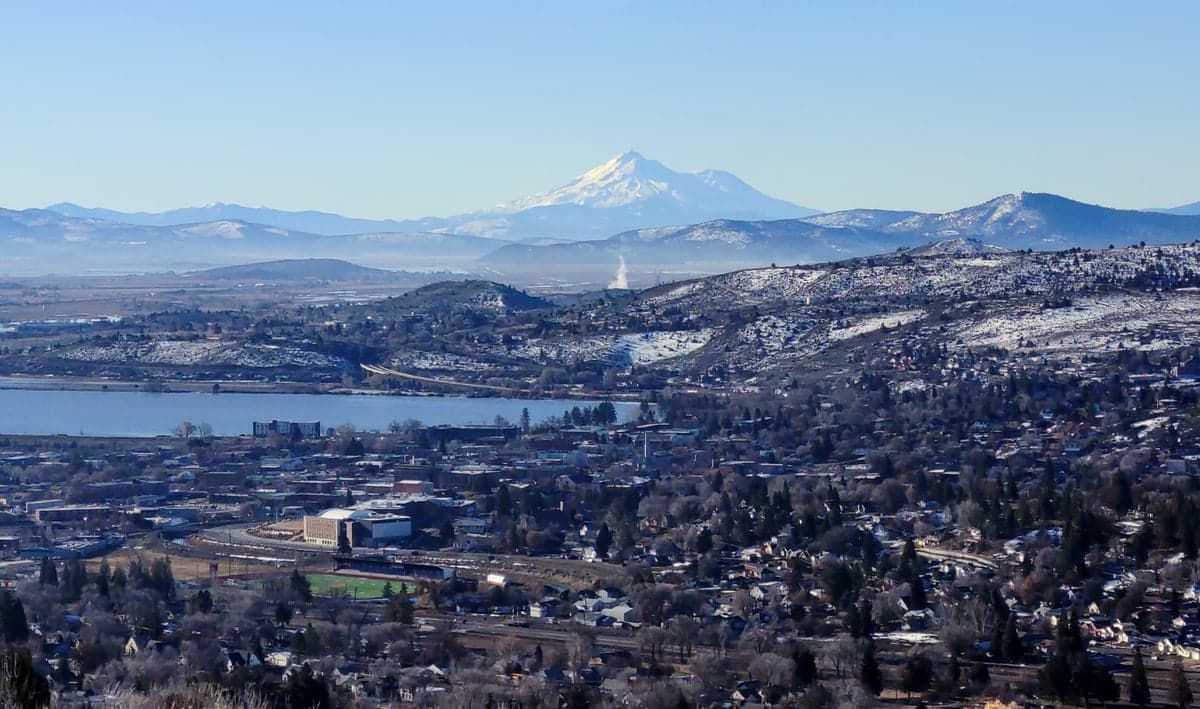
Photo: Wikipedia
Quality of Life in Klamath Falls, OR
A high quality of life with strong walkability, manageable living costs, healthy neighborhood signals, and solid amenity access.
What does Quality of Life tell us?
Quality of Life blends cost of living, nearby amenities, socioeconomic signals, and neighborhood character. City-level scores represent the whole municipality; individual neighborhoods can differ.
What does this tell us?
Quality of Life blends cost of living, nearby amenities, socioeconomic signals, and neighborhood character. City-level scores represent the whole municipality; individual neighborhoods can differ.
Cost of Living
14% below national average
The Real Cost of Living in Klamath Falls, OR for 2026
| Tier | Individual | Family (4) |
|---|---|---|
| Survival | $15k | $29k |
| Comfortable | $50k | $74k |
| Luxury | $85k+ | $132k+ |
| Elite (Top 5%) | $133k+ | $206k+ |
64%
The Area Signal
A metric tracking the socioeconomic signals of the area.


Hobbies
Explore the areaGroceries
10 within 10 miles
Gas
20 within 10 miles
Hospital
3 within 20 miles
Airport
LAS — Harry Reid International
Post Office
USPS — Klamath Falls, OR
Critical Amenities
Quality-of-Life Analysis
Klamath Falls offers a notably lower cost of living than much of the Pacific Northwest, with a composite index of 86 (100 = U.S. average), making it an attractive option for budget-conscious families, outdoor enthusiasts, and remote workers seeking space and affordability. The area’s median household income of roughly $52,000 sits below the national median, reflecting a working-class and retiree demographic drawn by the region’s natural beauty and slower pace. The population skews older and more conservative than Oregon’s Willamette Valley, with a strong presence of veterans, healthcare workers, and employees tied to the nearby Oregon Institute of Technology and Sky Lakes Medical Center.
Cost of living, housing affordability, and how Klamath Falls compares to nearby cities
Housing in Klamath Falls is significantly cheaper than in Oregon’s major metros. The median home value of $257,400 is roughly half the Portland metro median and about 30% lower than Bend’s median, which exceeds $700,000. Median rent sits at $962, well below the national median of $1,200 and far under the $1,800+ typical in Bend or Ashland. The overall cost of living index of 86 means groceries, utilities, and transportation are all below the U.S. average. For comparison, nearby Medford’s index is 93, and Ashland’s is 107. The average one-way commute of just 13.9 minutes is among the shortest in Oregon, reducing transportation costs and freeing up time for recreation or family. However, property taxes are moderate at roughly 1.0% of assessed value, and Oregon’s lack of a sales tax helps offset higher state income taxes for residents.
Schools, amenities, and what daily life feels like in Klamath Falls
Daily life in Klamath Falls revolves around outdoor access and a compact downtown. The Klamath County School District serves the area, with Klamath Union High School and Henley High School as the main public options; Oregon Institute of Technology provides a four-year engineering and health-sciences university in town. Amenities include the Klamath County Museum, the Favell Museum of Western Art and Artifacts, and the annual Klamath Falls Film Festival. For groceries and shopping, residents rely on the downtown core and the South Sixth Street corridor, with Walmart, Costco, and local markets available. The nearby Upper Klamath Lake and Crater Lake National Park (about 60 miles north) anchor a lifestyle of fishing, hiking, and boating. Healthcare is centered at Sky Lakes Medical Center, a 176-bed regional hospital. The city’s walkability is low outside the core, but the short commute means most errands take under 15 minutes by car. Winters bring snow and inversions that can cause air stagnation, while summers are dry and warm, with temperatures often in the 80s.
Klamath Falls is best suited for people who prioritize affordability and outdoor recreation over urban nightlife or career density. Remote workers, retirees on fixed incomes, and families seeking a low-stress environment with good lake and mountain access will find the area appealing. Those needing frequent flights or high-end retail may prefer Medford or Bend, but for a quiet, budget-friendly base with short commutes and strong natural amenities, Klamath Falls delivers a distinct quality of life that is increasingly rare in the Pacific Northwest.

Crime in Klamath Falls, OR
Higher crime rates than 62% of comparable U.S. locations.
Violent CrimeViolent Crime Analysis
Property CrimeProperty Crime Analysis
Crime Analysis
Klamath Falls, Oregon, reports a violent crime rate of 458.6 per 100,000 residents and a property crime rate of 2,621.2 per 100,000, placing it above national averages for both categories. While not the most dangerous city in the state, these figures indicate a community where safety is a significant concern, particularly regarding property offenses. The overall safety picture is mixed, with certain areas and times presenting higher risks than others, and local justice system policies playing a role in the crime landscape.
Crime in context
Compared to the 2023 national average of roughly 380 violent crimes per 100,000, Klamath Falls’ rate of 458.6 is about 21% higher. Property crime is even more elevated: the national average sits near 1,950 per 100,000, making Klamath Falls’ 2,621.2 rate roughly 34% above the norm. Within Oregon, the city’s crime rates are higher than the state average for both violent and property offenses. Larceny-theft is the most common property crime, followed by burglary and motor vehicle theft. The city’s location as a regional hub for commerce and services in the Klamath Basin likely contributes to these elevated numbers, as transient populations and economic activity can increase opportunities for crime.
What residents experience
Residents frequently report that property crime—especially vehicle break-ins, package theft, and vandalism—is the most visible safety issue in daily life. Violent crime, while less common, is concentrated in specific contexts such as domestic disputes and drug-related incidents. Aggravated assault accounts for the majority of violent offenses, with robbery and homicide being rarer. The local justice system, influenced by progressive policies common in Oregon’s larger counties, has faced criticism for prioritizing rehabilitation over incarceration. This approach, while sympathetic to offenders, can lead to shorter sentences and faster return of convicted criminals to the streets, which directly impacts public safety and victim justice. Residents often express frustration with repeat offenders cycling through the system without meaningful consequences.
Neighborhood-level variation is notable. Areas near the downtown core and along the South 6th Street corridor see higher concentrations of both property and violent crime, while outlying residential neighborhoods like those near Upper Klamath Lake or the Oregon Institute of Technology campus tend to be quieter. The city’s west side and newer subdivisions generally report lower crime rates, though no area is immune to property crime. Proactive measures—such as neighborhood watch programs, secured parking, and home security systems—are common recommendations from local law enforcement and long-term residents. For those considering relocation, consulting the Klamath Falls Police Department’s annual crime report or speaking with local real estate agents about specific block-level trends is advisable before committing to a neighborhood.
* Values derived from national, state, county, city and local statistics and may differ in a specific area. Last updated: 2026-04-20T23:05:01.000Z
Narrative content on this page is AI-generated and may contain mistakes. Verify any details that matter before acting on them.
ReloMaps may earn a commission from affiliate links at no extra cost to you.

