 Popular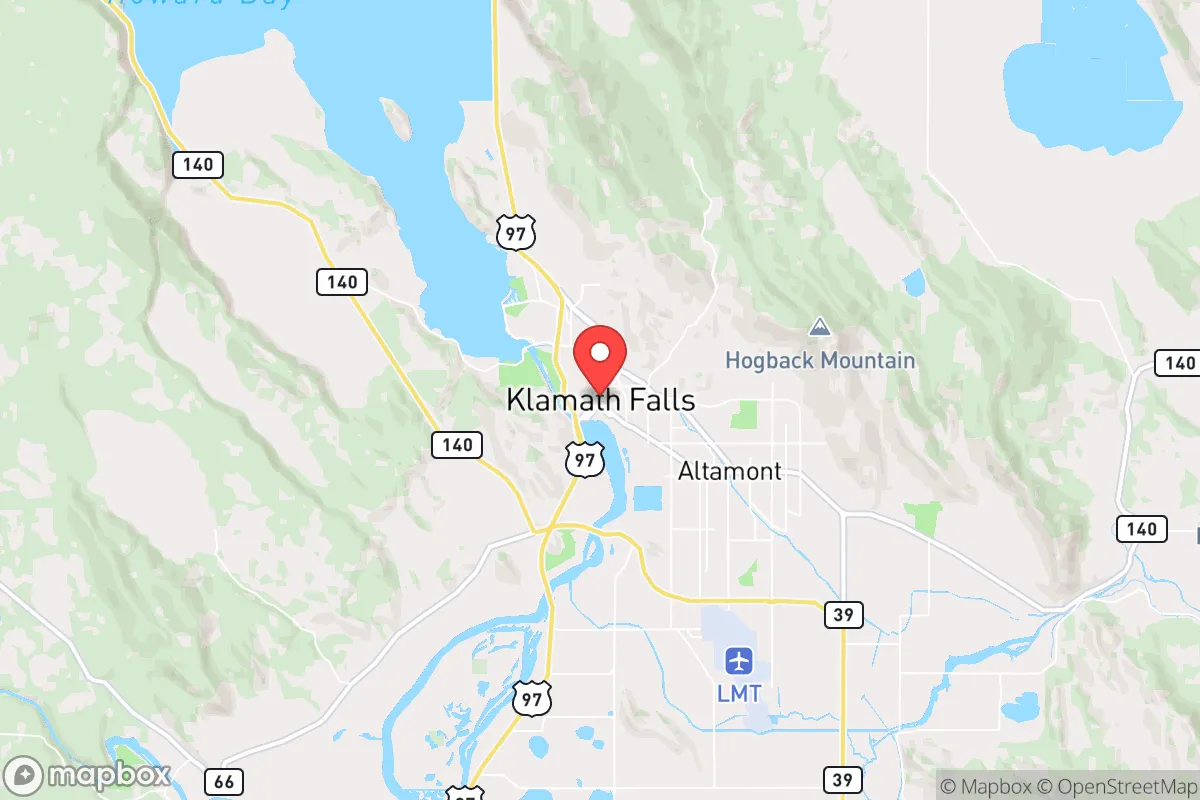
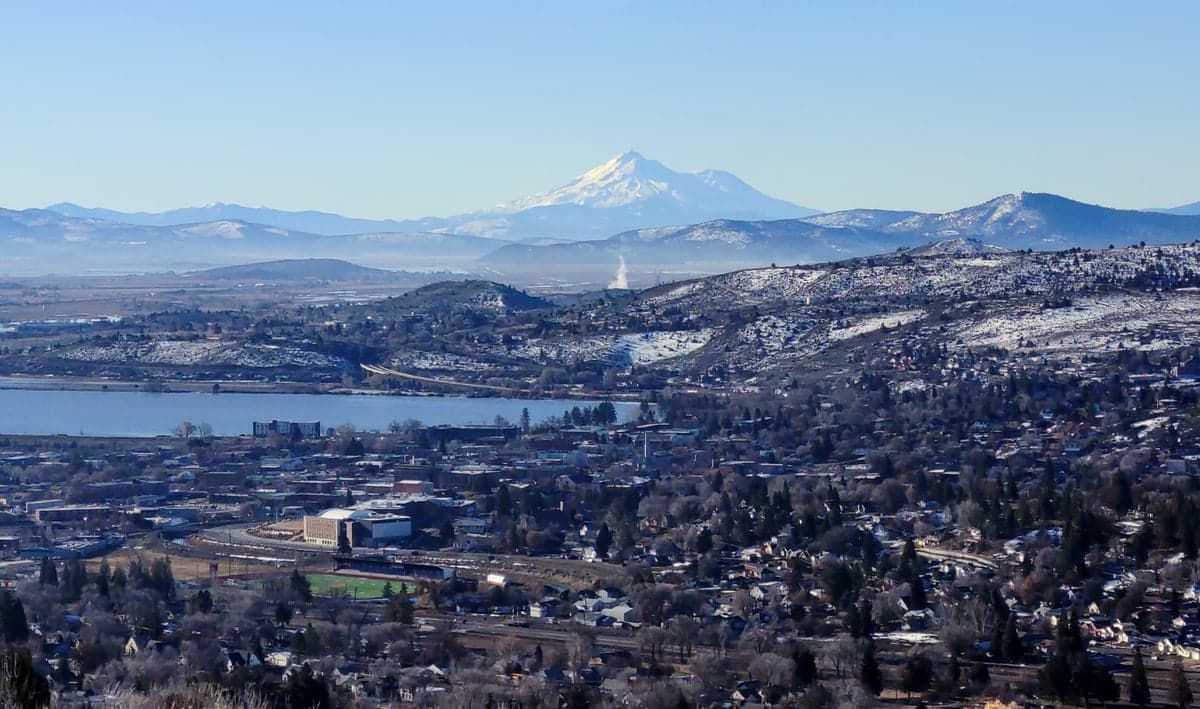
Photo: Wikipedia
Political ClimatePolitical Climate in Klamath Falls, OR
District shown is the primary district for this city’s centroid. Cities may span multiple districts.
Local Political AnalysisPolitical Analysis of Klamath Falls, OR
Klamath Falls leans solidly conservative, with a Cook PVI of R+14 that reflects a deep-rooted preference for limited government and personal responsibility. This isn’t a recent shift—the area has long voted Republican by wide margins, and the 2024 presidential race saw Klamath County go roughly +30 points for the GOP candidate. But if you’ve lived here a while, you’ve noticed the political winds starting to shift, and not in a way that sits well with folks who value their freedoms. The old-school libertarian streak that defined this town is being tested by outside influences, and it’s worth keeping an eye on.
How it compares
Drive an hour north to Bend, and you’re in a different world—Deschutes County has flipped from red to purple, and parts of Bend proper are now reliably blue. That’s the kind of change that worries longtime Klamath residents. Ashland, about 90 minutes west, is a progressive stronghold, while Medford and Grants Pass lean conservative but not as reliably as Klamath Falls. The contrast is stark: Klamath County still feels like the Oregon of the 1990s, where neighbors minded their own business and the government stayed out of your backyard. But as California transplants and remote workers trickle in, you see the same pattern that turned Bend from a logging town into a hub of bike lanes and housing mandates. The local school board and city council races are where this tension plays out—candidates who talk about parental rights and property rights still win, but the margins are tighter than they were a decade ago.
What this means for residents
For now, daily life in Klamath Falls reflects that conservative majority. Property taxes remain relatively low compared to the Willamette Valley, and there’s no city income tax—something that’s become a rarity in Oregon. The county sheriff’s office has a reputation for not enforcing state-level gun restrictions they view as unconstitutional, which is a big deal for the hunting and outdoor crowd. But the creeping signs of government overreach are there: the state’s land-use planning laws still choke development, making it hard to build new homes without jumping through hoops, and the recent push for statewide rent control has locals worried about property rights. If you’re someone who values the Second Amendment or wants to run a small business without a stack of permits, Klamath Falls is still a refuge—but you can feel the pressure building as Portland’s policies ripple outward.
Culturally, Klamath Falls holds onto a few distinctions that set it apart from the progressive tide. The annual Basin Brewfest is a low-key affair where folks actually talk to each other, not a political rally. The local paper, the Herald and News, still runs editorials that defend free markets and local control. But the biggest red flag is the demographic shift: the county’s population has stayed flat for years, while the surrounding rural areas are aging out. Younger families are moving to Redmond or even Idaho, where the political climate is more aligned with traditional values. If the trend continues, Klamath Falls could become a blue dot in a red county within a decade—not because locals changed their minds, but because the people who moved here brought different priorities. For now, it’s still a place where you can live your life without the government breathing down your neck, but the fight to keep it that way is just getting started.

State Political ClimatePolitical Climate in Oregon
State Political AnalysisPolitical Environment in the State
Oregon has long been painted as a deep-blue bastion, but the reality on the ground is far more fractured—and frankly, more interesting. The state’s overall partisan lean is solidly Democratic at the statewide level, with every presidential election since 1988 going blue, but that top-line number hides a fierce and growing urban-rural civil war. Over the last 10-20 years, the Portland metro area’s explosive growth has dragged the state leftward on cultural and economic issues, while the rest of Oregon—east of the Cascades and much of the southern interior—has hardened into some of the most conservative territory in the Pacific Northwest. The result is a state that votes like California on ballot measures but feels like two different countries when you drive an hour from downtown Portland.
Urban vs. rural divide
The political map of Oregon is a textbook case of geographic polarization. The Portland metro—Multnomah, Washington, and Clackamas counties—generates roughly half the state’s population and votes overwhelmingly Democratic. Multnomah County alone delivered 76% of its vote to Joe Biden in 2020, making it one of the most liberal urban counties in the nation. Salem and Eugene follow suit, with Lane County reliably blue. But drive east over the Cascade crest, and you enter a different world. Deschutes County (Bend) flipped from blue to red in 2020 after trending Republican for years, while rural strongholds like Klamath Falls, Medford, Grants Pass, and Pendleton vote 65-75% Republican. The I-5 corridor from Portland to Eugene is the Democratic engine; everything else is a red wall. The divide isn’t just partisan—it’s cultural. Portland’s politics are shaped by tech transplants, activists, and a robust public sector, while eastern Oregon’s economy is ranching, timber, and outdoor recreation, with a fierce independent streak that resents Salem’s mandates.
Policy environment
Oregon’s policy environment is a mixed bag that leans heavily progressive, with consequences that conservatives find increasingly burdensome. The state has no sales tax, which sounds great until you realize it’s replaced by some of the highest income and property taxes in the nation—top marginal income tax rate hits 9.9%, and property taxes are capped but still high. The regulatory posture is aggressive: Oregon has a statewide land-use planning system that restricts development, a cap-and-trade carbon program (HB 2020, later replaced by executive order), and some of the strictest environmental regulations in the country. Education policy is dominated by teachers’ unions, with Portland Public Schools spending over $20,000 per student but producing mediocre outcomes. Healthcare is heavily regulated, with a state-run insurance exchange and Medicaid expansion under the Oregon Health Plan. Election laws are among the most progressive: automatic voter registration, same-day registration, and vote-by-mail are the norm, which conservatives argue reduces election integrity. Gun laws are restrictive—Measure 114 (2022) requires a permit to purchase and bans magazines over 10 rounds, though it’s been tied up in court. For a conservative, the policy environment feels like a slow squeeze: higher taxes, less local control, and a regulatory apparatus that favors collective goals over individual freedom.
Trajectory & freedom
Oregon is becoming less free by almost any measure, and the trend has accelerated since 2020. The most glaring example is Measure 110 (2020), which decriminalized personal possession of all drugs—a policy that backfired spectacularly, leading to a surge in public drug use, overdoses, and homelessness. In 2024, the legislature partially rolled it back, recriminalizing possession, but the damage to public order is done. On gun rights, Measure 114 represents the most significant infringement in state history, and while it’s currently blocked by court order, the political will behind it is strong. Parental rights took a hit with HB 2002 (2023), which allows minors to access reproductive health care, including abortion and gender-affirming care, without parental consent—a major red flag for conservative families. Medical autonomy is constrained by vaccine mandates for healthcare workers and schoolchildren, though exemptions exist. Property rights are under constant pressure from the land-use system, which limits what you can build on your own land, especially in rural areas. On the positive side, Oregon has no sales tax, and the state’s constitutional right-to-hunt-and-fish amendment (2010) offers some protection for outdoor traditions. But overall, the trajectory is toward more government control, not less.
Civil unrest & political movements
Oregon has been a flashpoint for civil unrest, particularly in Portland. The 2020 George Floyd protests turned into months-long nightly demonstrations, with the federal government deploying DHS agents to protect the federal courthouse. The city became a national symbol of left-wing activism, with groups like Rose City Antifa and the John Brown Gun Club clashing with police and counter-protesters. Since then, the energy has cooled but not disappeared—Portland still sees periodic protests over police brutality, housing, and Gaza. On the right, rural Oregon has a strong secessionist movement, with groups like Citizens for Constitutional Freedom pushing for the creation of a “Greater Idaho” that would absorb eastern Oregon counties into the red state of Idaho. As of 2025, 13 counties have voted to support secession talks, though the legislature has ignored them. Immigration politics are tense: Portland is a sanctuary city, and the state has a 1987 law limiting local cooperation with federal immigration enforcement. Election integrity is a hot-button issue, with conservatives pointing to vote-by-mail’s vulnerabilities—though no major fraud has been proven. A new resident would notice the political graffiti, the homeless encampments, and the palpable tension between Portland’s progressive bubble and the rest of the state.
Projection
Over the next 5-10 years, Oregon is likely to become more polarized, not less. Demographic trends favor the left: Portland’s suburbs are growing, and in-migration from California and Washington brings more progressive voters. But the rural exodus is real—young people leave eastern Oregon for the cities, and retirees often move to Idaho or Arizona. The Greater Idaho movement could gain traction if the legislature continues to ignore rural grievances, but it’s a long shot. What’s more likely is a continued policy drift leftward: expect tighter gun laws, more environmental regulation, and possibly a state income tax increase to fund social programs. The housing crisis will force some deregulation, but the land-use system is sacred to the political class. For a conservative moving in now, the next decade will feel like a slow retreat—higher taxes, less personal freedom, and a cultural environment that’s increasingly hostile to traditional values. The best bet for like-minded people is to settle in Bend, Redmond, or the southern Oregon towns of Medford and Grants Pass, where the local politics are more balanced and the lifestyle is still rooted in independence.
Bottom line for a new resident: Oregon is a beautiful state with a serious political problem. If you value low taxes, gun rights, parental authority, and local control, you’ll find yourself fighting an uphill battle against a well-funded progressive machine in Salem. The urban centers are lost to the left, but the rural areas and some mid-sized towns still offer a refuge—if you’re willing to accept the trade-offs. Visit first, talk to locals, and understand that the Oregon you see on Instagram is not the Oregon you’ll live in. It’s a state of stunning natural beauty and declining personal freedom, and the choice to move here should be made with eyes wide open.
* Values derived from national, state, county, city and local statistics and may differ in a specific area. Last updated: 2026-04-20T23:05:01.000Z
Narrative content on this page is AI-generated and may contain mistakes. Verify any details that matter before acting on them.
ReloMaps may earn a commission from affiliate links at no extra cost to you.

