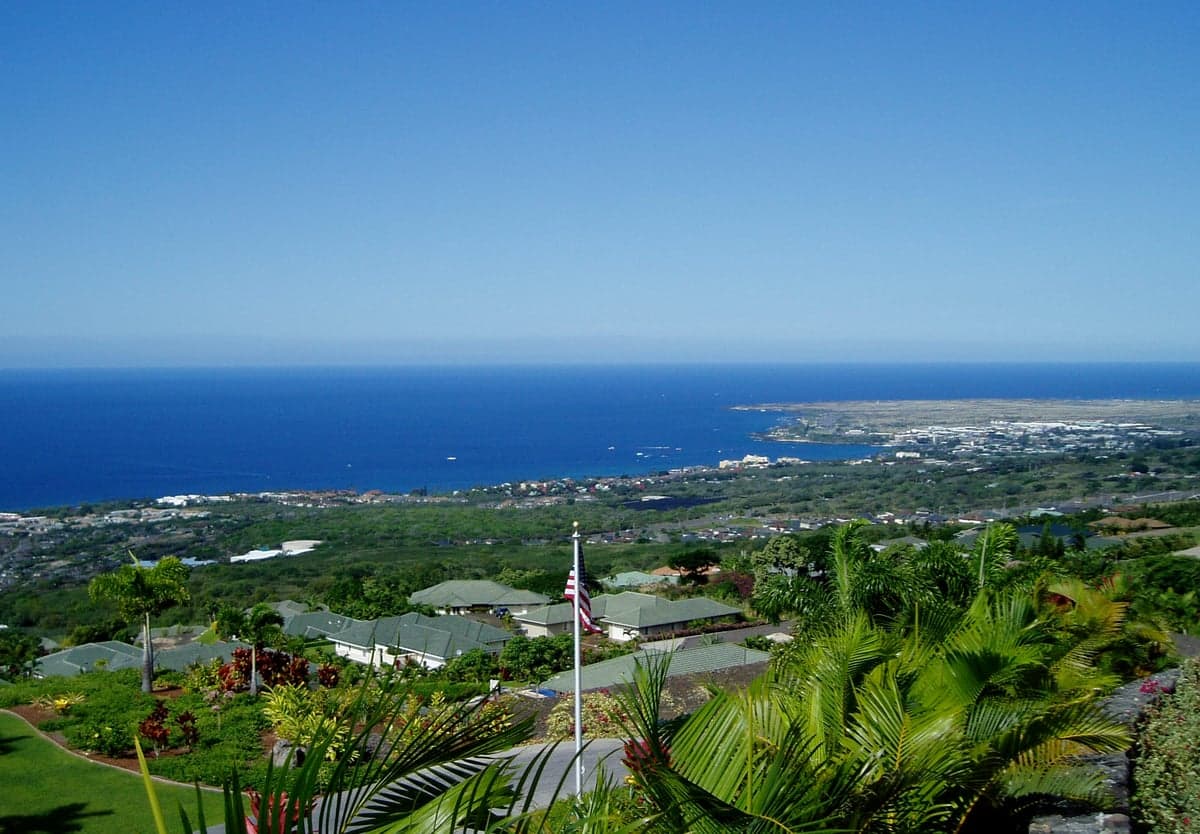
Photo: Wikipedia
Demographics of Kona, HI
Historical data isn't available for Kona, HI. Trends shown are for Hawaii County, HI.
Affluence Level in Kona, HI
An upper-middle-class area. Household wealth, education levels, and homeownership run ahead of national benchmarks.
People of Kona, HI
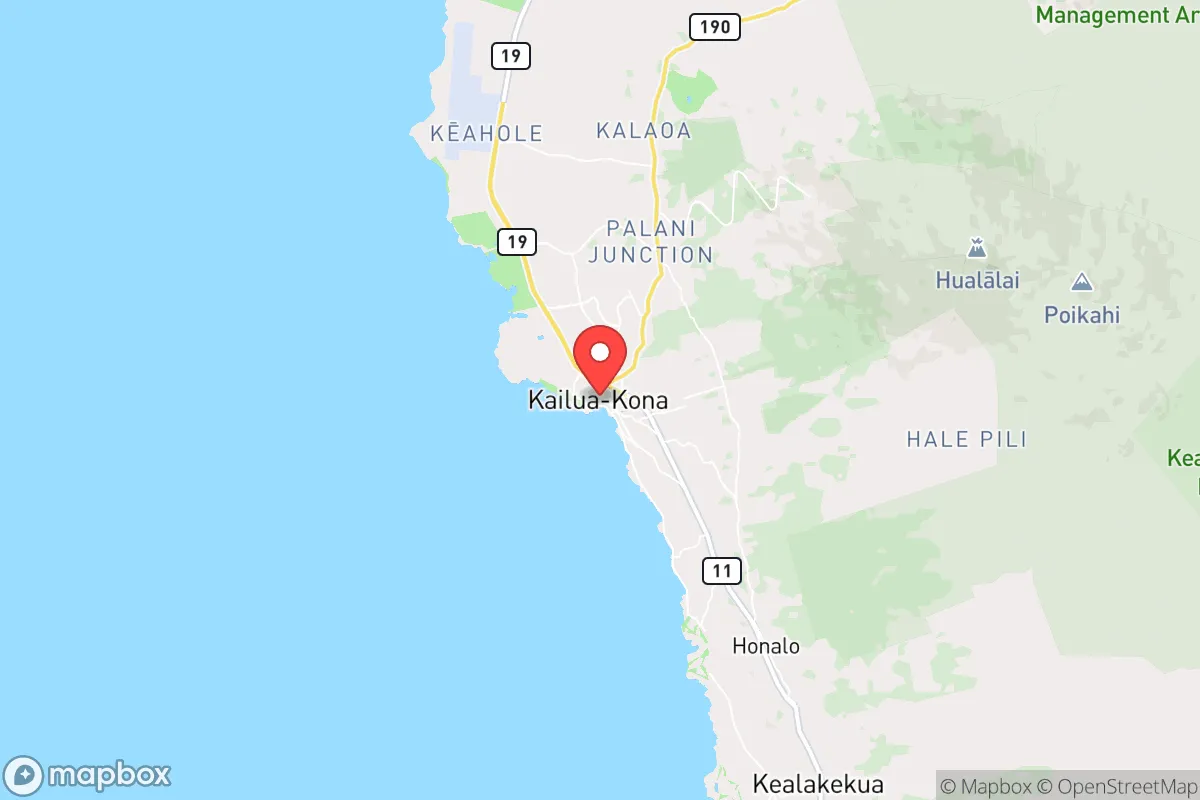
The people of Kona, Hawaii, today number 4,167, forming a community that is distinctly multiethnic yet anchored by a strong Asian and White plurality. The population is 44.1% White, 25.4% East and Southeast Asian, 10.8% Hispanic, and 8.1% foreign-born, with a notably high 31.6% holding a college degree. This is not a transient tourist hub but a settled residential corridor along the Queen Kaʻahumanu Highway, where long-time local families and newer mainland transplants coexist in a landscape defined by lava fields and ocean views. The area’s identity is shaped by a blend of plantation-era heritage, a growing service economy, and a steady influx of professionals seeking a slower pace of life.
How the city was settled and grew
Kona’s modern population history begins not with ancient Hawaiian settlements but with the 19th-century coffee and cattle industries that drew the first major wave of immigrants. The fertile slopes of Hualālai and Mauna Loa, known as the Kona coffee belt, attracted Portuguese, Japanese, and Chinese laborers to work the plantations in the late 1800s. These groups established the foundational ethnic character of neighborhoods like Holualoa, where Japanese coffee farmers built tight-knit communities that still hold annual cultural festivals, and Keauhou, which developed as a ranching and fishing hub. By the early 20th century, Filipino laborers arrived to supplement the workforce, settling in areas like Kailua-Kona’s older coastal strip. The population remained small and agriculturally focused through the 1950s, with the harbor at Kailua-Kona serving as the main commercial artery.
Modern era (post-1965)
The 1965 Immigration and Nationality Act opened the door for a second wave of Asian immigration, particularly from the Philippines and Vietnam, who joined established Japanese and Chinese communities. Simultaneously, the rise of jet tourism and the development of the Kona International Airport in the 1970s transformed the economy from agriculture to hospitality. This drew a new wave of domestic in-migrants—mostly White retirees and entrepreneurs from the U.S. mainland—who settled in master-planned subdivisions like Kona Vistas and Hōkūliʻa. These newer neighborhoods, built on former lava fields south of Kailua-Kona, contrast sharply with the older, denser core. The Hispanic population, now 10.8%, grew primarily through labor migration to the construction and service sectors, with many families settling in the Kona Palisades area. The Asian population remains concentrated in the historic coffee belt and along the highway corridor, while the White population is more dispersed across the newer subdivisions. The 0.2% Black population and negligible Indian subcontinent presence reflect the area’s limited draw for those groups, a pattern common in rural Hawaii.
The future
The population of Kona is projected to become slightly more diverse, though the White share is likely to remain dominant due to continued mainland migration. The foreign-born share, currently 8.1%, may increase modestly as the hospitality and healthcare sectors attract Filipino and Hispanic workers. New residential development is pushing southward into areas like Kealakehe and Kona Paradise, where larger lots and lower prices appeal to families and remote workers. The college-educated share (31.6%) is expected to rise as more professionals relocate for lifestyle reasons, potentially widening the cultural gap between newer arrivals and established local families. The cultural identity is evolving from a plantation-era, multiethnic localism toward a more polarized mix of affluent transplants and working-class service workers, with the Asian and Hispanic communities serving as a stabilizing middle ground. Over the next 10-20 years, Kona will likely become more suburban and less agriculturally rooted, with the coffee belt becoming a heritage tourism zone rather than a working landscape.
For someone moving in now, Kona is a place of contrasts: a small town with a globalized economy, where the old plantation-era social fabric is fraying but not yet gone. The population is becoming more White and college-educated, but the Asian and Hispanic communities remain the backbone of the local workforce and culture. New arrivals should expect a community that values neighborliness but is increasingly divided by income and origin, with the best integration happening in shared spaces like farmers markets and community events. It is a safe, slow-paced environment ideal for families and retirees, but those seeking a truly diverse, urban experience will find it lacking.

* Values derived from national, state, county, city and local statistics and may differ in a specific area. Last updated: 2026-07-29T03:58:55.000Z
Narrative content on this page is AI-generated and may contain mistakes. Verify any details that matter before acting on them.
ReloMaps may earn a commission from affiliate links at no extra cost to you.

