Photo: Wikipedia
Personal Sovereignty in Kotzebue, AK
Viable for self-reliance. Generally workable, though some barriers may limit total independence.
What does Personal Sovereignty tell us?
Personal Sovereignty measures your capacity for self-reliance and independence with minimal government friction. Higher scores mean fewer barriers between you and the way you want to live... but it assumes you have the space you need and good neighbors.
What does this tell us?
Personal Sovereignty measures your capacity for self-reliance and independence with minimal government friction. Higher scores mean fewer barriers between you and the way you want to live... but it assumes you have the space you need and good neighbors.
State Policy
Energy independence: Net exporter (350% of energy produced in-state)
Personal Liberty
Homesteading

Personal Liberty Analysis
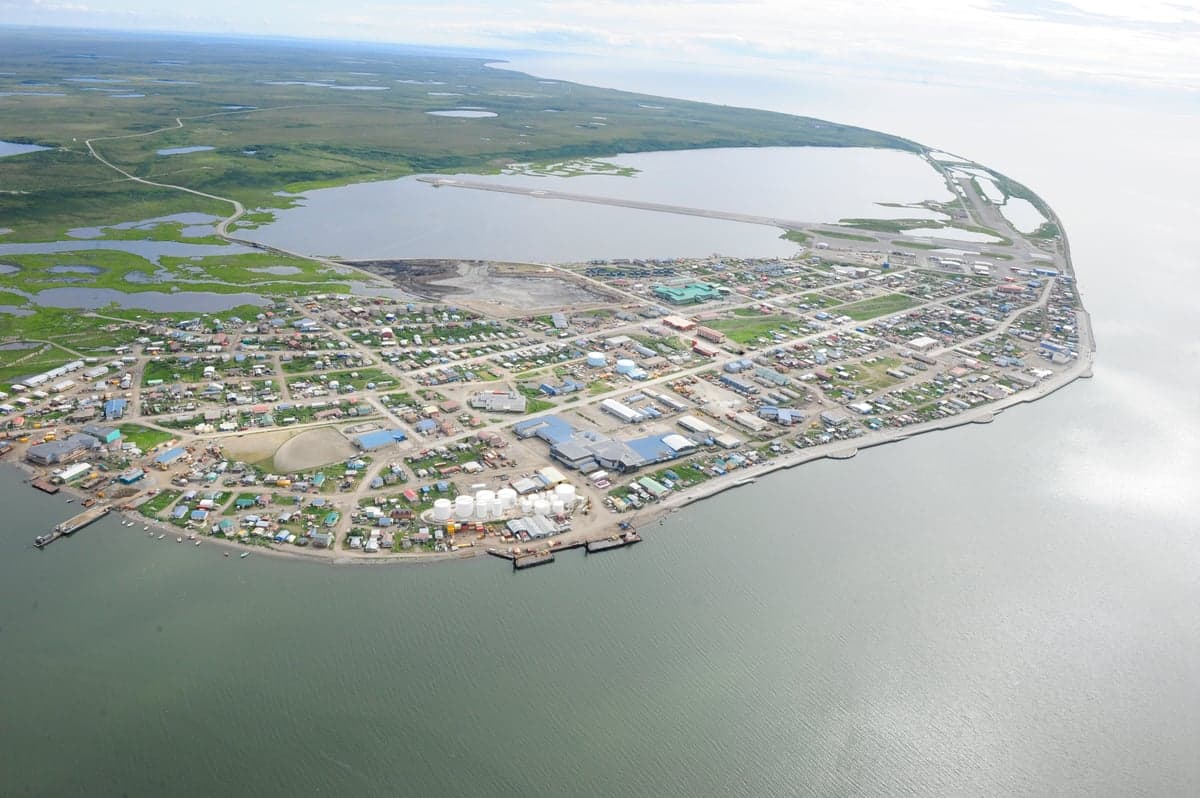
Kotzebue, Alaska, offers a personal sovereignty environment that is markedly different from the Lower 48, but it comes with extreme trade-offs that a survivalist or prepper must weigh carefully. Located 30 miles above the Arctic Circle, this remote Inupiat hub of roughly 3,200 people operates under Alaska’s generally libertarian-leaning state framework, but the practical realities of life here—subsistence dependence, extreme weather, and limited infrastructure—create a unique blend of freedom and constraint. For those seeking to escape government overreach, Kotzebue provides a buffer from many federal and state intrusions, yet it demands a level of self-reliance that few are prepared for. The key question is whether the autonomy gained is worth the isolation and logistical burdens.
Tax burden and regulatory posture in Northwest Arctic
Alaska’s state-level tax posture is among the most favorable in the nation for those seeking to minimize government extraction. There is no state income tax, no state sales tax, and no state property tax—a trifecta that immediately puts Kotzebue ahead of nearly every jurisdiction in the Lower 48. The Northwest Arctic Borough does levy a modest property tax (roughly 10–15 mills on assessed value), but the borough’s tax base is tiny, and most residential properties are exempt or assessed at low values. The state’s Permanent Fund Dividend, which pays residents an annual cash dividend from oil revenues, adds a small but real financial buffer—around $1,600 per person in recent years. However, the regulatory posture here is less about taxes and more about the practical choke points: fuel costs are astronomical (often $6–$8 per gallon for heating oil and gasoline), and the cost of shipping goods via barge or air creates a hidden tax on everything you consume. The state’s regulatory footprint is light compared to the Lower 48—no vehicle emissions testing, minimal building codes outside of safety, and a general hands-off attitude toward land use—but the federal government’s presence looms large through the National Park Service, BLM, and the Alaska National Interest Lands Conservation Act, which restrict development on vast swaths of surrounding land. For a prepper, the tax burden is negligible, but the regulatory posture is a mixed bag: state-level freedom is high, but federal land restrictions and the logistical dependency on external supply chains create vulnerabilities.
Self-defense and gun law specifics in a remote Arctic setting
Alaska is one of the most gun-friendly states in the Union, and Kotzebue reflects that ethos. No permit is required to open or conceal carry a firearm for anyone 21 or older who can legally possess a firearm. There is no state-level firearm registry, no waiting periods, and no magazine capacity restrictions. The state preempts local gun ordinances, so the city of Kotzebue cannot impose its own restrictions—a critical protection against local government overreach. However, the practical realities of self-defense here are shaped by the environment. Bears and moose are the primary threats, not human assailants; violent crime rates in Kotzebue are above the national average (the city reports about 10–12 violent crimes per 1,000 residents annually, driven largely by domestic incidents and alcohol-related disputes), but the remote setting means that a firearm is more likely to be used for subsistence hunting or animal defense than for personal protection against people. The extreme cold (winter temperatures average -10°F to -20°F) requires careful firearm maintenance—lubricants freeze, and metal can become brittle. For a prepper, the legal framework is ideal: you can carry a .44 Magnum revolver or a 12-gauge shotgun without bureaucratic hassle. But the real challenge is ammunition logistics—shipping ammo to Kotzebue is expensive and slow, so stockpiling ahead of time is essential. The nearest gun store with a wide selection is in Fairbanks, a 350-mile flight away.
Self-reliance and homesteading viability in the Arctic
Homesteading in Kotzebue is not for the faint of heart, but for those willing to embrace extreme conditions, the potential for self-reliance is real. Lot sizes in the city proper are small—typically 5,000 to 10,000 square feet—but the surrounding unincorporated areas offer larger parcels, often 1 to 5 acres, with minimal zoning restrictions. The Northwest Arctic Borough has no formal subdivision regulations for rural parcels, so you can essentially build what you want, where you want, as long as you meet basic health and safety codes. Off-grid feasibility is high: there is no municipal water or sewer system in most of Kotzebue—residents rely on hauled water and honey buckets or septic tanks. Solar power is marginal (only 4–5 hours of daylight in December, but 24-hour sun in June), so wind turbines and diesel generators are the primary off-grid power sources. The cost of setting up a self-sufficient homestead is steep—a basic off-grid cabin can run $50,000–$100,000 just for materials, not including labor—but once established, you can hunt, fish, and trap for a significant portion of your food. The Inupiat subsistence culture means that caribou, moose, salmon, and seal are available, but you must navigate state and federal subsistence regulations, which prioritize rural residents for certain species. For a prepper, the key trade-off is that self-reliance here requires a massive upfront investment in infrastructure (fuel storage, water catchment, waste management) and a willingness to accept that some supplies—like medical gear, ammunition, and specialized tools—will always require external sourcing.
Personal liberties in a tight-knit Arctic community
Parental rights in Kotzebue are strong under Alaska law. The state has a robust parental rights statute that allows parents to direct their children’s education, medical care, and religious upbringing without undue government interference. Homeschooling is legal and lightly regulated—you simply file a notice of intent with the local school district and provide an annual assessment. The Northwest Arctic Borough School District, which runs Kotzebue’s public schools, is chronically underfunded and has a graduation rate around 60%, so many conservative parents opt for homeschooling or correspondence programs like the Alaska Virtual School. Medical autonomy is more complicated: Kotzebue has a small hospital (the Maniilaq Health Center) that handles basic care, but for anything serious, you’re medevaced to Anchorage—a $50,000+ flight that insurance may or may not cover. Vaccine mandates and medical overreach are minimal in Alaska compared to states like California or New York, but the remote location means that alternative medicine and holistic care are virtually nonexistent. Speech and property rights are well-protected: Alaska’s constitution has strong protections for free expression, and property rights are enshrined in state law, with no statewide rent control or land-use planning that would infringe on private ownership. However, the social pressure in a small, tight-knit community can be intense—everyone knows everyone, and conformity to local norms (especially around subsistence practices and alcohol use) is expected. For a prepper seeking to live quietly and keep to themselves, Kotzebue’s isolation is a double-edged sword: you have legal freedom, but social scrutiny is unavoidable.
Overall, Kotzebue offers a level of personal sovereignty that is rare in the modern United States—no income tax, minimal gun restrictions, and the ability to live off-grid with little government interference—but it demands a level of self-sufficiency that most survivalists underestimate. Compared to the Lower 48, where property taxes, zoning laws, and firearm restrictions are tightening, Kotzebue feels like a libertarian frontier. But compared to other remote Alaska towns like Fairbanks or Homer, Kotzebue is more extreme in its isolation and logistical costs. For a single individual or family willing to embrace the Arctic’s harshness, this is one of the last places in America where you can truly be left alone—but only if you can survive the cold, the cost, and the loneliness. The sovereignty is real, but it’s earned through grit, not granted by government.

* Values derived from national, state, county, city and local statistics and may differ in a specific area. Last updated: 2026-04-19T09:46:56.000Z
Narrative content on this page is AI-generated and may contain mistakes. Verify any details that matter before acting on them.
ReloMaps may earn a commission from affiliate links at no extra cost to you.

