Photo: Wikipedia
Demographics of La Plata, MD
Affluence Level in La Plata, MD
An upper-middle-class area. Household wealth, education levels, and homeownership run ahead of national benchmarks.
People of La Plata, MD
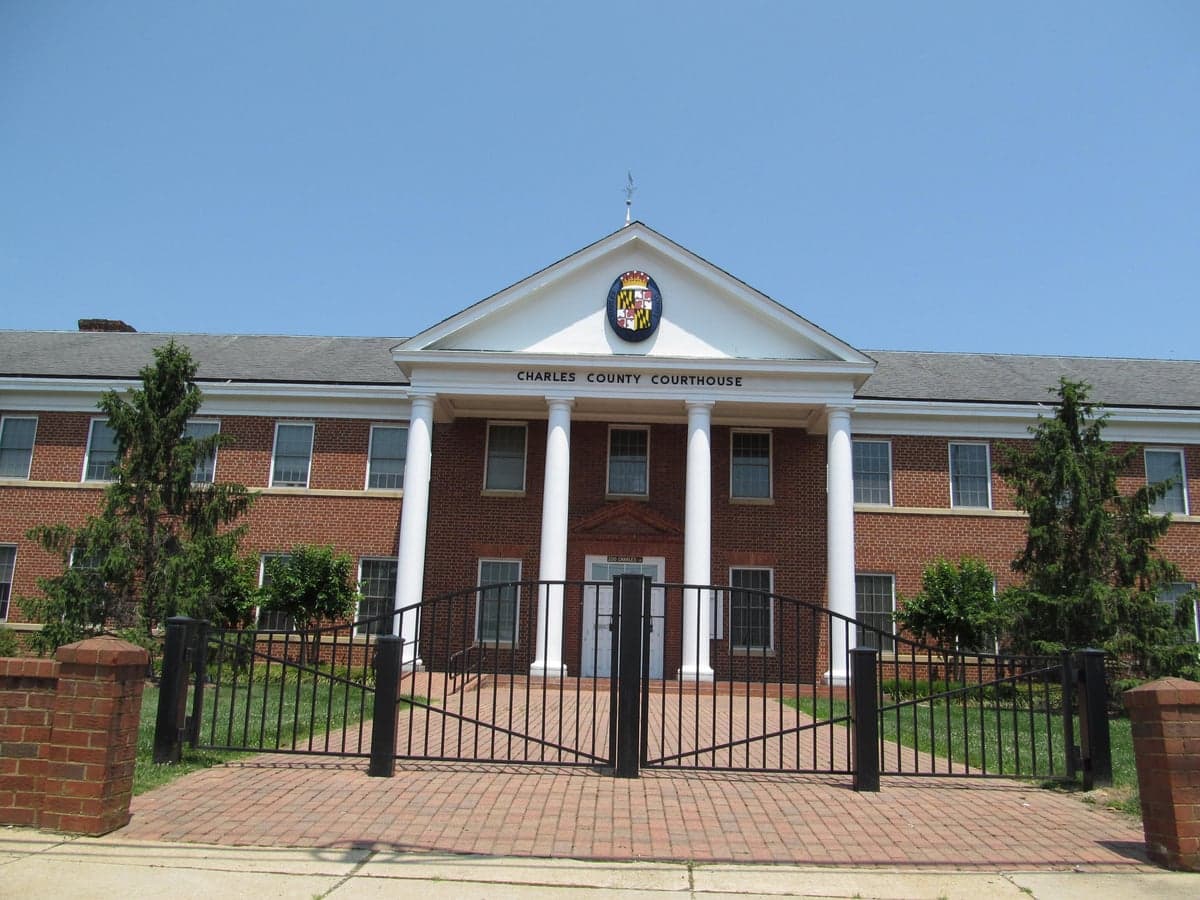
La Plata, Maryland, is a town of roughly 10,470 residents with a distinctly biracial character—47.2% White and 34.1% Black—alongside a small but growing Hispanic population (6.8%) and modest East/Southeast Asian (2.2%) and Indian-subcontinent (1.6%) communities. The foreign-born share sits at just 4.5%, well below the national average, reflecting a population shaped more by domestic migration than international immigration. With 33.9% of adults holding a college degree, La Plata leans middle-class and professional, anchored by county government, healthcare, and retail employment. The town’s identity is rooted in its role as the Charles County seat, blending small-town Southern Maryland character with the commuter-shed pressures of the Washington, D.C. metro area.
How the city was settled and grew
La Plata’s human history begins not with colonial settlement but with a railroad decision. Founded in 1872 as a stop on the Baltimore and Potomac Railroad, the town was deliberately sited away from the old colonial port of Port Tobacco, which had silted in and declined. The railroad drew a mix of Anglo-American farmers, merchants, and tradesmen, many from surrounding Charles County, who built the early commercial core along Charles Street and Washington Avenue. The original residential neighborhoods—Old Town La Plata around the railroad depot and Port Tobacco Village to the east—housed these founding families, predominantly White and Protestant. A small Black population, descended from enslaved families on former tobacco plantations, lived in the Burch Avenue area and the rural fringe, working as laborers and domestic servants. The town grew slowly through the early 1900s, serving as a market center for tobacco and dairy farms, with no major immigrant wave until the mid-20th century.
Modern era (post-1965)
The post-1965 era transformed La Plata from a sleepy county seat into a Washington exurb. The 1965 Immigration and Nationality Act had little direct effect here—the foreign-born share remains low—but the domestic migration of Black families from Washington, D.C. and Prince George’s County reshaped the town. From the 1970s through the 1990s, middle-class Black professionals moved into subdivisions like St. Charles (a large planned community straddling the county line) and Hawthorne, drawn by affordable housing, good schools, and proximity to federal jobs. The White population, meanwhile, shifted toward newer developments on the town’s western edge, such as Westbury and Village Green, creating a de facto east-west racial geography. The Hispanic population began appearing in the 2000s, concentrated in rental units near Route 6 and the La Plata Business Park, working in construction, landscaping, and food service. East/Southeast Asian and Indian-subcontinent residents arrived even later, typically as professionals in healthcare and IT, settling in the newer subdivisions like Brentwood Estates without forming distinct ethnic enclaves. The 2010s saw modest growth in the Hispanic share (from about 4% to 6.8%) and a slight decline in the White share as the Black population stabilized.
The future
La Plata’s demographic future points toward gradual diversification rather than rapid change. The Hispanic population is likely to continue growing slowly, driven by family reunification and service-sector jobs, but will remain a minority within a minority. The East/Southeast Asian and Indian-subcontinent communities are expected to grow incrementally as the D.C. region’s tech and defense sectors push farther south, but they will likely assimilate into existing neighborhoods rather than forming new ethnic enclaves. The Black population, now over a third of the town, appears stable—neither declining through out-migration nor surging through new arrivals. The White population, while still the largest single group, is aging and may shrink slightly as younger White families opt for farther exurbs like Waldorf or Hughesville. The town is not tribalizing into distinct enclaves; rather, it is becoming a moderately diverse, middle-class suburb where race and ethnicity matter less than income and school district. The biggest wildcard is housing supply—if La Plata builds more affordable units, it could attract younger, more diverse families; if it remains built out and expensive, it will slowly homogenize by income.
For someone moving to La Plata now, the town offers a stable, family-oriented environment with a genuine biracial character and small but growing Hispanic and Asian communities. It is not a melting pot in the classic sense—foreign-born residents are few—but it is a place where Black and White families have lived side by side for decades, and where newer groups are integrating without friction. The trajectory is toward a more diverse, more educated, and slightly more suburban future, with the county seat’s small-town feel gradually giving way to commuter pragmatism.

* Values derived from national, state, county, city and local statistics and may differ in a specific area. Last updated: 2026-04-22T01:05:53.000Z
Narrative content on this page is AI-generated and may contain mistakes. Verify any details that matter before acting on them.
ReloMaps may earn a commission from affiliate links at no extra cost to you.

