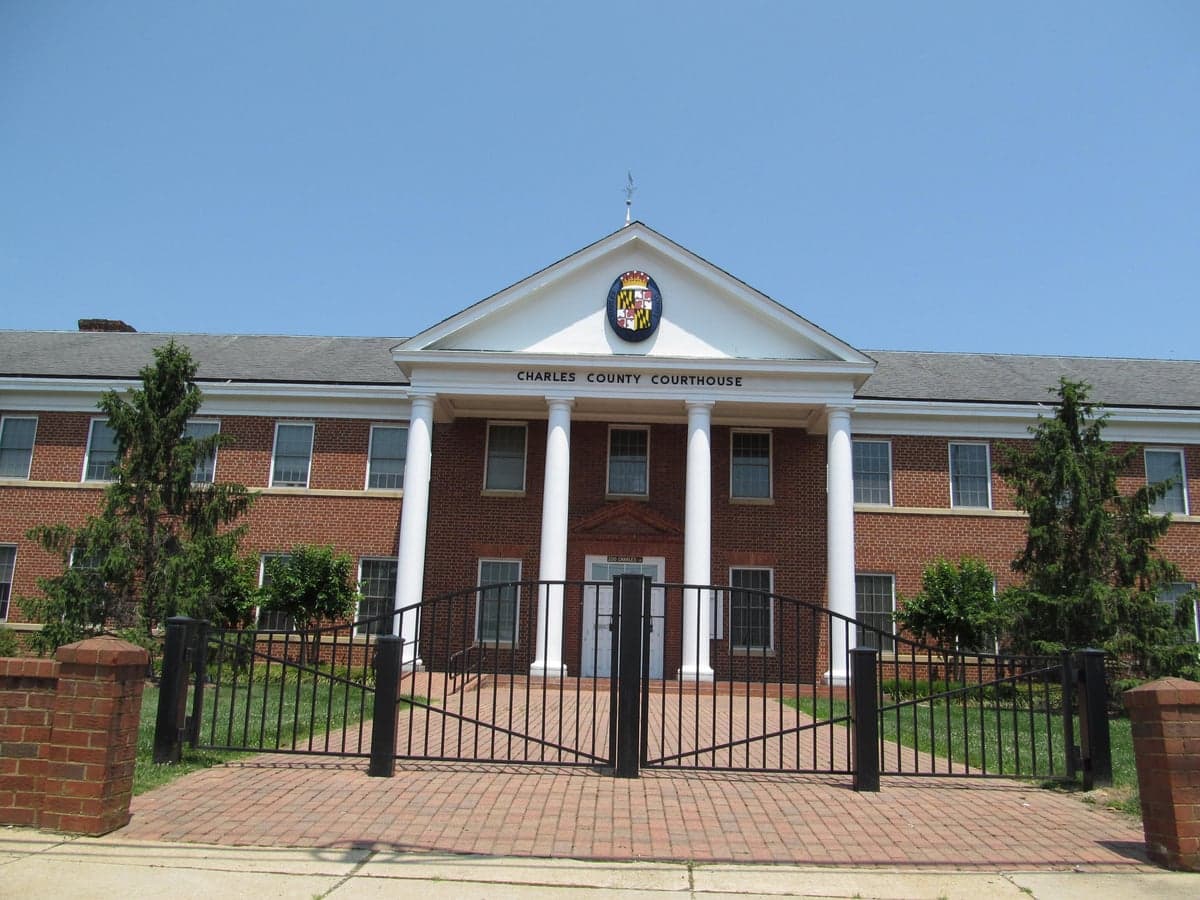
Photo: Wikipedia
Political ClimatePolitical Climate in La Plata, MD
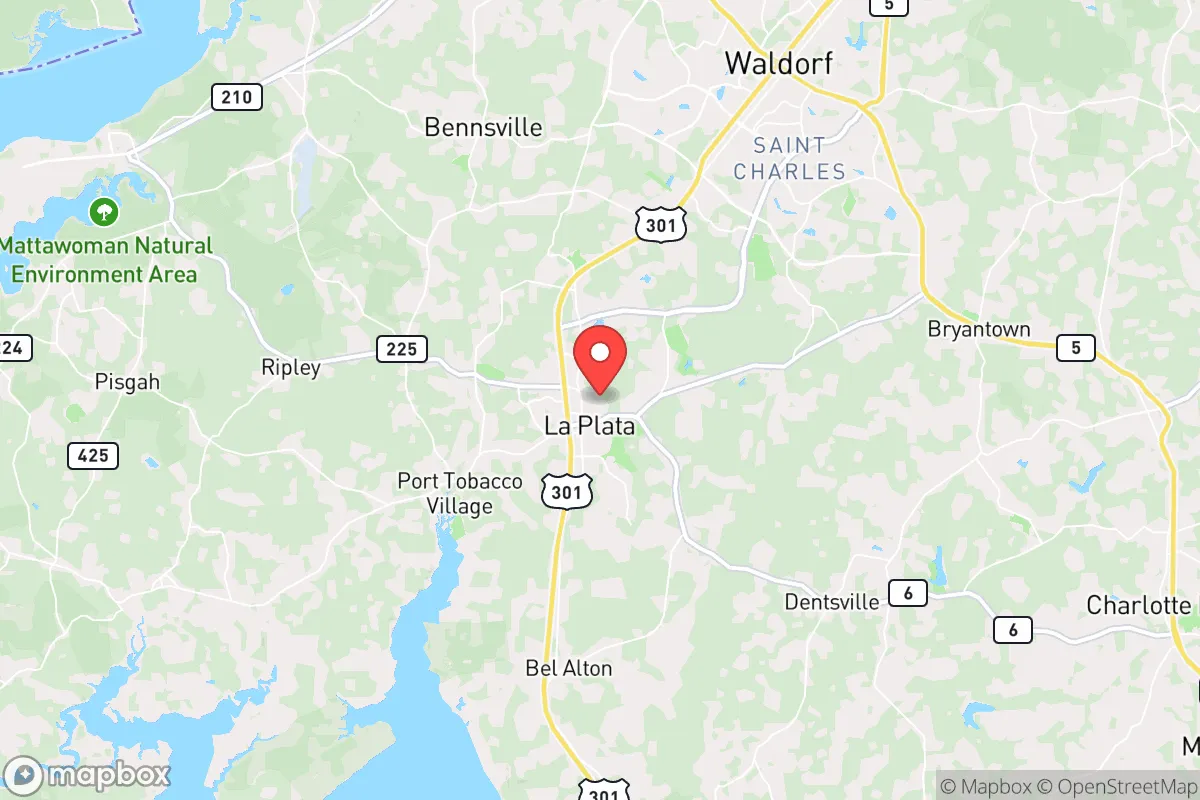
District shown is the primary district for this city’s centroid. Cities may span multiple districts.
Local Political AnalysisPolitical Analysis of La Plata, MD
Look, I’ve lived in La Plata for over twenty years, and I’ve watched this town shift from a quiet, conservative-leaning crossroads into something that feels a lot more like a D.C. suburb every election cycle. The Cook PVI here is D+17, which tells you straight up that Charles County leans heavily Democratic. That wasn’t always the case—back in the ’90s, you could still have a reasonable conversation about limited government at the local diner without someone calling you a relic. Now, the political energy is firmly blue, and the trajectory is only getting more progressive with each wave of new residents fleeing higher taxes and congestion up in Prince George’s and Montgomery counties, ironically bringing those same big-government habits with them.
How it compares
If you drive ten miles west into Waldorf, you’ll find a similar story—D+15 or so, same county, same voting patterns. But head south just twenty minutes to St. Mary’s County, places like Leonardtown or California, and the air changes. Those areas are reliably red, with a Cook PVI around R+12. It’s a stark contrast: one county where the school board is debating critical race theory and gender ideology curricula, and another where the biggest local fight is about zoning for a new shooting range. Even closer, the town of Indian Head, just east of La Plata, has gone deep blue with its federal workforce transplants, while rural spots like Nanjemoy still hold onto a more independent, leave-us-alone streak. The divide isn’t just partisan—it’s cultural. La Plata sits right on that fault line, and the pressure from the north is relentless.
What this means for residents
For those of us who value personal freedoms and local control, the shift is concerning. You see it in the county’s push for stricter land-use regulations, higher property taxes to fund programs you didn’t ask for, and a school system that seems more interested in social engineering than teaching kids to read and do math. The county government has gotten comfortable with mandates—mask requirements that lingered longer than necessary, vaccine passports for county employees, and a general attitude that the state knows better than you do about your own life. If you’re a small business owner or a parent who wants to raise your kids without government overreach, you feel the squeeze. The silver lining is that local elections still matter here; turnout is high, and a motivated minority can sometimes slow the progressive freight train. But long-term, unless the demographic tide reverses, La Plata is going to keep drifting left.
Culturally, La Plata still has some of its old Southern Maryland charm—the firehouse parade, the county fair, the volunteer fire departments that actually run on community spirit. But the policy distinctions are growing sharper. The county has embraced sanctuary policies that limit cooperation with federal immigration enforcement, and the local government has been aggressive in pushing green energy mandates that drive up utility costs for homeowners. If you’re looking for a place where the government stays out of your wallet and your family decisions, you might want to look further south or west. La Plata is a nice town with good people, but the political winds are blowing hard in one direction, and it’s not the direction of limited government or personal liberty.

State Political ClimatePolitical Climate in Maryland
State Political AnalysisPolitical Environment in the State
Maryland has long been a deep blue state, but the reality on the ground is far more complicated than the statewide numbers suggest. The Democratic Party holds a supermajority in the legislature and has won every presidential election here since 1992, but that dominance is almost entirely driven by the Washington, D.C. suburbs and Baltimore City. Outside of those two population centers, much of the state votes reliably Republican, and the gap between the two Marylands has only widened over the past 20 years. If you’re considering a move here, you need to understand that your experience of the state’s politics will depend almost entirely on which county you land in.
Urban vs. rural divide
The political map of Maryland is a textbook case of urban-rural polarization. The Democratic strongholds are Montgomery County and Prince George’s County—both D.C. suburbs that together cast more than a third of the state’s votes. In 2024, Montgomery County went +52 for the Democratic presidential candidate, while Prince George’s was +68. Baltimore City is even more lopsided, delivering a +70 margin. These three jurisdictions alone are enough to swing the entire state blue. Meanwhile, the rest of Maryland is a sea of red. The Eastern Shore counties—like Wicomico, Talbot, and Queen Anne’s—vote Republican by comfortable margins. Western Maryland, including Garrett County and Allegany County, is deeply conservative, with Garrett going +45 for the GOP in 2024. Even the exurbs of D.C. and Baltimore are shifting right: Carroll County and Harford County have become reliably Republican, and Frederick County, once a swing area, has trended red in recent cycles. The divide isn’t just about party labels—it’s about culture, economics, and daily life. A resident of Deep Creek Lake in Garrett County lives in a completely different political universe from someone in Bethesda.
Policy environment
Maryland’s policy environment is shaped by the Democratic supermajority in Annapolis, and the results are a mixed bag for conservatives. The state has a progressive income tax structure with rates up to 5.75%, plus a county-level piggyback tax that can push the effective rate over 8% in places like Montgomery County. Property taxes are also high, especially in the D.C. suburbs. On the regulatory side, Maryland has some of the strictest environmental rules in the country, including a ban on fracking and aggressive renewable energy mandates. Education policy is a flashpoint: the state’s Blueprint for Maryland’s Future law pours billions into public schools but has also centralized control in Annapolis, reducing local school board autonomy. On election law, Maryland has no-excuse mail-in voting and same-day registration, which conservatives argue weakens ballot integrity. The state also has some of the nation’s strictest gun laws, including a ban on assault weapons and a handgun permit system that requires a “good and substantial reason” to carry—a standard that was loosened after the Bruen Supreme Court decision but remains burdensome. For a conservative, the policy environment feels like a slow but steady expansion of government reach into daily life.
Trajectory & freedom
Over the past decade, Maryland has become noticeably less free in several key areas. The most significant contraction has been in Second Amendment rights. In 2023, the legislature passed the Gun Safety Act, which banned firearms in most public places, including parks, libraries, and hospitals, and required a permit for any carry in those spaces. This law was partially blocked by a federal court, but the fight continues. On medical freedom, Maryland was an early adopter of COVID-19 vaccine mandates for state employees and school staff, and those mandates remain in place for many public-facing roles. Parental rights have taken a hit as well: the state passed a law in 2024 that allows minors as young as 12 to receive certain mental health and reproductive health services without parental consent. Property rights are also under pressure, with the state’s Department of the Environment aggressively enforcing stormwater management regulations that can add tens of thousands of dollars to the cost of building a home. On the positive side for conservatives, Maryland has not adopted a statewide rent control law, and there is no state income tax on Social Security benefits. But the overall trajectory is toward more regulation, more mandates, and less individual autonomy.
Civil unrest & political movements
Maryland has seen its share of political flashpoints. The 2015 Baltimore riots following the death of Freddie Gray were a national story, and the city still struggles with high crime and strained police-community relations. More recently, the state has been a battleground over immigration policy. Montgomery County and Prince George’s County are sanctuary jurisdictions, meaning local law enforcement does not cooperate with federal immigration authorities. This has led to tensions with the state government, which has tried to limit local sanctuary policies. On the right, there is a growing movement of county-level resistance to state mandates. In 2023, several rural counties passed resolutions declaring themselves “Second Amendment sanctuaries,” and there have been ongoing fights over school board control, with conservative parents organizing against critical race theory and LGBTQ curriculum in places like Frederick County and Carroll County. Election integrity remains a hot-button issue: Maryland’s vote-by-mail system, expanded during COVID, was made permanent in 2021, and conservative groups have raised concerns about ballot harvesting and voter roll maintenance. These are not abstract debates—they play out in local news, school board meetings, and county council chambers every week.
Projection
Looking ahead five to ten years, Maryland is likely to become even more polarized. The D.C. suburbs continue to grow, driven by federal employment and tech jobs, which will reinforce the Democratic majority. At the same time, rural and exurban counties are seeing an influx of conservatives from more expensive states like Virginia and New Jersey, which could make places like Frederick County and Harford County even redder. The net effect is a state that is increasingly split between two incompatible political cultures. For a conservative moving in now, the realistic expectation is that state-level policy will continue to lean left, but local control in red counties will offer some buffer. The key battlegrounds will be school boards, county commissions, and the state legislature’s redistricting process, which is likely to remain heavily gerrymandered in favor of Democrats. If you’re looking for a state where your vote will matter in presidential elections, Maryland is not that place. But if you want a community where conservative values are the norm and you’re willing to fight for local control, there are pockets of Maryland that still feel like home.
For a new resident, the bottom line is this: Maryland offers a high quality of life in many areas, but it comes with a political price tag. If you settle in a red county like Carroll or Garrett, you’ll find like-minded neighbors and a local government that pushes back against Annapolis. If you land in Montgomery or Prince George’s, you’ll be living in a deep blue environment where progressive policies are the baseline. The state’s tax burden, regulatory climate, and erosion of personal freedoms are real concerns, but they are not uniform across the map. Do your homework on the county level, and you can find a place that fits your values—just don’t expect the state government to have your back.
* Values derived from national, state, county, city and local statistics and may differ in a specific area. Last updated: 2026-04-22T01:05:53.000Z
Narrative content on this page is AI-generated and may contain mistakes. Verify any details that matter before acting on them.
ReloMaps may earn a commission from affiliate links at no extra cost to you.

