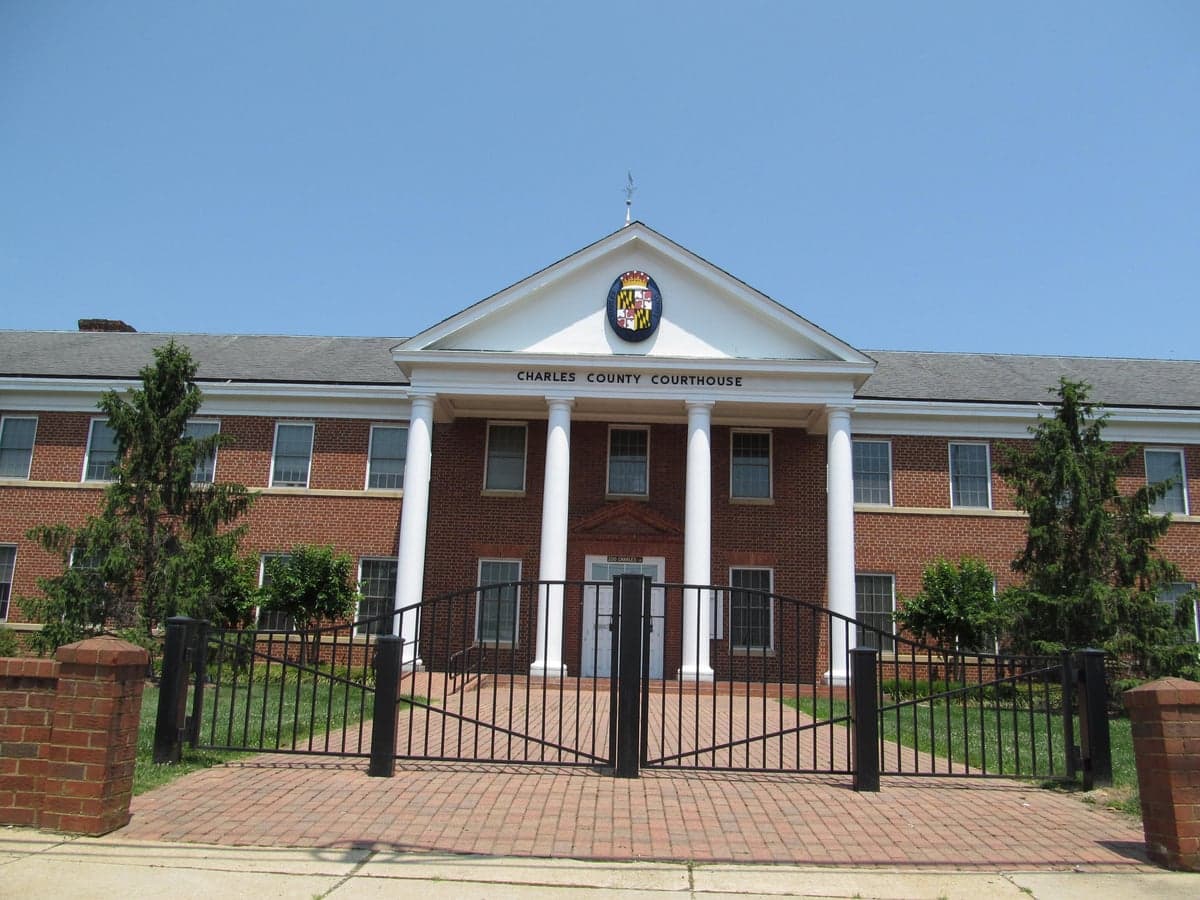
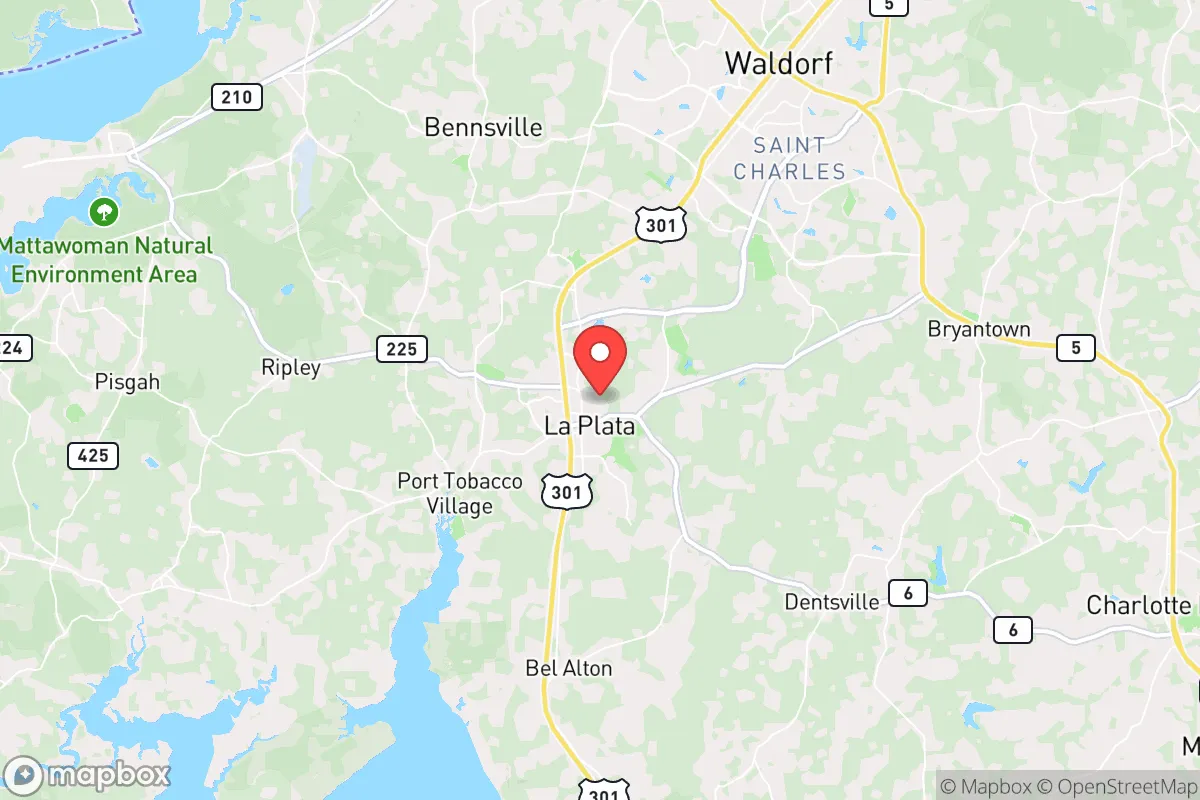
Photo: Wikipedia
Personal Sovereignty in La Plata, MD
Viable for self-reliance. Generally workable, though some barriers may limit total independence.
What does Personal Sovereignty tell us?
Personal Sovereignty measures your capacity for self-reliance and independence with minimal government friction. Higher scores mean fewer barriers between you and the way you want to live... but it assumes you have the space you need and good neighbors.
What does this tell us?
Personal Sovereignty measures your capacity for self-reliance and independence with minimal government friction. Higher scores mean fewer barriers between you and the way you want to live... but it assumes you have the space you need and good neighbors.
State Policy
Energy independence: Importer (8% of energy produced in-state)
Personal Liberty
Homesteading

Personal Liberty Analysis
For a relocation researcher evaluating personal sovereignty in La Plata, Maryland, the environment presents a complex trade-off: the town itself offers a semi-rural, community-oriented atmosphere with some room for self-reliance, but it sits squarely within a state government that has aggressively expanded its reach into personal freedoms, particularly around firearms, medical autonomy, and property rights. While the local culture in Charles County leans more moderate than the state's urban core, the legal framework imposed from Annapolis creates a ceiling on how much true sovereignty a resident can exercise. This analysis is for those who view government overreach as a primary threat to liberty and who prioritize the ability to live, defend, and provide for themselves without bureaucratic interference.
Tax burden and regulatory posture in a high-tax state
Maryland's overall tax burden is among the highest in the nation, and La Plata residents feel this directly. The state imposes a progressive income tax with rates up to 5.75%, and Charles County adds a local income tax of 3.03%, bringing the combined top marginal rate to roughly 8.78%. Property taxes are also significant: the county's rate is approximately $1.14 per $100 of assessed value, and while La Plata town itself adds a small municipal tax, the combined burden is notably higher than in neighboring Virginia or West Virginia. Sales tax is 6%, with no local option to increase it. For a prepper or self-reliant individual, this high tax environment means less disposable income for stockpiling supplies, land improvements, or investing in off-grid infrastructure. The regulatory posture is equally burdensome: Maryland has strict environmental regulations, including the Chesapeake Bay Critical Area law, which restricts development and land use within 1,000 feet of tidal waters and their tributaries. This can limit what you can build, clear, or modify on your property, especially if you're near a stream or wetland. The state also has a notoriously complex permitting process for any construction, well drilling, or septic system work, which can delay or frustrate homesteading projects. For someone seeking maximum autonomy, the tax and regulatory climate here is a significant negative.
Self-defense and gun law specifics under state preemption
This is the most critical sovereignty issue for a survivalist or prepper audience. Maryland is one of the most restrictive states in the country for gun owners, and La Plata residents are subject to all state-level limitations. The state requires a Handgun Qualification License (HQL) to purchase a handgun, which involves a training course, fingerprinting, and a background check. The process takes weeks and costs over $100. "Shall-issue" concealed carry is now the law after the Supreme Court's Bruen decision, but the application process is still onerous, requiring an 8-hour training class and a $75 fee. More concerning for preppers: Maryland has a ban on "assault weapons" and high-capacity magazines (over 10 rounds for long guns, over 10 for handguns purchased after 2013). This means you cannot legally own an AR-15 or similar semi-automatic rifle in the configuration commonly used for home defense or preparedness. The state also has a "red flag" law allowing for the temporary seizure of firearms without a criminal conviction, and a background check requirement for all private firearm transfers, including between family members. While Charles County's sheriff's office is generally more supportive of Second Amendment rights than in Montgomery or Prince George's counties, the state law is the binding constraint. For anyone serious about self-defense and the ability to resist government overreach, this legal framework is a major liability. You can own firearms, but the types, capacities, and ease of access are severely curtailed.
Self-reliance and homesteading viability: lot sizes and off-grid feasibility
La Plata offers a mixed picture for homesteading. The town itself has standard suburban lots of a quarter-acre to half-acre, which are too small for serious self-sufficiency. However, the surrounding Charles County areas, particularly south and east of town toward the Potomac River, have larger parcels. Zoning in the county's Agricultural Conservation (AC) district allows for lots as small as 5 acres, but the real opportunity is in the Rural Residential (RR) zone, where lots can be 1 to 3 acres. For a serious homesteader, you need to look at the AC zone or the more rural areas near Hughesville or Charlotte Hall, where 10- to 20-acre parcels are still available. Off-grid feasibility is limited by state and county codes. Maryland requires all new dwellings to be connected to the electrical grid if it is available within 500 feet, which it often is. Solar panels are allowed but must be grid-tied unless you get a special exemption, which is rare. Rainwater collection is legal but restricted: you can collect up to 5,000 gallons for non-potable uses like irrigation, but using it for drinking requires a permit and testing. Composting toilets are allowed with a state-approved system, but the permitting process is lengthy. Raising livestock is permitted on parcels of 2 acres or more in the AC zone, but chickens, goats, and bees are allowed on smaller lots with county approval. The bottom line: true off-grid, self-sufficient living is very difficult to achieve legally in La Plata. The state's building codes, health regulations, and utility requirements create a web of compliance that undermines the goal of complete self-reliance. You can have a large garden and some animals, but you will remain tethered to the grid and the county's regulatory system.
Personal liberties: parental rights, medical autonomy, speech, and property
On parental rights, Maryland has moved in a direction that concerns many conservatives. The state has a "Safe to Learn" act that mandates certain LGBTQ-inclusive curriculum in public schools, and there is no broad parental opt-out for specific lessons. Parents can request their child be excused from instruction that conflicts with their religious beliefs, but the process is not automatic and requires a formal written request each time. Medical autonomy is also constrained: Maryland has a strict vaccine mandate for school attendance, with only narrow medical exemptions (no religious or philosophical exemptions). During the COVID-19 pandemic, the state imposed broad mask and vaccine mandates that were enforced by the health department. For a prepper concerned about future public health overreach, this precedent is troubling. Free speech is protected under the First Amendment, but Maryland has a "hate speech" law that can be used to prosecute certain types of speech deemed to incite violence or harassment. Property rights are the most concerning area. Maryland has a strong "eminent domain" authority, and the state has used it for economic development projects, including the expansion of the National Harbor area. More immediately relevant: the state's "Critical Area" law and the Chesapeake Bay Preservation Act give the government broad authority to restrict what you can do with your land, including clearing trees, building fences, or installing a driveway, if it is within a designated buffer zone. This can feel like a direct infringement on your ability to use your property as you see fit. For someone who values the right to control their own land, body, and children's education, Maryland's legal environment is restrictive.
Overall, La Plata offers a better personal sovereignty environment than the state's urban core, but it is still a poor choice compared to states like West Virginia, Tennessee, or Texas. The tax burden is high, gun laws are among the most restrictive in the nation, off-grid living is legally difficult, and parental and property rights are constrained by state-level mandates. For a survivalist or prepper who prioritizes maximum autonomy and minimal government interference, La Plata is a compromise location at best. It provides a decent community and proximity to the D.C. area, but the legal and regulatory framework from Annapolis creates a ceiling on true sovereignty that cannot be ignored. If your primary goal is to live free from government overreach, you would be better served looking further south or west.

* Values derived from national, state, county, city and local statistics and may differ in a specific area. Last updated: 2026-04-22T01:05:53.000Z
Narrative content on this page is AI-generated and may contain mistakes. Verify any details that matter before acting on them.
ReloMaps may earn a commission from affiliate links at no extra cost to you.

