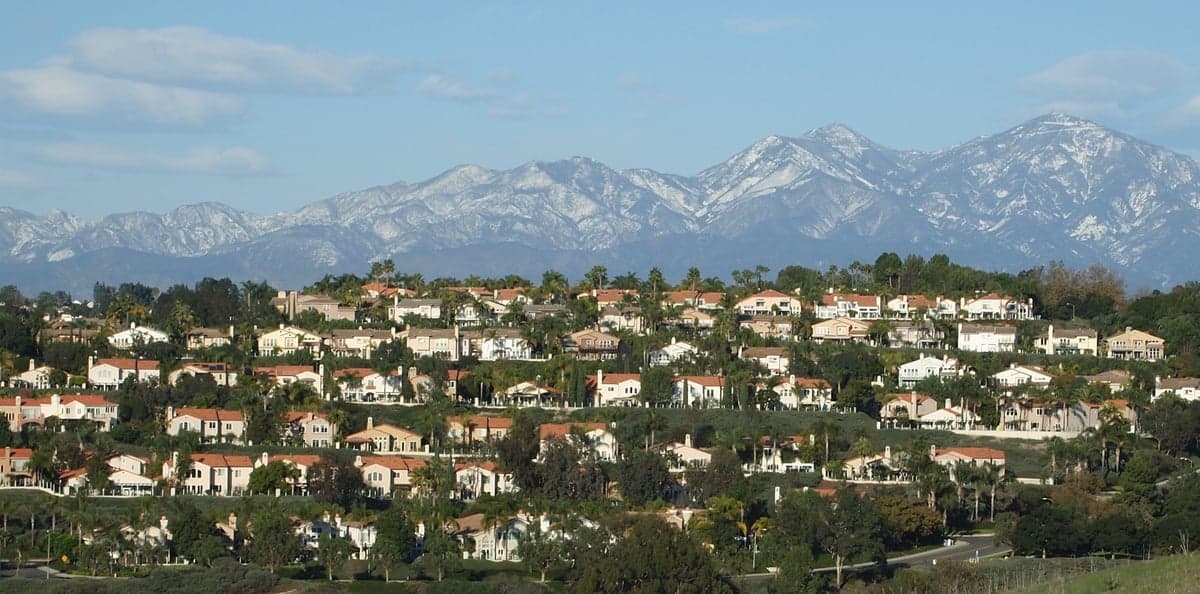
Photo: Wikipedia
Political ClimatePolitical Climate in Laguna Niguel, CA
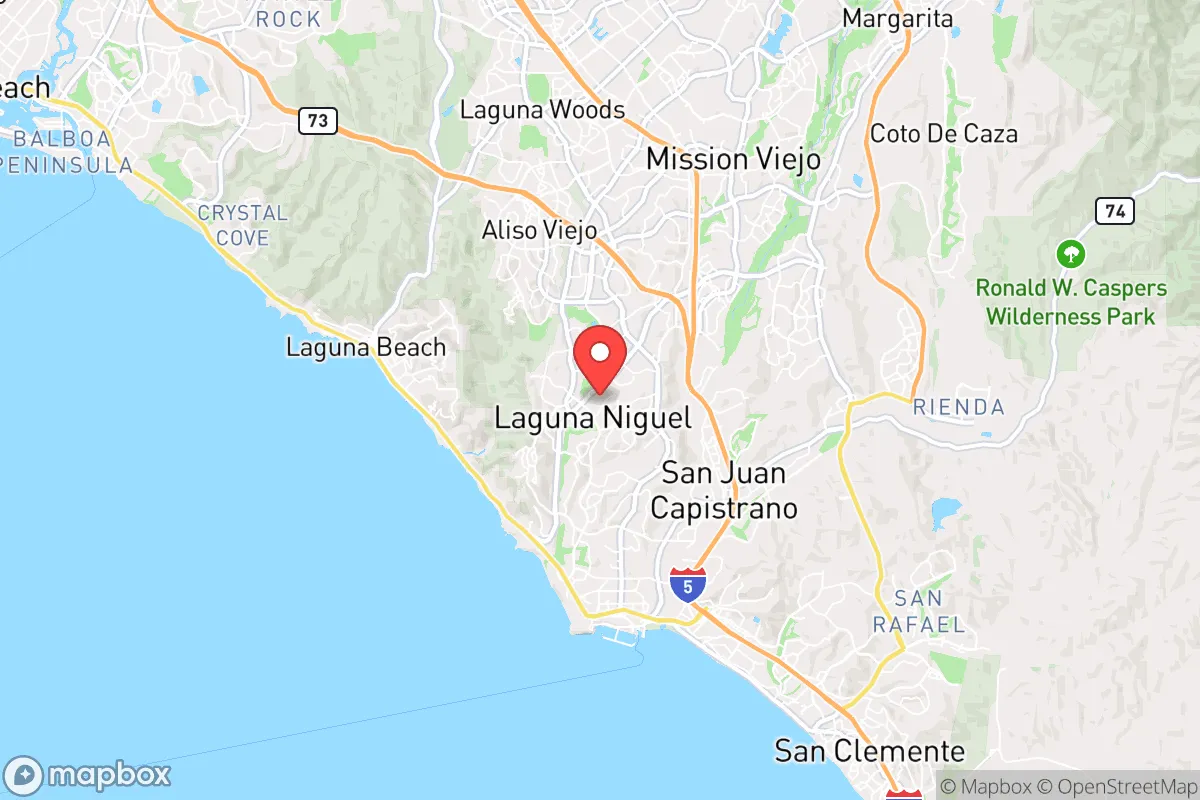
District shown is the primary district for this city’s centroid. Cities may span multiple districts.
Local Political AnalysisPolitical Analysis of Laguna Niguel, CA
Laguna Niguel leans to the left, but it’s not the kind of deep-blue lock you see in much of coastal Orange County. The city’s Cook Partisan Voting Index (PVI) of D+4 means it’s about 8 points more conservative than California as a whole, which sits at D+12. That gap has narrowed over the past decade as the area has shifted leftward, but it still feels noticeably more moderate than places like Irvine or Santa Ana. If you’ve lived here a while, you’ve watched the old Reagan Republican stronghold slowly give way to a younger, more diverse electorate—though the change hasn’t been as dramatic as in nearby San Juan Capistrano or Dana Point, which have also trended blue but at a slower clip.
How it compares
Compared to the state average, Laguna Niguel is a political outlier. California’s D+12 PVI reflects a solidly Democratic electorate, driven by the Bay Area, Los Angeles, and the Central Valley’s growing Latino population. In contrast, Laguna Niguel sits in Orange County’s “South County” region, which historically voted Republican but has been drifting left since the 2010s. The city’s D+4 rating puts it in the same ballpark as nearby Mission Viejo (D+3) and Aliso Viejo (D+5), but it’s still more conservative than the county seat of Santa Ana (D+18) or the coastal enclave of Newport Beach (D+2). The real contrast is with inland cities like Lake Forest (D+1) or Rancho Santa Margarita (R+2), which lean slightly right—showing how the political spectrum tightens as you move away from the coast. In practice, this means Laguna Niguel’s elections are competitive: in 2024, the city voted for Kamala Harris by a margin closer to 52-45, while California overall went 58-40 for her.
What this means for residents
For conservative residents, Laguna Niguel offers a rare pocket of political balance in a state that often feels hostile. You’ll find plenty of neighbors who share your views, especially in the older neighborhoods near the golf courses or along Crown Valley Parkway. Local city council races tend to be nonpartisan but often split along moderate vs. conservative lines, meaning your vote actually matters—unlike in deep-blue districts where primaries decide everything. For liberal residents, the city is comfortable but not a bubble. You’ll encounter regular debates at community meetings about housing density, school funding, and environmental policy, but the tone is generally civil. The real friction comes on state-level issues: property tax reform (Prop 13 debates), gas car bans, and homelessness policy often divide residents along predictable lines. Both sides can find their people here, but you’ll also have to get used to hearing the other side out over backyard barbecues.
Culturally, Laguna Niguel’s political climate shapes daily life in subtle ways. The city’s parks and trails are well-funded, reflecting a local consensus on quality-of-life spending, but you won’t see the same aggressive progressive policies on housing or policing that define Los Angeles or San Francisco. The local school board, Capistrano Unified, has been a battleground over curriculum and parental rights, with moderate candidates often winning by narrow margins. Looking ahead, the trajectory is clear: as younger families move in from pricier coastal cities and the Latino population grows (now about 15% of residents), the D+4 lean will likely edge toward D+6 or D+7 by 2030. But for now, Laguna Niguel remains one of the few places in California where a Republican candidate can still win a city council seat—and where a Democrat can feel like they’re not shouting into the void.

State Political ClimatePolitical Climate in California
State Political AnalysisPolitical Environment in the State
California is a solidly Democratic state with a Cook Partisan Voting Index of D+12, meaning it votes about 12 points more Democratic than the national average in presidential elections. The state hasn't voted Republican for president since George H.W. Bush in 1988, and the Democratic grip has only tightened over the last two decades, driven by massive population growth in coastal metros and a steady exodus of moderate and conservative voters from high-cost areas. That said, the state is far from a monolith — it contains some of the most conservative counties in the nation, and the political reality for a new resident depends almost entirely on which of California's wildly different regions you choose to call home.
Urban vs. rural divide
The political map of California is a study in extremes. The Bay Area — San Francisco, Oakland, San Jose — and Los Angeles County are the engine rooms of the state's Democratic supermajority, routinely delivering 70-85% of the vote for Democratic candidates. San Diego and Sacramento are reliably blue but more moderate, with competitive suburbs. In contrast, the Central Valley and Inland Empire are where the state's conservative backbone lives. Bakersfield (Kern County) and Fresno are reliably Republican, with Kern County voting +20 R in 2024. Orange County, once a GOP stronghold, flipped decisively blue in 2018 and has stayed there, though its northern suburbs like Yorba Linda and Huntington Beach remain conservative redoubts. The rural North State — counties like Shasta, Siskiyou, and Modoc — vote Republican by margins of 30-40 points, but their populations are too small to offset the coastal cities. The practical takeaway: if you move to San Francisco, you're in a deep-blue urban environment; if you move to Bakersfield or Redding, you're in a solidly conservative community with a very different set of local politics.
Policy environment
California's state-level policy is among the most progressive in the nation, and it affects every resident regardless of where they live. The state has a progressive income tax with a top marginal rate of 13.3% (the highest in the U.S.), a statewide sales tax of 7.25% (with local add-ons pushing it to 10%+ in many cities), and some of the highest gas taxes in the country. Property taxes are capped at 1% of assessed value plus inflation under Proposition 13, which keeps them relatively low for long-term owners but means new buyers face high effective rates due to elevated home prices. Regulatory policy is extensive: California has the nation's strictest environmental regulations (including the California Environmental Quality Act, or CEQA), a statewide plastic bag ban, and aggressive renewable energy mandates aiming for 100% clean electricity by 2045. Education policy is dominated by the California Teachers Association, with per-pupil spending around $15,000 (above the national average) but uneven outcomes. Healthcare is heavily regulated, with the state running its own insurance exchange (Covered California) and expanding Medi-Cal to cover all low-income adults regardless of immigration status. Election laws are among the most accessible in the country: universal mail-in voting, same-day registration, and automatic voter registration at the DMV. For a conservative relocator, the state-level policy environment will feel like a headwind on taxes, energy costs, and business regulation, but local control in conservative counties can soften some of the edges.
Recent policy direction
The last five years have seen California accelerate its progressive agenda across nearly every dimension a relocator might care about. On gun and self-defense law, the state has passed some of the nation's strictest measures: a 2023 law (SB 2) effectively bans carrying firearms in most public places, including parks, hospitals, and public transit, and a 2024 law (AB 28) imposes an 11% excise tax on guns and ammunition. Parental and education rights have been a flashpoint: a 2024 law (AB 1955) prohibits school districts from requiring that teachers notify parents if a child changes their gender identity, overriding local parental-notification policies in places like Chino Valley and Murrieta. On speech and privacy, the state passed the California Age-Appropriate Design Code (AB 2273) in 2022, imposing strict data privacy rules on platforms used by minors, though it's been challenged in court. Medical and bodily autonomy is fully protected: California has codified abortion rights into law (SB 245, 2022) and expanded access to gender-affirming care for minors, positioning itself as a "sanctuary state" for people traveling from states with bans. Property rights are constrained by rent control (AB 1482 caps annual rent increases at 5% plus inflation) and a 2024 law (SB 9) that allows homeowners to split lots and build duplexes, overriding local zoning. Taxation has moved leftward: a 2024 ballot measure (Prop 19) tightened inheritance tax loopholes for property transfers, and there's ongoing pressure to raise corporate taxes. Voting and ballot access has expanded further with the 2021 Voter's Choice Act, which mandates mail-in ballots and vote centers in most counties. For a conservative relocator, the direction is unmistakably toward more regulation, higher taxes, and stronger state preemption of local control on social issues.
Civil unrest & political movements
California has a long history of political activism on both sides, and the last decade has been particularly volatile. The 2020 George Floyd protests in Los Angeles, Oakland, and San Francisco were among the largest and most destructive in the nation, with billions in property damage and a lasting impact on public safety perceptions. The homelessness crisis has fueled ongoing tension: cities like San Francisco and Los Angeles have seen repeated clashes between advocates for "housing first" policies and residents frustrated with encampments, leading to a 2024 Supreme Court ruling (Grants Pass v. Johnson) that gave cities more leeway to clear them. On the right, the California Republican Party has struggled to gain traction, but grassroots movements like the Recall Gavin Newsom effort in 2021 (which failed 62-38) and the Huntington Beach "parental rights" movement show that conservative energy is real in specific locales. Immigration politics are a constant flashpoint: California is a "sanctuary state" under SB 54 (2017), which limits local law enforcement cooperation with federal immigration authorities, and the state has sued the Trump administration repeatedly over border policies. Secession rhetoric — the "Calexit" movement — peaked around 2016-2017 but has since fizzled, though a small but vocal minority still pushes for it. Election integrity controversies have been muted compared to other states, but conservative activists in places like Shasta County have challenged mail-in voting procedures and pushed for hand-counting ballots. A new resident will notice the political temperature varies dramatically by location: in San Francisco, activism is a daily reality; in Bakersfield, it's a background hum.
Projection
Over the next 5-10 years, California's political trajectory is likely to remain firmly Democratic at the state level, but with growing internal friction. Demographic shifts are the key driver: the state's population has declined for three consecutive years (2020-2023), with net out-migration concentrated among lower-income and middle-class families, many of whom lean conservative or moderate. The people moving in — largely from abroad and from other blue states — tend to be younger, more educated, and more progressive, reinforcing the coastal cities' political dominance. In-migration patterns from Texas and Arizona are negligible compared to the outflow. The Central Valley and Inland Empire are growing faster than the coast, but not fast enough to flip the state's overall lean. Expect continued policy battles over housing (the state will likely preempt more local zoning), energy (more mandates for electric vehicles and solar), and education (further erosion of local control on curriculum and parental rights). The Republican Party will remain a minority force at the state level but could win a few more legislative seats in competitive districts like CA-27 (northern Los Angeles County) and CA-45 (Orange County). For a conservative relocator, the realistic outlook is that California will become more expensive, more regulated, and more culturally progressive at the state level, but that conservative communities in the Central Valley, Inland Empire, and North State will remain viable enclaves with their own local politics.
The bottom line for a new resident: California's political climate is not a single experience. If you move to San Francisco or Los Angeles, you'll be immersed in a progressive urban environment with high taxes, strict regulations, and active social movements. If you move to Bakersfield, Redding, or Huntington Beach, you'll find a conservative community with lower costs, more local control, and a political culture that feels distinctly different from Sacramento. The state-level policies — on taxes, guns, education, and healthcare — will apply everywhere, but their impact will be softened or sharpened by your specific location. For a conservative relocator, the key is to choose your county and city carefully, understanding that California's political reality is a patchwork, not a monolith.
* Values derived from national, state, county, city and local statistics and may differ in a specific area. Last updated: 2026-06-08T04:43:35.000Z
Narrative content on this page is AI-generated and may contain mistakes. Verify any details that matter before acting on them.
ReloMaps may earn a commission from affiliate links at no extra cost to you.

