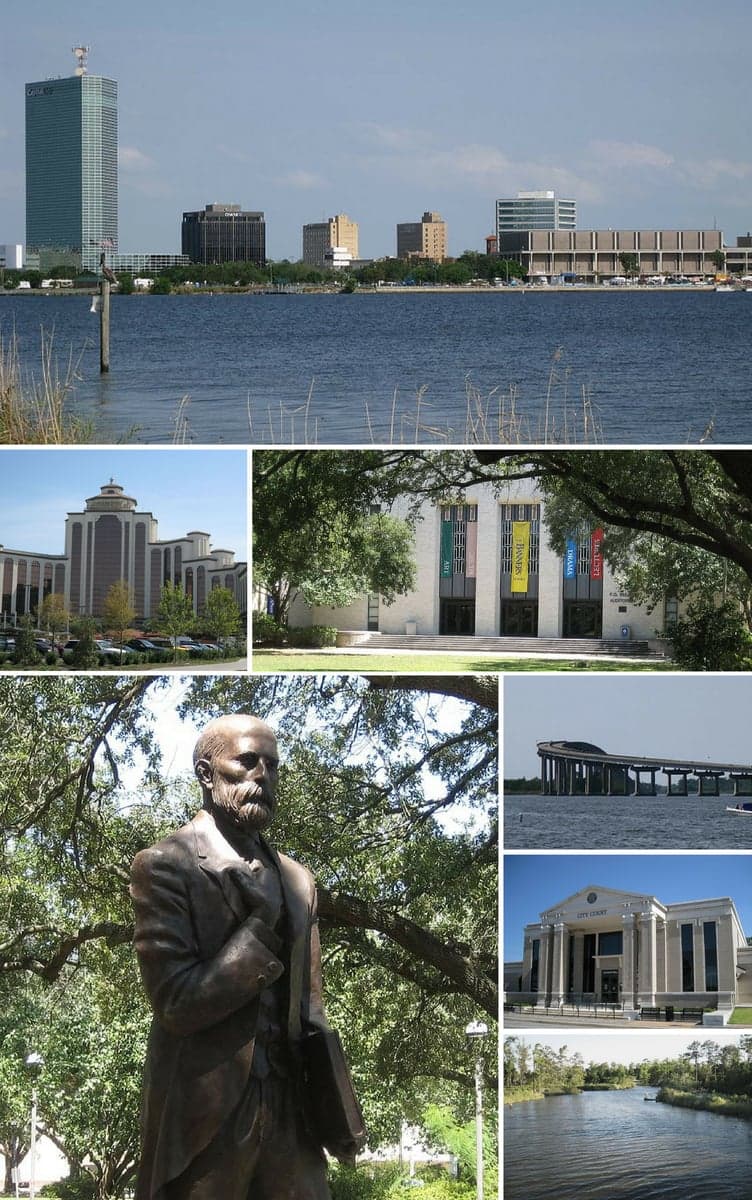
Photo: Wikipedia
Political ClimatePolitical Climate in Lake Charles, LA
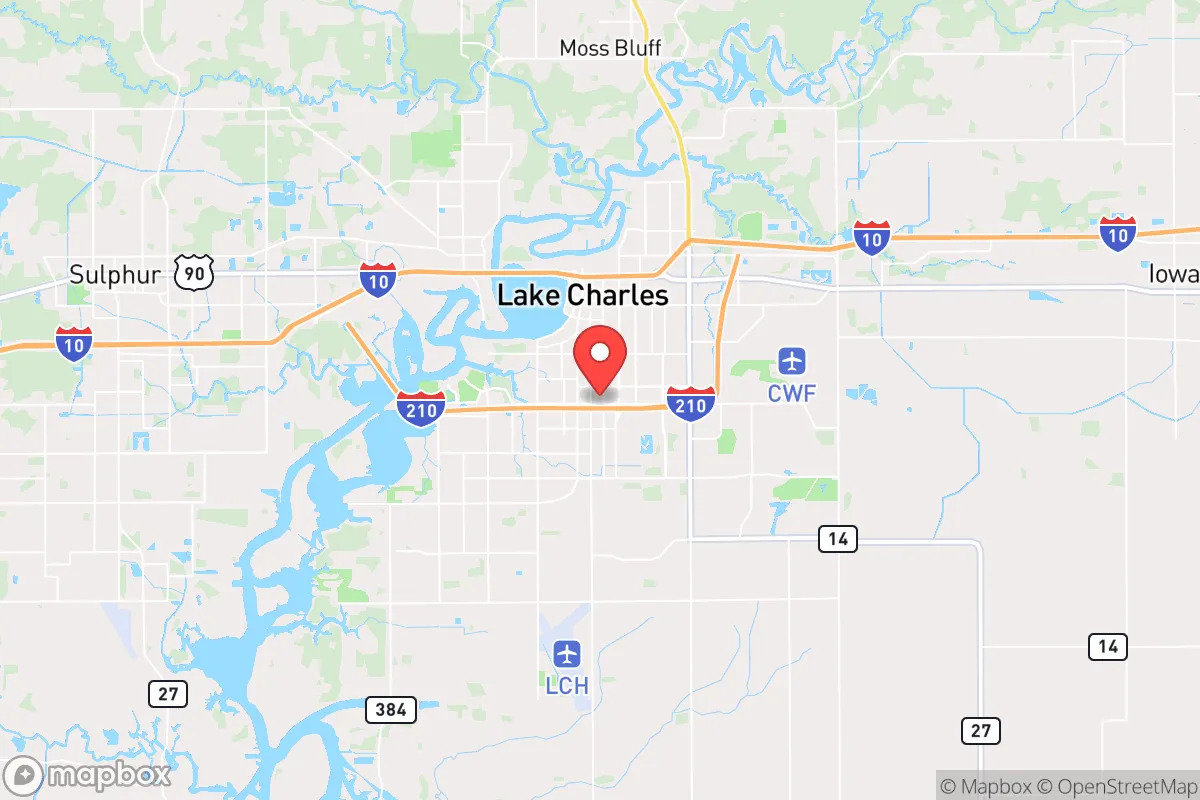
District shown is the primary district for this city’s centroid. Cities may span multiple districts.
Local Political AnalysisPolitical Analysis of Lake Charles, LA
Lake Charles is about as solidly conservative as it gets in Louisiana, with a Cook PVI of R+22 that tells you pretty much everything you need to know about how folks around here vote. We've been reliably red for as long as anyone can remember, and while the national trends have shifted in some places, this corner of Southwest Louisiana has held the line. The area leans heavily Republican in both local and national elections, and that's not something that's likely to change anytime soon, even if you see some of the bigger cities in the state drifting the other way.
How it compares
If you drive east toward Lafayette or Baton Rouge, you'll start to feel the political ground shift under your feet. Lafayette is still conservative, but it's got a more moderate, almost suburban vibe compared to Lake Charles. Baton Rouge is a whole different animal, with a much stronger Democratic presence thanks to the state capital and LSU. And of course, New Orleans is a world away politically, with its progressive city council and very different cultural priorities. Even within Calcasieu Parish, you'll find that the smaller towns like Sulphur and Westlake tend to be even more conservative than Lake Charles proper, while the city itself has a slightly more mixed feel, especially in the older neighborhoods near the lake. But overall, this is a place where the Second Amendment is a given, not a debate, and where the idea of the government telling you how to run your business or raise your kids is met with a very healthy dose of skepticism.
What this means for residents
For the most part, it means you get to live your life without a lot of bureaucratic nonsense. The local government here is generally pro-business and pro-personal freedom, which is a big reason why the petrochemical industry and the small businesses that support it have thrived. You won't find a lot of heavy-handed zoning laws or overreaching health mandates like you might in some other parts of the country. The tax burden is relatively low compared to states like California or New York, and the cost of living reflects that. But it's not all perfect. There's a growing concern among long-time residents that some of the more progressive ideas are starting to creep in, especially through the school system and some of the newer transplants who come for the jobs but bring their politics with them. You see it in small ways, like debates over library books or curriculum changes, and it's something to keep an eye on. The general feeling is that if you want to be left alone to work hard, raise your family, and keep what you earn, this is still one of the best places in the country to do it.
One thing that really sets Lake Charles apart is the strong sense of community and the "live and let live" attitude that still exists here. People are friendly, they look out for each other, and there's a deep respect for tradition, whether that's hunting and fishing, the local festivals, or just the way things have always been done. That said, there's a real wariness about any kind of government overreach, whether it's from the state or the feds. The memory of the COVID-era restrictions still stings for a lot of folks, and it's made people even more protective of their personal freedoms. The long-term outlook is cautiously optimistic, but only if we can keep the more intrusive, top-down policies from taking root. As long as the local elections stay focused on local issues and common sense, Lake Charles will remain a place where conservative values aren't just tolerated, they're the norm.

State Political ClimatePolitical Climate in Louisiana
State Political AnalysisPolitical Environment in the State
Louisiana has long been a reliably red state in federal elections, but its political climate is far more complex than a simple partisan label suggests. The state leans Republican at the presidential level, with Donald Trump winning it by nearly 19 points in 2024, but Democrats still hold significant power in local and state offices, particularly in the New Orleans and Baton Rouge areas. Over the past 20 years, the state has shifted rightward, driven by suburban and rural realignment, but the old-school, culturally conservative Democratic machine still has a stubborn foothold, creating a unique political landscape that feels like a tug-of-war between traditional Southern values and progressive coastal influence.
Urban vs. rural divide
The political map of Louisiana is a study in contrasts. The state’s two major metros—New Orleans and Baton Rouge—are the primary engines of Democratic votes. New Orleans, with its deep-rooted Black political establishment and growing progressive white population, consistently delivers margins of 70-80% for Democratic candidates. Baton Rouge is more competitive but still leans blue, driven by the state capital’s government workforce and Louisiana State University. Meanwhile, the rest of the state is overwhelmingly Republican. The Acadiana region, centered around Lafayette, is a conservative stronghold, as is the Florida Parishes north of Lake Pontchartrain, including Covington and Mandeville, which have become bedroom communities for New Orleans conservatives. The northwestern corner of the state, anchored by Shreveport, is a political battleground—Shreveport itself is a Democratic-leaning city with a large Black population, but the surrounding Caddo Parish suburbs and rural areas are deeply red. The most dramatic shift has been in the suburbs of New Orleans, like Metairie and Kenner, which were once reliably Democratic but have flipped hard to the GOP over the past two decades, mirroring national trends.
Policy environment
Louisiana’s policy environment is a mixed bag for conservatives. On the positive side, the state has no personal property tax on vehicles or boats, and its homestead exemption on property taxes is generous, protecting the first $75,000 of a home’s value from taxation. The state income tax is a flat 3% for most earners, and there’s no state-level estate tax. However, the sales tax is among the highest in the nation, often exceeding 10% in some parishes when local taxes are added. On education, Louisiana has a robust school choice program, including the Louisiana Scholarship Program, which allows low-income students in failing schools to attend private or parochial schools. This is a major draw for conservative parents. Healthcare policy is more concerning: the state expanded Medicaid under the Affordable Care Act in 2016, a decision that has locked many into government-run healthcare and driven up costs for private insurers. Election laws are relatively secure, with voter ID requirements in place, but the state still allows no-excuse absentee voting, which has raised eyebrows among election integrity advocates. The regulatory environment is generally business-friendly, with a right-to-work law and a legal climate that has been reformed to limit lawsuit abuse, though trial lawyers remain a powerful force in the state legislature.
Trajectory & freedom
Louisiana has seen a mixed trajectory on personal freedom over the past decade. On the positive side, the state has expanded gun rights significantly. In 2021, Louisiana passed constitutional carry, allowing law-abiding citizens to carry a concealed firearm without a permit. This was a major win for Second Amendment advocates. The state also has a strong Castle Doctrine and Stand Your Ground law. On parental rights, Louisiana passed the “Parental Bill of Rights” in 2024, which affirms parents’ authority over their children’s education and medical decisions, a direct response to progressive overreach in schools. However, there are concerning trends. The state’s medical marijuana program, while limited, has expanded under Governor Jeff Landry, a Republican, which some conservatives see as a slippery slope toward recreational use. More troubling is the state’s continued reliance on federal dollars, which creates a dependency that can be leveraged by Washington to impose progressive mandates. The state has also seen a rise in local “hate crime” ordinances in cities like New Orleans, which can be used to chill speech and target conservative viewpoints. On the whole, Louisiana is moving in the right direction on gun rights and parental authority, but the creeping influence of federal money and coastal cultural imports remains a concern.
Civil unrest & political movements
Louisiana has a history of political turbulence, but recent years have been relatively calm compared to other states. The most visible flashpoint has been the debate over Confederate monuments, which came to a head in New Orleans in 2017 when the city removed several statues under cover of night, sparking protests from both sides. This issue still simmers, with some rural parishes flying the Confederate flag on public property, leading to periodic legal battles. Immigration politics are less heated here than in border states, but there is growing concern about the influx of illegal immigrants into New Orleans and Baton Rouge, driven by sanctuary city policies in those metros. In 2024, Governor Landry signed a law requiring local law enforcement to cooperate with federal immigration authorities, a move that has been challenged in court by New Orleans officials. Election integrity remains a hot-button issue, with many conservatives still skeptical of the state’s use of electronic voting machines without a paper trail. In 2020, Louisiana was one of the few states that did not see widespread fraud allegations, but the lack of a verifiable paper ballot is a lingering concern. Organized activist movements are relatively muted, but the left has a strong presence in New Orleans, with groups like the New Orleans Workers’ Center for Racial Justice pushing for defunding the police and other progressive policies.
Projection
Looking ahead 5-10 years, Louisiana is likely to remain a red state at the presidential level, but the cultural and political battle will intensify at the local level. The biggest demographic shift is the continued exodus of conservative-leaning residents from New Orleans to the Northshore suburbs like Slidell and Hammond, which are becoming increasingly Republican. Meanwhile, Baton Rouge is seeing an influx of out-of-state professionals, many from blue states, who are bringing progressive politics with them. This could turn Baton Rouge into a more competitive battleground, similar to what happened in Atlanta. The rural areas, particularly in the northern and western parts of the state, will remain deeply red, but they are losing population, which could dilute their political influence over time. The biggest wildcard is the state’s economy—if Louisiana can diversify away from oil and gas and attract more conservative-leaning migrants from high-tax states, the political balance could shift further right. However, if the state continues to rely on federal handouts and fails to address its crime problem in New Orleans and Baton Rouge, it could see a backlash that drives more conservatives to the suburbs or out of state entirely.
For a new resident, the bottom line is this: Louisiana offers a low-tax, gun-friendly, and culturally conservative environment in most of the state, but you need to choose your location carefully. If you want a truly conservative lifestyle, look at the suburbs of Lafayette, the Northshore, or the rural parishes north of Alexandria. Avoid New Orleans and the core of Baton Rouge if you want to escape progressive politics and high crime. The state is moving in the right direction on many fronts, but the coastal cities are a constant source of friction. If you’re willing to navigate that divide, Louisiana can be a great place to live, work, and raise a family with minimal government overreach.
* Values derived from national, state, county, city and local statistics and may differ in a specific area. Last updated: 2026-04-23T05:00:08.000Z
Narrative content on this page is AI-generated and may contain mistakes. Verify any details that matter before acting on them.
ReloMaps may earn a commission from affiliate links at no extra cost to you.

