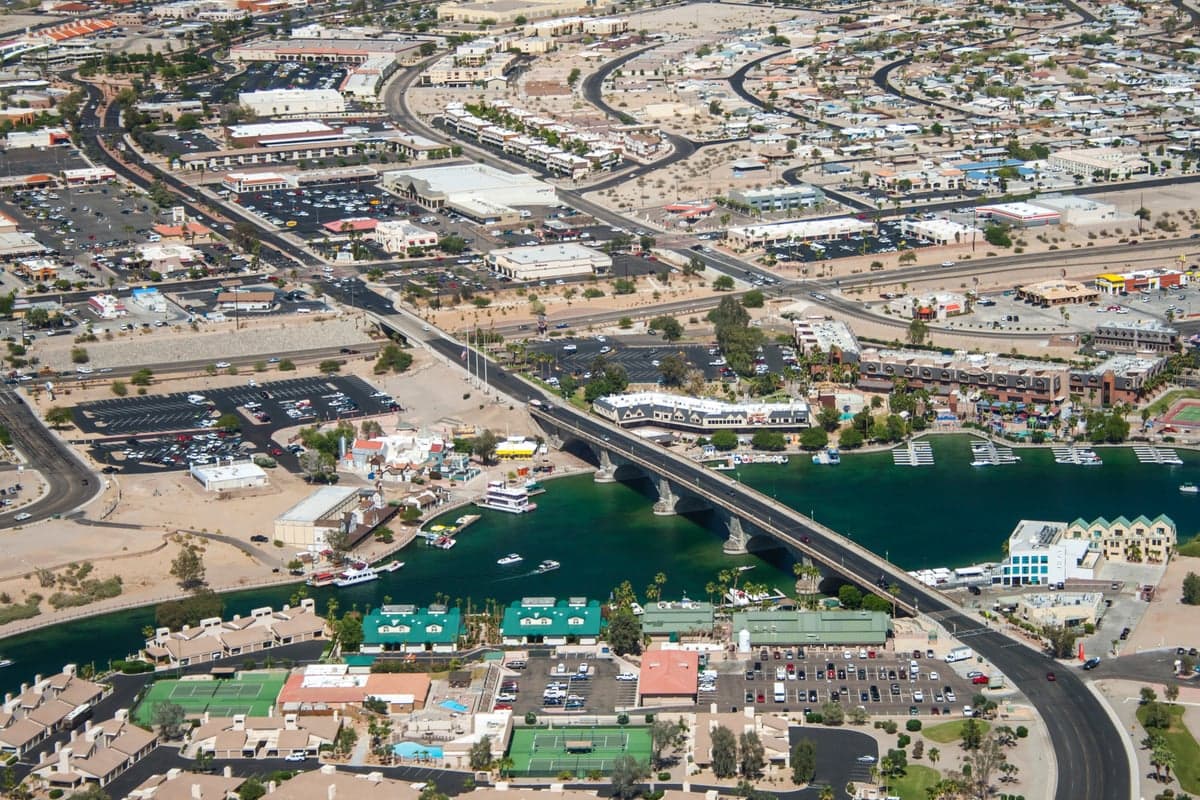
Photo: Wikipedia
Strategic Assessment of Lake Havasu City, AZ
Meaningful friction. Expect exposure to either population pressure, blast zones, or natural disaster risk. Consider buying a retreat property.
What does the Strategic Assessment tell us?
Our Strategic Assessment grades tactical survivability of an area. Major population centers, military targets, fallout zones, natural disasters, and border exposure all drive risk — lower exposure means a more defensible position in a crisis.
This is heavily inspired by Joel Skousen's Strategic Relocation book. Highly recommended you checkout the book ($)What does this tell us?
Our Strategic Assessment grades tactical survivability of an area. Major population centers, military targets, fallout zones, natural disasters, and border exposure all drive risk — lower exposure means a more defensible position in a crisis.
This is heavily inspired by Joel Skousen's Strategic Relocation book. Highly recommended you checkout the book ($)Strategic Pillars

Key Distances
Regional Safe Places
Below is our recommended "safe zones" in Arizona and the surrounding area based on our strategic heuristics. For most people, it's unrealistic to live in a “safe zone” full-time due to work, family or other personal reasons. They tend to be more rural. However, many of these areas are perfect for second homes and retreat properties that double as a vacation home or even a short-term rental.
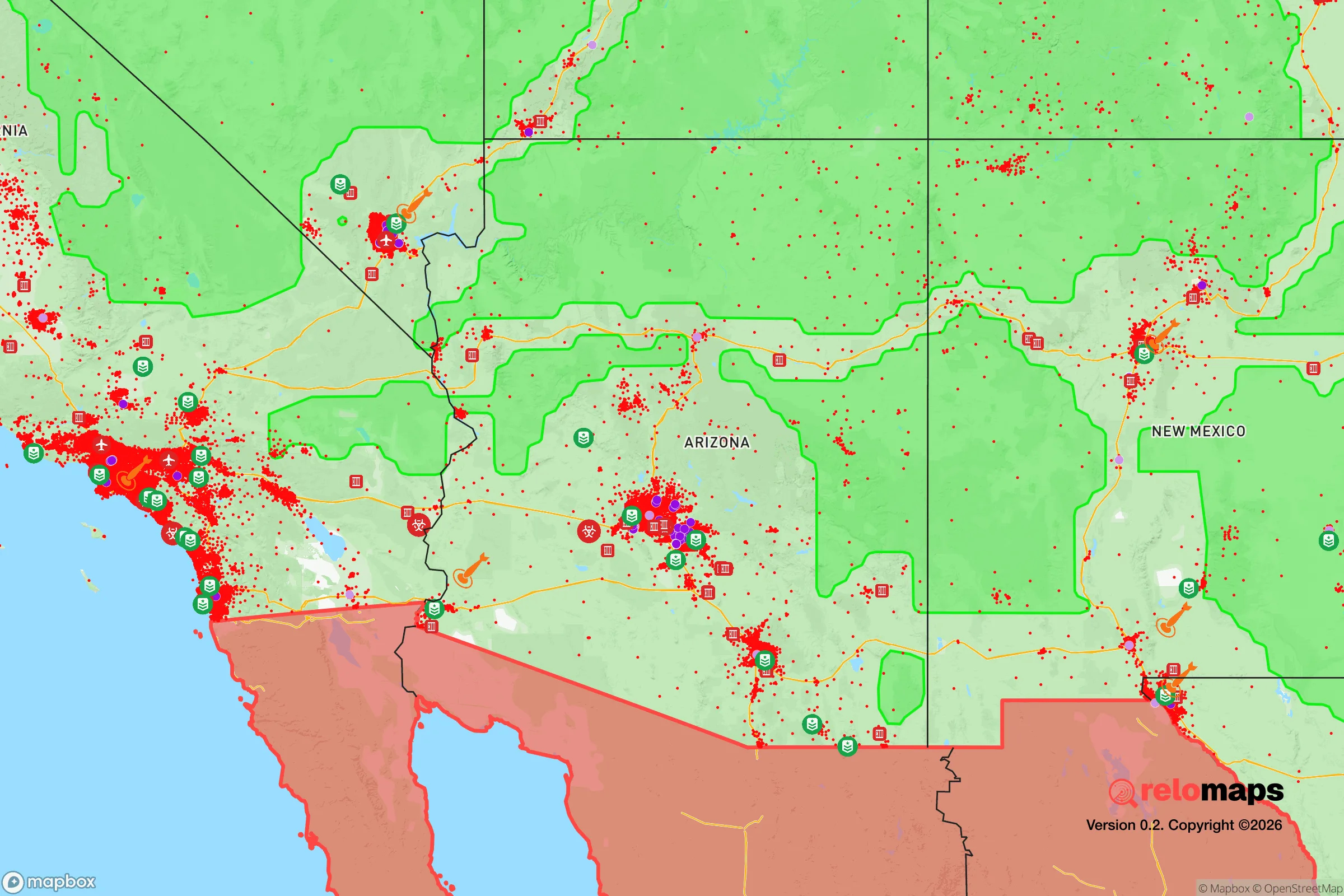
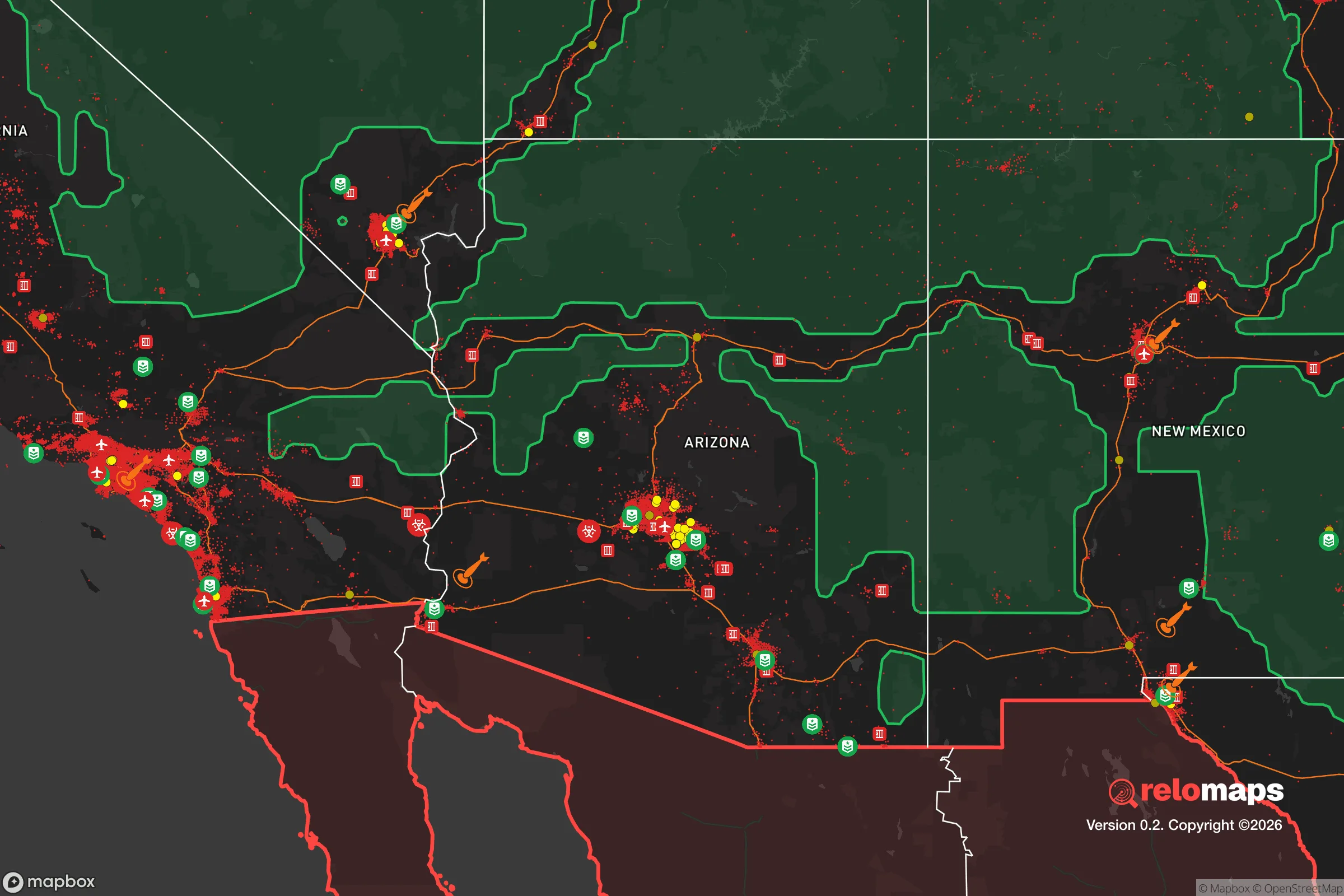


Important Note: For informational purposes only. This does not mean nothing bad ever happens in the green zones. Please use common sense. This is based on public data and modeled with AI. We tried to take a conservative approach but mistakes happen. We update this regularly as new information becomes available.
Solar Generator Recommendations
Backup power matters more here than in safer locations. We've picked three solar generators across budgets and capacity tiers — start with the budget unit if you only need a few essentials, or step up if you want to run a fridge and HVAC for days at a time.

Jackery Portable Power Station Explorer 300
Budget OptionPower on the Go: Weighing only 11 lbs, it's convenient to set up and store with book-sized foldable solar panels

BLUETTI Portable Power Station AC180
Designed for both indoor and outdoor scenarios, AC180 is highly capable as it has a robost capacity and continuous output power.

EF ECOFLOW DELTA Pro Ultra Power Station
Upgraded PickEcoFlow DELTA Pro Ultra is a whole-home energy system designed to grow with your family. Integrated with the Smart Home Panel 2, it scales to meet your evolving energy needs — keeping your home powered, intelligent, and secure through every stage of life.
We earn a commission, at no additional cost to you.
Strategic Assessment Analysis
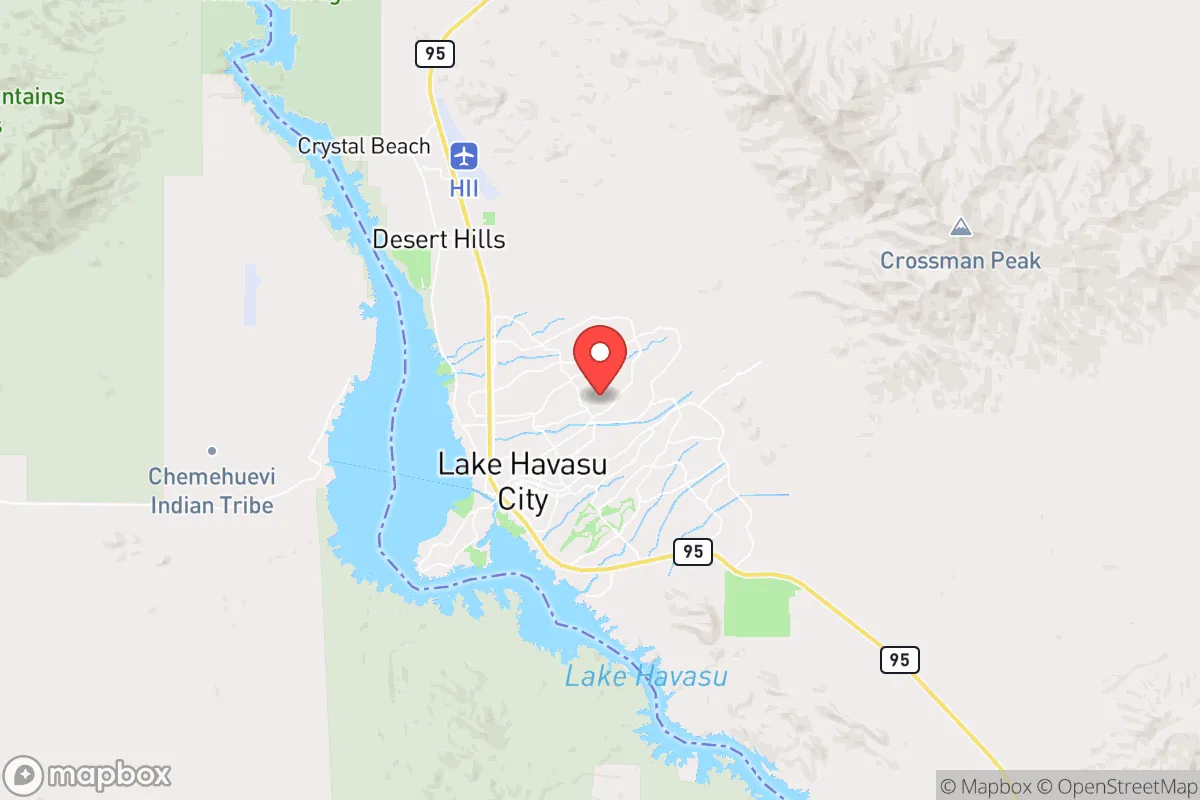
Lake Havasu City offers a surprisingly strong strategic position for those prioritizing resilience, but it comes with trade-offs that demand clear-eyed assessment. Its location in western Arizona, roughly 150 miles from Phoenix and 200 miles from Las Vegas, places it far enough from major population centers to avoid the worst of urban collapse scenarios, yet close enough to access critical supplies if pre-positioned. The Colorado River provides a reliable water source, and the surrounding Mojave Desert creates natural buffers against mass movement of people during crises. However, the city’s reliance on tourism, a single major highway (AZ-95), and its proximity to the Palo Verde Nuclear Generating Station—the largest nuclear plant in the U.S.—introduce vulnerabilities that any serious relocator must weigh.
Geographic position and natural advantages for long-term survival
Lake Havasu City sits at the intersection of the Colorado River and Lake Havasu, a 45-mile-long reservoir created by Parker Dam. This gives residents direct access to a reliable, year-round freshwater source—a critical asset in the arid Southwest where water scarcity is a growing concern. The surrounding terrain is rugged, with the Mohave Mountains to the east and the Whipple Mountains to the west, offering natural chokepoints and defensible positions. The climate is extreme: summer highs regularly exceed 110°F, which limits agricultural viability but also discourages large-scale migration during a crisis. The city’s elevation at roughly 500 feet means milder winters, but the heat itself becomes a survival challenge without adequate cooling and water storage. For a prepper, the key advantage is isolation from major interstate corridors—I-10 and I-40 are both over 100 miles away, reducing the risk of refugee flows or supply chain disruptions from coastal or border crises.
Risks, exposures, and proximity to fallout-relevant landmarks
The most significant risk is the Palo Verde Nuclear Generating Station, located about 50 miles south near Tonopah, Arizona. While it’s a pressurized water reactor with robust containment, a major incident—whether from sabotage, earthquake, or grid failure—could render Lake Havasu City uninhabitable for weeks or months depending on wind patterns. The prevailing winds in the region blow from the west and southwest, meaning fallout from Palo Verde would likely drift toward Phoenix, but a shift could put Lake Havasu directly in the plume path. Additionally, the city lies within 200 miles of Nellis Air Force Base (Las Vegas) and Luke Air Force Base (Phoenix), both potential targets in a conflict scenario. The Colorado River itself is a strategic asset that could become a target for sabotage or contamination. The city’s single main artery, AZ-95, is a two-lane road in many stretches, creating a single-point-of-failure evacuation bottleneck—if that road is blocked, escape routes are limited to dirt tracks or boat access across the lake.
Practical resilience for a relocator: food, water, energy, and defensibility
Water is Lake Havasu City’s strongest card. The Colorado River provides a virtually unlimited supply, but it’s not potable without treatment. A Berkey or similar gravity-fed filter plus a supply of bleach or iodine tablets is essential. The city’s municipal water comes from the river and is treated, but during a grid-down scenario, pumps fail. Preppers should plan for at least 30 days of stored water (one gallon per person per day) and a manual pump or generator-powered well if on a private lot. Food is a weak point: the local grocery stores (Walmart, Safeway, and a few smaller markets) rely on daily truck deliveries from Phoenix and Las Vegas. A disruption of more than a week would empty shelves quickly. The desert soil is poor for traditional gardening, but raised beds with shade cloth and drip irrigation can produce tomatoes, peppers, and squash during the cooler months. Hunting is limited—mule deer and javelina exist but are sparse—and fishing in the lake is reliable for bass and catfish. Energy is a mixed bag: the city gets power from the grid fed by Palo Verde and natural gas plants, but solar is excellent with over 300 sunny days per year. A 5kW solar array with battery storage can run a fridge, lights, and a well pump indefinitely. Defensibility is moderate: the city’s layout along the lake means many homes have only one road in and out, which can be secured with neighbors. The local police force is small (about 60 officers), so community watch and mutual aid networks are critical. The Mohave County Sheriff’s Office is based in Kingman, 90 miles north, meaning response times in a crisis could be hours.
The overall strategic picture for Lake Havasu City is one of calculated trade-offs. It offers a rare combination of water security, geographic isolation, and low population density (roughly 57,000 year-round residents, swelling to 100,000+ in winter with snowbirds). The climate and terrain are harsh but manageable with preparation. The proximity to Palo Verde and the reliance on a single road are real vulnerabilities that cannot be ignored. For a conservative-leaning relocator who values self-reliance and wants to be far from the chaos of coastal cities, Lake Havasu City is a viable option—but only if you arrive with six months of supplies, a solar setup, and a plan for water treatment and community defense. It is not a bug-out location for a weekend; it’s a long-term homestead that demands serious investment in infrastructure and relationships. If you’re willing to sweat through the summers and keep your head down, this desert outpost can be a fortress. If you’re looking for a turnkey paradise, look elsewhere.

* Values derived from national, state, county, city and local statistics and may differ in a specific area. Last updated: 2026-04-22T09:27:24.000Z
Narrative content on this page is AI-generated and may contain mistakes. Verify any details that matter before acting on them.
ReloMaps may earn a commission from affiliate links at no extra cost to you.

