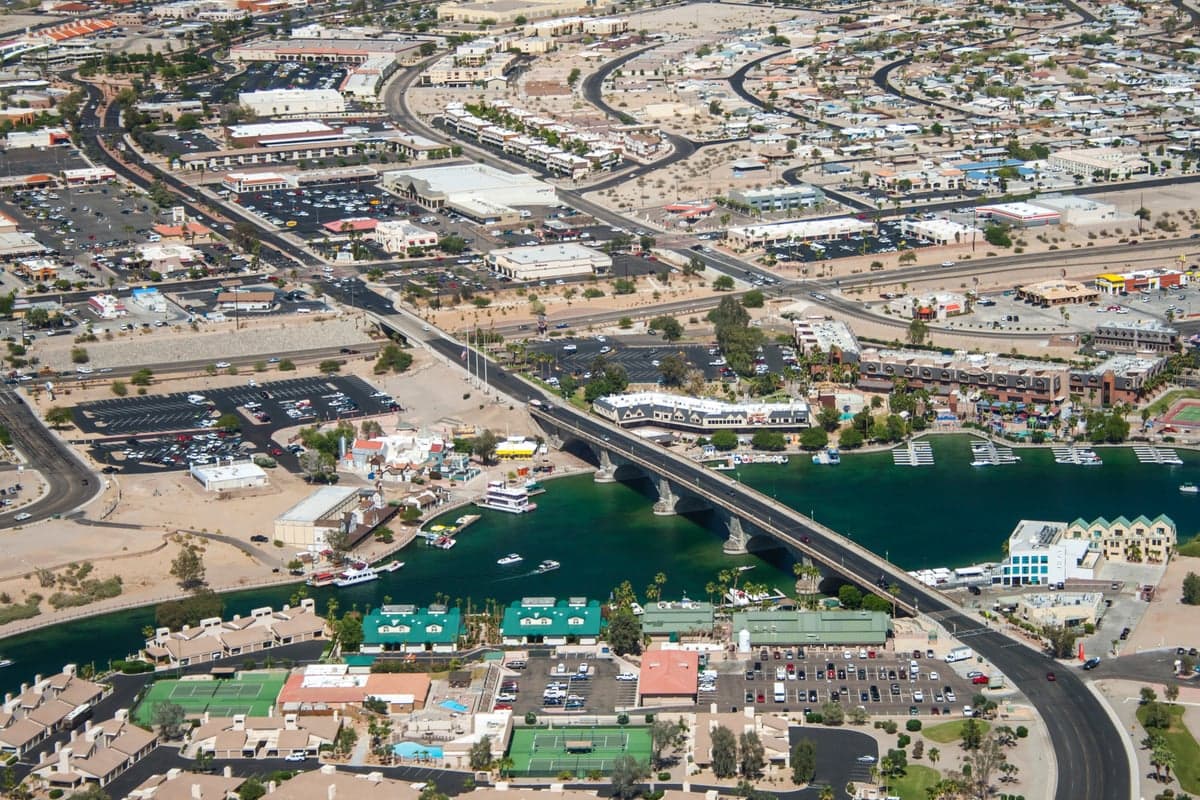
Photo: Wikipedia
Political ClimatePolitical Climate in Lake Havasu City, AZ
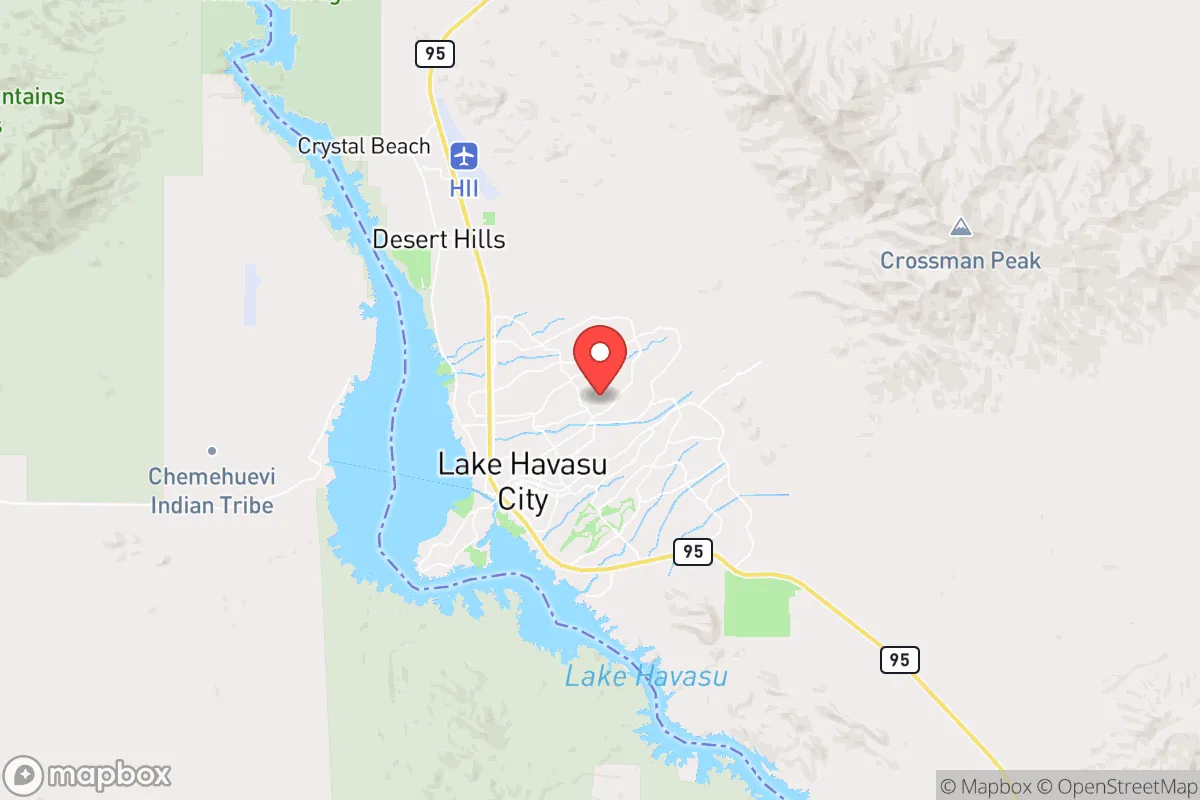
District shown is the primary district for this city’s centroid. Cities may span multiple districts.
Local Political AnalysisPolitical Analysis of Lake Havasu City, AZ
Lake Havasu City has long been a stronghold for conservative values, and that hasn't changed. The area's Cook Partisan Voting Index of R+15 tells you everything you need to know about the baseline—this is one of the most reliably Republican communities in Arizona. If you look at the voting patterns over the last decade, you'll see that local elections and state races consistently break for candidates who prioritize limited government, Second Amendment rights, and local control. The trajectory here is actually holding steady, which is more than you can say for some parts of the state that have seen a slow drift leftward. People move here specifically because they want to escape the kind of overreach you see in places like Phoenix or Tucson, and that hasn't changed one bit.
How it compares
When you stack Lake Havasu City up against its neighbors, the contrast is pretty stark. Head south to Yuma, and you'll find a much more mixed political landscape, with a growing progressive influence that's been creeping into local policy debates. Go east to Kingman, and while it's still conservative, it's not quite as rock-solid as Havasu—you see more split-ticket voting there. The real eye-opener is when you compare it to the Phoenix metro area. Places like Scottsdale or Tempe have shifted noticeably left in the last few election cycles, with city councils pushing zoning changes and tax hikes that would never fly here. Lake Havasu City remains a place where the local government still believes in letting people live their lives without a bunch of unnecessary regulations. That's a big part of why the community has stayed so stable politically—people here vote with their feet, and they've chosen a place that respects individual freedom.
What this means for residents
For folks living here, the political climate translates directly into daily life. You don't have to worry about the city council trying to impose new gun restrictions or micromanage how you run your business. Property taxes stay reasonable because the local government isn't constantly looking for new ways to spend your money. The school board focuses on academics and parental rights, not pushing social agendas. That said, there are some warning signs on the horizon. The state legislature in Phoenix has been flirting with more centralized control over local issues, and there's always the risk that federal overreach could trickle down—especially on water rights and land use, which are huge concerns out here. The long-term outlook depends on keeping that local autonomy intact. If the progressive wave that's hit other parts of Arizona ever makes serious inroads here, you'd see a real shift in the quality of life that brought most of us to this town in the first place.
Culturally, Lake Havasu City wears its conservatism on its sleeve, but it's not the in-your-face kind. You see it in the way people treat each other—neighbor helping neighbor, minimal red tape, and a general attitude of "mind your own business unless someone needs a hand." The city has resisted the kind of woke policies that have bogged down other municipalities, like equity audits or defunding the police. The police department here is well-funded and respected, and that's not changing anytime soon. One distinction worth noting: the city has also pushed back hard against state-level mandates on things like mask requirements and business closures during the pandemic, which earned it a lot of goodwill from residents who felt their freedoms were being trampled elsewhere. That independent streak is baked into the local identity, and as long as the political winds don't shift too dramatically, it's going to stay that way for the foreseeable future.

State Political ClimatePolitical Climate in Arizona
State Political AnalysisPolitical Environment in the State
Arizona has shifted from a reliably red state to a competitive battleground, but its political center of gravity remains center-right, driven by a coalition of suburban conservatives, rural ranchers, and a growing population of retirees and veterans. Over the past 20 years, the state has gone from voting Republican by double digits in every presidential election from 2000 to 2012 to flipping blue for Joe Biden in 2020 by just 10,457 votes—a razor-thin margin that underscores a deep partisan split. The 2024 cycle saw a slight rightward correction, with Donald Trump carrying the state by roughly 2 points, but the long-term trajectory is one of increasing polarization, with Maricopa County acting as the decisive swing region.
Urban vs. rural divide
The political map of Arizona is a tale of two landscapes. Maricopa County, home to Phoenix and its sprawling suburbs, contains about 60% of the state’s population and is the epicenter of the political fight. The county voted for Biden in 2020 by about 2 points, but Trump flipped it back in 2024 by a similar margin—a sign that the suburban vote is highly volatile. Within Maricopa, Scottsdale and Gilbert remain reliably conservative, while Tempe and Flagstaff (in Coconino County) are progressive strongholds. Tucson (Pima County) leans Democratic, but the surrounding Pinal County has become a conservative bulwark, voting +18 for Trump in 2024. Rural counties like Yavapai (Prescott), Mohave (Kingman), and Cochise (Sierra Vista) are deep red, often voting 70%+ Republican. The urban-rural divide is stark: Phoenix and Tucson drive Democratic margins, while the rest of the state—especially the vast stretches of desert and mountain country—votes overwhelmingly conservative.
Policy environment
Arizona’s policy environment is a mixed bag for conservatives. On the plus side, the state has a flat income tax rate of 2.5% (passed in 2021), one of the lowest in the nation, and no estate tax. Property taxes are moderate, and the state has a right-to-work law. However, the regulatory posture has shifted leftward in recent years. The state’s education system is under pressure: school choice is robust (Empowerment Scholarship Accounts exist), but teacher unions have gained influence, and a 2023 court ruling blocked the expansion of ESA funding to all students. Healthcare is a flashpoint—Arizona expanded Medicaid under the Affordable Care Act, and a 2024 ballot measure enshrined abortion access up to 15 weeks in the state constitution, overriding a pre-existing near-total ban. Election laws have been tightened: voter ID requirements are in place, and a 2021 law restricted mail-in ballot drop boxes, but the state still has no-excuse early voting, which progressives use heavily. The governor’s office is held by Democrat Katie Hobbs (elected 2022), who has vetoed numerous conservative bills on immigration and education, creating a policy stalemate with the Republican legislature.
Trajectory & freedom
On the freedom front, Arizona is a tale of two trends. Gun rights remain strong: the state has permitless carry (passed in 2010), no magazine bans, and a preemption law that blocks local gun control. Parental rights saw a win with the 2022 passage of a law requiring schools to notify parents of curriculum changes involving sexuality, though it was later challenged in court. Property rights are generally respected, but a 2023 law limiting short-term rentals (like Airbnb) in residential zones has been a sore point for some. Medical autonomy took a hit with the 2024 abortion amendment, which conservatives view as government overreach into life issues. Taxation is trending in the right direction—the flat tax cut was a major win—but the state’s sales tax on groceries remains a burden. Overall, Arizona is more free than California or New York, but less free than Texas or Florida. The trajectory is concerning: the 2024 abortion amendment and the growing influence of progressive Phoenix suburbs suggest a slow drift leftward on cultural issues, even as fiscal policy remains conservative.
Civil unrest & political movements
Arizona has seen its share of political flashpoints. The 2020 election integrity controversy was centered here, with the Maricopa County ballot audit (the “Cyber Ninjas” review) becoming a national story. That episode energized grassroots conservative movements, including the Arizona Freedom Caucus in the state legislature, which has pushed for stricter election laws and immigration enforcement. On the left, Mijente and other activist groups have organized protests against SB 1070 (the 2010 immigration law) and continue to push for sanctuary policies. Immigration politics are a constant: the border with Mexico runs 370 miles along Arizona’s southern edge, and the town of Nogales has seen frequent protests and counter-protests over border policy. In 2023, Governor Hobbs deployed the National Guard to the border, but refused to cooperate with Texas’s busing of migrants, creating a rift with conservative counties. Secession or nullification rhetoric is rare, but some rural counties have discussed “joining” Texas or forming a separate state—mostly symbolic. A new resident would notice the constant presence of political signs and the intensity of local activism, especially in Maricopa County.
Projection
Over the next 5-10 years, Arizona is likely to become more purple, with a slight leftward tilt. The key demographic driver is the influx of domestic migrants from California and the Midwest—many of whom are moderate or left-leaning professionals. Maricopa County’s suburbs are densifying, and younger voters in Chandler and Mesa are trending blue. However, the state’s retiree population (especially in Sun City and Green Valley) remains reliably conservative, and the rural vote is not shrinking. The 2024 election showed that Trump can still win Arizona, but the margin is thin. Expect continued legislative gridlock between a Republican legislature and a Democratic governor, with ballot measures becoming the primary vehicle for policy change—especially on abortion, education funding, and marijuana legalization. A new resident moving in now should expect a state that is fiscally conservative but culturally contested, where the fight over the next decade will be over school choice, immigration enforcement, and the scope of local government power.
For a conservative relocating to Arizona, the bottom line is this: you’ll find a low-tax, gun-friendly environment with strong property rights and a vibrant conservative grassroots movement, especially in the suburbs and rural areas. But you’ll also face a growing progressive presence in Phoenix and Tucson, a Democratic governor who can veto conservative legislation, and a political landscape that requires active engagement to preserve the freedoms you value. If you’re looking for a state where your vote still matters and your voice can be heard, Arizona is a battleground worth fighting for—but don’t expect it to feel like Texas or Florida anytime soon.
* Values derived from national, state, county, city and local statistics and may differ in a specific area. Last updated: 2026-04-22T09:27:24.000Z
Narrative content on this page is AI-generated and may contain mistakes. Verify any details that matter before acting on them.
ReloMaps may earn a commission from affiliate links at no extra cost to you.

