Demographics of Lake Murray of Richland, SC
Affluence Level in Lake Murray of Richland, SC
An upper-middle-class area. Household wealth, education levels, and homeownership run ahead of national benchmarks.
People of Lake Murray of Richland, SC
The people of Lake Murray of Richland are a predominantly white, college-educated population of roughly 7,000 residents, concentrated in a suburban-rural setting defined by lakefront living and a strong sense of privacy. With a foreign-born share of just 2.0% and a Black population of 8.4%, the city is notably less diverse than Richland County as a whole, reflecting its history as a planned recreational community rather than a traditional Southern town. The population skews older and wealthier than the regional average, with 46.9% holding a bachelor's degree or higher, and the dominant cultural identity centers on boating, golf, and low-key family life. This is a place where newcomers are typically drawn by the lake lifestyle, not by employment hubs or historic settlement patterns.
How the city was settled and grew
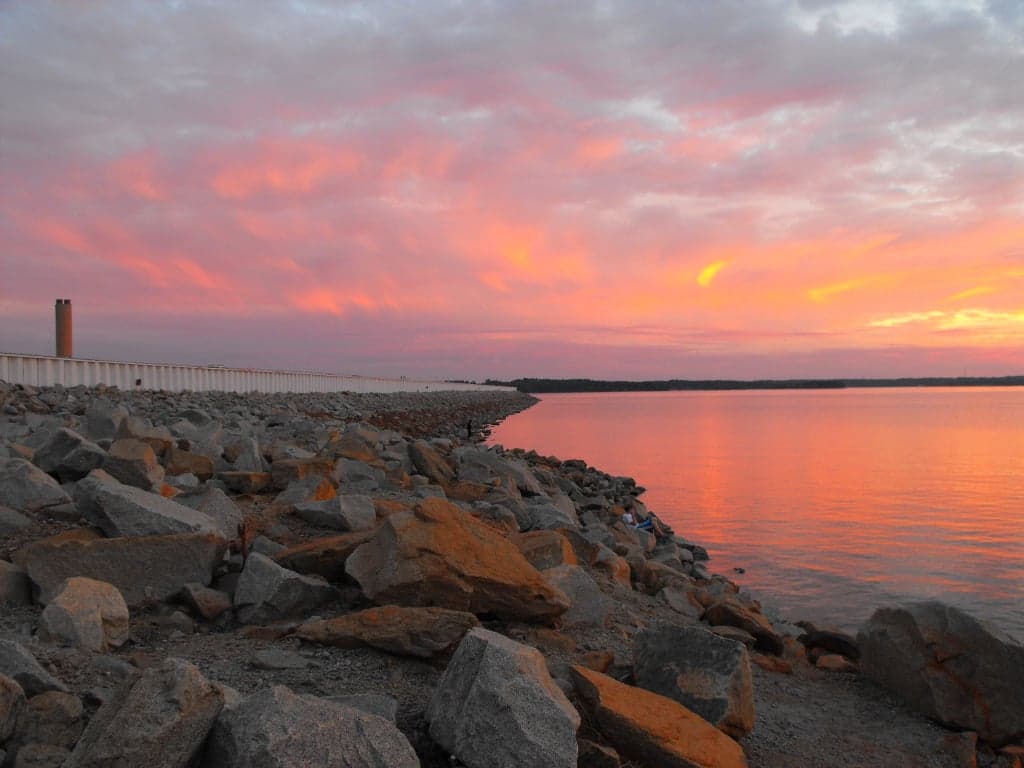
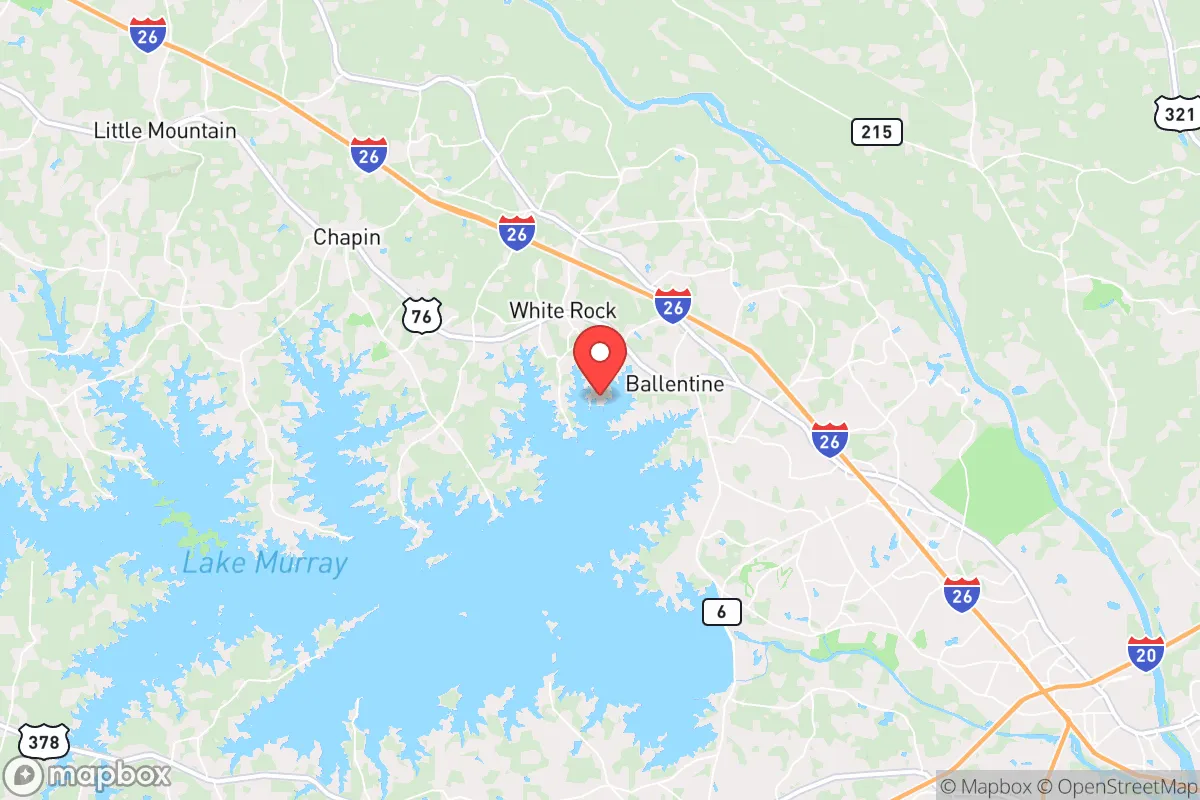
Lake Murray of Richland is not a historic settlement but a post-1940s planned community, born from the creation of Lake Murray itself. The lake was impounded in the 1930s by the Dreher Shoals Dam (now the Saluda Dam) to generate hydroelectric power for the region, flooding the original river valleys and displacing small farming communities. The city's residential development began in earnest in the 1950s and 1960s, when Columbia-area professionals and retirees purchased lots along the newly created shoreline. The earliest neighborhoods—Lake Murray Shores and Harbor Isle—were built by local developers catering to white, middle-class families seeking weekend cottages and permanent lakefront homes. No significant immigrant or minority population settled here during this period; the area was effectively a white enclave, with restrictive covenants common in deed records until the 1960s. The original population was overwhelmingly native-born South Carolinians from Columbia and the surrounding Midlands, drawn by the promise of water access and rural tranquility within commuting distance of the state capital.
Modern era (post-1965)
After the 1965 Hart-Cellar Act and the broader civil rights era, Lake Murray of Richland saw little demographic change compared to nearby Columbia. The city remained overwhelmingly white, with the Black population hovering around 8-10% through the 1970s and 1980s, largely concentrated in a few older subdivisions like Woodcreek Farms and Lake Carolina (the latter technically outside city limits but functionally part of the same social geography). The Hispanic and Asian populations remained negligible until the 2000s, when a small wave of East/Southeast Asian professionals—primarily engineers and medical workers employed at Palmetto Health Richland and the University of South Carolina—began buying homes in The Summit and Lake Pointe neighborhoods. Today, East/Southeast Asian residents make up 3.5% of the population, while the Indian-subcontinent share is 0.0%, reflecting the absence of the tech and academic clusters that draw Indian families to other parts of Richland County. The Hispanic share (2.3%) is also low, with most Hispanic residents working in landscaping, construction, or hospitality and living in rental properties along Highway 6 rather than in the lakefront subdivisions. The city's modern character is thus one of voluntary homogeneity: residents choose Lake Murray of Richland precisely because it is quiet, safe, and demographically stable, with little pressure for rapid diversification.
The future
Demographic projections suggest Lake Murray of Richland will remain a predominantly white, affluent enclave over the next 10-20 years, with only modest increases in diversity. The foreign-born share (2.0%) is unlikely to rise significantly, as the city lacks the rental housing stock, public transit, and entry-level jobs that attract immigrant populations to more urban areas. The Black population may grow slightly as some middle-class Black families move from Columbia's older suburbs into newer developments like Lake Ridge and Harbor Pointe, but the overall share is expected to stay below 12%. The East/Southeast Asian population could edge toward 5% as more medical and tech professionals discover the area, but the Indian-subcontinent population will likely remain near zero due to the absence of a critical mass of Indian cultural institutions or employers. The most notable trend is aging in place: the median age (estimated in the mid-40s) is rising, and younger families are being priced out by lakefront property values that have doubled since 2015. The city is not tribalizing into distinct ethnic enclaves; rather, it is homogenizing by income, with new construction in The Peninsula and Lakewalk targeting high-net-worth buyers regardless of race.
For someone moving in now, Lake Murray of Richland offers a stable, low-diversity community where the population is becoming older, wealthier, and more selective. The city is not a melting pot or a rapidly changing suburb—it is a deliberate lifestyle choice for those who prioritize water access, low crime, and social homogeneity. New residents should expect to find a place where the population is largely self-selected for shared values around privacy, recreation, and property investment, with little pressure for demographic or cultural change on the horizon.

* Values derived from national, state, county, city and local statistics and may differ in a specific area. Last updated: 2026-04-23T04:03:33.000Z
Narrative content on this page is AI-generated and may contain mistakes. Verify any details that matter before acting on them.
ReloMaps may earn a commission from affiliate links at no extra cost to you.

