
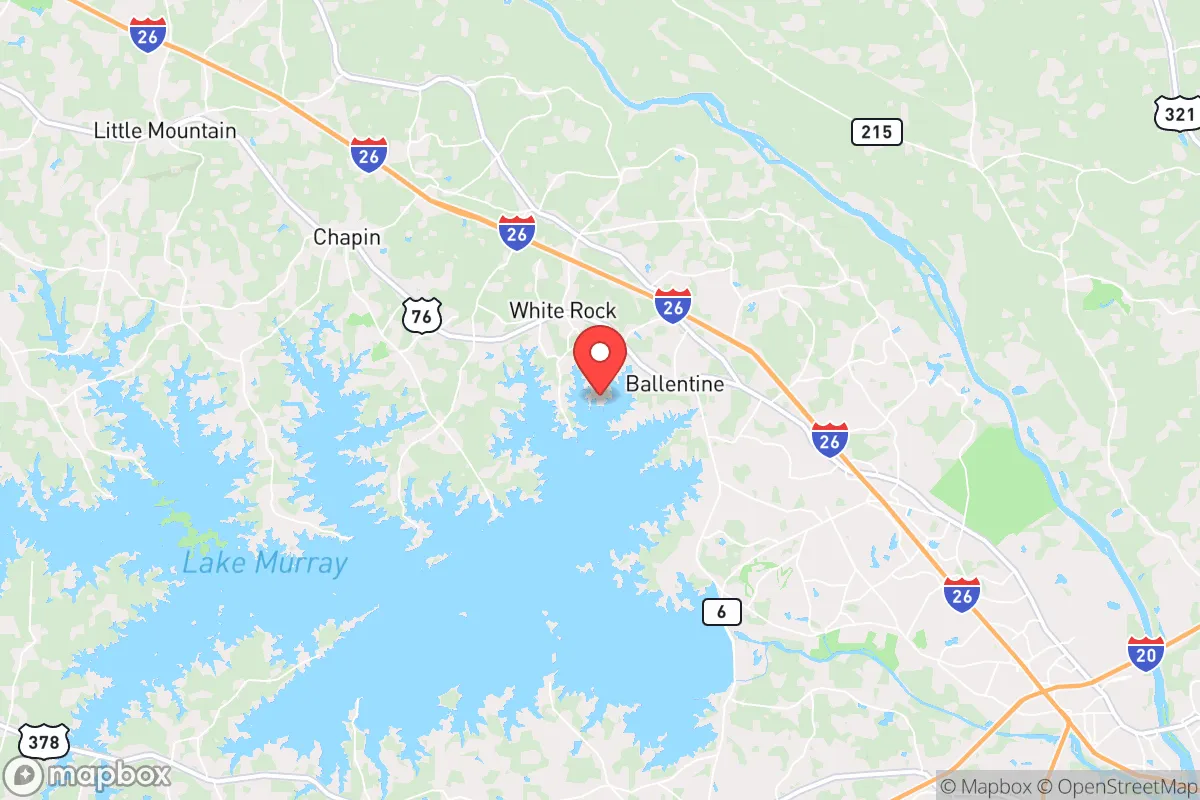
Political ClimatePolitical Climate in Lake Murray of Richland, SC
District shown is the primary district for this city’s centroid. Cities may span multiple districts.
Local Political AnalysisPolitical Analysis of Lake Murray of Richland, SC
Lake Murray of Richland, South Carolina, has long been a reliably conservative pocket, and that hasn't changed much. The area's Cook PVI of R+7 tells you the basics: Republicans have a solid, but not overwhelming, advantage here. But if you've lived here a while, you know the real story is in the details. The political lean is still very much center-right, with a strong emphasis on personal responsibility, low taxes, and keeping government out of your business. However, you can feel the ground shifting just a little, especially as more folks move in from places like Columbia or even from up north, bringing with them a different set of priorities.
How it compares
To really get the picture, you gotta look at the neighbors. Drive ten minutes east into downtown Columbia, and you're in a completely different world. Richland County as a whole is a deep blue island, thanks to the state capital and the university. That contrast is stark. Lake Murray of Richland is the conservative counterweight. Compare us to a place like Irmo, just across the lake in Lexington County, and you'll find a similar vibe, though Lexington County is even more reliably red. The difference is that Lake Murray of Richland is a bit more of a mixed bag—you get the lake lifestyle folks who are here for the quiet and the freedom, and you get the Columbia commuters who might be a little more moderate. The real worry for a lot of us is seeing that progressive influence from the city start to creep out this way, especially in school board meetings and local zoning debates.
What this means for residents
For the people who live here, the political climate means a few very practical things. First, your property taxes are still reasonable compared to what you'd pay in the city. The county council has historically been pretty good about keeping spending in check and not piling on new fees. Second, there's a strong sense of local control. People here don't like being told what to do by Columbia or even by the state. You see it in the resistance to overreaching health mandates or in the pushback against any talk of restrictive land-use ordinances that would tell you what you can and can't do on your own property. The biggest concern I hear from neighbors is that the new folks moving in might not understand that "live and let live" is a two-way street. They want to bring in the same kind of regulations and progressive policies that made them leave their old towns in the first place.
In the near term, I see the area staying conservative, but it's going to be a fight. The long-term trajectory depends on who moves in and whether they respect the culture that's been built here. The school board is a big battleground right now, with debates over curriculum and parental rights. That's where you'll see the real clash between the old guard and the new arrivals. For now, if you value your Second Amendment rights, want to keep your tax burden low, and don't want a bunch of government overreach in your daily life, Lake Murray of Richland is still a solid bet. But keep an eye on those local elections—that's where the real change happens, and it's not always for the better.

State Political ClimatePolitical Climate in South Carolina
State Political AnalysisPolitical Environment in the State
South Carolina has long been a reliably red state, but the flavor of that conservatism has shifted noticeably over the past 10-20 years. The old-school, establishment Republicanism that dominated Columbia and Charleston for decades is increasingly giving way to a more populist, freedom-oriented conservative coalition, driven by explosive growth in the Upstate and along the coast. While the state hasn't flipped blue in a presidential race since 1976, the margins have tightened in some suburban areas, even as rural counties have become more deeply Republican. The overall partisan lean remains solidly Republican, but the internal dynamics are more interesting than the top-line result suggests.
Urban vs. rural divide
The political map of South Carolina is a study in contrasts. The state's two major metros, Charleston and Greenville, are both growing fast but are trending in opposite political directions. Charleston County has become a genuine battleground, with the city of Charleston itself leaning increasingly progressive, driven by a wave of out-of-state transplants and a booming tourism economy. The surrounding suburbs like Mount Pleasant and Summerville are more mixed, with many families fleeing the city's rising costs and leftward drift. Meanwhile, Greenville County remains a conservative stronghold, though the city of Greenville has a small but vocal progressive enclave. The real engine of the state's red lean is the vast rural expanse: the Pee Dee region around Florence, the Lowcountry outside of Charleston, and the Upstate foothills near Anderson and Spartanburg. These areas vote 70-80% Republican and are culturally and economically distinct from the coastal and Upstate growth corridors. The Columbia metro area, anchored by the state capital and the University of South Carolina, is a purple island in a red sea, with Richland County reliably blue and Lexington County deeply red.
Policy environment
South Carolina's policy environment is broadly conservative, but with some notable wrinkles. The state has a flat income tax of 6.4% (set to drop to 6.0% by 2026), which is moderate by national standards but high for the South. Property taxes are very low, especially for primary residences, thanks to a 2006 law that capped assessment increases. This is a major draw for retirees and families looking to escape high-tax states like New York or California. The regulatory posture is generally business-friendly, with a right-to-work law and a strong tort reform environment. On education, the state has a robust school choice movement, with a new Education Scholarship Trust Fund program that allows parents to use state funds for private school tuition, tutoring, or homeschooling. This is a huge win for parental rights. Healthcare policy is mixed: the state did not expand Medicaid under the ACA, which keeps taxes lower but leaves a coverage gap for some low-income adults. Election laws are solid, with voter ID requirements and a ban on ballot harvesting, though the state does not have the same level of election integrity measures as Georgia or Florida. The state legislature is firmly in Republican hands, with a supermajority in both chambers.
Trajectory & freedom
Over the past five years, South Carolina has moved decisively in the direction of personal liberty, particularly on gun rights and parental rights. In 2021, the state passed constitutional carry, allowing law-abiding citizens to carry a concealed firearm without a permit. This was a major victory for Second Amendment advocates. In 2023, the legislature passed the Parents' Bill of Rights, which requires schools to notify parents of any changes to a child's health or well-being and prohibits instruction on sexual orientation or gender identity in K-5 classrooms. This law has been a flashpoint, but it reflects the state's strong conservative values. On the tax front, the legislature has been gradually reducing the income tax rate, with a goal of reaching 5.5% by 2028. However, there are concerns about government overreach in other areas. The state's COVID-19 response was relatively restrained compared to blue states, but there were still business closures and mask mandates that many conservatives found excessive. The state also has a Certificate of Need (CON) law that restricts the opening of new hospitals and medical facilities, which many see as a form of crony capitalism that limits healthcare access and drives up costs. Efforts to repeal CON have stalled in the legislature.
Civil unrest & political movements
South Carolina has not seen the same level of civil unrest as some other states, but there have been notable flashpoints. The Confederate flag removal from the Statehouse grounds in 2015, following the Charleston church shooting, was a deeply divisive moment that still resonates. The flag's removal was seen by many conservatives as a capitulation to progressive pressure, while others viewed it as a necessary step for the state's image. More recently, the Moms for Liberty movement has been very active in the state, particularly in Lexington and Greenville counties, where they have successfully pushed for school board candidates who oppose critical race theory and LGBTQ+ curriculum. On the left, the Indivisible movement has a presence in Charleston and Columbia, but it has not translated into significant electoral gains. Immigration politics are less heated than in border states, but there is a growing concern about the influx of migrants into the state, particularly in the construction and hospitality industries. The state has not passed a sanctuary city law, and local law enforcement generally cooperates with federal immigration authorities. There have been no major secession or nullification movements, though some rural counties have passed resolutions asserting local control over federal land management.
Projection
Looking ahead 5-10 years, South Carolina's political trajectory is likely to be shaped by two competing forces: in-migration and rural depopulation. The state is growing rapidly, with Greenville and Charleston both expected to add hundreds of thousands of new residents by 2035. Many of these newcomers are coming from blue states like California, New York, and Illinois, and they are bringing their political preferences with them. This could gradually shift the suburbs of Charleston and Greenville toward a more purple hue, similar to what has happened in the suburbs of Atlanta and Charlotte. However, the rural areas are likely to remain deeply red, and the state's legislative districts are drawn to favor rural and suburban areas over urban ones. The state's Republican supermajority is unlikely to be seriously threatened in the next decade, but the internal dynamics of the party could shift. The populist, freedom-oriented wing is ascendant, and we are likely to see more legislation focused on school choice, gun rights, and tax cuts. The biggest wildcard is the state's education system: if the school choice movement succeeds in improving outcomes, it could cement the state's conservative identity for a generation. If it fails, it could open the door to more progressive education policies.
For a new resident, the bottom line is this: South Carolina is a state that respects your freedom to live your life as you see fit, as long as you're not trying to impose progressive ideology on others. The tax burden is low and getting lower, the gun laws are among the best in the country, and the school choice movement is giving parents real options. The biggest risks are the rapid growth in the coastal and Upstate areas, which is driving up housing costs and changing the political character of some communities. If you're looking for a place where you can raise a family, own a business, and be left alone, South Carolina is a strong bet. Just be aware that the state is not immune to the cultural battles that are raging across the country, and you will need to be engaged to protect the freedoms you value.
* Values derived from national, state, county, city and local statistics and may differ in a specific area. Last updated: 2026-04-23T04:03:33.000Z
Narrative content on this page is AI-generated and may contain mistakes. Verify any details that matter before acting on them.
ReloMaps may earn a commission from affiliate links at no extra cost to you.

