Strategic Assessment of Lake Murray of Richland, SC
Workable tactical position. Some exposure to population density or targets, but generally defensible in a crisis.
What does the Strategic Assessment tell us?
Our Strategic Assessment grades tactical survivability of an area. Major population centers, military targets, fallout zones, natural disasters, and border exposure all drive risk — lower exposure means a more defensible position in a crisis.
This is heavily inspired by Joel Skousen's Strategic Relocation book. Highly recommended you checkout the book ($)What does this tell us?
Our Strategic Assessment grades tactical survivability of an area. Major population centers, military targets, fallout zones, natural disasters, and border exposure all drive risk — lower exposure means a more defensible position in a crisis.
This is heavily inspired by Joel Skousen's Strategic Relocation book. Highly recommended you checkout the book ($)Strategic Pillars

Key Distances
Regional Safe Places
Below is our recommended "safe zones" in South Carolina and the surrounding area based on our strategic heuristics. For most people, it's unrealistic to live in a “safe zone” full-time due to work, family or other personal reasons. They tend to be more rural. However, many of these areas are perfect for second homes and retreat properties that double as a vacation home or even a short-term rental.
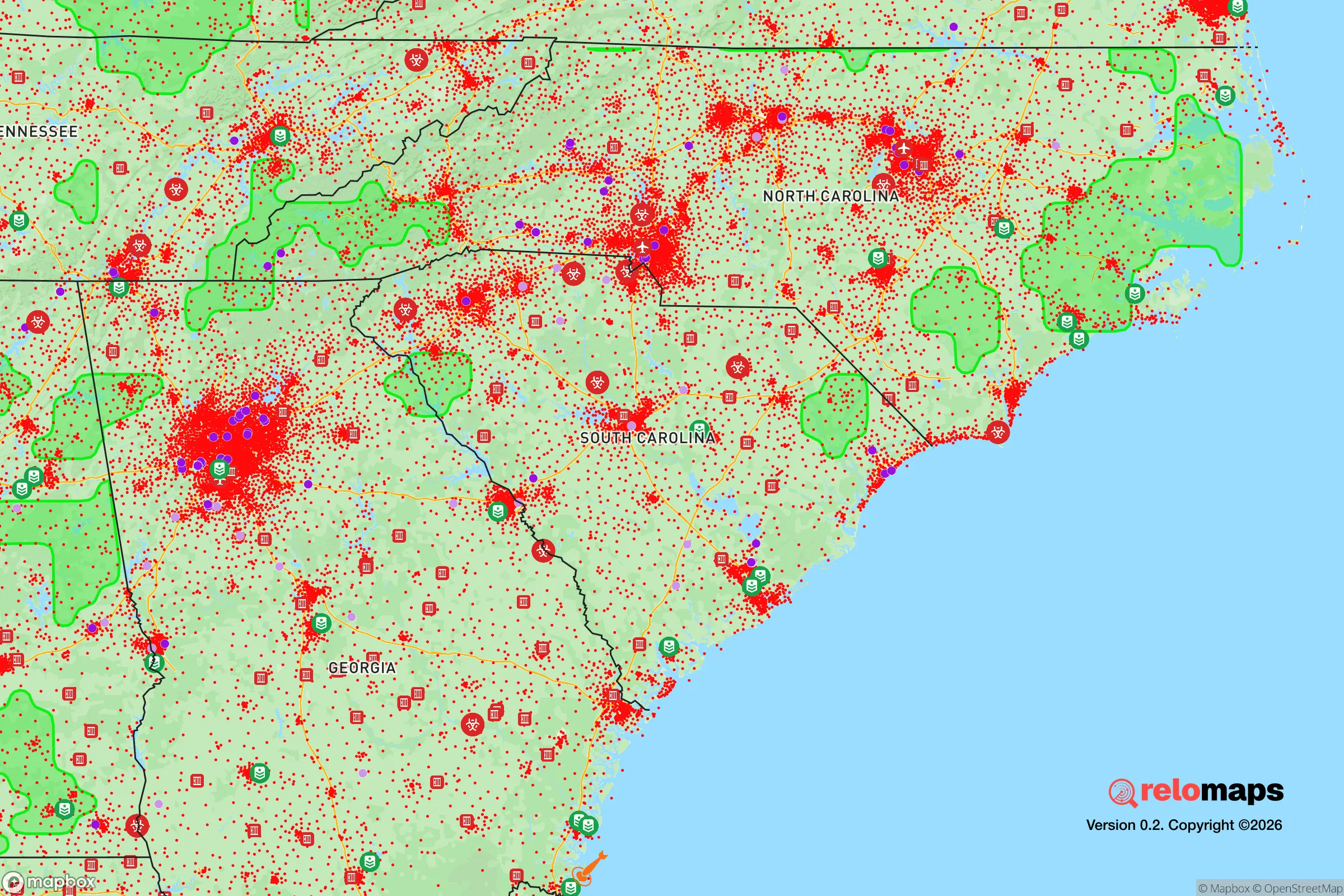
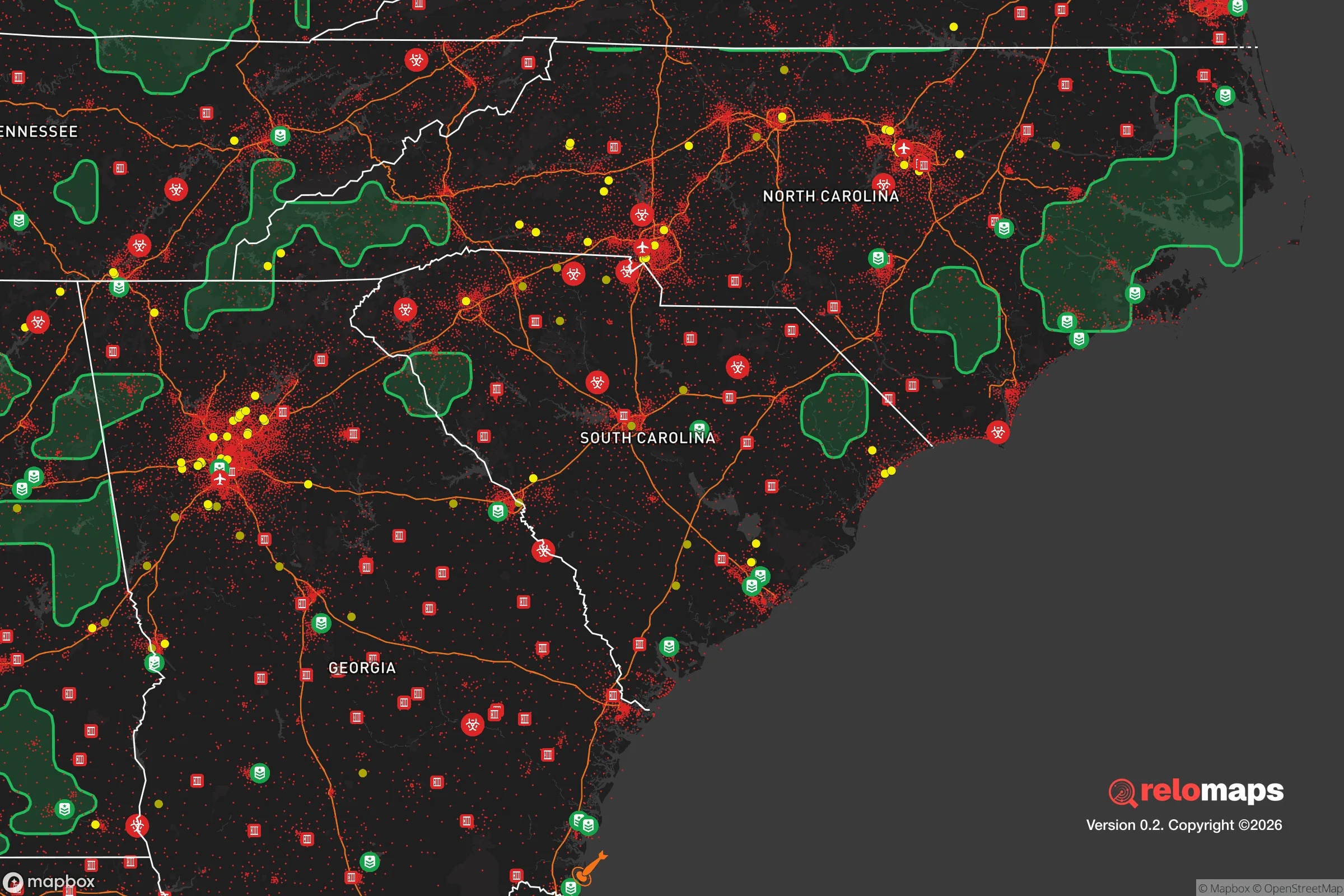


Important Note: For informational purposes only. This does not mean nothing bad ever happens in the green zones. Please use common sense. This is based on public data and modeled with AI. We tried to take a conservative approach but mistakes happen. We update this regularly as new information becomes available.
Solar Generator Recommendations
Backup power matters more here than in safer locations. We've picked three solar generators across budgets and capacity tiers — start with the budget unit if you only need a few essentials, or step up if you want to run a fridge and HVAC for days at a time.

Jackery Portable Power Station Explorer 300
Budget OptionPower on the Go: Weighing only 11 lbs, it's convenient to set up and store with book-sized foldable solar panels

BLUETTI Portable Power Station AC180
Designed for both indoor and outdoor scenarios, AC180 is highly capable as it has a robost capacity and continuous output power.

EF ECOFLOW DELTA Pro Ultra Power Station
Upgraded PickEcoFlow DELTA Pro Ultra is a whole-home energy system designed to grow with your family. Integrated with the Smart Home Panel 2, it scales to meet your evolving energy needs — keeping your home powered, intelligent, and secure through every stage of life.
We earn a commission, at no additional cost to you.
Strategic Assessment Analysis
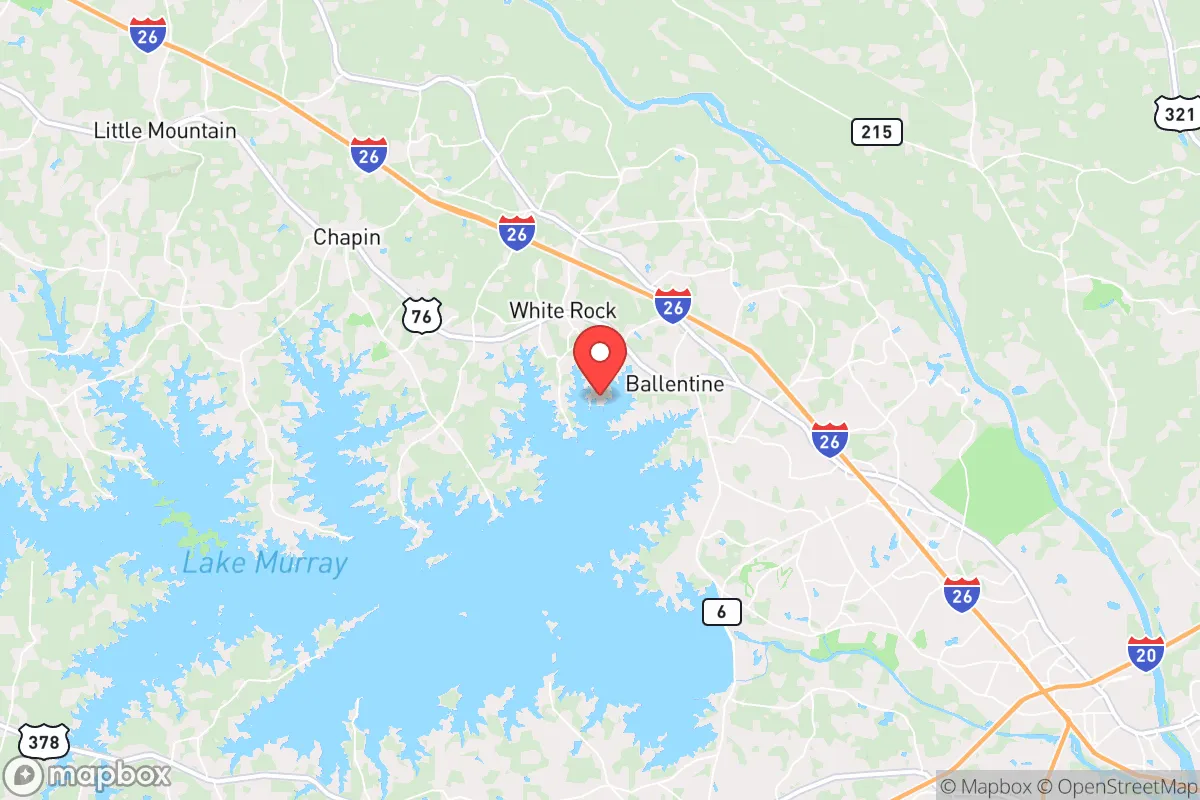
Lake Murray of Richland, South Carolina, offers a strategic balance of proximity to resources and natural separation from the most acute risks of major metropolitan collapse, but it is not a remote fortress. The area’s resilience hinges on its position roughly 15 miles northwest of Columbia’s urban core, placing it close enough for supply runs and medical access yet far enough to avoid the immediate blast radius of a major civic disruption or infrastructure failure. For a relocator operating from a prepper mindset, this is a calculated trade-off: the lake provides a natural buffer and a renewable water source, but the region’s dependence on Columbia’s grid and logistics means you must plan for cascading failures that could ripple outward within hours of a mass casualty event or unrest.
Geographic position and natural advantages for long-term survival
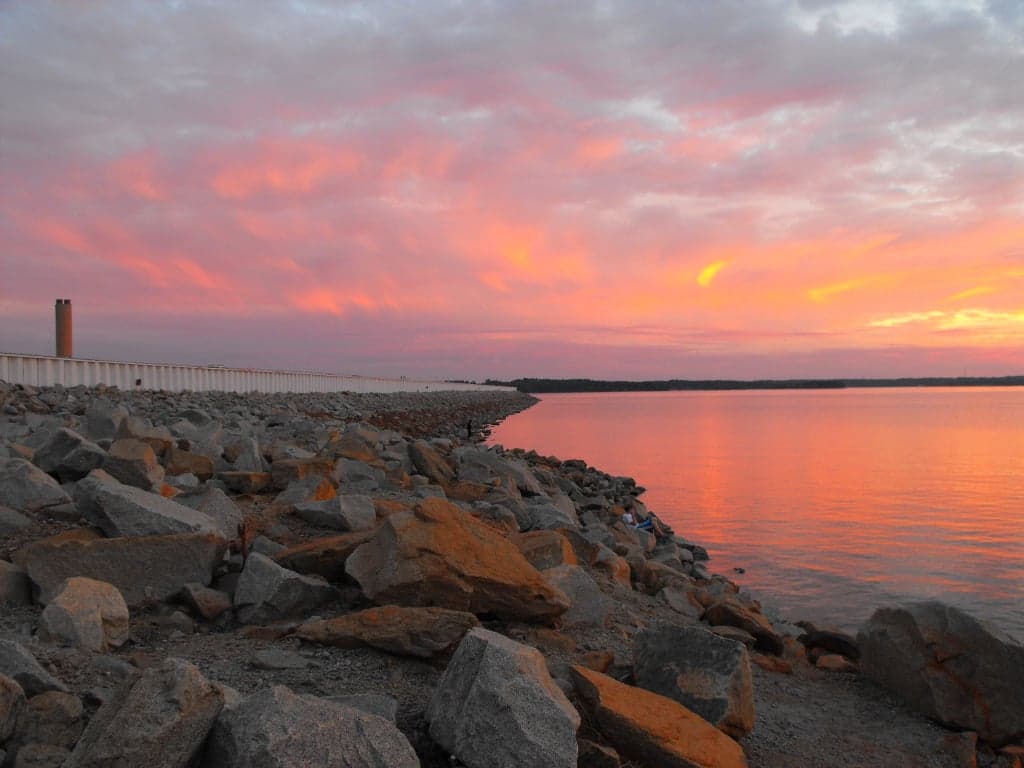
Lake Murray itself is the area’s primary strategic asset. As a 50,000-acre man-made reservoir with a controlled dam (the Dreher Shoals Dam), it offers a reliable freshwater source that is less susceptible to drought than many Southeastern reservoirs. The surrounding terrain is gently rolling Piedmont, not mountainous, but the lake’s irregular shoreline creates dozens of coves and inlets that provide natural concealment and defensible positions for a homestead or bug-out location. The area sits outside the immediate fallout zone of any major military or industrial target in Columbia, such as Fort Jackson (a major Army training base) or the Savannah River Site (a nuclear facility 70 miles southwest). Prevailing winds from the southwest would carry any airborne contamination from Savannah River away from Lake Murray, though a worst-case release could still affect the region. The lake’s elevation—roughly 360 feet above sea level—keeps it above floodplains, and the local clay soils drain well, reducing the risk of prolonged ground saturation that could complicate gardening or water purification efforts.
Risks, exposures, and proximity to fallout-relevant landmarks
The most significant vulnerability is the area’s proximity to Columbia’s critical infrastructure. The city hosts the state capital, the University of South Carolina, and major hospitals like Prisma Health Richland, which would become chokepoints during a mass casualty event or civil unrest. A coordinated attack or grid failure in Columbia could trigger a refugee flow along I-26 and I-77, both of which pass within 10 miles of Lake Murray’s eastern shore. The Dreher Shoals Dam itself is a potential target—a breach would drain the lake and flood downstream communities, though the dam is reinforced and monitored. Additionally, the nearby Columbia Metropolitan Airport (CAE) and Fort Jackson are plausible targets for a precision strike or sabotage, with fallout patterns that could extend into the lake area depending on wind. The region’s power grid is part of the Santee Cooper and Dominion Energy networks, which have experienced rolling blackouts during past winter storms (e.g., 2014 and 2022), indicating fragility under stress. For a relocator, this means you cannot rely on grid power for more than 72 hours during a regional crisis; solar and battery backup are non-negotiable.
Practical resilience for a relocator: food, water, energy, and defensibility
Water is the area’s strongest card. Lake Murray’s volume—over 2.5 trillion gallons—means you can draw and treat water indefinitely with a simple pump and filtration system (e.g., a Berkey or Sawyer filter). The lake is also stocked with striped bass, catfish, and crappie, providing a protein source that requires no refrigeration if caught daily. However, the water is subject to agricultural runoff and occasional algae blooms in late summer, so boiling or chemical treatment is essential. Food security is moderate: the surrounding Richland and Lexington counties have fertile soil for raised-bed gardening, and local farmers’ markets (e.g., the Soda City Market in Columbia) offer seasonal produce, but you cannot rely on them during a supply chain disruption. The area’s energy situation is mixed. Solar exposure is good—roughly 4.5 peak sun hours per day—but the region’s frequent thunderstorms and hurricane remnants (e.g., from Hurricane Hugo in 1989 or Matthew in 2016) can knock out panels. A propane generator with a 500-gallon tank is a better baseline. Defensibility is decent but not ideal: the lake’s shoreline is dotted with suburban subdivisions and vacation homes, meaning you will have neighbors within earshot. A property on a private cove with a single road access point is preferable to a peninsula with multiple approaches. The local law enforcement presence (Richland County Sheriff’s Department) is professional but thinly spread across 770 square miles, so you should plan for self-reliance during the first 72 hours of any crisis.
The overall strategic picture for Lake Murray is one of calculated compromise. It is not a remote bug-out location like the Appalachian foothills, nor is it a hardened urban compound. Instead, it offers a middle ground: a defensible water source within a day’s drive of major medical and supply hubs, but with clear exposure to Columbia’s vulnerabilities. For a conservative-minded relocator who values community ties and a slower pace but refuses to be caught flat-footed, this area works if you invest in off-grid water, solar, and a well-stocked pantry. The key is to treat the lake as a resource, not a guarantee—and to have a secondary plan for a deeper retreat into the Upstate or the mountains if the situation escalates beyond local resilience. In a world where the next crisis could be a cyberattack on the grid, a biological event, or civil unrest, Lake Murray provides a viable base camp, not a final redoubt.

* Values derived from national, state, county, city and local statistics and may differ in a specific area. Last updated: 2026-04-23T04:03:33.000Z
Narrative content on this page is AI-generated and may contain mistakes. Verify any details that matter before acting on them.
ReloMaps may earn a commission from affiliate links at no extra cost to you.

