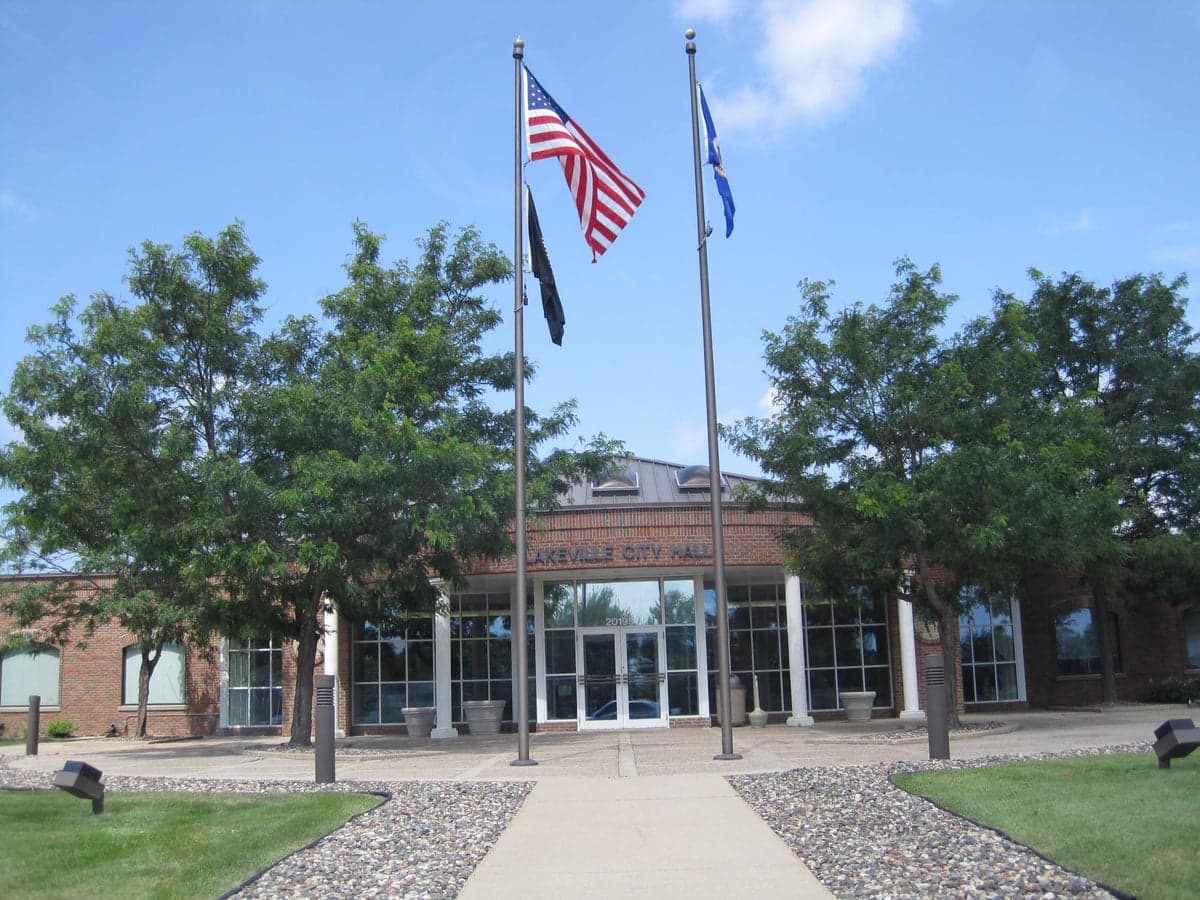
Photo: Wikipedia
Quality of Life in Lakeville, MN
A high quality of life with strong walkability, manageable living costs, healthy neighborhood signals, and solid amenity access.
What does Quality of Life tell us?
Quality of Life blends cost of living, nearby amenities, socioeconomic signals, and neighborhood character. City-level scores represent the whole municipality; individual neighborhoods can differ.
What does this tell us?
Quality of Life blends cost of living, nearby amenities, socioeconomic signals, and neighborhood character. City-level scores represent the whole municipality; individual neighborhoods can differ.
Cost of Living
49% above national average
The Real Cost of Living in Lakeville, MN for 2026
| Tier | Individual | Family (4) |
|---|---|---|
| Survival | $28k | $52k |
| Comfortable | $83k | $121k |
| Luxury | $192k+ | $298k+ |
| Elite (Top 5%) | $226k+ | $350k+ |
114%
The Area Signal
A metric tracking the socioeconomic signals of the area.
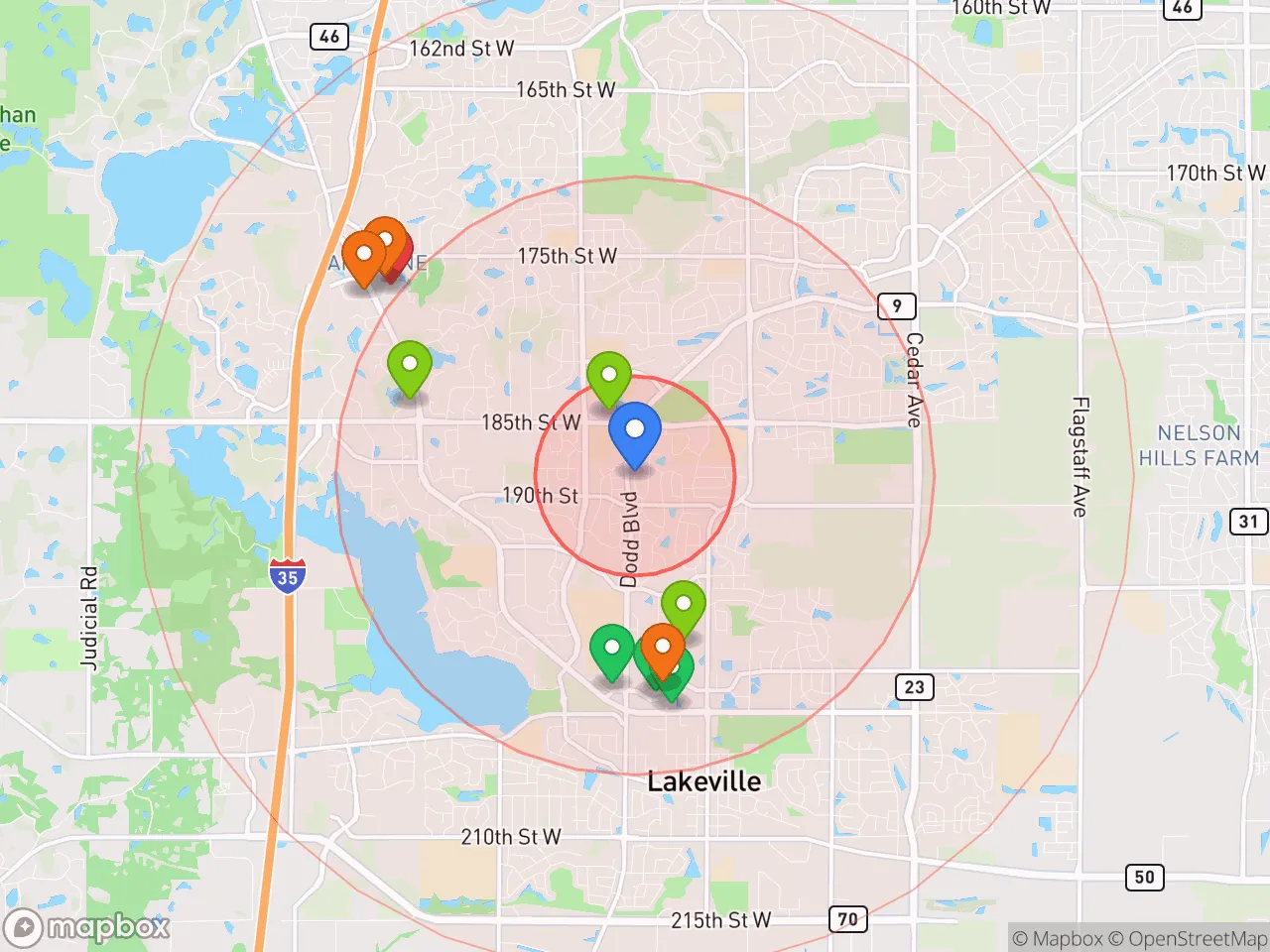
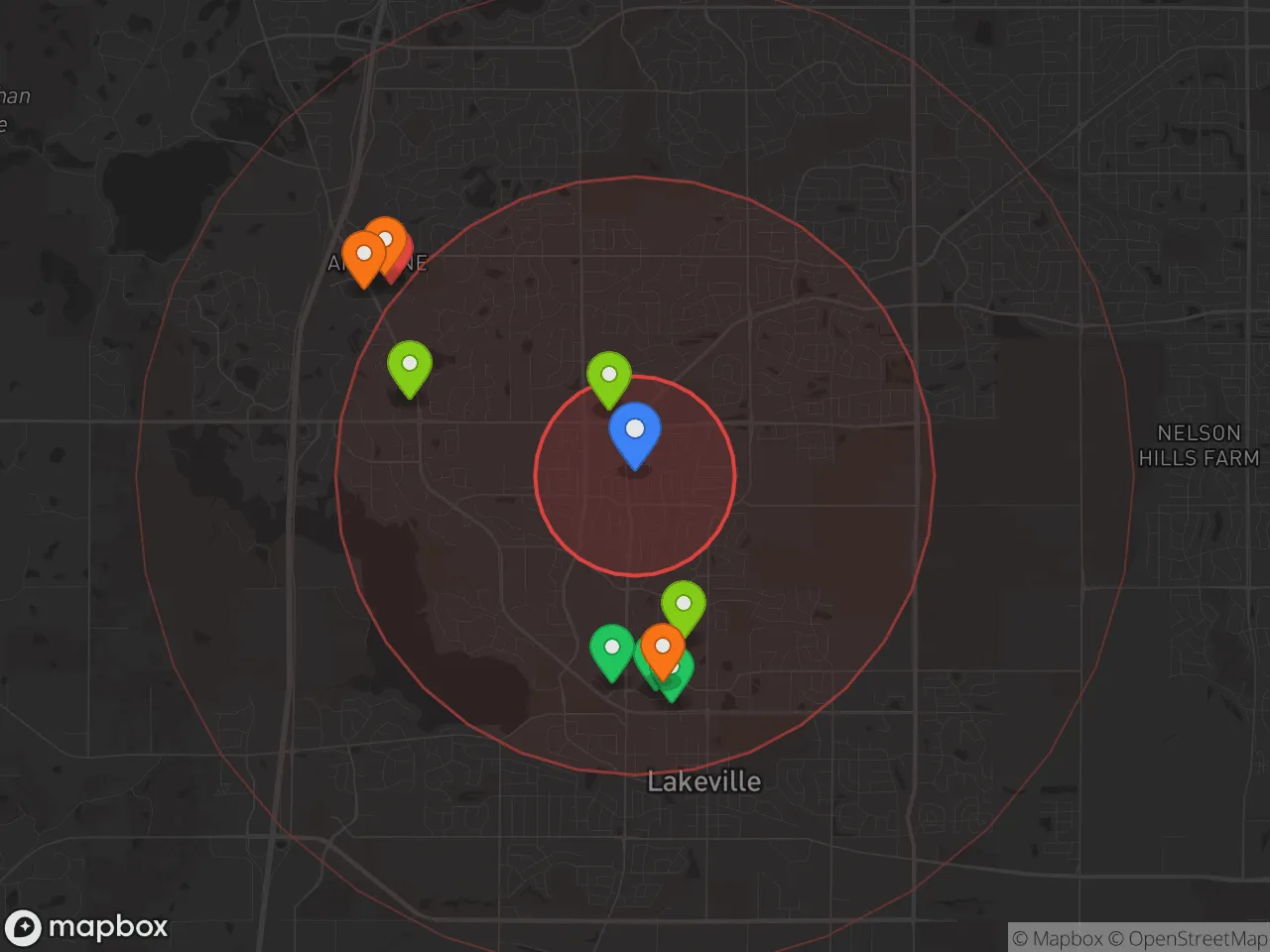
Hobbies
Explore the areaGroceries
5 within 10 miles
Gas
20 within 10 miles
Hospital
20 within 20 miles
Airport
JFK — John F. Kennedy Memorial
Post Office
USPS — Lakeville, MN
Critical Amenities
Quality-of-Life Analysis
Lakeville, Minnesota, is a prosperous southern Twin Cities suburb where the cost of living index sits at 149—nearly 50 percent above the national average—reflecting a community built around high-end single-family homes, top-rated public schools, and a largely professional, family-oriented population. With a median home value of $425,200 and a median rent of $1,727, the city attracts dual-income households and executives who work in Minneapolis, St. Paul, or the growing job centers of Dakota County, while the average commute of roughly 24.5 minutes keeps daily life manageable. The demographic profile skews toward married couples with children, and the area’s affluence is visible in its well-maintained parks, low crime rates, and robust local retail corridors.
Cost of living, housing, and how Lakeville compares to nearby suburbs
Lakeville’s cost of living index of 149 is significantly higher than the U.S. baseline of 100, driven almost entirely by housing costs. The median home value of $425,200 places it above neighboring suburbs such as Farmington (around $380,000) and Burnsville (around $350,000), but below the most expensive western suburbs like Eden Prairie (median above $450,000). Renters face a median monthly rent of $1,727, which is roughly $200–$300 more than in Apple Valley or Rosemount, reflecting Lakeville’s newer housing stock and strong school district. Property taxes in Dakota County are moderate for the metro area—around 1.1 percent of assessed value—but the overall housing burden means that households earning less than $90,000 annually may find homeownership challenging. For comparison, a family earning the metro-area median income of about $95,000 would spend roughly 28 percent of gross income on a mortgage at current rates, which is at the upper edge of the traditional affordability threshold.
What daily life is like for families: schools, parks, and local amenities
Daily life in Lakeville revolves around its highly regarded public school system, Lakeville Area Schools (ISD 194), which consistently ranks among the top 10 percent of Minnesota districts for test scores and college readiness. The district operates two comprehensive high schools—Lakeville North and Lakeville South—both of which offer strong Advanced Placement and extracurricular programs. Beyond academics, the city maintains over 40 parks, including the 200-acre Ritter Farm Park with its trails and community gardens, and the Lakeville Heritage Center, which hosts farmers markets and seasonal events. Retail is concentrated along Kenrick Avenue and Dodd Boulevard, anchored by the Lakeville Crossing shopping center and a mix of national chains and local restaurants. The average commute of 24.5 minutes is shorter than the Twin Cities metro average of about 27 minutes, and most residents drive to work, as public transit options are limited to express bus routes to downtown Minneapolis. For recreation, the city’s proximity to the Minnesota River Valley and lakes like Orchard and Marion provides fishing, boating, and hiking within a 15-minute drive.
Lakeville is best suited for families and professionals who prioritize excellent schools, low crime, and a suburban lifestyle with easy access to the Twin Cities job market. The high cost of housing means that renters and first-time buyers on a single income may struggle, but for dual-income households earning $120,000 or more, the trade-off of higher expenses for strong schools, safe neighborhoods, and a 24.5-minute commute is a clear value proposition. Retirees and singles may find the area less appealing due to the family-centric culture and limited nightlife, but for those seeking a well-run, affluent suburb with a proven track record in education and community services, Lakeville delivers consistently.

Crime in Lakeville, MN
Lower crime rates than 93% of comparable U.S. locations.
Violent CrimeViolent Crime Analysis
Property CrimeProperty Crime Analysis
Crime Analysis
Lakeville, Minnesota, is one of the safest cities of its size in the Twin Cities metro area, with violent crime rates roughly 75% lower than the national average and property crime rates that are also well below state and national benchmarks. However, as a suburb of a major metropolitan area, Lakeville is not immune to the broader regional crime trends influenced by the progressive criminal justice policies prevalent in the Twin Cities. The city’s low crime rates are a direct result of its affluent, family-oriented character and a well-funded police department, but residents should remain aware that proximity to the metro area brings risks associated with regional crime patterns.
Crime in context
Lakeville’s violent crime rate stands at 91.1 incidents per 100,000 residents, a fraction of the national rate of roughly 380 per 100,000 and well below the Minnesota state average of about 240 per 100,000. Property crime in Lakeville is 521.9 per 100,000, compared to the national average of approximately 1,950 per 100,000. These figures place Lakeville among the safest suburbs in Dakota County. However, the broader Twin Cities metro area has seen rising property crime and car thefts in recent years, driven in part by progressive district attorneys in Hennepin and Ramsey counties who have implemented policies that reduce pretrial detention and lower penalties for repeat offenders. While Lakeville’s local prosecutor’s office maintains a more conservative approach, the city’s location within a region with lenient justice policies means that criminals from nearby high-crime areas can and do travel into the suburb.
What residents experience
For the average Lakeville resident, crime is not a daily concern. The most common incidents are thefts from vehicles and package thefts, particularly in neighborhoods near major retail corridors like Kenrick Avenue and Dodd Boulevard. Violent crime is rare and typically involves domestic disputes or isolated incidents rather than random attacks. Residents consistently report feeling safe walking their neighborhoods at night and allowing children to play outside unsupervised. The Lakeville Police Department maintains a strong community presence, with neighborhood watch programs and active social media alerts. Still, the city has experienced occasional carjackings and burglaries linked to organized groups operating out of Minneapolis and St. Paul, reflecting the reality that no suburb is fully insulated from metro-area crime when regional prosecutors prioritize offender rehabilitation over public safety.
Neighborhood-level variation in Lakeville is modest but noticeable. The newer developments in the western and southern parts of the city, such as the area around Lakeville High School and the Orchard Lake neighborhood, tend to have the lowest crime rates. Older sections near the city’s core, particularly along 185th Street and near the downtown commercial district, see slightly higher property crime rates. The safest areas are the gated communities and large-lot subdivisions in the far south, where home values exceed $600,000 and police patrols are frequent. Overall, Lakeville offers a high degree of safety, but residents should remain vigilant about locking vehicles and securing packages, especially given the regional context of progressive criminal justice policies that reduce consequences for property offenders.
* Values derived from national, state, county, city and local statistics and may differ in a specific area. Last updated: 2026-04-24T15:44:01.000Z
Narrative content on this page is AI-generated and may contain mistakes. Verify any details that matter before acting on them.
ReloMaps may earn a commission from affiliate links at no extra cost to you.

