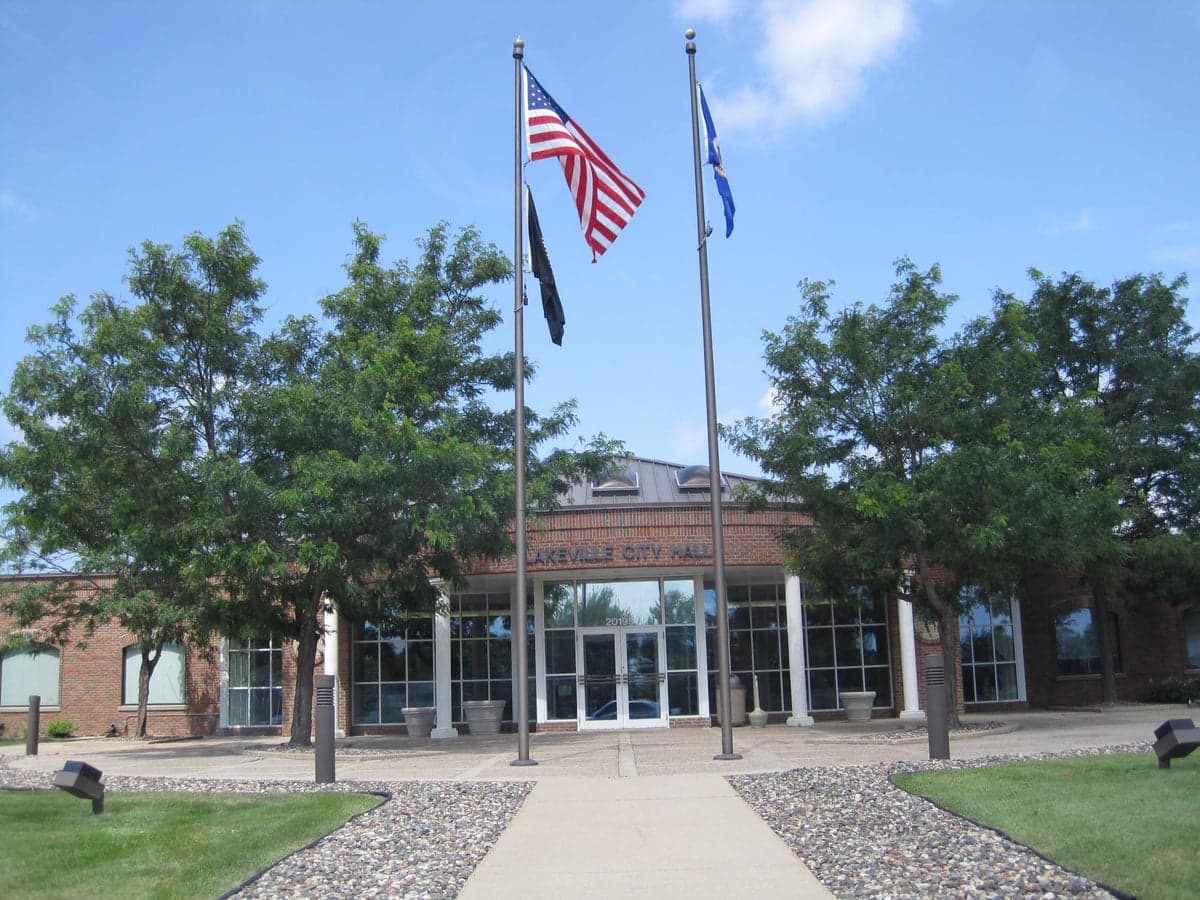
Photo: Wikipedia
Political ClimatePolitical Climate in Lakeville, MN
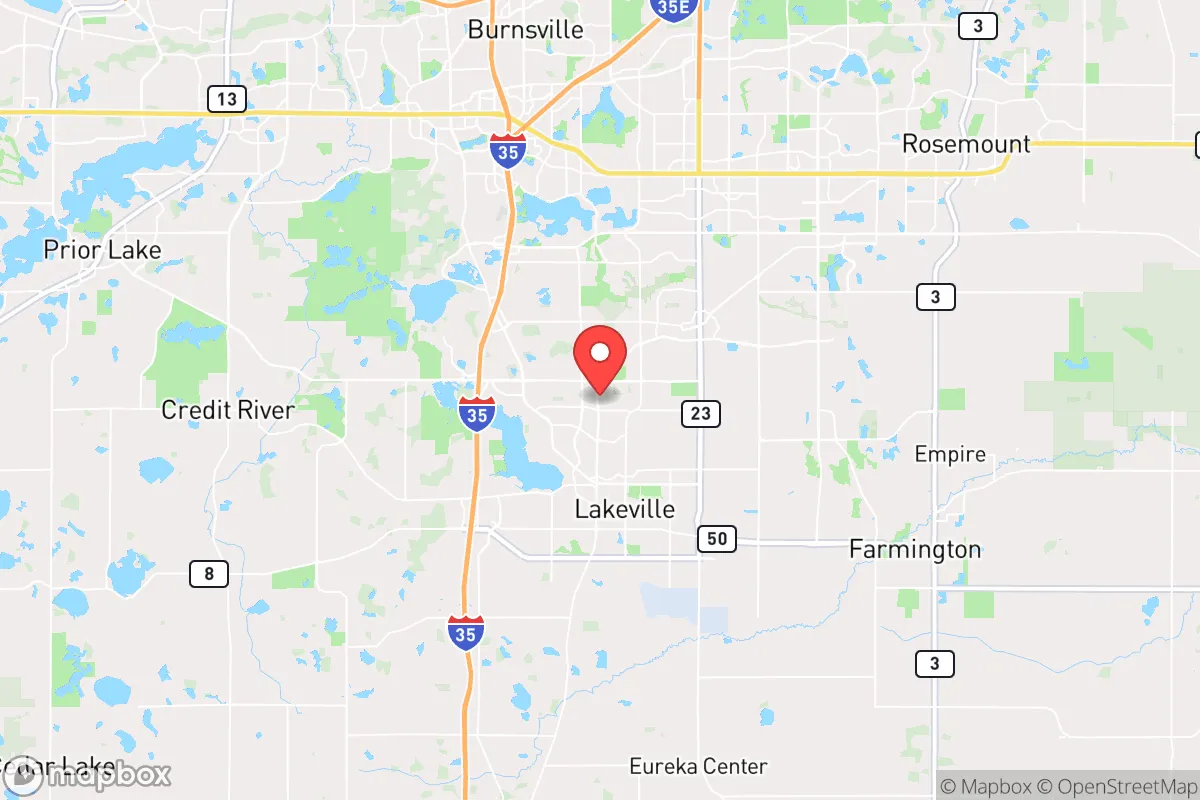
District shown is the primary district for this city’s centroid. Cities may span multiple districts.
Local Political AnalysisPolitical Analysis of Lakeville, MN
Lakeville, Minnesota, has long been a reliably conservative community, but like many suburbs of the Twin Cities, it’s been drifting leftward in recent cycles. The Cook PVI of D+3 might surprise folks who remember when this town was a solid red stronghold, but it reflects a real shift—especially in the newer developments closer to the Dakota County line. While the city council and school board still lean center-right, the influence of progressive voters from Minneapolis and St. Paul is creeping in, and that’s something to keep an eye on if you value local control and limited government.
How it compares
Lakeville sits in a political sandwich. To the north, you’ve got Burnsville and Eagan—both reliably blue, with higher taxes and more progressive policies on housing and policing. To the south and east, places like Farmington and Northfield are still more conservative, though Northfield’s college-town vibe brings its own brand of leftism. The real contrast is with rural towns like New Prague or Lonsdale, where you won’t find a D+3 label anywhere. Lakeville’s shift is driven by new residents moving from the core cities, bringing their voting habits with them. The 2020 election saw Biden win the city by a slim margin, which would have been unthinkable a decade ago. The school board races have also gotten tighter, with more progressive candidates winning seats and pushing for things like equity audits and critical race theory-inspired curriculum changes.
What this means for residents
For a long-time resident, the biggest concern is how this political drift affects daily life. Property taxes have been climbing faster than inflation, partly to fund new mandates from the state government—like paid family leave and stricter environmental regulations—that Lakeville voters didn’t ask for. The city council has been more willing to accept state and federal grants with strings attached, which can lead to overreach on issues like housing density and zoning. If you’re a homeowner who values your right to use your property as you see fit, you might find the new comprehensive plan a bit intrusive. The school district has also seen a push for more centralized control, with less flexibility for parents to opt their kids out of certain lessons or programs. It’s not a full-blown progressive takeover, but the trend is clear: more government involvement in areas that used to be left to families and local communities.
Culturally, Lakeville still feels like a family-oriented, outdoorsy town—the lakes and parks are well-maintained, and the community events like the Pan-O-Prog festival draw big crowds. But the policy distinctions are growing. The city has adopted a more aggressive stance on climate action, including a sustainability plan that could lead to higher fees for things like new construction or stormwater management. There’s also been a quiet push for more affordable housing mandates, which some worry will change the character of established neighborhoods. If you’re looking for a place where the government stays out of your business and lets you live your life, Lakeville is still a decent bet—but you’ll want to pay attention to local elections and maybe get involved with the more conservative-leaning civic groups. The next few years will tell us whether this town holds its ground or becomes another suburb that’s indistinguishable from Minneapolis in its politics.

State Political ClimatePolitical Climate in Minnesota
State Political AnalysisPolitical Environment in the State
Minnesota has shifted from a classic purple battleground to a reliably blue state over the past two decades, with Democrats now holding every statewide office and both legislative chambers. The state voted for Hillary Clinton by 1.5 points in 2016, Joe Biden by 7 points in 2020, and Kamala Harris by roughly 4 points in 2024, but the real story is the collapse of Republican performance in the Twin Cities suburbs and the simultaneous hardening of rural red counties. For a conservative considering relocation, the state presents a stark choice: live in a metro area where your vote is effectively meaningless, or settle in a rural or exurban pocket where local governance still respects traditional values but state-level policy will consistently override you.
Urban vs. rural divide
The political map of Minnesota is a tale of two worlds. The Twin Cities metro — Hennepin, Ramsey, and Washington counties — drives the state’s blue lean, with Minneapolis and St. Paul delivering margins of 70-80% for Democratic candidates. But the real shift has been in the inner-ring suburbs like Edina, Bloomington, and Roseville, which were competitive as recently as 2012 and now vote solidly Democratic. Meanwhile, the exurbs tell a different story: Scott County (Shakopee, Prior Lake) and Wright County (Buffalo, Monticello) have become reliably red, with Scott County voting +18 for Trump in 2024. Outside the metro, the state is overwhelmingly conservative. Greater Minnesota — counties like Stearns (St. Cloud), Olmsted (Rochester), and St. Louis (Duluth) — is a mixed bag: St. Cloud and its surrounding farmland lean red, while Duluth and Rochester are blue-leaning college towns. The rural northwest and southwest, including Marshall, Worthington, and Fergus Falls, vote Republican by 30-40 point margins, but their populations are too small to offset the metro’s dominance. The 7th Congressional District, which covers much of western Minnesota, is the only reliably red seat in the state, held by Republican Michelle Fischbach.
Policy environment
Minnesota’s policy environment has lurched sharply left since Democrats took full control of state government in 2023. The state now has a progressive income tax with a top rate of 9.85% on income over $190,000, one of the highest in the nation. Property taxes are also above average, with effective rates around 1.1% of home value. The regulatory posture is aggressive: Minnesota adopted California-style emissions standards in 2024, effectively mandating electric vehicle sales targets. Education policy is a flashpoint — the state has no school choice program, no charter school expansion, and in 2023 passed a law requiring school districts to adopt “ethnic studies” curricula that critics argue prioritize activism over academics. Healthcare is dominated by the state-run MNsure exchange, and Minnesota expanded Medicaid under the ACA. Election laws are among the most liberal in the country: same-day voter registration, no voter ID requirement, and automatic voter registration when getting a driver’s license. The 2023 “Restore the Vote” law restored voting rights to felons on parole or probation, adding an estimated 55,000 people to the rolls. For a conservative, the policy environment feels like a one-party state imposing a progressive agenda with little regard for rural or suburban dissent.
Trajectory & freedom
Minnesota is becoming less free by any objective measure, particularly on economic and personal liberty. The 2023 legislative session was a blitz of progressive legislation: a new “clean energy” mandate requiring 100% carbon-free electricity by 2040, a paid family and medical leave program funded by payroll taxes, and a “driver’s license for all” law that grants licenses to undocumented immigrants. On gun rights, Minnesota is a “may issue” state for concealed carry permits, and in 2023 Democrats passed a “red flag” law allowing courts to temporarily seize firearms from individuals deemed a threat — a law that conservatives argue lacks due process. Parental rights took a hit with the “trans refuge” law, which shields gender-affirming care for minors from out-of-state legal challenges and prevents parents from being notified if a child changes their gender identity at school. Medical autonomy is constrained by the state’s strict Certificate of Need laws for healthcare facilities, which limit competition and keep costs high. Property rights are under pressure from aggressive environmental regulations, including a 2024 law that restricts development near wetlands. The trajectory is clear: each session brings more mandates, more taxes, and more state control over personal decisions.
Civil unrest & political movements
Minnesota has been a national flashpoint for civil unrest since the 2020 murder of George Floyd in Minneapolis, which sparked the largest protests in the state’s history and led to the dismantling of the Minneapolis Police Department’s “Third Precinct.” The aftermath included a failed ballot measure to replace the police department with a “public safety” agency, and a subsequent spike in violent crime that has only recently begun to subside. The state is also a battleground for immigration politics: Minnesota is a “sanctuary state” under a 2023 law that limits local law enforcement cooperation with federal immigration authorities. This has led to tensions in communities like Worthington and Willmar, where large immigrant populations have changed the demographic makeup rapidly. Election integrity remains a live issue — the 2020 election saw a narrow 7-point margin for Biden, but no widespread fraud was proven, though conservatives point to the state’s lack of voter ID and the 2023 felon voting law as vulnerabilities. Organized movements on the right include the Minnesota Gun Owners Caucus and the Minnesota Family Council, which have fought legislative battles but lost ground. On the left, the Minnesota DFL is now dominated by the progressive “Squad” wing, with Rep. Ilhan Omar representing Minneapolis and Rep. Betty McCollum representing St. Paul. The political atmosphere is polarized, but the left holds the institutional power.
Projection
Over the next 5-10 years, Minnesota will likely become more blue and more progressive. Demographic trends favor the Democrats: the Twin Cities metro is growing while rural counties shrink, and the state’s immigrant population — concentrated in the metro and in agricultural towns — tends to vote Democratic. In-migration patterns show a net outflow of conservatives to states like Florida, Texas, and South Dakota, while newcomers from blue states like California and Illinois are more likely to be progressive. The 2024 election results showed Democrats losing ground among rural voters but gaining in the suburbs, a trade-off that still favors them statewide. The state’s Republican Party is fractured between a moderate wing and a populist, Trump-aligned faction, making it difficult to mount a unified challenge. Realistically, a conservative moving to Minnesota today should expect to live under one-party Democratic rule for the foreseeable future, with state-level policies that will continue to expand government control over healthcare, education, energy, and personal choices. The only bright spot is that local control in red counties and exurbs can still provide some buffer — but that buffer is eroding as state preemption laws expand.
For a conservative considering Minnesota, the bottom line is this: if you value low taxes, school choice, gun rights, and limited government, this is not the state for you. The political climate is hostile to those priorities, and the trajectory is worsening. The best you can hope for is to find a conservative enclave like Scott County or Wright County, where local governance is still sane, but you’ll be fighting state-level headwinds on everything from your kids’ education to your property taxes. If you’re dead set on living in the Land of 10,000 Lakes, prepare to be a permanent political minority — and to pay for the privilege.
* Values derived from national, state, county, city and local statistics and may differ in a specific area. Last updated: 2026-04-24T15:44:01.000Z
Narrative content on this page is AI-generated and may contain mistakes. Verify any details that matter before acting on them.
ReloMaps may earn a commission from affiliate links at no extra cost to you.

