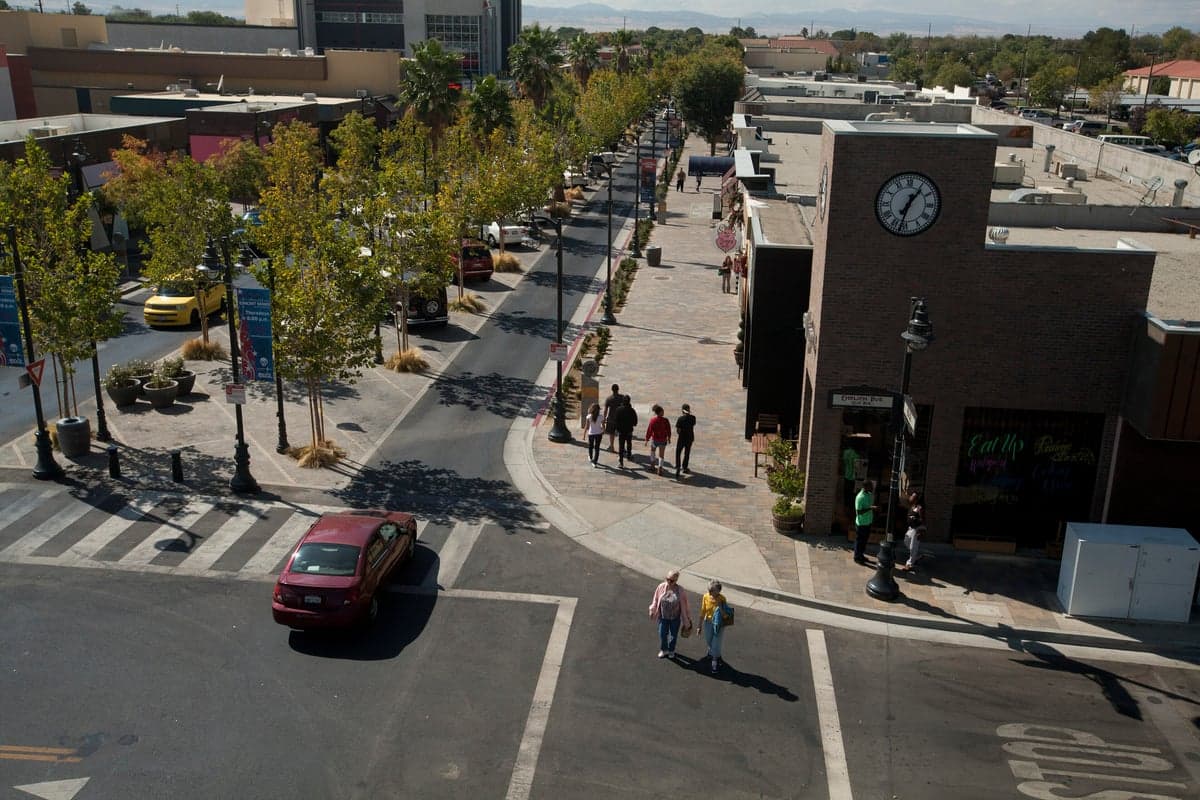
Photo: Wikipedia
Political ClimatePolitical Climate in Lancaster, CA
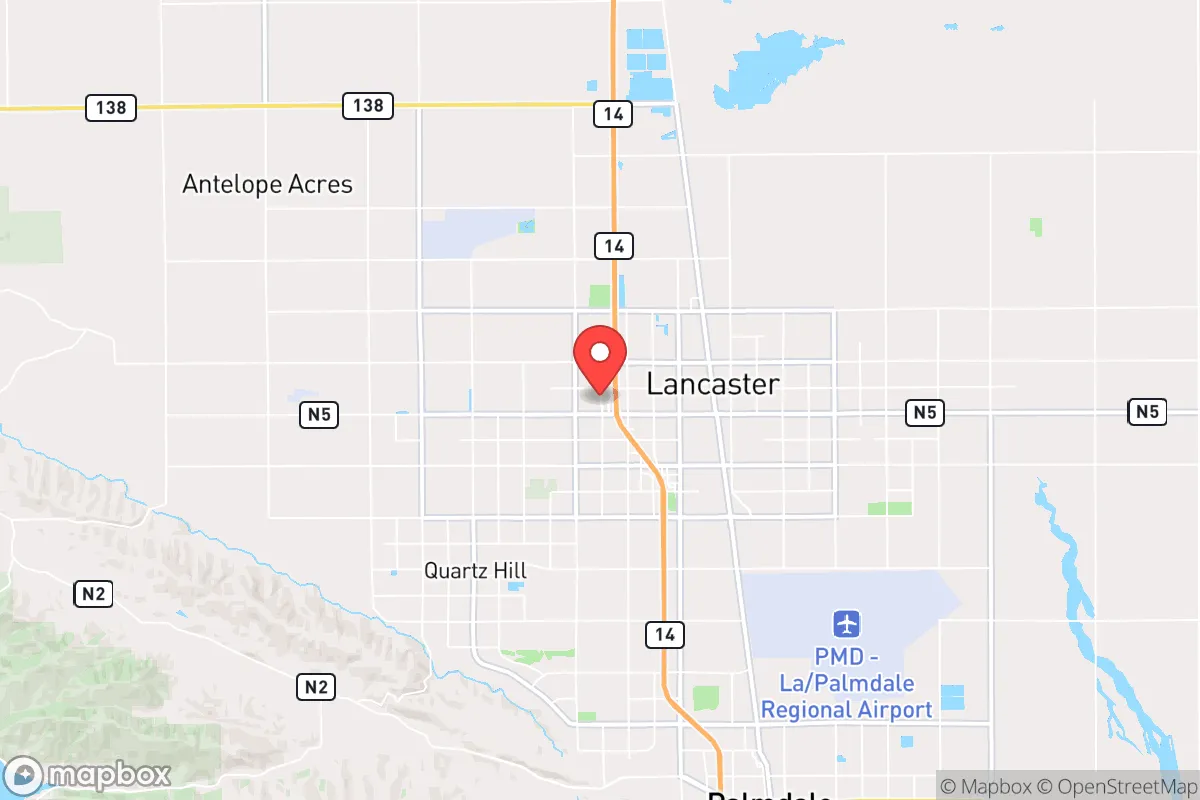
District shown is the primary district for this city’s centroid. Cities may span multiple districts.
Local Political AnalysisPolitical Analysis of Lancaster, CA
Lancaster, California, sits in a unique political spot. On paper, the city’s Cook PVI is D+3, meaning it leans slightly Democratic compared to the national average. But if you’ve lived here as long as I have, you know that number doesn’t tell the whole story. This area has deep roots in aerospace, agriculture, and a strong sense of personal responsibility. Over the last decade, you’ve seen a real shift—what was once a reliably conservative stronghold in northern Los Angeles County has been slowly nudged leftward by an influx of folks from the coast and a growing reliance on government services. The trajectory feels concerning, like we’re watching a place that prided itself on self-reliance get tangled up in the same big-government thinking that’s bogged down the rest of the state.
How it compares
Drive just a few miles in any direction, and you’ll feel the political contrast. Head south toward Palmdale, and you’ll find a similar story—a working-class town that’s trending bluer, but still holds onto a libertarian streak. But go east toward the unincorporated areas of the Antelope Valley, or north toward Rosamond and Mojave, and you’re in deep red territory where folks still fly Trump flags and talk about property rights like they’re sacred. Lancaster itself has become the progressive hub of the valley. The city council has pushed through policies like a “sanctuary city” ordinance and embraced state-mandated housing density increases that feel like Sacramento telling us how to live. Meanwhile, nearby towns like Quartz Hill and Littlerock have pushed back hard on similar measures, keeping a more traditional, hands-off approach to local governance. It’s a real split—Lancaster feels like it’s trying to be a mini-Los Angeles, while the surrounding areas are holding the line.
What this means for residents
For someone who values personal freedoms and limited government, the changes in Lancaster are a red flag. The most obvious impact is on your wallet and your rights. Property taxes have crept up as the city expands its social programs, and new development rules—like strict energy codes and “green” building mandates—add thousands to the cost of a new home. There’s also been a push for more public surveillance and “equity” initiatives that feel like government overreach into how you run your business or raise your kids. On the plus side, if you’re okay with a more active local government, you’ll find plenty of investment in parks, public transit, and community events. But for those of us who moved out here to escape the bureaucracy of LA County, it’s getting harder to tell the difference. The long-term worry is that Lancaster keeps drifting left, and the next wave of policies could make it even harder to live here without constant government involvement in your daily life.
One cultural distinction worth noting: Lancaster still has a strong “Old West” vibe in its outskirts, with horse properties and rural living that attract folks who want space and privacy. But the city core is embracing a more urban, progressive identity—think bike lanes, farmers markets, and public art that leans into social justice themes. The annual California Poppy Festival is still a big draw, but even that’s gotten more politicized in recent years. If you’re considering a move here, my honest advice is to look closely at the specific neighborhood. The further you get from downtown, the more you’ll find the Lancaster that used to be—where people mind their own business and don’t expect the government to solve every problem. But the direction of the city as a whole? Let’s just say I’m keeping a close eye on the next election cycle.

State Political ClimatePolitical Climate in California
State Political AnalysisPolitical Environment in the State
California is a one-party Democratic state where Republicans haven’t won a statewide election since 2006, and the legislature has a supermajority that can pass tax increases without a single GOP vote. The dominant coalition is a mix of coastal progressives, Silicon Valley tech elites, and unionized public-sector workers, with the state’s overall partisan lean shifting from a purple swing state in the 1990s to a deep blue stronghold by the 2010s. Over the last 20 years, the GOP has been effectively locked out of power, and the state has moved steadily left on taxes, regulation, and social policy, making it a challenging environment for conservatives considering relocation.
Urban vs. rural divide
The political map of California is a stark contrast between the densely populated coastal metros and the vast, sparsely populated interior. The San Francisco Bay Area and Los Angeles County are the Democratic engines, with San Francisco itself voting 85% for Biden in 2020 and Los Angeles County delivering over 4 million votes for Democrats. Inland, the Central Valley and far northern counties are Republican strongholds — places like Bakersfield (Kern County) voted 55% for Trump, and Redding (Shasta County) went 65% for Trump. The divide is so sharp that Orange County, once a GOP bastion, flipped to Biden in 2020 and has not returned, while rural counties like Modoc and Siskiyou remain deeply red. Suburbs like Simi Valley in Ventura County and Temecula in Riverside County are politically mixed, with Temecula recently gaining attention for conservative school board battles, but they are increasingly surrounded by blue-leaning growth.
Policy environment
California’s policy environment is defined by high taxes, heavy regulation, and progressive social mandates. The state has the highest top marginal income tax rate in the nation at 13.3%, and sales taxes can exceed 10% in cities like Los Angeles and San Francisco. Property taxes are capped by Proposition 13, but annual reassessments on new purchases mean homeowners face steep bills. The regulatory posture is aggressive: California has its own environmental standards (CARB), strict labor laws (AB 5 reclassifying gig workers as employees), and a statewide rent control cap (AB 1482). Education policy is dominated by the California Teachers Association, with school choice limited and charter schools under attack via AB 1505. Healthcare is heavily regulated, with a state-run exchange (Covered California) and mandates for employer coverage. Election laws are among the most liberal: universal mail-in ballots, same-day registration, and no voter ID requirement, which has fueled ongoing concerns about election integrity among conservatives.
Trajectory & freedom
California is becoming less free by almost any measure, especially for conservatives. Recent legislation has expanded government control over personal choices: AB 2098 (2022) allows medical boards to punish doctors for spreading “misinformation,” chilling free speech in healthcare. SB 357 (2022) bans loitering for prostitution, but critics say it’s used to target sex workers rather than traffickers. On gun rights, California has some of the strictest laws in the nation — the Unsafe Handgun Act (SB 869) effectively bans new handgun models, and the state’s “may issue” concealed carry regime was tightened further after Bruen. Parental rights have been eroded by AB 1955 (2024), which prohibits schools from notifying parents if a child changes their gender identity. Property rights are constrained by rent control and CEQA (California Environmental Quality Act), which allows endless lawsuits to block development. On the positive side, Proposition 13 still protects long-term homeowners from massive tax hikes, and the state has a strong tradition of direct democracy via ballot initiatives, though the legislature often undermines them.
Civil unrest & political movements
California has a long history of civil unrest, from the 1992 Los Angeles riots to the 2020 George Floyd protests that saw widespread looting in San Francisco and Los Angeles. Organized activist movements are dominated by the left: Black Lives Matter, Antifa, and immigrant rights groups are highly active, while conservative movements like the California Republican Party and the “Recall Newsom” effort (which gathered 1.7 million signatures in 2021) show grassroots energy but limited electoral success. Immigration politics are a flashpoint: California is a sanctuary state (SB 54, 2017), prohibiting local law enforcement from cooperating with ICE. Secession rhetoric exists on both sides — the “Calexit” movement pushes for independence, while rural counties like Siskiyou and Modoc have floated secession from the state, though neither has traction. Election integrity remains a hot-button issue: the 2020 election saw universal mail-in ballots, and subsequent audits in places like Shasta County revealed discrepancies, leading to a conservative push for hand-counting that was ultimately blocked by the state.
Projection
Over the next 5-10 years, California will likely become even more progressive, driven by demographic shifts and in-migration patterns. The state’s population has declined for three consecutive years (2020-2023), with net out-migration of over 500,000 people, mostly to Texas, Arizona, and Nevada. Those leaving tend to be middle-class families and conservatives, while those arriving are often foreign immigrants and young progressives drawn to coastal cities. The legislature is expected to continue passing laws that expand government control — look for a single-payer healthcare push, further gun restrictions, and more limits on parental rights. The GOP is unlikely to win any statewide office, but could gain a few legislative seats in the Central Valley and Inland Empire as those areas grow. For a conservative moving in now, expect to find a state where your vote for president or senator is effectively meaningless, your taxes will be high, and your personal freedoms will be increasingly constrained by Sacramento.
For a new resident, the bottom line is that California offers unmatched natural beauty and economic opportunity, but at a steep cost to personal liberty and financial freedom. If you’re a conservative, you’ll be in a permanent minority, fighting uphill battles on everything from school boards to gun rights. The state is not going to become more friendly to your values — it’s going to become less so. If you’re considering relocation, weigh the trade-offs carefully: the weather and job market are real, but so is the erosion of the freedoms that make America unique. Many conservatives are choosing to leave; those who stay are often doing so for family, career, or climate, not for political alignment.
* Values derived from national, state, county, city and local statistics and may differ in a specific area. Last updated: 2026-04-24T14:31:54.000Z
Narrative content on this page is AI-generated and may contain mistakes. Verify any details that matter before acting on them.
ReloMaps may earn a commission from affiliate links at no extra cost to you.

