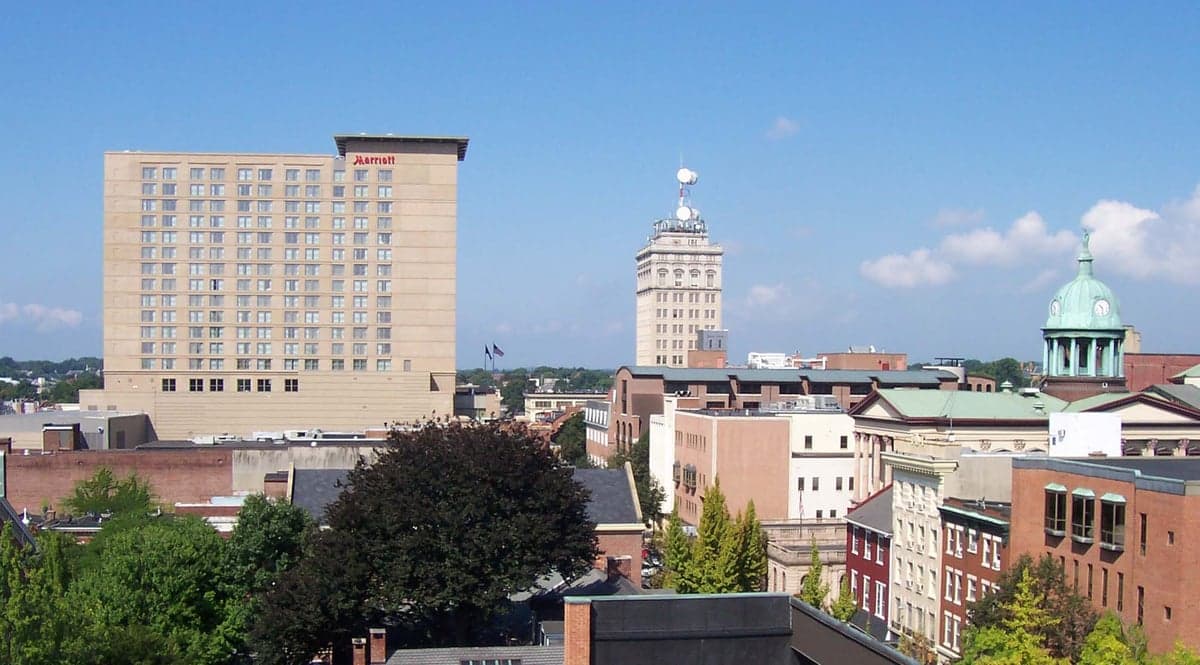
Photo: Wikipedia
Quality of Life in Lancaster, PA
A high quality of life with strong walkability, manageable living costs, healthy neighborhood signals, and solid amenity access.
What does Quality of Life tell us?
Quality of Life blends cost of living, nearby amenities, socioeconomic signals, and neighborhood character. City-level scores represent the whole municipality; individual neighborhoods can differ.
What does this tell us?
Quality of Life blends cost of living, nearby amenities, socioeconomic signals, and neighborhood character. City-level scores represent the whole municipality; individual neighborhoods can differ.
Cost of Living
10% below national average
The Real Cost of Living in Lancaster, PA for 2026
| Tier | Individual | Family (4) |
|---|---|---|
| Survival | $19k | $35k |
| Comfortable | $40k | $58k |
| Luxury | $102k+ | $157k+ |
| Elite (Top 5%) | $119k+ | $185k+ |
109%
The Area Signal
A metric tracking the socioeconomic signals of the area.
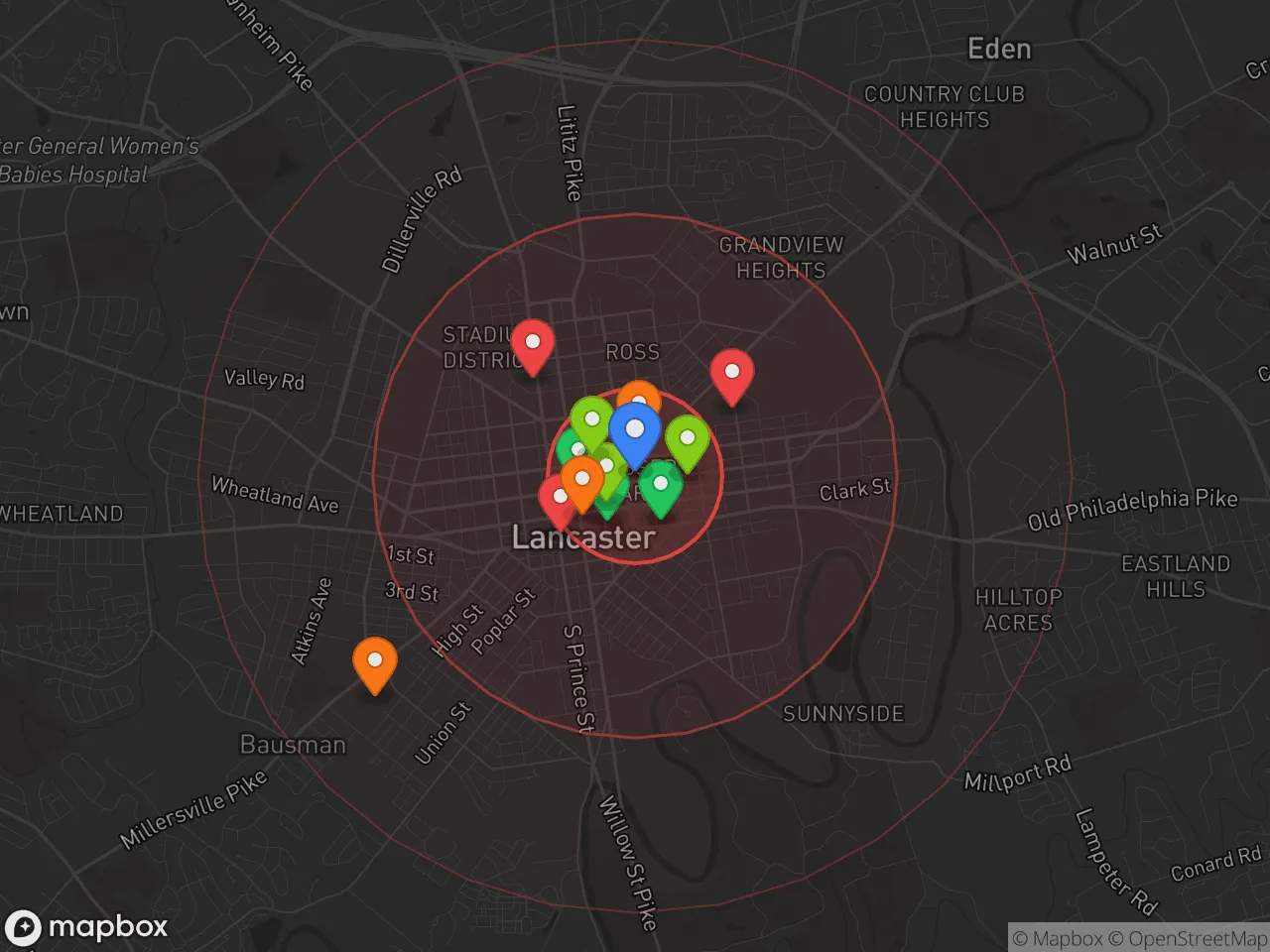
Hobbies
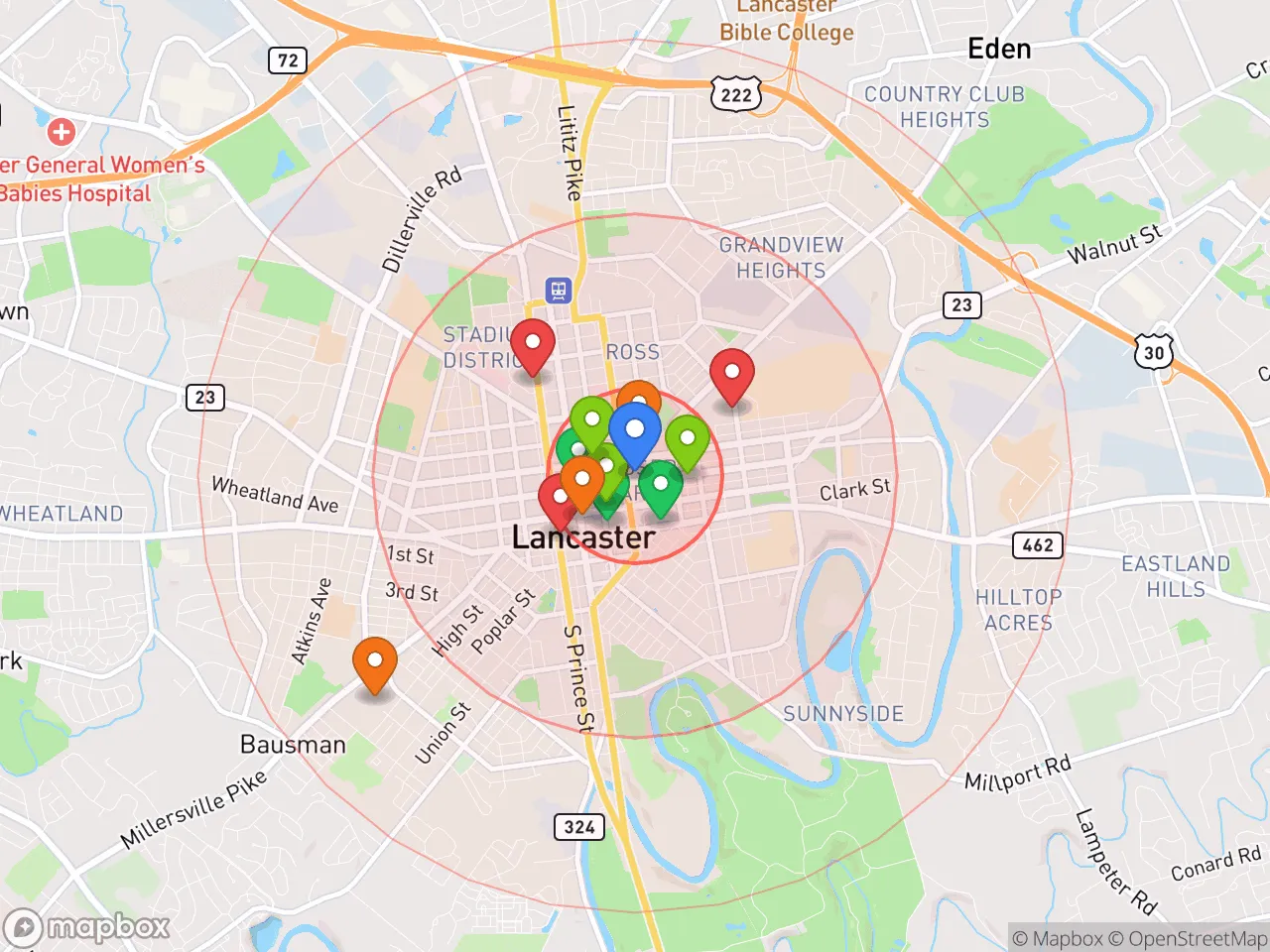
Explore the areaGroceries
8 within 10 miles
Gas
20 within 10 miles
Hospital
11 within 20 miles
Airport
PHL — Philadelphia International
Post Office
USPS — Lancaster, PA
Critical Amenities
Quality-of-Life Analysis
Lancaster, Pennsylvania, offers a quality of life defined by a blend of historic charm, a strong local economy, and a cost of living that remains well below the national average, attracting a diverse mix of young professionals, growing families, and retirees. The city and its surrounding county are home to a population that values community, walkability, and access to both urban amenities and Amish Country farmland. With a cost of living index of 90 (10% below the U.S. average), Lancaster provides a tangible affordability advantage over nearby major metros like Philadelphia and New York City, while still offering a rich cultural and recreational scene.
Cost of living, housing affordability, and how Lancaster compares to nearby cities
Lancaster’s housing market is a primary driver of its affordability. The median home value sits at $203,700, significantly lower than the national median of roughly $350,000 and a fraction of the prices seen in Philadelphia (where the median exceeds $250,000) or the New York City suburbs. Median rent is $1,177, making it feasible for renters to find one-bedroom apartments in the city center or family homes in surrounding townships like Manheim Township or East Hempfield. While home prices have risen steadily since 2020, they remain accessible for dual-income households. The average commute of 23.4 minutes is slightly below the national average, reflecting the area’s manageable traffic patterns and the prevalence of local employment in healthcare, education, and manufacturing—major employers include Lancaster General Health and Armstrong World Industries. Compared to Harrisburg (30+ minute commutes) or Reading, Lancaster offers a stronger balance of job density and short drive times.
What daily life is like: amenities, schools, and the local rhythm
Daily life in Lancaster revolves around a walkable downtown core, a robust farmers’ market scene, and a calendar of community events. The Central Market, the nation’s oldest continuously operating public market, anchors the city with fresh produce, meats, and artisan goods. The School District of Lancaster offers magnet programs and dual-language options, while suburban districts like Hempfield and Manheim Township consistently rank among the top in the state for test scores and extracurriculars. The city’s rhythm is slower than a major metro but faster than rural Pennsylvania—residents enjoy over 30 parks, the Lancaster County Park system, and easy access to the Susquehanna River for kayaking and hiking. The arts scene is notable, with the Lancaster Symphony Orchestra, the Demuth Museum, and First Friday gallery walks drawing crowds. For families, the presence of the Lancaster Science Factory and Dutch Wonderland amusement park provides year-round activities.
Lancaster is best suited for those who value a lower cost of living without sacrificing cultural depth or community connection. Young professionals will find a growing tech and creative sector, while families benefit from strong public schools and safe neighborhoods like West End or School Lane Hills. Retirees are drawn to the walkable downtown and access to top-tier healthcare at Lancaster General Hospital. The area is less ideal for those seeking a 24-hour nightlife scene or a hyper-diverse urban environment, but for anyone prioritizing affordability, short commutes, and a tight-knit community with deep historical roots, Lancaster delivers a compelling quality of life.

Crime in Lancaster, PA
Generally safer than 67% of comparable U.S. locations.
Violent CrimeViolent Crime Analysis
Property CrimeProperty Crime Analysis
Crime Analysis
Lancaster, Pennsylvania, presents a mixed safety profile, with crime rates that are elevated compared to national averages but generally lower than those of nearby major cities like Philadelphia and Baltimore. The city's violent crime rate stands at 370.5 incidents per 100,000 residents, while property crime occurs at a rate of 1,376.2 per 100,000. These figures place Lancaster in a category where residents should exercise standard urban caution, particularly as the local justice system's progressive leanings raise concerns about recidivism and public safety.
Crime in context
Lancaster's violent crime rate of 370.5 per 100,000 is roughly 50% higher than the national average of approximately 230 per 100,000, though it remains significantly below the rates of larger nearby metros like Philadelphia (over 600 per 100,000). Property crime in Lancaster, at 1,376.2 per 100,000, is about 20% above the national average of roughly 1,150 per 100,000. These numbers reflect a city that struggles with crime more than typical suburban or rural areas, but is not among the most dangerous small cities in the Northeast. The surrounding Lancaster County, which includes many affluent suburbs, has substantially lower crime rates, pulling the regional average down.
What residents experience
Lancaster operates within Pennsylvania's judicial system, which has seen a trend toward progressive prosecution and sentencing reforms in recent years. District attorneys and judges in the county have increasingly emphasized diversion programs and reduced sentences for nonviolent offenders. While these policies aim to reduce incarceration, critics argue they contribute to higher rates of repeat offending and property crime, as offenders face fewer consequences. Residents commonly report issues with theft, vehicle break-ins, and occasional burglaries, particularly in areas near downtown and along major transit corridors. Violent crime, while less frequent, is concentrated in specific neighborhoods and often involves individuals known to one another rather than random attacks on the public.
For families and individuals considering relocation, the practical impact of Lancaster's crime environment depends heavily on daily routines. Most daytime areas, including the popular downtown shopping and dining district, are generally safe with normal awareness. However, property crime is a persistent nuisance, with bike theft, package theft, and car break-ins being common complaints. The progressive judicial philosophy in the region means that even when perpetrators are caught, they may face minimal jail time, which can be frustrating for victims and does little to deter future offenses.
Neighborhood-level variation
Safety in Lancaster varies dramatically by neighborhood. The western and southern parts of the city, including areas around Franklin & Marshall College and the West End, are considered safer, with crime rates closer to the national average. In contrast, the southeastern quadrant, particularly near the city's public housing developments and along the South Duke Street corridor, experiences violent crime rates two to three times the city average. Suburbs like Lititz, Manheim Township, and East Hempfield Township offer significantly lower crime rates, often with violent crime below 100 per 100,000, making them attractive alternatives for those prioritizing safety while still accessing Lancaster's amenities.
* Values derived from national, state, county, city and local statistics and may differ in a specific area. Last updated: 2026-05-02T01:19:40.000Z
Narrative content on this page is AI-generated and may contain mistakes. Verify any details that matter before acting on them.
ReloMaps may earn a commission from affiliate links at no extra cost to you.

