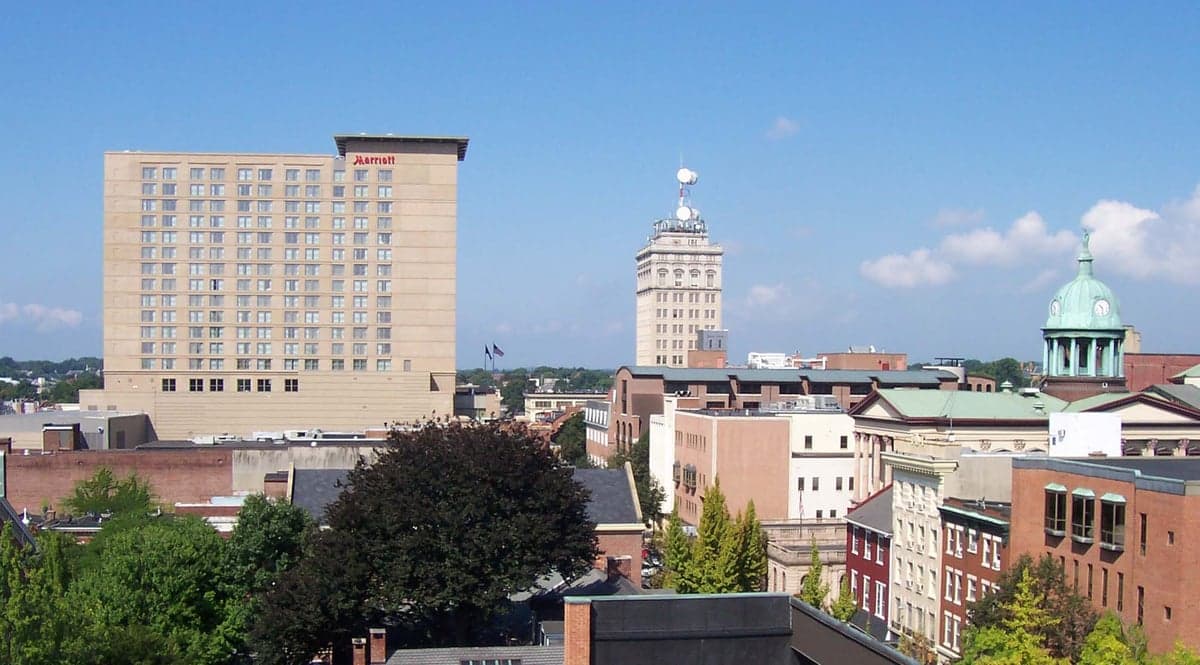
Photo: Wikipedia
Political ClimatePolitical Climate in Lancaster, PA
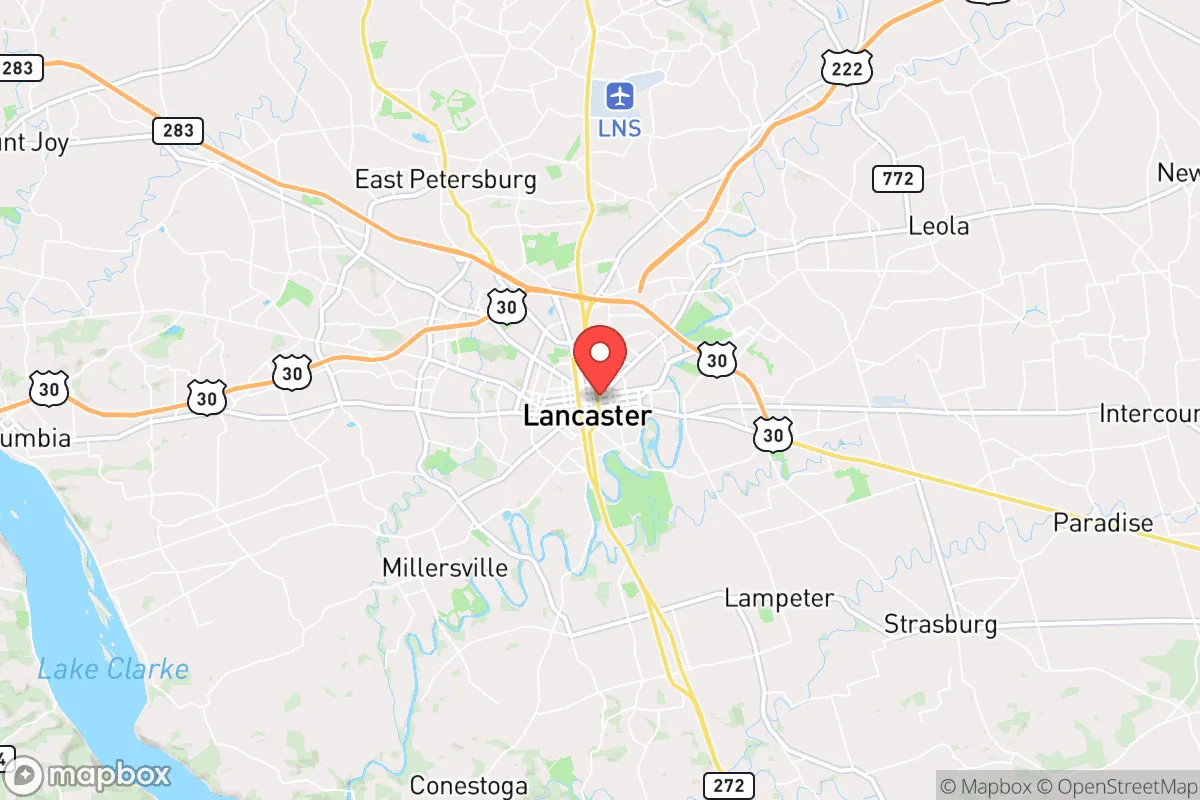
District shown is the primary district for this city’s centroid. Cities may span multiple districts.
Local Political AnalysisPolitical Analysis of Lancaster, PA
Lancaster, Pennsylvania, has long been a conservative stronghold, and the numbers back that up—the area carries a Cook PVI of R+11, meaning it votes about 11 points more Republican than the nation as a whole. But if you’ve lived here as long as I have, you’ve seen the political winds start to shift, and not necessarily for the better. The city itself, Lancaster City, has been trending more progressive in recent years, with a growing number of younger transplants and renters pushing for policies that feel out of step with the county’s traditional values. Meanwhile, the surrounding townships—like Manheim Township, East Hempfield, and Warwick—still lean heavily red, but even there, you’ll notice a creeping influence of progressive ideas, especially in school board meetings and local zoning debates.
How it compares
If you drive 30 minutes east to Reading or 45 minutes north to Harrisburg, you’ll see a stark contrast. Reading is a deep blue city with a strong Democratic machine, while Harrisburg has its own urban-left tilt. Lancaster County, by comparison, has historically been a reliable Republican vote, but the gap is narrowing. In the 2020 presidential election, Lancaster County voted for Trump by about 15 points—still solidly red, but down from the 20-point margins of previous cycles. The real worry for folks like me is that the county’s growth, driven by commuters from Philadelphia and New York, is bringing in voters who don’t share our local values. Places like Lititz and Mount Joy still feel like small-town America, but you can sense the pressure to adopt the same kind of government overreach we see in bigger cities—like mask mandates that outlasted common sense, or zoning changes that prioritize density over property rights.
What this means for residents
For those of us who value personal freedoms and limited government, the trend is concerning. The county commissioners are still mostly conservative, but the city council in Lancaster City has pushed for things like rent control and sanctuary city policies, which feel like a direct attack on local autonomy and public safety. If you’re a homeowner or a small business owner, you’re probably watching school board elections more closely than ever—because that’s where the real battles are happening. Curriculum changes, library book policies, and even mask mandates in schools have become flashpoints. The good news is that the rural and suburban parts of the county still have a strong conservative base, and voter turnout here is high. But if you’re thinking of moving to the area, I’d recommend sticking to the townships outside the city limits, where the political climate is still more aligned with traditional American values of self-reliance and limited government.
One cultural distinction that still holds strong here is the influence of the Amish and Mennonite communities, who tend to vote conservative but also keep a low profile politically. Their presence reinforces a culture of personal responsibility and skepticism of big government—values that are increasingly under pressure. The long-term outlook? If the current migration patterns continue, Lancaster County could become a purple area within a decade, especially if the city’s progressive policies start bleeding into county-level decisions. For now, it’s still a place where a conservative can feel at home, but you’ve got to keep your eyes open and your voice heard at the ballot box.

State Political ClimatePolitical Climate in Pennsylvania
State Political AnalysisPolitical Environment in the State
Pennsylvania is a true battleground state, and if you’re looking at it through a conservative lens, the picture is complicated. Over the past 20 years, the state has shifted from a reliably blue-leaning swing state to a dead-even toss-up, with Donald Trump winning it in 2016 and Joe Biden narrowly flipping it back in 2020. The 2024 race was another nail-biter, with Trump reclaiming the state by less than 2 points. The long-term trajectory shows the Philadelphia suburbs bleeding Republican votes, while the rural and exurban areas have become deeply red. The result is a state that feels like two different countries, and the political tension is palpable.
Urban vs. rural divide
The political map of Pennsylvania is a textbook case of the urban-rural split. Philadelphia and its immediate collar counties—Montgomery, Delaware, and Chester—are the engine of the Democratic vote. These suburbs have shifted hard left over the last decade, driven by college-educated professionals and a growing minority population. Pittsburgh is also reliably blue, though its surrounding Allegheny County is more competitive than Philly’s suburbs. The real story is the rest of the state. The vast rural expanse—from the northern tier along the New York border down through the central Appalachians and into the southwest—is overwhelmingly Republican. Counties like Lycoming, Bradford, and Tioga routinely vote 70%+ Republican. The key battlegrounds are the “collar counties” around Philadelphia that aren’t fully suburbanized, like Bucks and Northampton, and the old industrial towns like Erie, Scranton, and Wilkes-Barre. These areas have been trending red as working-class voters abandon the Democratic Party over cultural and economic issues. The 2020 election saw Luzerne County (Wilkes-Barre) flip from Obama to Trump, and it stayed red in 2024. The divide isn’t just about geography—it’s about worldview. In Philadelphia, you see bike lanes and pride flags; in rural Pennsylvania, you see Trump signs and “Don’t Tread on Me” flags.
Policy environment
Pennsylvania’s policy environment is a mixed bag for conservatives. The state has a flat income tax rate of 3.07%, which is relatively low and hasn’t changed in years—a rare bright spot. Property taxes, however, are a major burden, especially in high-cost areas like the Philadelphia suburbs. There’s no statewide sales tax on groceries or clothing, but local sales taxes can add up. The regulatory posture is moderate; Pennsylvania is not Texas or Florida, but it’s not California either. The state has a strong oil and gas industry in the Marcellus Shale, and while there’s been talk of a severance tax, it hasn’t passed. Education policy is a flashpoint: the state has a massive funding disparity between wealthy suburban districts and poor rural ones, and the courts have ordered a fix, which could lead to higher taxes. School choice is limited—there’s a small tax credit scholarship program, but no universal voucher system. On healthcare, the state expanded Medicaid under Obamacare, which is a done deal. Election laws are a sore spot for conservatives: no voter ID requirement beyond a signature, widespread mail-in voting (expanded during COVID and made permanent), and a Supreme Court that has been friendly to ballot harvesting. The 2020 election saw massive turnout, but also allegations of irregularities in Philadelphia and Allegheny counties that were never fully resolved to many conservatives’ satisfaction.
Trajectory & freedom
On the freedom front, Pennsylvania is trending in the wrong direction. The most concerning recent development is the passage of a “red flag” law in 2023, which allows courts to temporarily seize firearms from individuals deemed a threat. This was a major win for gun control advocates and a clear infringement on Second Amendment rights. The state also has universal background checks and a one-gun-a-month purchase limit. On the positive side, Pennsylvania is a “shall issue” state for concealed carry, and there’s no permit required for open carry. Parental rights have taken a hit: the state’s Department of Education has pushed “culturally responsive” curricula that many conservatives see as CRT-lite, and there’s no explicit ban on transgender medical procedures for minors. Medical freedom took a blow during COVID, with Governor Josh Shapiro (a Democrat) imposing some of the longest-lasting school closures in the nation and a mask mandate that dragged on. Property rights are generally respected, though there’s a growing trend of local zoning laws that restrict development. The state’s tax burden is moderate, but the lack of a right-to-work law means unions still have significant power, especially in the public sector. Overall, the trajectory is toward more government control, not less.
Civil unrest & political movements
Pennsylvania has seen its share of political flashpoints. The 2020 election aftermath was particularly ugly, with massive “Stop the Steal” rallies in Harrisburg and Philadelphia. The state was ground zero for election integrity debates, and many conservatives still don’t trust the results. There’s a strong grassroots movement on the right, with groups like the Pennsylvania Freedom Coalition and local Moms for Liberty chapters fighting school board battles. On the left, Philadelphia has seen significant protest activity, including Black Lives Matter demonstrations in 2020 that turned violent in some areas. Immigration politics are less visible than in border states, but Philadelphia is a sanctuary city, and there’s been tension over the state’s “Welcoming Pennsylvania” initiative, which directs state resources to help illegal immigrants. There’s no serious secession movement, but there is a growing “state divorce” sentiment among rural conservatives who feel ignored by the Philadelphia-Harrisburg axis. The most visible flashpoint for a new resident would be the constant political advertising—Pennsylvania is the most expensive media market in the country during election cycles, and you can’t escape it.
Projection
Over the next 5-10 years, Pennsylvania is likely to remain a battleground, but the demographic trends favor the Democrats. The Philadelphia suburbs are getting more diverse and more educated, which typically means more blue votes. The rural areas are aging and losing population, which means their electoral power is shrinking. The wild card is the growing Hispanic population in places like Reading and Allentown, which could swing either way—they’re culturally conservative but have been courted by Democrats on economic issues. The state’s in-migration is mostly from New York and New Jersey, which tends to bring blue voters. If you’re moving in now, expect the political climate to become more polarized, with the state government likely staying in Democratic hands for the foreseeable future. The best bet for conservatives is to focus on local races—school boards, county commissions, and state legislative seats—where the rural advantage can still hold. The state as a whole is unlikely to become a red stronghold, but it could remain competitive if the GOP can hold onto the working-class voters in the old industrial towns.
For a new resident, the bottom line is this: Pennsylvania offers a mix of low taxes and decent property rights, but the political winds are blowing left. If you’re moving to a rural county like Franklin or York, you’ll find a conservative community that feels like a red state. If you’re moving to the Philadelphia suburbs, you’ll be in a blue bubble with high taxes and progressive policies. The state’s future depends on whether the rural vote can hold the line against the urban machine. It’s a place where your vote truly matters, but it’s also a place where you’ll need to stay engaged to protect your freedoms.
* Values derived from national, state, county, city and local statistics and may differ in a specific area. Last updated: 2026-05-02T01:19:40.000Z
Narrative content on this page is AI-generated and may contain mistakes. Verify any details that matter before acting on them.
ReloMaps may earn a commission from affiliate links at no extra cost to you.

