Photo: Wikipedia
Demographics of Lansing, MI
Affluence Level in Lansing, MI
A below-average socioeconomic profile. Incomes, home values, and educational attainment trail the U.S., with higher poverty and unemployment.
People of Lansing, MI
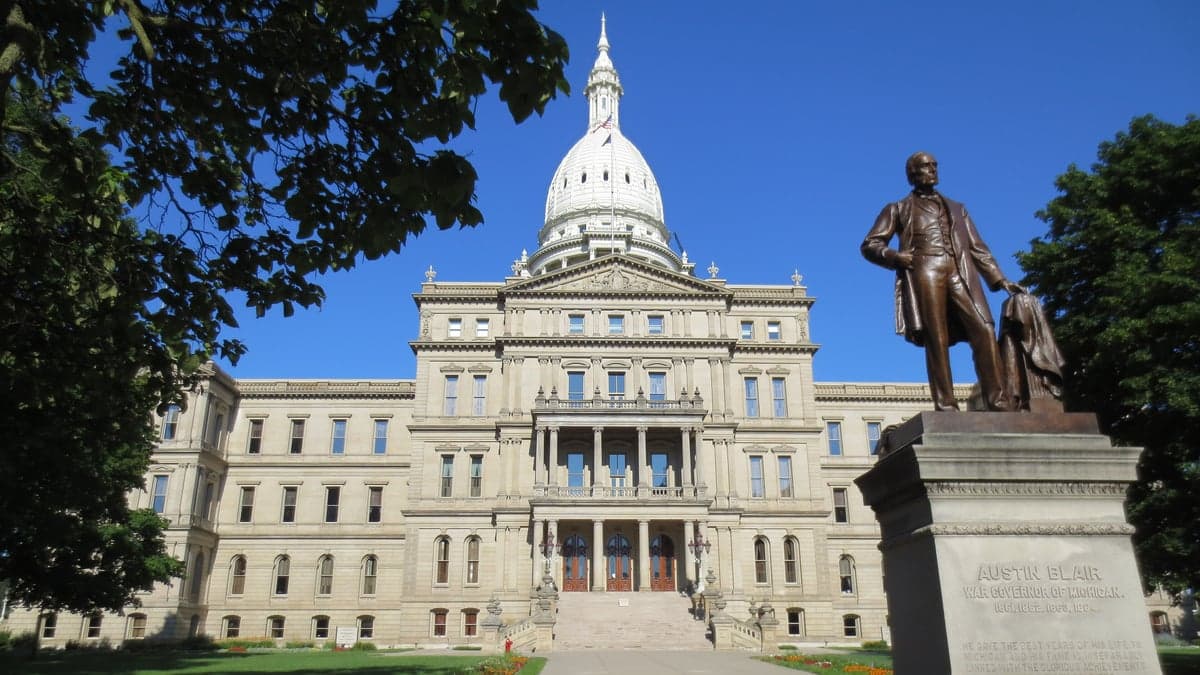
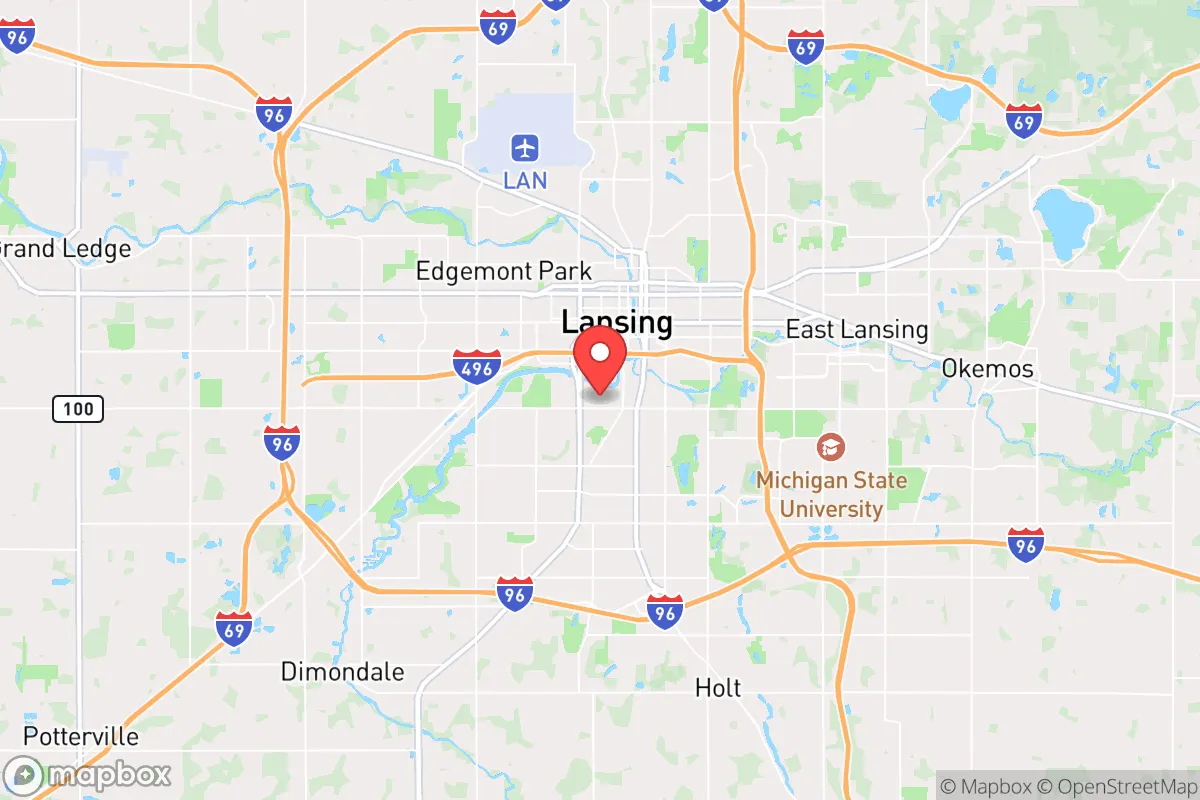
Lansing, Michigan, is a mid-sized state capital of 112,546 residents that feels more like a working-class industrial town than a political hub. Its population is notably diverse for the Midwest, with a White majority (51.3%) balanced by a substantial Black community (22.7%), a growing Hispanic population (12.9%), and smaller but distinct East/Southeast Asian (3.6%) and Indian (1.7%) enclaves. The city is denser than its suburbs, with a blue-collar character shaped by its automotive and government roots, and a foreign-born share of 6.3% that is lower than the national average but concentrated in specific neighborhoods.
How the city was settled and grew
Lansing was founded in the 1830s as a speculative lumber and mill town, but its real growth began in 1847 when it was chosen as the state capital—a political compromise that leapfrogged more established cities. The original settlers were Yankees from New York and New England, who built the first homes in the Old Town district along the Grand River. The city's character shifted dramatically after 1900 when Ransom E. Olds moved his Oldsmobile factory here, drawing a massive wave of European immigrants—Poles, Germans, Italians, and Dutch—who settled in working-class neighborhoods like Westside and MoTown (near the Michigan Avenue corridor). By the 1920s, the Great Migration brought Black families from the rural South to work in the auto plants, forming the core of what is now the South Side community, centered around Martin Luther King Jr. Boulevard. These groups built distinct ethnic parishes, union halls, and small businesses that still define the city's neighborhood fabric.
Modern era (post-1965)
The post-1965 immigration reforms and the decline of manufacturing reshaped Lansing's population. The Black population, which had grown steadily through the mid-20th century, stabilized around 22-24% as many middle-class families moved to suburbs like Delta Township and Holt. The South Side remains the historic heart of Black Lansing, though it has seen population loss and aging housing stock. Hispanic growth accelerated after 1990, driven by Mexican and Central American immigrants drawn to construction, food processing, and service jobs. They concentrated in the Eastside neighborhood, particularly along East Michigan Avenue, where Mexican bakeries, taquerias, and bodegas now anchor a vibrant commercial strip. East/Southeast Asian communities—primarily Hmong and Vietnamese refugees resettled in the 1970s and 1980s—established a small but stable presence in the North Side near the Lansing Mall area, while Indian professionals (many employed by Michigan State University or the auto industry's engineering sector) cluster in the Hawk Nest area near the MSU campus border. The White population, once a commanding majority, has declined from over 70% in 1980 to just over half today, with many families moving to outlying townships for newer schools and lower taxes.
The future
Lansing's population is slowly aging and slightly shrinking (down from a peak of ~130,000 in 1970), but it is not homogenizing. The Hispanic share is the fastest-growing segment, projected to reach 18-20% by 2040, driven by both immigration and higher birth rates. The Eastside will likely become more distinctly Hispanic, while the South Side may see modest reinvestment as downtown redevelopment pushes southward. The East/Southeast Asian and Indian communities are plateauing, as second-generation professionals often leave for larger job markets in Chicago or Detroit. The White population is expected to continue its gradual decline, though the Old Town and Downtown districts are attracting younger, college-educated Whites and a smattering of remote workers, reversing decades of disinvestment. The city is tribalizing into distinct enclaves rather than blending into a single melting pot, with each neighborhood maintaining a clear ethnic or economic identity.
For someone moving to Lansing now, the city offers a genuinely diverse, affordable urban experience with distinct neighborhood characters—but it is not a place of rapid growth or demographic convergence. The South Side remains the core of Black Lansing, the Eastside is becoming the Hispanic heartland, and the North Side and Hawk Nest hold small but stable Asian and Indian communities. The city's future is one of slow, managed change, where each group holds its ground rather than assimilating into a single mainstream. This makes Lansing a place where newcomers can find a specific community to join, but where the broader civic identity remains fragmented and working-class.

* Values derived from national, state, county, city and local statistics and may differ in a specific area. Last updated: 2026-05-03T10:53:41.000Z
Narrative content on this page is AI-generated and may contain mistakes. Verify any details that matter before acting on them.
ReloMaps may earn a commission from affiliate links at no extra cost to you.

