Photo: Wikipedia
Strategic Assessment of Lansing, MI
Meaningful friction. Expect exposure to either population pressure, blast zones, or natural disaster risk. Consider buying a retreat property.
What does the Strategic Assessment tell us?
Our Strategic Assessment grades tactical survivability of an area. Major population centers, military targets, fallout zones, natural disasters, and border exposure all drive risk — lower exposure means a more defensible position in a crisis.
This is heavily inspired by Joel Skousen's Strategic Relocation book. Highly recommended you checkout the book ($)What does this tell us?
Our Strategic Assessment grades tactical survivability of an area. Major population centers, military targets, fallout zones, natural disasters, and border exposure all drive risk — lower exposure means a more defensible position in a crisis.
This is heavily inspired by Joel Skousen's Strategic Relocation book. Highly recommended you checkout the book ($)Strategic Pillars

Key Distances
Regional Safe Places
Below is our recommended "safe zones" in Michigan and the surrounding area based on our strategic heuristics. For most people, it's unrealistic to live in a “safe zone” full-time due to work, family or other personal reasons. They tend to be more rural. However, many of these areas are perfect for second homes and retreat properties that double as a vacation home or even a short-term rental.


Important Note: For informational purposes only. This does not mean nothing bad ever happens in the green zones. Please use common sense. This is based on public data and modeled with AI. We tried to take a conservative approach but mistakes happen. We update this regularly as new information becomes available.
Solar Generator Recommendations
Backup power matters more here than in safer locations. We've picked three solar generators across budgets and capacity tiers — start with the budget unit if you only need a few essentials, or step up if you want to run a fridge and HVAC for days at a time.

Jackery Portable Power Station Explorer 300
Budget OptionPower on the Go: Weighing only 11 lbs, it's convenient to set up and store with book-sized foldable solar panels

BLUETTI Portable Power Station AC180
Designed for both indoor and outdoor scenarios, AC180 is highly capable as it has a robost capacity and continuous output power.

EF ECOFLOW DELTA Pro Ultra Power Station
Upgraded PickEcoFlow DELTA Pro Ultra is a whole-home energy system designed to grow with your family. Integrated with the Smart Home Panel 2, it scales to meet your evolving energy needs — keeping your home powered, intelligent, and secure through every stage of life.
We earn a commission, at no additional cost to you.
Strategic Assessment Analysis
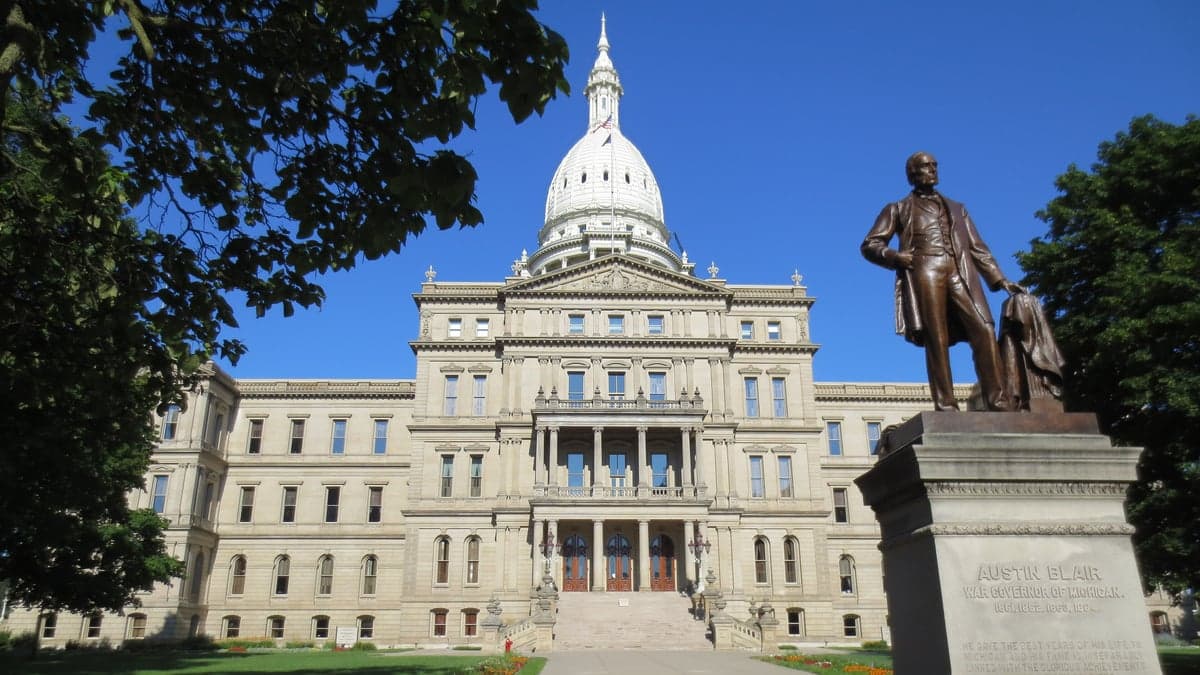
Lansing, Michigan, often dismissed as a sleepy state capital, actually occupies a surprisingly resilient strategic position in the Great Lakes region. It sits far enough from the immediate blast zones of major targets like Detroit or Chicago to offer a meaningful buffer, yet close enough to those economic hubs to access supplies and markets if the grid holds. For a relocator thinking in terms of civic unrest, supply chain disruptions, or even a major disaster, Lansing presents a mixed bag: decent natural advantages, but real exposure to the kind of political and industrial targets that make a prepper’s list of concerns.
Geographic position and natural advantages for long-term survival
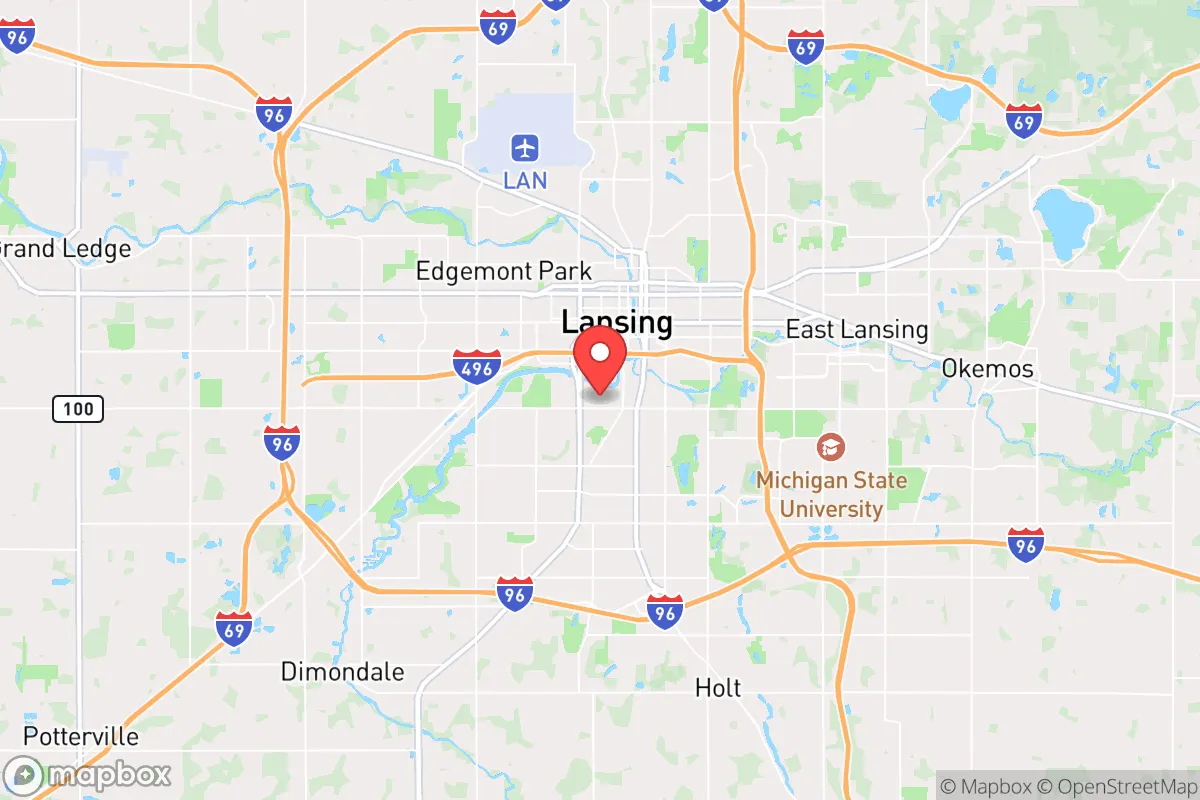
Lansing’s location is its strongest card. It’s nestled in the southern part of Michigan’s Lower Peninsula, roughly 90 miles from Detroit and 170 miles from Chicago—close enough to monitor events, far enough to avoid the worst of a blast or fallout plume from a major city strike. The area sits on the Grand River, a reliable water source that feeds into the Great Lakes system, and the surrounding Ingham County is flat, fertile farmland. This isn’t mountain redoubt territory, but it’s a breadbasket region: Michigan’s agricultural output, including corn, soybeans, and dairy, means local food production is robust. The climate is temperate, with four distinct seasons, which allows for year-round gardening and livestock raising if you’ve got the land. The biggest natural advantage is the Great Lakes themselves—they hold 20% of the world’s surface freshwater, and Lansing is within a 60-mile radius of Lake Michigan and Lake Huron. In a prolonged crisis, that water access is a strategic asset that most inland cities can’t match. The terrain is mostly flat to gently rolling, which makes it easy to travel by foot or bike if fuel runs short, but also means there’s little natural cover for defensive positions. You’re not going to find a canyon or ridge to fortify here—this is open-country survival, where community and logistics matter more than terrain.
Risks, exposures, and proximity to fallout-relevant landmarks
Here’s where the prepper calculus gets uncomfortable. Lansing is the state capital, which makes it a high-probability target for civil unrest or political violence. The Michigan State Capitol building, the Governor’s residence, and numerous state agency offices are concentrated downtown. In a scenario of widespread civic breakdown, that complex becomes a magnet for protests, riots, or even armed confrontation. The city also hosts a major General Motors plant (Lansing Grand River Assembly) and a large university (Michigan State University in nearby East Lansing). Both are potential flashpoints: the GM plant for labor unrest or supply-chain sabotage, the university for ideological clashes or mass-casualty events. More concerning is the proximity to Fermi 2 nuclear power plant, about 90 miles southeast near Monroe. While that’s outside the immediate 10-mile evacuation zone, prevailing winds from the southwest could carry fallout toward Lansing in a worst-case meltdown scenario. The Palisades Nuclear Plant, though decommissioned, sits 100 miles west near South Haven—another legacy risk. For fallout from a nuclear detonation, Lansing is far enough from Detroit and Chicago to avoid lethal prompt radiation, but you’d still need a basement or shelter for the first 48 hours if a major city is hit. The real risk is proximity to I-96 and I-69, major highways that would become chokepoints for refugees fleeing Detroit or Flint in a crisis. That influx could overwhelm local resources fast.
Practical resilience for a relocator: food, water, energy, and defensibility
For a single individual or family looking to hunker down, Lansing’s practical resilience is a mixed report card. Water is abundant—the Grand River runs through the city, and groundwater is accessible via wells in most rural parts of the county. But the city’s municipal water system is aging, and Flint’s water crisis (just 60 miles away) is a reminder that infrastructure can fail catastrophically. A prepper should plan on a well or a rainwater catchment system. Food security is strong because you’re surrounded by working farms. The Lansing area has a thriving farmers’ market scene (the Meridian Township Market is a good bet) and plenty of U-pick orchards within a 30-minute drive. But the city itself is a food desert in parts—many neighborhoods rely on convenience stores, not grocery stores. You’ll want to live on the outskirts, like in Delta Township or DeWitt, where you can have acreage for a garden and chickens. Energy is a vulnerability. The grid here is tied to the regional system (ITC Holdings), and winter ice storms are common—power outages lasting 3-7 days happen every few years. Solar is viable (Michigan gets about 160 sunny days a year, less than the Southwest but enough for a modest off-grid setup), but you’ll need a generator for winter heating. Natural gas is widely available in suburban areas, which is a plus for backup heat. Defensibility is poor in the city itself—flat terrain, dense neighborhoods, and limited chokepoints. The rural fringe offers better options: look for properties with a long driveway, tree lines for cover, and a basement for shelter. The local gun culture is moderate—Michigan is a shall-issue state for concealed carry, and there’s a strong hunting tradition, so you won’t stand out as a prepper. But the political climate is split: Ingham County leans blue, while surrounding counties like Eaton and Clinton are redder. That means you’ll have ideological neighbors, which can be a double-edged sword in a crisis—some will be allies, others may not share your survivalist mindset.
The overall strategic picture for Lansing is one of cautious viability. It’s not a hardened redoubt like the Idaho panhandle or the Ozarks, but it offers a realistic balance of resources and risk. The water and food access are genuine advantages, and the distance from primary targets gives you a 2-3 hour window to react if a major event hits Detroit or Chicago. The downsides are the political target risk of the capital itself and the vulnerability to refugee flows along the interstates. For a relocator who’s willing to live on the rural fringe, invest in a well and solar, and keep a low profile, Lansing can work as a base for riding out the next decade of instability. Just don’t buy a house downtown, and make sure your bug-out plan includes a route north toward the Upper Peninsula if things really go sideways. The Great Lakes are your ultimate safety net—but only if you’re ready to use them.

* Values derived from national, state, county, city and local statistics and may differ in a specific area. Last updated: 2026-05-03T10:53:41.000Z
Narrative content on this page is AI-generated and may contain mistakes. Verify any details that matter before acting on them.
ReloMaps may earn a commission from affiliate links at no extra cost to you.

