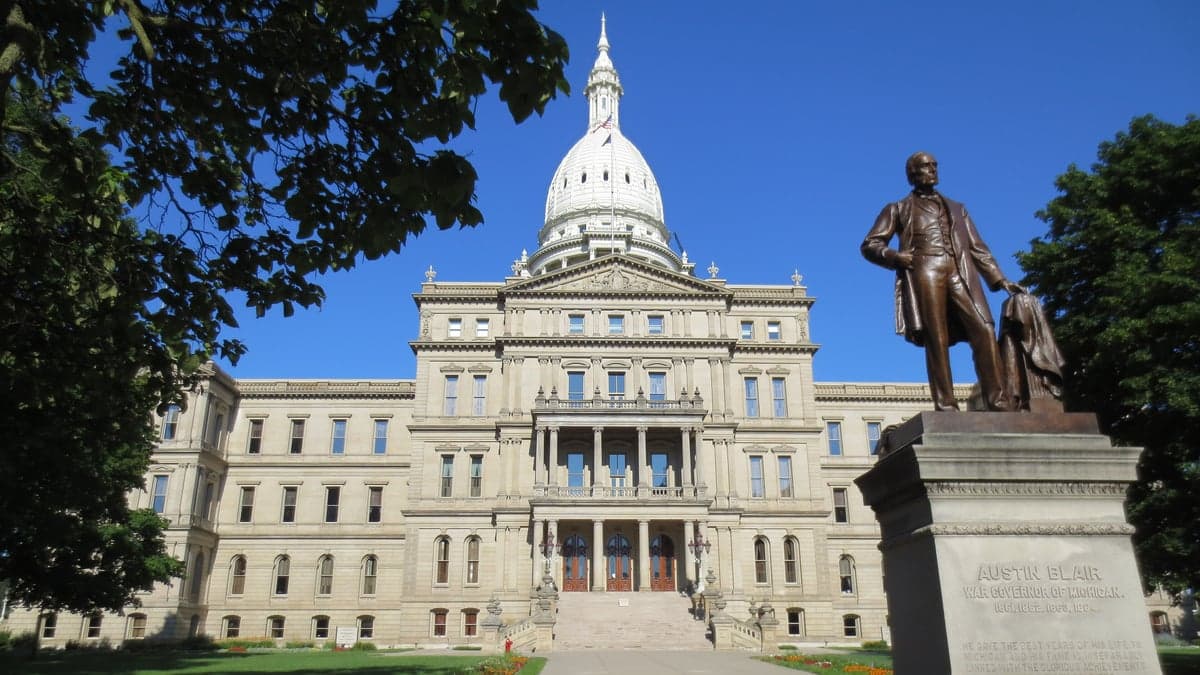
Photo: Wikipedia
Political ClimatePolitical Climate in Lansing, MI
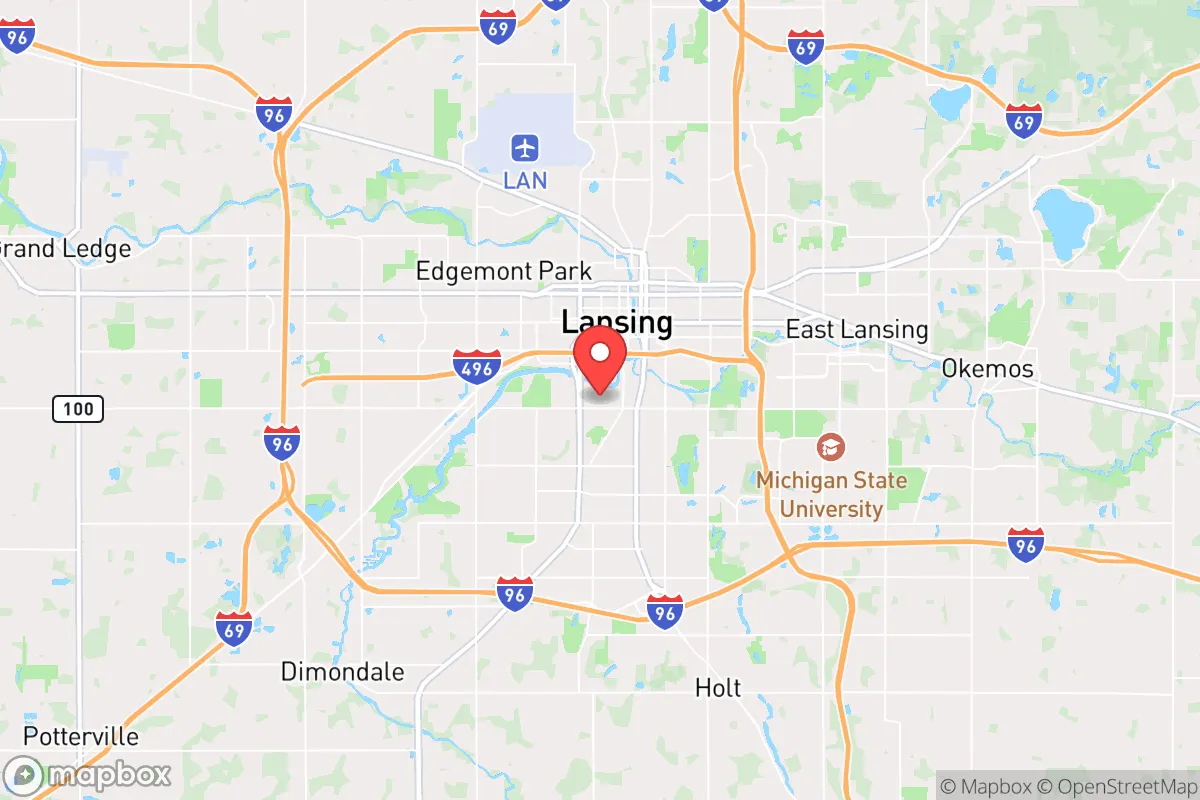
District shown is the primary district for this city’s centroid. Cities may span multiple districts.
Local Political AnalysisPolitical Analysis of Lansing, MI
Lansing, Michigan, sits in a unique political spot that’s shifted noticeably over the past decade. The Cook PVI rating of EVEN tells you the city itself is a true toss-up on paper, but the reality on the ground is more complicated. For a long time, Lansing was a reliably blue-collar, moderate Democratic stronghold, with a focus on auto manufacturing and state government jobs. But over the last ten years or so, the city has drifted leftward, especially on social and cultural issues, while the surrounding suburbs and rural areas have stayed firmly conservative. If you’re looking at the big picture, Lansing’s political center of gravity has moved away from the common-sense, live-and-let-live values that used to define the region.
How it compares
Drive just 15 minutes outside the city limits, and the political landscape flips hard. Towns like DeWitt, Grand Ledge, and Williamston are reliably conservative, with voters who prioritize low taxes, Second Amendment rights, and local control over schools and zoning. In contrast, Lansing proper has embraced a more progressive agenda, with city council pushing policies like sanctuary city status, higher minimum wages, and expanded social services that often come with increased bureaucracy and taxes. The contrast is stark: inside the city, you’ll see more “Hate Has No Home Here” signs; outside, it’s “Keep Government Out of My Healthcare.” The state capitol building itself is a daily reminder of the tug-of-war between Lansing’s city-level politics and the more balanced, often conservative, state-level leadership that has held the legislature for years. This split means that while the city votes blue, the surrounding region keeps the state from swinging too far left.
What this means for residents
For a longtime resident, the biggest concern is how much government overreach has crept into daily life. Property taxes have climbed steadily to fund new city programs, and there’s a growing sense that personal freedoms—like choosing your own healthcare, homeschooling without excessive red tape, or even running a small business without endless permits—are being squeezed. The push for “equity” initiatives in local schools and city hiring has raised eyebrows among folks who just want a level playing field, not preferential treatment. On the plus side, the state-level checks and balances mean that some of the more extreme proposals (like statewide rent control or strict gun bans) haven’t made it through. But the trend is concerning: each election cycle brings more candidates who see government as the solution to every problem, not a limited referee. If you value privacy, low taxes, and the freedom to live your life without a city councilman’s approval, you’ll want to keep a close eye on local elections.
Culturally, Lansing still has a strong blue-collar backbone, but it’s being slowly replaced by a younger, more activist crowd drawn to the state capital’s political scene. The old “work hard, mind your own business” ethos is giving way to a more vocal, sign-waving culture that can feel intrusive. Policy-wise, the city’s embrace of renewable energy mandates and “green” building codes has driven up housing costs, while the push for public transit expansions has raised taxes without delivering reliable service. For now, the balance is still there—you can find good schools in the suburbs and a decent cost of living—but the long-term trajectory points toward more regulation and less personal liberty. If you’re considering a move here, the suburbs or exurbs are where you’ll find the most breathing room, both politically and practically.

State Political ClimatePolitical Climate in Michigan
State Political AnalysisPolitical Environment in the State
Michigan has shifted from a reliably purple battleground to a state where Democrats now hold unified control of the governorship, legislature, and Supreme Court, a dramatic reversal from the GOP trifecta that ended in 2018. The state’s overall partisan lean is now a narrow Democratic tilt — Joe Biden won it by 2.8 points in 2020, and Gretchen Whitmer won re-election by nearly 11 points in 2022 — but that top-line number masks a deeply polarized landscape. Over the last 10-20 years, the key story is the collapse of the old Reagan Democrat strongholds in Macomb County and the Upper Peninsula, which have swung hard right, while the booming suburbs of Grand Rapids and the Detroit exurbs have moved left, creating a state that is simultaneously more competitive and more divided than ever.
Urban vs. rural divide
The political map of Michigan is a tale of three regions. The urban core of Detroit and its inner-ring suburbs like Southfield and Oak Park are overwhelmingly Democratic, delivering margins of 80% or more for the party. The opposite pole is rural northern Michigan and the Upper Peninsula, where counties like Oscoda and Mackinac routinely vote 65-70% Republican. The real battlegrounds are the suburban counties that ring Detroit: Oakland County (the state’s wealthiest) flipped from reliably red to reliably blue in the Trump era, while Macomb County (working-class, white, and union-heavy) swung hard in the opposite direction, giving Trump a 12-point win there in 2020. Out west, Kent County (Grand Rapids) has been a slow-motion shift: once a GOP stronghold, it voted for Biden in 2020 and Whitmer in 2022, driven by a growing professional class and a shrinking evangelical base. The Ann Arbor area (Washtenaw County) is a deep-blue island, while the Flint and Saginaw areas remain competitive but trending left.
Policy environment
Michigan’s policy environment has shifted sharply left since Democrats took full control in 2023. The state income tax is a flat 4.25%, but the new Democratic majority repealed the 2011 pension tax (a boon for retirees) and expanded the Earned Income Tax Credit — both popular moves, but funded by a corporate tax increase. The regulatory posture is increasingly burdensome: Governor Whitmer signed a sweeping clean energy mandate requiring 100% carbon-free electricity by 2040, which will drive up utility costs for families and businesses. On education, Michigan has eliminated the “Read by Grade Three” retention law and expanded school choice only modestly, while pouring money into traditional public schools. The biggest flashpoint is election law: Democrats passed a package that includes nine days of early voting, automatic voter registration, and pre-registration for 16-year-olds — changes that conservatives argue erode ballot security. The state also repealed its “right-to-work” law in 2023, a major win for unions that will make Michigan less attractive for non-union employers and workers who value workplace freedom.
Trajectory & freedom
Michigan is becoming less free by any conservative measure. The most alarming trend is on gun rights: in 2023, Democrats passed universal background checks, safe storage requirements, and a “red flag” law (extreme risk protection orders) that allows courts to temporarily seize firearms without a criminal conviction. This is a direct assault on the Second Amendment that would have been unthinkable a decade ago. On parental rights, the state has codified abortion access (the Reproductive Health Act of 2023) and expanded LGBTQ+ nondiscrimination protections, but has not passed any explicit parental notification or consent laws for minors seeking abortion — a major concern for families. Medical autonomy took a hit with the COVID-era emergency powers that Whitmer used to shut down businesses and schools unilaterally; the GOP legislature later limited those powers, but the precedent remains. Property rights are under pressure from the clean energy mandate, which will force wind and solar installations on private land. The tax burden is moderate, but the trend is upward: the corporate tax increase and the elimination of the pension tax exemption for new retirees signal a state that is willing to raise taxes to fund expanded government.
Civil unrest & political movements
Michigan has been a national flashpoint for political conflict. The 2020 lockdown protests at the state capitol in Lansing — where armed demonstrators entered the building — were a watershed moment for the right, and the subsequent “Wolverine Watchmen” kidnapping plot against Whitmer exposed a dangerous fringe. On the left, the “Stand Up Michigan” movement has organized massive protests against the state’s abortion laws and the 2023 gun control package. Immigration politics are relatively quiet compared to border states, but Detroit and Ann Arbor have sanctuary city policies that limit cooperation with ICE, a growing concern for conservatives. Election integrity remains a live issue: the 2020 election in Michigan was subject to numerous lawsuits and audits, and while no widespread fraud was found, the new voting laws have not alleviated distrust. The most visible flashpoint for a new resident would be the constant tension between the Democratic-controlled state government and the many “gun sanctuary” counties — over 40 of Michigan’s 83 counties have passed resolutions declaring themselves Second Amendment sanctuaries, a form of local nullification that signals deep resistance to the new red flag law.
Projection
Over the next 5-10 years, Michigan is likely to continue its leftward drift at the state level, driven by demographic trends: the growing professional class in the suburbs, the decline of rural population, and the continued in-migration of younger, more liberal residents to cities like Grand Rapids and Traverse City. The Republican Party is in disarray, with a civil war between the old business-friendly wing and the Trump-aligned populists, making it hard to win statewide. However, the state’s political geography is so evenly split that a single bad cycle for Democrats — a recession, a scandal, or a national wave — could flip the legislature back to GOP control. For a conservative moving in now, expect the state government to remain hostile on gun rights, taxes, and education, but local control in conservative counties and townships will provide a buffer. The key battlegrounds to watch are Macomb County (can Republicans hold it?) and Kent County (can Democrats keep it?). If the GOP can’t win back the suburbs, Michigan will become a solid blue state within a decade.
For a new resident, the bottom line is this: Michigan offers beautiful natural resources, a relatively low cost of living, and strong communities in its conservative rural and exurban areas, but the state government is actively moving in a direction that will restrict your personal freedoms — especially your Second Amendment rights and your ability to opt out of progressive education and energy policies. If you’re moving here, choose your county carefully: Livingston County (just west of Detroit) is a conservative stronghold, while Washtenaw County is the opposite. The state is not lost, but it’s in a fight, and your vote and your voice will matter more here than in a deep-red state where the outcome is predetermined.
* Values derived from national, state, county, city and local statistics and may differ in a specific area. Last updated: 2026-05-03T10:53:41.000Z
Narrative content on this page is AI-generated and may contain mistakes. Verify any details that matter before acting on them.
ReloMaps may earn a commission from affiliate links at no extra cost to you.

