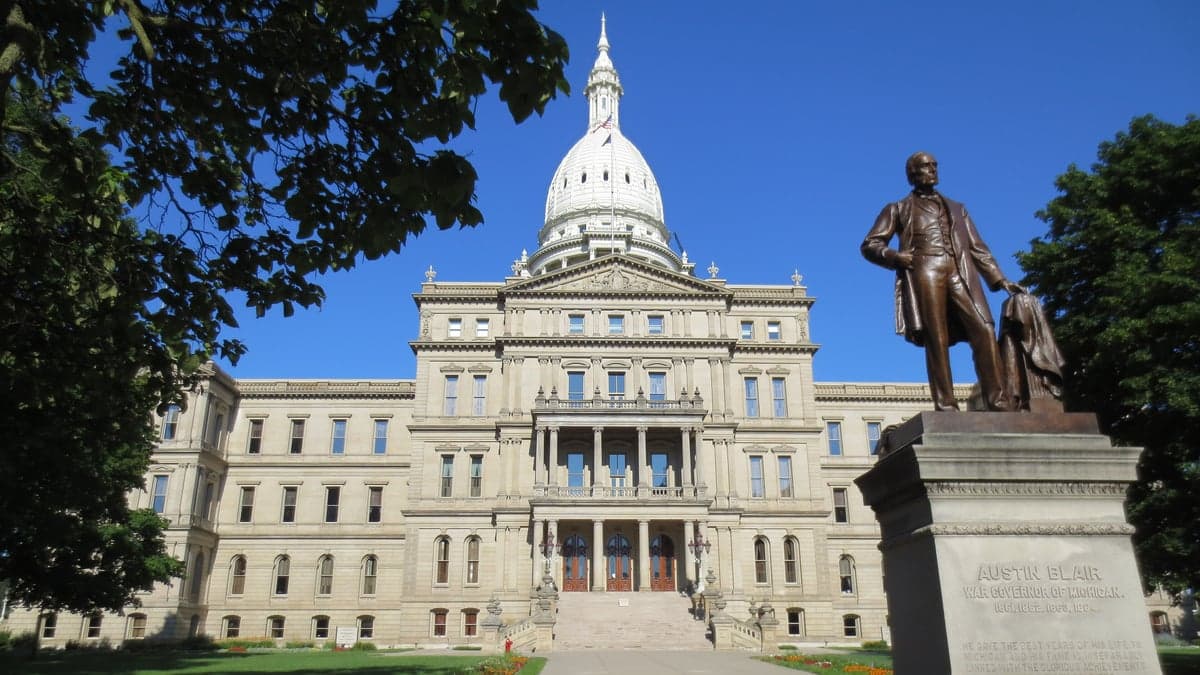
Photo: Wikipedia
Personal Sovereignty in Lansing, MI
Strong independent fundamentals that actively favor personal liberty and low regulation.
What does Personal Sovereignty tell us?
Personal Sovereignty measures your capacity for self-reliance and independence with minimal government friction. Higher scores mean fewer barriers between you and the way you want to live... but it assumes you have the space you need and good neighbors.
What does this tell us?
Personal Sovereignty measures your capacity for self-reliance and independence with minimal government friction. Higher scores mean fewer barriers between you and the way you want to live... but it assumes you have the space you need and good neighbors.
State Policy
Energy independence: Importer (20% of energy produced in-state)
Personal Liberty
Homesteading

Personal Liberty Analysis
Lansing, Michigan, presents a mixed picture for those prioritizing personal sovereignty, where the state's progressive governance often clashes with the practical realities of living in a Midwestern capital city. While the city itself leans heavily left, the surrounding Ingham County and broader Michigan landscape offer pockets of autonomy that a survivalist or prepper can leverage, provided they navigate a regulatory environment that is increasingly skeptical of individual self-reliance. The key to thriving here lies in understanding where state overreach ends and where local workarounds begin, particularly in the realms of taxation, self-defense, and property use.
Tax burden and regulatory posture in Michigan's capital region
Michigan's tax structure is a double-edged sword for the sovereignty-minded individual. The state imposes a flat income tax rate of 4.25%, which is moderate compared to high-tax states like California or New York, but it's paired with a 6% sales tax that hits every purchase, including prepping supplies and ammunition. Property taxes in Lansing are notably high, with an average effective rate around 2.3% of assessed value, driven by the city's reliance on property levies to fund schools and services. This means a $200,000 home carries roughly $4,600 in annual property taxes—a significant recurring cost that eats into resources better spent on land, gear, or savings. The regulatory posture is similarly burdensome: Michigan's Department of Environment, Great Lakes, and Energy (EGLE) enforces strict environmental rules that can complicate anything from building a detached garage to digging a well. Lansing's city code adds layers of permitting for fences, sheds, and even backyard chickens, with a maximum of four hens allowed and no roosters. For a prepper, this means the path to self-sufficiency is paved with paperwork and fees, though the state's lack of a personal property tax on most household goods is a small win.
Self-defense realities and Michigan's gun law landscape
Michigan is a shall-issue state for concealed pistol licenses (CPLs), meaning the county sheriff must issue one if you meet basic requirements—no subjective "good cause" nonsense. As of 2024, the state requires a background check for all firearm purchases, including private sales, which is a step toward overreach that rankles many in the prepper community. However, Lansing itself is not a sanctuary city for gun rights; the city council has passed resolutions supporting universal background checks and red flag laws, though state preemption prevents them from enacting their own bans. Open carry is legal without a permit, but doing so in downtown Lansing will attract police attention and likely hostility from the liberal populace. The practical advice here: get your CPL (a straightforward process involving an 8-hour class and a $105 fee) to avoid the hassle of pistol purchase permits and to carry concealed in most public spaces. Stand-your-ground laws are on the books, but Michigan's self-defense statutes require a reasonable belief of imminent harm—no castle doctrine expansion to vehicles or occupied structures, which is a gap for those who live in their rigs or bug-out vehicles. For a survivalist, the takeaway is that Lansing is not a gun-friendly haven, but it's not a hostile one either; you can arm yourself legally, but you'll need to stay informed on shifting state-level restrictions.
Self-reliance and homesteading viability in the Lansing area
The viability of a self-reliant lifestyle in Lansing depends heavily on whether you're inside city limits or in the surrounding townships. Within the city, standard residential lots average 5,000 to 7,000 square feet, which severely limits homesteading ambitions. Zoning codes restrict livestock to chickens only (hens, no roosters), and any structure over 200 square feet requires a permit. Rainwater collection is technically legal but must not create a nuisance, and the city's water utility discourages disconnection from the municipal supply. Off-grid living is effectively impossible within city limits due to building codes requiring grid-tied electrical and sewer connections. The real opportunity lies in the townships just outside Lansing—Delta, DeWitt, and Meridian—where lot sizes jump to one to five acres, and zoning is far more permissive. In these areas, you can keep goats, rabbits, and even a horse on a few acres, and many properties have existing wells or septic systems. The soil in the Grand River valley is fertile, supporting robust vegetable gardens and fruit trees. For a prepper, the strategy is clear: buy land in the surrounding townships, not in the city. The trade-off is a longer commute to work or supplies, but the gain in autonomy—being able to store fuel, raise food, and build without constant permit fees—is substantial.
Personal liberties: parental rights, medical autonomy, and free speech
On parental rights, Michigan has been a battleground. The state's compulsory vaccination laws for school entry are among the strictest in the Midwest, with only medical and religious exemptions allowed—no philosophical exemption. This means parents who object to vaccines on principle must either homeschool or seek a religious exemption, which is increasingly scrutinized by school districts. Medical autonomy is similarly constrained: Michigan's emergency powers laws, used extensively during the COVID-19 pandemic, gave the governor broad authority to mandate masks, close businesses, and restrict gatherings, with limited legislative oversight. While those specific orders have expired, the legal framework remains, a clear threat to personal sovereignty in future crises. Free speech is protected under the First Amendment, but Lansing's city government has shown a willingness to regulate public assembly, requiring permits for gatherings of 50 or more in parks. Property rights are perhaps the most concerning: Michigan's "public trust" doctrine allows the state to claim ownership of land beneath navigable waters, and the Michigan Natural Resources Trust Fund has been used to acquire private land for public use, often against the owner's wishes. For a prepper, this means your land is never truly yours if the state decides it's a "critical dune" or "wetland." The overall environment is one of creeping government control, where each liberty must be actively defended through local engagement and legal vigilance.
Compared to states like Texas or Idaho, Lansing and Michigan as a whole rank low on the personal sovereignty scale, but they are not the worst. The state's flat income tax and lack of personal property tax on vehicles and household goods are advantages over high-tax states, and the ability to own firearms without a permit for open carry is a plus. However, the regulatory burden on property use, the aggressive vaccination mandates, and the broad emergency powers are significant red flags for anyone prioritizing autonomy. For a survivalist or prepper, Lansing is a place to live strategically—buy land in the townships, get your CPL, and stay politically active to push back against overreach. It's not a sovereign paradise, but with careful planning, you can carve out a life of self-reliance in the shadow of the state capitol.

* Values derived from national, state, county, city and local statistics and may differ in a specific area. Last updated: 2026-05-03T10:53:41.000Z
Narrative content on this page is AI-generated and may contain mistakes. Verify any details that matter before acting on them.
ReloMaps may earn a commission from affiliate links at no extra cost to you.

