Photo: Wikipedia
Personal Sovereignty in Las Vegas, NV
Viable for self-reliance. Generally workable, though some barriers may limit total independence.
What does Personal Sovereignty tell us?
Personal Sovereignty measures your capacity for self-reliance and independence with minimal government friction. Higher scores mean fewer barriers between you and the way you want to live... but it assumes you have the space you need and good neighbors.
What does this tell us?
Personal Sovereignty measures your capacity for self-reliance and independence with minimal government friction. Higher scores mean fewer barriers between you and the way you want to live... but it assumes you have the space you need and good neighbors.
State Policy
Energy independence: Importer (15% of energy produced in-state)
Personal Liberty
Homesteading

Personal Liberty Analysis
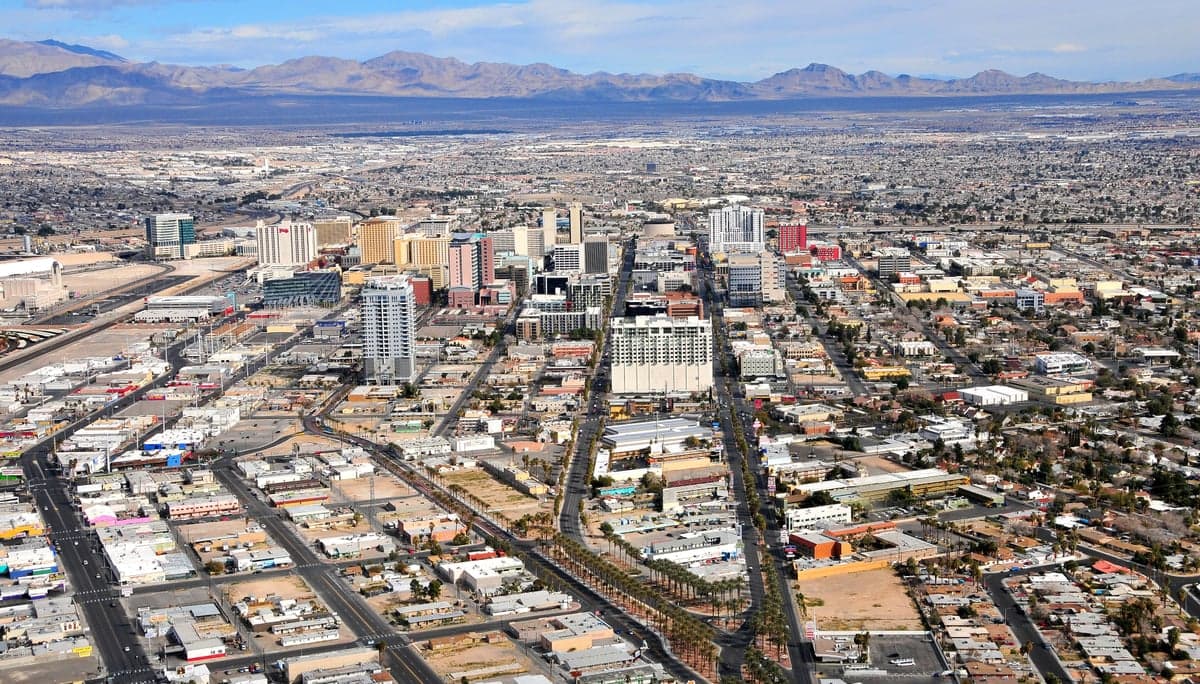
Las Vegas, Nevada, presents a complex and often contradictory environment for personal sovereignty, one that demands careful navigation rather than blind acceptance. On one hand, the state’s foundational ethos of limited government and individual liberty—rooted in its frontier history and lack of a state income tax—offers genuine breathing room for those seeking to minimize government overreach. On the other hand, the city’s dependence on a tightly regulated tourism and gaming industry, combined with a rapidly growing population and a progressive local government in Clark County, creates a persistent tension between personal freedom and bureaucratic control. For a survivalist or prepper mindset, Las Vegas is not a sanctuary, but it is a place where strategic advantages can be carved out if you understand the specific levers of power and regulation at play.
Tax burden and regulatory posture: How Nevada’s fiscal structure supports self-reliance
The single most powerful tool for personal sovereignty in Las Vegas is Nevada’s tax structure. There is no state income tax, no corporate income tax, and no franchise tax on business entities, which means the state government does not directly tax your labor or your business profits. This is a critical advantage for anyone seeking to build wealth and self-reliance outside the federal system. The state relies heavily on sales tax (8.25% in Clark County, among the highest in the nation) and gaming taxes, so your consumption—not your earnings—is what funds the state. For a prepper, this means you can legally earn and save more of your income for land, supplies, and investments without the state taking a cut. However, the regulatory posture is a mixed bag. While Nevada is a “right-to-work” state and generally business-friendly, Clark County imposes its own layers of permitting, zoning, and licensing that can feel intrusive. For example, starting a home-based business or a small-scale food operation requires navigating a thicket of health department and business license requirements that can stifle the kind of informal, self-sufficient economy many preppers value. The state’s regulatory environment is best described as “low tax, moderate red tape”—you keep more of your money, but you must still deal with a bureaucracy that is not shy about enforcing its rules.
Self-defense and gun law specifics: What the Second Amendment looks like in Clark County
Nevada is a shall-issue state for concealed carry, meaning that if you meet the basic requirements—age 21, no felony record, completion of a safety course—the county sheriff must issue you a permit. There is no discretionary “good cause” requirement, which is a significant win for personal sovereignty. Open carry is legal without a permit for anyone 18 or older, though in practice, doing so in Las Vegas will attract police attention and is not recommended for tactical reasons. The state also has a strong preemption law, meaning local governments like Clark County cannot ban or further restrict firearms beyond state law. This prevents the kind of patchwork bans seen in states like California or New York. However, there are notable limitations. Private property rights are paramount: casinos, hotels, and many private businesses on the Strip can and do ban firearms, and violating that ban can get you trespassed. Additionally, Nevada has a “red flag” law (SB 143, passed in 2019) that allows law enforcement to petition a court to temporarily seize firearms from individuals deemed a risk to themselves or others. For a prepper, this is a direct threat to due process and a tool that can be abused by overzealous authorities. The law is used sparingly in Clark County, but its existence means that your gun rights are not absolute—they are contingent on avoiding any interaction with the mental health or family court systems. Magazine capacity limits and assault weapon bans are not currently on the books, but the political climate in Las Vegas is shifting leftward, so vigilance is warranted.
Self-reliance and homesteading viability: Lot sizes, zoning, and off-grid feasibility
Within the Las Vegas city limits, homesteading and off-grid living are nearly impossible due to strict zoning and water rights regulations. The typical residential lot in the valley is a quarter-acre or less, and homeowners associations (HOAs) govern a vast majority of subdivisions, imposing rules on everything from landscaping to vehicle storage. For a prepper, an HOA is a direct infringement on property rights—you cannot keep chickens, store a generator visibly, or install solar panels without approval. The city’s water supply is entirely dependent on the Colorado River and the Southern Nevada Water Authority, which tightly controls usage through tiered pricing and restrictions on grass lawns. True off-grid living—well water, septic, solar with battery storage—is effectively illegal within the urban growth boundary. The viable alternative is to look outside the city, in unincorporated Clark County or neighboring Nye County (e.g., Pahrump, about 60 miles west). There, you can find 5- to 40-acre parcels with fewer zoning restrictions, no HOA, and the ability to drill a well (though water depth can exceed 500 feet, costing $15,000–$30,000). Pahrump is a known hub for preppers and survivalists, with a more permissive attitude toward alternative energy, livestock, and even underground bunkers. The trade-off is a longer commute to Las Vegas for work or supplies, and a more isolated social environment. For those committed to self-reliance, the path is clear: buy land outside the Clark County bubble and treat Las Vegas as a resource hub, not a home base.
Personal liberties: Parental rights, medical autonomy, speech, and property
Nevada’s record on parental rights is mixed. The state has a strong “parental involvement” law for minors seeking abortions, requiring parental notification, but it also has a broad “medical decision-making” statute that allows minors to consent to certain treatments without parental knowledge. For parents concerned about government overreach into family matters, this is a red flag. The state’s education system is centralized, with no robust school choice voucher program (though charter schools exist), meaning your tax dollars fund a public school system that may not align with your values. On medical autonomy, Nevada was an early adopter of vaccine mandates for school attendance, and during the COVID-19 pandemic, the state imposed some of the strictest lockdowns and mask mandates in the West. This history suggests that medical freedom is not guaranteed in a crisis—the state will prioritize public health orders over individual choice. Free speech is protected under the Nevada Constitution, but the state has a “cyber-harassment” law that has been criticized for being overly broad, and local ordinances in Las Vegas restrict panhandling and public assembly in certain zones. Property rights are generally strong, with no state-level rent control (though local efforts have been attempted), and the state’s eminent domain laws are relatively restrained. However, the prevalence of HOAs means that your property rights are often delegated to a private board that can fine you or place a lien on your home for violations. For a sovereignty-minded individual, this is a significant erosion of control over your own land.
In the broader landscape of American cities, Las Vegas offers a unique blend of fiscal freedom and regulatory friction. The absence of a state income tax and the shall-issue gun laws are genuine advantages that put it ahead of most coastal metros. But the city’s dependence on a controlled tourism economy, the power of HOAs, and the progressive tilt of Clark County government mean that personal sovereignty is not a given—it must be actively defended and strategically exercised. For a survivalist or prepper, the smart play is to use Las Vegas as an economic engine while establishing a self-sufficient foothold in the surrounding rural counties. Compared to a place like Austin, Texas, or Boise, Idaho, Las Vegas offers less cultural alignment with conservative values but more raw financial leverage. It is a place where you can keep more of what you earn, but you must remain vigilant against the creeping influence of a state that, in a crisis, has shown it will prioritize control over liberty.

* Values derived from national, state, county, city and local statistics and may differ in a specific area. Last updated: 2026-04-15T23:42:23.000Z
Narrative content on this page is AI-generated and may contain mistakes. Verify any details that matter before acting on them.
ReloMaps may earn a commission from affiliate links at no extra cost to you.

