Photo: Wikipedia
Political ClimatePolitical Climate in Laurel, DE
District shown is the primary district for this city’s centroid. Cities may span multiple districts.
Inherited from parent state — no local data available.
Local Political AnalysisPolitical Analysis of Laurel, DE
Laurel, Delaware, has a Cook PVI of D+8, meaning it leans significantly more Democratic than the national average, but that number doesn't tell the whole story for someone who's lived here a while. This used to be a quiet, conservative-leaning town where folks kept to themselves and the government stayed out of your business, but over the last decade or so, the political winds have shifted hard toward progressive policies, especially as new development and people from up north have moved in. You can feel it in local ordinances, school board decisions, and even how the town council handles things like property rights and public gatherings. It's not the same Laurel I grew up in, and if you're someone who values personal freedom and limited government, you need to know what you're walking into.
How it compares
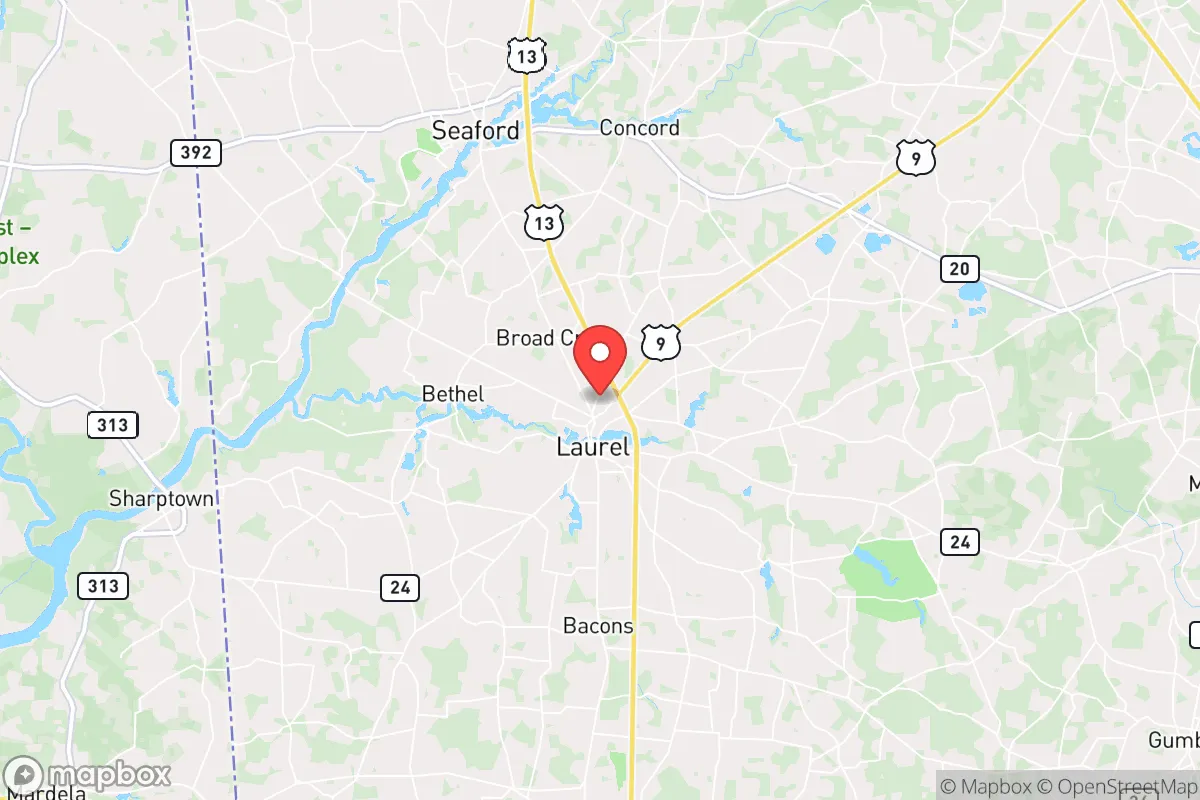
Drive ten miles north to Seaford, and you'll find a town that's still got that old-school, independent streak—more red-leaning, with folks who'll tell you straight up they don't want the county telling them what to do with their land. Head south to Delmar, right on the Maryland line, and it's a similar story: a mix of rural conservatism and working-class pragmatism. But Laurel itself? It's become an outlier in western Sussex County. While the surrounding areas vote reliably Republican in state and local races, Laurel's precincts consistently go blue, and that's reflected in everything from zoning rules to how the police department operates. The contrast is stark—you can cross a county road and feel like you've entered a different political universe, where the local government is more eager to regulate than to protect your rights.
What this means for residents
For a resident who values personal freedoms, the biggest red flag is how quickly the town council and school board have embraced progressive policies without much pushback. You've got new ordinances that make it harder to run a small business out of your home, stricter noise and gathering rules that feel like overreach, and a school system that's been pushing DEI initiatives and gender ideology curriculum that a lot of us find intrusive. Property taxes have crept up, and there's a growing sense that the local government sees itself as a manager of your life rather than a protector of your liberty. If you're the kind of person who wants to be left alone to raise your family, work your land, and speak your mind without someone in an office telling you how to think, Laurel is becoming a tougher place to do that. The long-term trend is concerning—more regulation, more progressive social policies, and less room for traditional values.
One thing that stands out culturally is how the town's identity has shifted. Laurel used to be a place where the annual festival and the volunteer fire department were the big deals, and everyone knew each other. Now, there's a noticeable divide between the newer residents who push for things like bike lanes and "inclusive" public art, and the old-timers who just want to keep the town functional and free. The local paper and social media groups are full of arguments over mask mandates, library book content, and whether the town should adopt "sanctuary" policies. If you're looking for a community that still believes in individual responsibility and limited government, you might find more comfort in the smaller unincorporated areas around Laurel, like Gumboro or Phillips Landing, where the politics are still rooted in common sense and personal liberty. My advice: come visit, talk to the locals at the diner, and see if the vibe matches what you're looking for—because the numbers on paper only tell part of the story.

State Political ClimatePolitical Climate in Delaware
State Political AnalysisPolitical Environment in the State
Delaware has long been a political oddity — a small state with a big blue tilt, but one that still holds onto conservative pockets that feel a world away from the coastal elite corridors. Over the past two decades, the state has shifted from a purple swing state to a solidly Democratic stronghold, driven largely by the explosive growth of New Castle County and the influx of out-of-state transplants from the Northeast. In 2024, Delaware voted for Kamala Harris by a margin of roughly 14 points, a far cry from the tight races of the 1990s and early 2000s. The state’s political DNA is now defined by a deep urban-rural split, a progressive policy machine in Dover, and a growing sense among conservatives that their voice is being drowned out by the Wilmington-Dover corridor.
Urban vs. rural divide
The political map of Delaware is a tale of three counties, but really two worlds. New Castle County, home to over 55% of the state’s population, is the engine of Democratic dominance. Wilmington, Newark, and the sprawling suburbs around them vote overwhelmingly blue — think 60-70% Democratic in most elections. This is where the corporate transplants, university faculty, and government workers cluster. In contrast, Kent County and Sussex County are the state’s conservative backbone. Dover, the capital, is a purple island in a sea of red, but the rural stretches — places like Milford, Georgetown, and Seaford — lean heavily Republican. Sussex County, in particular, has been a GOP stronghold for decades, though recent in-migration of retirees from the Northeast is slowly diluting that edge. The divide is stark: drive 20 minutes south of Dover and you’ll see Trump signs still nailed to barns, while north of the C&D Canal, you’ll find “In This House We Believe” yard signs on every block.
Policy environment
Delaware’s policy environment is a mixed bag that leans progressively, with some notable exceptions. On taxes, the state is a double-edged sword: no sales tax is a huge plus for conservatives, but the progressive income tax (top rate of 6.6% on income over $60,000) and high property taxes in New Castle County can sting. The regulatory posture is business-friendly in name — Delaware is the corporate home of over 60% of Fortune 500 companies — but that’s a legal fiction; the state’s Court of Chancery is a draw for corporations, not residents. For everyday life, the state has embraced progressive policies: universal mail-in voting was made permanent in 2022, and same-day voter registration is now law. Education is a sore spot — the state’s school funding system is heavily reliant on local property taxes, leading to wide disparities between wealthy New Castle County districts and poorer rural ones. Parental rights have been under assault, with the state’s 2023 law banning conversion therapy for minors and 2024 legislation expanding LGBTQ+ curriculum mandates in public schools, raising concerns among conservative families about what their kids are being taught.
Trajectory & freedom
If you value personal liberty, Delaware’s trajectory is concerning. The state has been on a steady march toward more government control over daily life. Gun rights have taken the biggest hit: in 2022, Delaware passed a permit-to-purchase law for handguns, a ban on “assault weapons” (including many popular rifles), and a limit on magazine capacity to 17 rounds. These laws were pushed through by Governor John Carney and a Democratic supermajority, and they’ve survived court challenges so far. Medical autonomy took a hit with the state’s 2023 law requiring COVID-19 vaccine mandates for healthcare workers, which was later softened but left a bitter taste. On the plus side, Delaware has no personal property tax on vehicles or boats, and no inheritance tax — small wins for freedom-minded folks. But the trend is clear: the state is becoming less permissive on guns, more prescriptive on education, and more aggressive on public health mandates. The 2024 “Parental Bill of Rights” bill, which would have given parents more say in school curriculum, died in committee — a sign that the legislature is not interested in rolling back progressive control.
Civil unrest & political movements
Delaware isn’t known for major civil unrest, but the political temperature has risen. In 2020, Wilmington saw several nights of protests following George Floyd’s death, with some property damage and clashes with police. The Delaware State Police were criticized for heavy-handed tactics, but the protests largely fizzled. More recently, conservative activism has focused on school board meetings, particularly in Sussex County, where parents have organized against critical race theory and LGBTQ+ curriculum mandates. The Delaware Republican Party is fractured between establishment types and a more populist, Trump-aligned wing, but they’ve had little success at the ballot box. Immigration politics are relatively quiet — Delaware is not a border state, but Newark and Wilmington have declared themselves “sanctuary cities”, limiting cooperation with ICE. This has sparked backlash in rural areas, where residents worry about the strain on local services. Election integrity remains a flashpoint: the 2020 election saw no major scandals, but the permanent mail-in voting law has conservatives worried about ballot harvesting and fraud, especially in close local races.
Projection
Looking ahead 5-10 years, Delaware is likely to get bluer, not redder. The in-migration from New York, New Jersey, and Pennsylvania — particularly to Sussex County’s beach towns like Rehoboth Beach and Lewes — is bringing more progressive voters into what was once a conservative stronghold. The retiree influx is a wild card: many are older and fiscally conservative, but they tend to be socially moderate or liberal, especially on environmental issues. The Democratic supermajority in the legislature shows no signs of weakening, and with Governor Carney term-limited, the next governor (likely a Democrat) will probably push for even more progressive policies — think state-funded universal pre-K, carbon pricing, and further gun restrictions. The rural exodus is real: young people are leaving Kent and Sussex counties for jobs in Wilmington or out of state, hollowing out the GOP base. For a conservative moving in now, expect to be a permanent minority in state politics, with your best hope being local control in towns like Middletown (a rare purple suburb) or Selbyville (deep red).
For a new resident, the bottom line is this: Delaware offers low taxes and a convenient location, but the political climate is increasingly hostile to conservative values. If you’re a parent, expect to fight for your kids’ education. If you’re a gun owner, prepare for more restrictions. If you value personal freedom, you’ll find yourself on the defensive. The state is small, which means your vote matters more than in a big state like Texas, but the deck is stacked against you. Choose your county wisely — Sussex County is your best bet for a like-minded community, but even there, the tide is turning. Delaware is a beautiful state with a lot to offer, but it’s no longer the quiet, conservative haven it once was. Move here for the beaches and the tax breaks, but don’t expect the politics to be on your side.
* Values derived from national, state, county, city and local statistics and may differ in a specific area. Last updated: 2026-04-29T22:48:57.000Z
Narrative content on this page is AI-generated and may contain mistakes. Verify any details that matter before acting on them.
ReloMaps may earn a commission from affiliate links at no extra cost to you.

