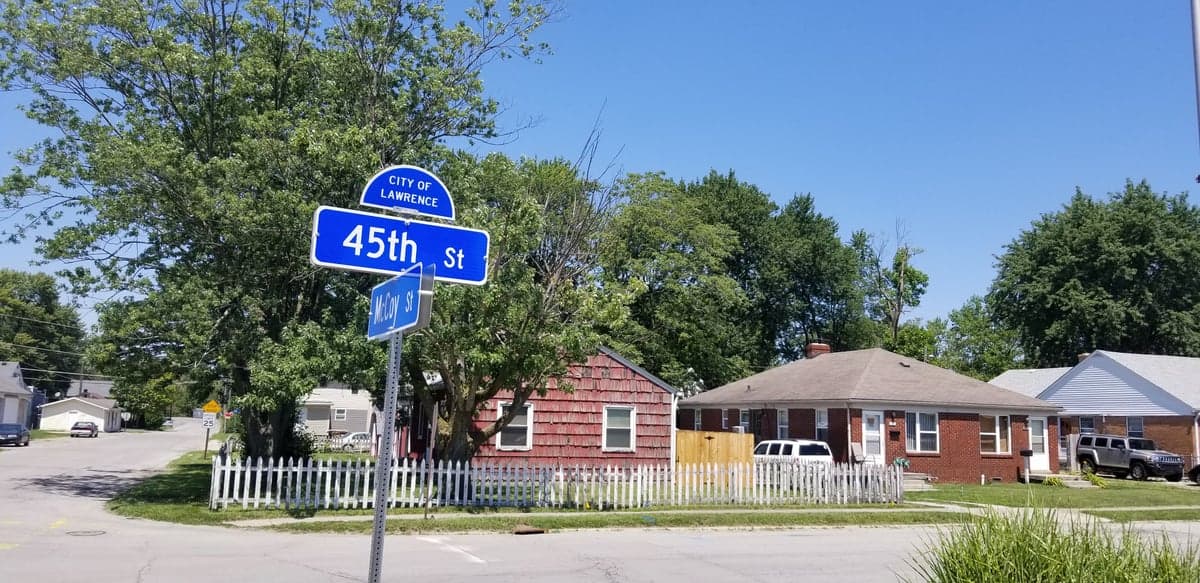
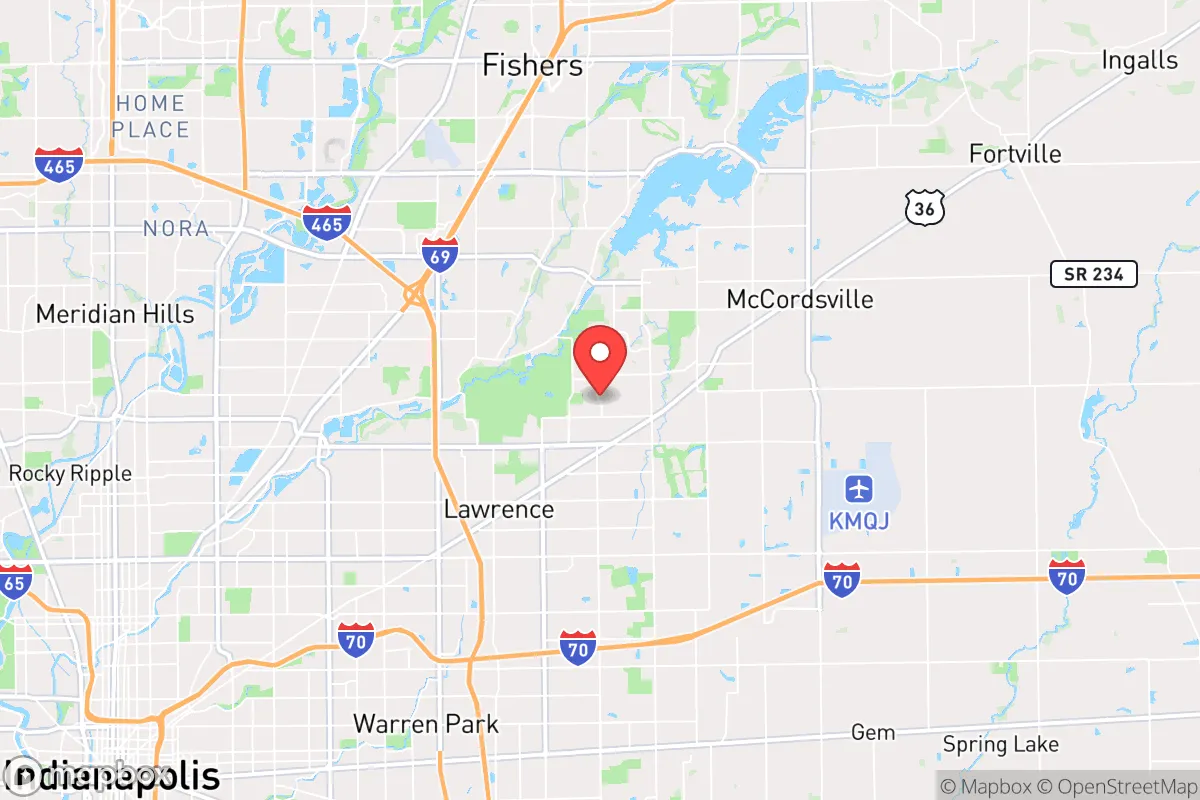
Photo: Wikipedia
Demographics of Lawrence, IN
Affluence Level in Lawrence, IN
A middle-class area roughly in line with national averages across income, home values, education, and employment.
People of Lawrence, IN
The people of Lawrence, Indiana, today form a densely diverse, majority-minority city of 49,284 residents, characterized by a near-even split between White (45.8%) and Black (27.6%) populations, a substantial Hispanic community (19.6%), and a smaller but growing East/Southeast Asian presence (1.3%). The city’s identity is shaped by its post-industrial evolution from a manufacturing suburb to a more fragmented, multi-ethnic community where distinct neighborhoods reflect different eras of settlement. With a foreign-born share of 7.0% and a college-educated rate of 35.4%, Lawrence is a working-to-middle-class city that has absorbed successive waves of domestic and international migration, creating a patchwork of enclaves rather than a single dominant cultural identity.
How the city was settled and grew
Lawrence was originally platted in 1836 as a farming and milling community along the Fall Creek and Indian Creek corridors, drawing early settlers of German and Scotch-Irish descent who built the first homes in what is now the Historic Lawrence Village district around 46th Street and Franklin Road. The arrival of the Indianapolis & Vincennes Railroad in the 1850s spurred a small industrial base, but the city remained a rural crossroads until the early 20th century. The real growth came after World War II, when defense plants and auto manufacturing—particularly at the nearby Allison Transmission and General Motors plants—pulled thousands of White Appalachian and Midwestern workers into new subdivisions like Oaklandon (northeast Lawrence) and Sunnywood (southwest of 56th Street). These neighborhoods were built as classic postwar suburbs, with single-family homes on large lots, and they remain predominantly White and older in age profile today.
Modern era (post-1965)
The 1965 Hart-Cellar Act and the subsequent collapse of Indianapolis’s inner-city manufacturing base reshaped Lawrence’s population dramatically. Between 1970 and 2000, Black families moved east from Indianapolis’s near-east side and Martindale-Brightwood neighborhoods, settling in the Mill Village area (around 46th Street and Mitthoeffer Road) and the Skiles Test neighborhood near 56th Street. This wave was driven by white flight from Indianapolis proper and the availability of affordable housing stock in Lawrence’s older subdivisions. By 2020, Black residents made up 27.6% of the city, concentrated in the southern and central wards. Simultaneously, Hispanic immigration—primarily from Mexico and Central America—accelerated after 1990, with families moving into apartment complexes and starter homes along Pendleton Pike and in the Fort Harrison redevelopment zone, drawn by construction and service jobs. The East/Southeast Asian population (1.3%) is smaller and more dispersed, with Vietnamese and Filipino families clustering near the Indianapolis International Airport corridor on the city’s western edge, while the Indian-subcontinent population (0.4%) remains negligible and scattered. The foreign-born share of 7.0% is lower than neighboring Indianapolis (12.5%), reflecting Lawrence’s character as a secondary settlement zone for immigrants who first land in the city proper.
The future
Lawrence’s population is trending toward greater fragmentation rather than homogenization. The White share has declined steadily from 68% in 2000 to 45.8% today, while the Hispanic share has nearly doubled since 2010 and is projected to reach 25-28% by 2035, driven by both immigration and higher birth rates. The Black population has plateaued around 27-28%, suggesting that out-migration to suburbs like Greenwood or Avon is offsetting new arrivals. The East/Southeast Asian and Indian populations are growing slowly but remain small, likely remaining below 3% combined for the next decade. The city is not tribalizing into hostile enclaves, but distinct neighborhood identities are hardening: Oaklandon and Sunnywood remain overwhelmingly White and older, Mill Village is majority Black and middle-aged, and the Fort Harrison corridor is becoming a Hispanic-majority zone with younger families. The college-educated rate of 35.4% is slightly below the national average (37.9%), and without a major new employer or transit link, Lawrence is unlikely to attract the high-skilled immigrants that are reshaping suburbs like Carmel or Fishers.
For someone moving in now, Lawrence is becoming a stable, multi-ethnic working-class city where neighborhood choice largely determines your daily experience. The city offers affordable housing and proximity to Indianapolis jobs, but the demographic trends point toward continued diversification of the Hispanic population and gradual aging of the White and Black cohorts. It is not a melting pot but a mosaic—and for conservative-leaning families seeking a community with clear neighborhood identities and moderate growth, Lawrence provides a grounded, unpretentious alternative to the rapidly changing suburbs to the north.

* Values derived from national, state, county, city and local statistics and may differ in a specific area. Last updated: 2026-04-22T09:06:57.000Z
Narrative content on this page is AI-generated and may contain mistakes. Verify any details that matter before acting on them.
ReloMaps may earn a commission from affiliate links at no extra cost to you.

