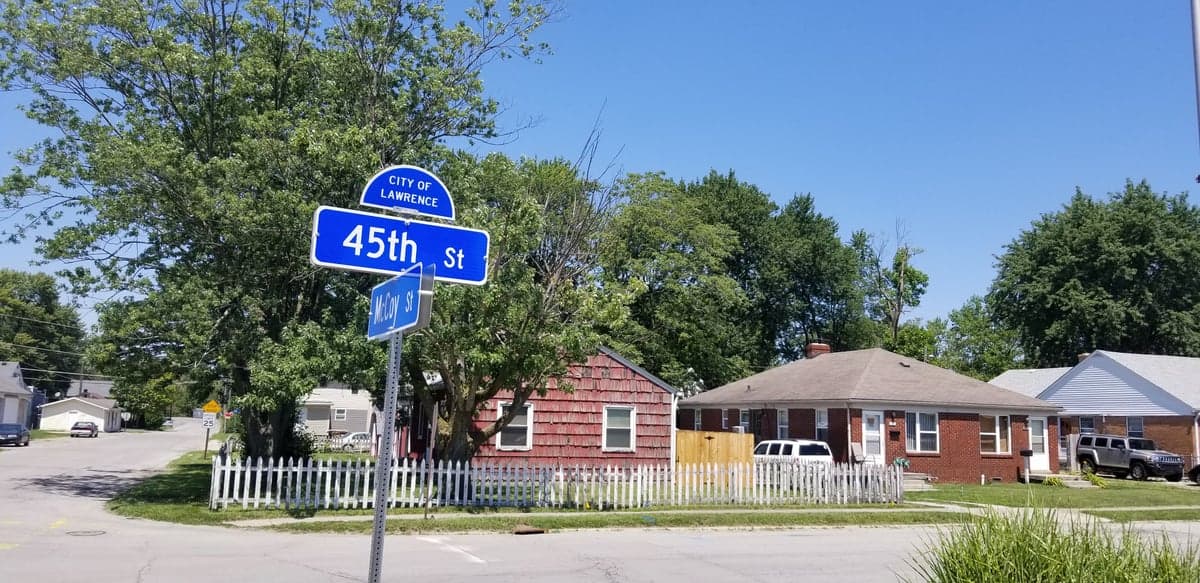
Photo: Wikipedia
Political ClimatePolitical Climate in Lawrence, IN
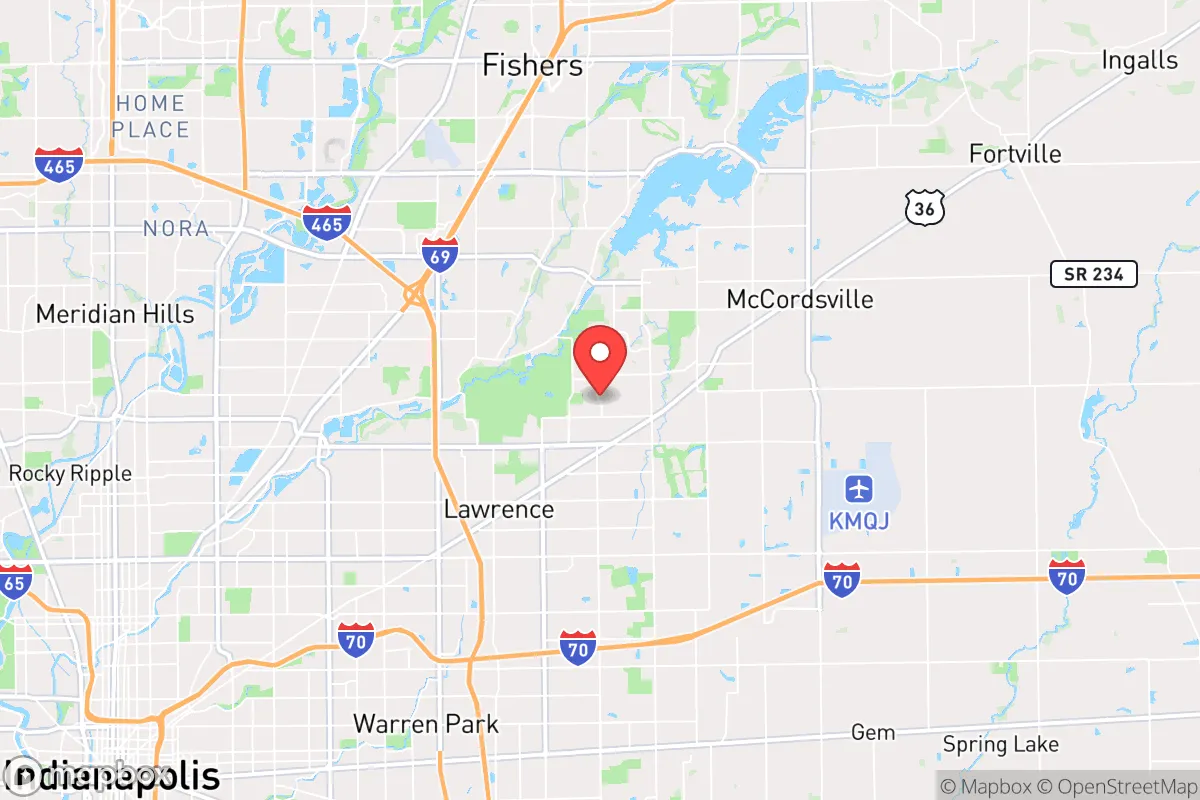
District shown is the primary district for this city’s centroid. Cities may span multiple districts.
Local Political AnalysisPolitical Analysis of Lawrence, IN
Lawrence, Indiana, sits squarely in a deep-blue political pocket, with a Cook PVI of D+21 that tells you pretty much everything you need to know about the local voting patterns. This isn't a place that's been trending left slowly—it's been solidly Democratic for decades, and the shift toward progressive policies has accelerated noticeably in the last five to ten years. If you remember Lawrence back in the '90s, it was a quieter, more middle-of-the-road suburb where folks just wanted to be left alone. Now, you see a lot more government involvement in daily life, from zoning overreach to school board decisions that feel less about education and more about social engineering.
How it compares
Drive ten minutes north to Noblesville or fifteen minutes east to Greenfield, and you're in a completely different political world. Those areas lean reliably Republican, with lower taxes, fewer regulations, and a general "stay out of my business" attitude that used to be the norm here in Lawrence. Even neighboring Indianapolis, which is also blue, has a more laissez-faire vibe in its outer neighborhoods compared to Lawrence's increasingly activist local government. The contrast is stark: in Lawrence, you'll find more ordinances about what you can do with your own property, more public spending on programs that sound good on paper but rarely deliver, and a school system that seems more focused on equity initiatives than on reading and math scores. It's the kind of place where a city council meeting can turn into a debate about banning plastic bags or mandating diversity training for small business owners—things that would never even come up in nearby Fishers or Carmel.
What this means for residents
For a long-time resident, the biggest concern is the slow creep of government overreach into personal freedoms. The local government has been pushing harder on housing regulations, making it tougher to do simple things like build a shed or run a small home-based business without jumping through hoops. Property taxes have inched up faster than inflation, and there's a growing appetite for new fees and permits that feel less about safety and more about control. The school board has become a battleground, with curriculum changes that prioritize social-emotional learning over core academics, and parents who speak up often get labeled as troublemakers. If you value the ability to live your life without a bureaucrat telling you how to do it, Lawrence is becoming a harder place to call home. The trajectory is clear: more progressive policies, more spending, and less tolerance for traditional values.
One cultural distinction that stands out is the local push for "inclusive" public spaces, which sounds nice until you realize it often means restricting how private property can be used or what kinds of events can be held in parks. The city has also embraced a more aggressive approach to code enforcement, sending inspectors into neighborhoods for things like grass height or fence color that would have been ignored a generation ago. If you're considering moving here, I'd honestly recommend looking at the surrounding counties first—places like Hancock County or Hamilton County—where the political climate is more aligned with personal liberty and fiscal restraint. Lawrence isn't what it used to be, and unless you're comfortable with a government that keeps finding new ways to involve itself in your life, you might want to keep driving.

State Political ClimatePolitical Climate in Indiana
State Political AnalysisPolitical Environment in the State
Indiana has been a reliably red state for decades, but it’s not the deep-red bastion many outsiders assume. The state leans Republican by about 10-15 points in statewide races, though that margin has narrowed slightly in the last two cycles as suburban voters drift left and rural turnout holds steady. Over the past 20 years, Indiana has shifted from a solidly conservative state to one where the GOP still dominates, but the coalition is fracturing—especially around the I-69 corridor and the Indianapolis suburbs.
Urban vs. rural divide
The political map of Indiana is a textbook study in the urban-rural split. Indianapolis (Marion County) is the blue anchor, consistently voting Democratic by 20-25 points in presidential elections. But the real story is the suburbs: Hamilton County (Carmel, Fishers, Noblesville) was once a GOP stronghold voting 65-70% Republican, but in 2020 it slipped to 55-58% for Trump. Allen County (Fort Wayne) is still red but trending purple, while Lake County (Gary, Hammond) remains one of the most reliably Democratic counties in the Midwest. The rural counties—Kosciusko, Elkhart, Dubois, Porter—vote 70-80% Republican, driven by manufacturing, agriculture, and strong church communities. The divide is stark: drive 20 minutes outside any metro and you’re in deep-red territory where Trump signs still outnumber all others.
Policy environment
Indiana’s policy environment is broadly conservative, but with some notable wrinkles. The state has a flat income tax of 3.05% (down from 3.23% in 2023, with a scheduled phase-down to 2.9% by 2027). Property taxes are capped at 1% of assessed value for owner-occupied homes, which keeps housing costs manageable. There’s no inheritance tax and no estate tax. On education, Indiana has a robust school choice system: vouchers are available to any family earning up to 300% of the free lunch threshold, and charter schools are plentiful. The state also passed a parental bill of rights (HB 1608) in 2022, requiring schools to notify parents about curriculum changes and medical services. Healthcare is a mixed bag: Indiana expanded Medicaid under Pence, but the state has some of the strictest abortion laws in the country (a near-total ban with narrow exceptions). Election laws are moderately restrictive—voter ID is required, and early voting is limited to 28 days before an election. No same-day registration.
Trajectory & freedom
Indiana is moving in a mixed direction on personal freedom. On the positive side for conservatives: constitutional carry (permitless carry) became law in 2022, and the state has a strong Stand Your Ground statute. Parental rights were strengthened with HB 1608, and the state banned transgender procedures for minors in 2023 (SB 480). Property rights are solid—Indiana is a right-to-work state and has no statewide zoning mandates. But there are concerning trends: Indianapolis passed a local hate crimes ordinance in 2020 that includes sexual orientation and gender identity, and the city council has pushed for more progressive policing reforms. The state also saw a major push for marijuana legalization in 2023 that failed, but the issue isn’t dead—neighboring Michigan and Illinois have legalized, and pressure is building. The biggest red flag for freedom-minded residents is government overreach during COVID: Holcomb’s emergency orders lasted 18 months, and the state supreme court upheld his authority. That precedent still worries many.
Civil unrest & political movements
Indiana has seen its share of political flashpoints. The 2020 George Floyd protests in Indianapolis turned violent, with looting and fires along Monument Circle. The city’s police reform commission was created in response, though it’s been mostly symbolic. On the right, the Indiana Freedom Coalition and Moms for Liberty chapters are active in school board races, particularly in Hamilton and Hendricks counties. Immigration politics are relatively quiet—Indiana is not a border state, but Elkhart County has a large Amish and Mennonite population that’s politically active on religious liberty issues. There’s been no serious secession or nullification talk, though some rural counties have passed Second Amendment sanctuary resolutions (about 30 counties total). Election integrity is a live issue: the 2020 election saw Trump’s campaign challenge Indiana’s mail-in ballot expansion, and the state legislature tightened absentee ballot rules in 2021 (SB 398). No major fraud was found, but the distrust lingers.
Projection
Over the next 5-10 years, Indiana will likely remain red but with a thinner margin. The suburban drift in Hamilton and Boone counties will continue as white-collar professionals move in from blue states—many are fiscally conservative but socially moderate. The Indianapolis metro will become more Democratic as it grows, while rural counties will hold steady. The wild card is in-migration from Illinois: thousands of families are moving to Lake, Porter, and LaPorte counties to escape Chicago’s taxes and crime. These transplants tend to vote Republican, which could offset suburban losses. The state’s age demographics are a concern—Indiana has a median age of 38, and younger voters are more left-leaning. If the GOP doesn’t adapt on issues like marijuana and school choice messaging, they could lose ground. Expect more fights over local control—cities like Bloomington and South Bend will push progressive ordinances, while the state legislature will preempt them. The next governor (2024) will be a Republican, but the margin will be closer than in 2016.
For a new resident, the bottom line is this: Indiana offers a low-tax, pro-business environment with strong gun rights and school choice, but you’ll need to pick your county carefully. If you want deep-red politics and low crime, look at Kosciusko, Dubois, or Elkhart counties. If you want suburban comfort with decent schools and a mix of neighbors, Hamilton or Boone counties are your best bet. Avoid Marion County if you’re worried about progressive policies and rising crime. The state is still a good bet for conservatives, but the margins are tightening—and the culture war is coming to your local school board meeting sooner or later.
* Values derived from national, state, county, city and local statistics and may differ in a specific area. Last updated: 2026-04-22T09:06:57.000Z
Narrative content on this page is AI-generated and may contain mistakes. Verify any details that matter before acting on them.
ReloMaps may earn a commission from affiliate links at no extra cost to you.

