Photo: Wikipedia
Demographics of Lawrence, MA
Affluence Level in Lawrence, MA
A middle-class area roughly in line with national averages across income, home values, education, and employment.
People of Lawrence, MA
The people of Lawrence, Massachusetts, today form one of the most densely concentrated Hispanic-majority cities in New England, with 82.3% of its 88,297 residents identifying as Hispanic, while the non-Hispanic white population has fallen to just 12.6%. The city is notably young, with a median age around 31, and has a high foreign-born share of 23.3%, reflecting ongoing immigration from the Dominican Republic and Puerto Rico. Lawrence is also characterized by low educational attainment — only 16.4% of adults hold a bachelor’s degree — and a working-class identity rooted in its industrial past. Distinctive markers include a vibrant Dominican cultural presence in the Campagnone Common area and a growing Puerto Rican community centered around Essex Street and the South Common.
How the city was settled and grew
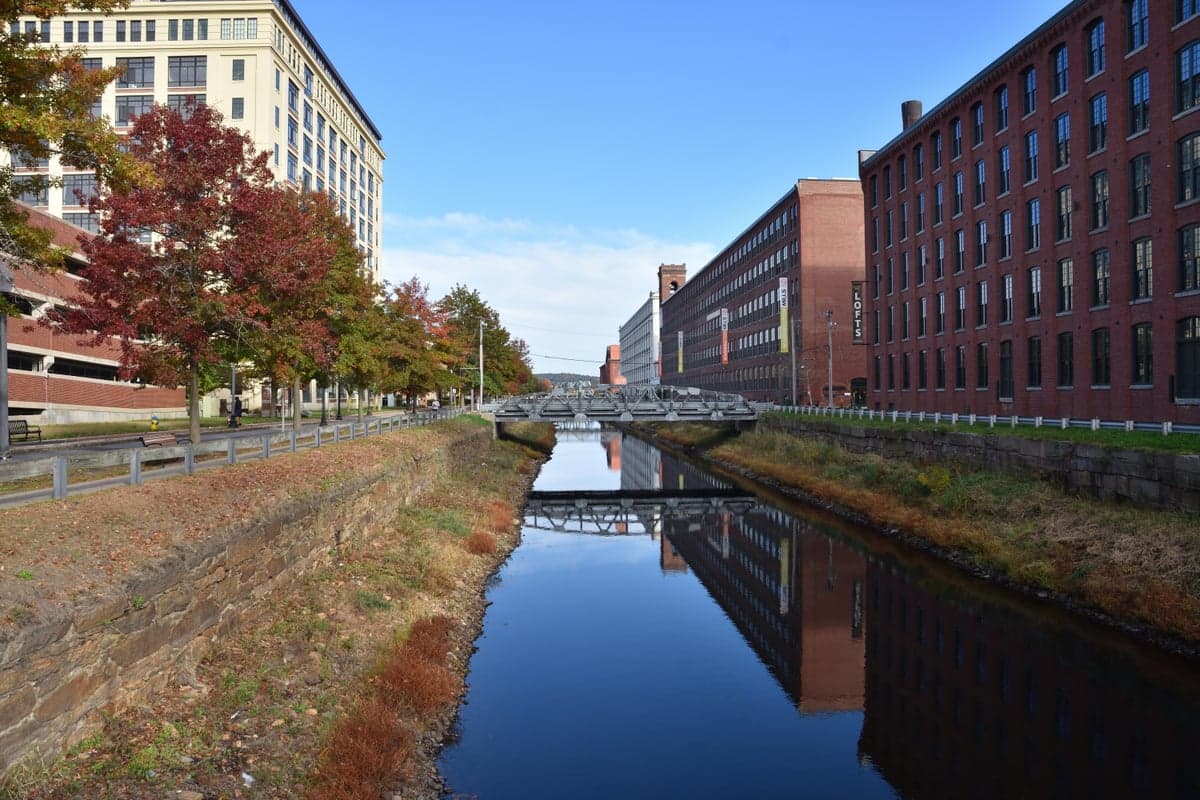
Lawrence was founded in 1845 as a planned mill city, built specifically to harness water power from the Great Stone Dam on the Merrimack River for textile manufacturing. The first major wave of settlers were native-born Yankee farmers and laborers from rural New England, who constructed the mills and the earliest housing in the North Common and South Common districts. By the 1850s, the city’s explosive growth drew Irish immigrants fleeing the Great Famine, who settled in the Dublin neighborhood (roughly the area around Union Street and the North Canal), building St. Mary’s Church and forming the city’s first large ethnic enclave. A second wave of French-Canadian immigrants arrived from Quebec between 1860 and 1900, taking mill jobs and establishing the Little Canada neighborhood (bounded by the Merrimack River, Broadway, and the North Canal), where French was the dominant language well into the 20th century. Italians, Germans, and Eastern European Jews followed in smaller numbers, clustering in the Arlington and Prospect Hill neighborhoods. By 1910, Lawrence was one of the most ethnically diverse cities in the United States, with over 40 languages spoken in its mills, and the 1912 Bread and Roses Strike cemented its reputation as a center of immigrant labor activism.
Modern era (post-1965)
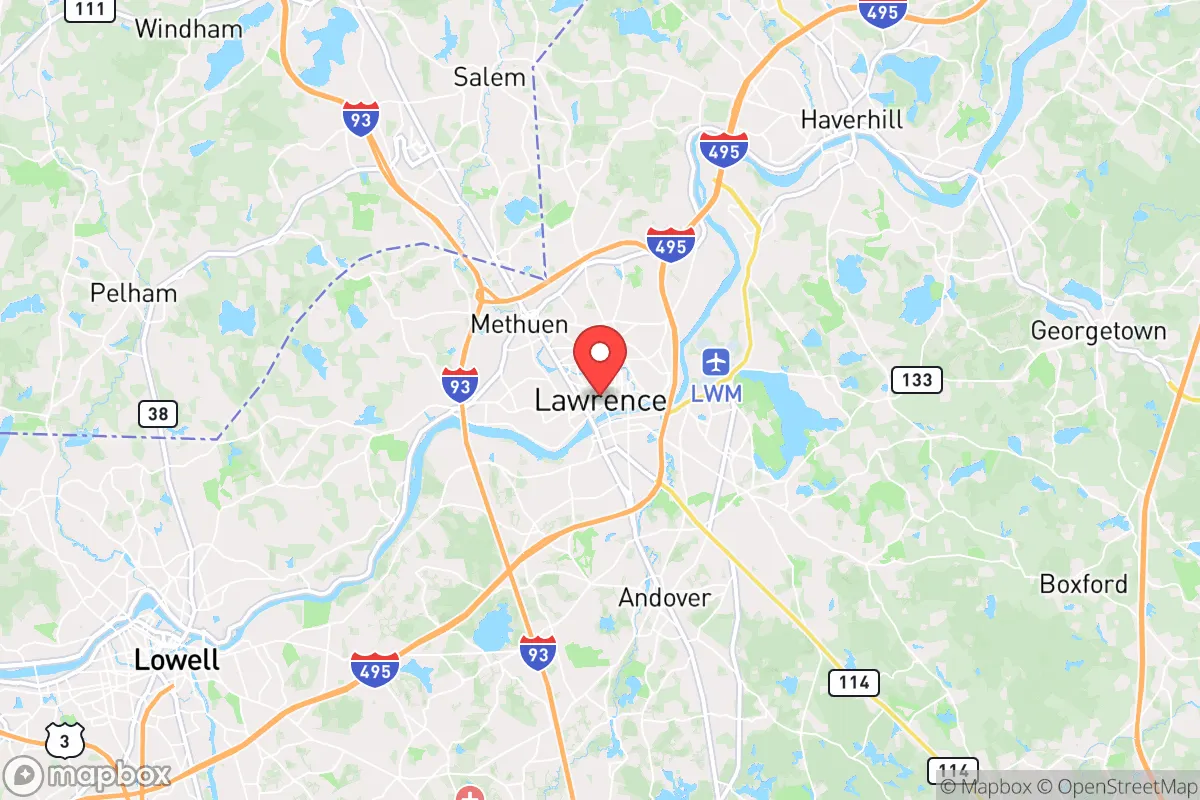
The post-1965 era brought a dramatic demographic transformation. The Immigration and Nationality Act of 1965 opened doors for non-European immigration, and the collapse of the textile industry in the 1970s and 1980s triggered white flight to suburbs like Methuen and Andover. The city’s population shifted rapidly from majority white to majority Hispanic, driven primarily by migration from Puerto Rico (a U.S. territory, so not counted as foreign-born) and immigration from the Dominican Republic. By 1990, the Hispanic share had surpassed 50%, and it has continued climbing to 82.3% today. The Campagnone Common area became the heart of the Dominican community, with bodegas, churches, and social clubs lining Essex Street. The South Common and Prospect Hill neighborhoods absorbed the largest Puerto Rican influx, while a smaller but visible East/Southeast Asian population (1.5%) — primarily Vietnamese and Cambodian — settled in the Arlington district near the Merrimack River. The Black population (2.1%) and Indian subcontinent population (0.2%) remain very small and are scattered rather than concentrated in any single neighborhood. The city’s foreign-born share of 23.3% is nearly double the national average, but the majority of Hispanic residents are U.S.-born citizens of Puerto Rican or Dominican descent.
The future
Lawrence’s population is projected to remain overwhelmingly Hispanic, with the non-Hispanic white share likely to continue declining below 10% as older white residents age out and are not replaced. The Dominican and Puerto Rican communities are both large and growing, but they are not merging into a single pan-ethnic identity; distinct enclaves persist, with Dominicans dominant around Campagnone Common and Puerto Ricans concentrated near the South Common. The city is not homogenizing — it is tribalizing into these two sub-communities, with separate social networks, churches, and even political factions. The East/Southeast Asian population is stable but not growing significantly, and the Black and Indian populations remain negligible. The next 10-20 years will likely see continued Hispanic growth, driven by natural increase (a young population with higher birth rates) and ongoing immigration from the Dominican Republic. Gentrification pressures from Boston’s rising housing costs are pushing some young professionals into Lawrence’s North Canal and Riverfront districts, but this inflow is small and unlikely to alter the city’s demographic trajectory in a major way.
Lawrence is becoming a solidly Hispanic-majority, working-class city with a distinct Dominican-Puerto Rican cultural divide, a very small non-Hispanic white remnant, and minimal Asian or Black presence. For someone moving in now, the city offers low housing costs and a vibrant Latino culture, but also faces challenges of low educational attainment, high poverty rates, and limited economic mobility. The population is young and family-oriented, but the school system struggles with performance, and English proficiency is a barrier for many foreign-born residents. Lawrence is not a melting pot — it is a city where two Hispanic sub-groups dominate, and newcomers should expect to navigate a community shaped by that reality.

* Values derived from national, state, county, city and local statistics and may differ in a specific area. Last updated: 2026-04-19T08:07:48.000Z
Narrative content on this page is AI-generated and may contain mistakes. Verify any details that matter before acting on them.
ReloMaps may earn a commission from affiliate links at no extra cost to you.

