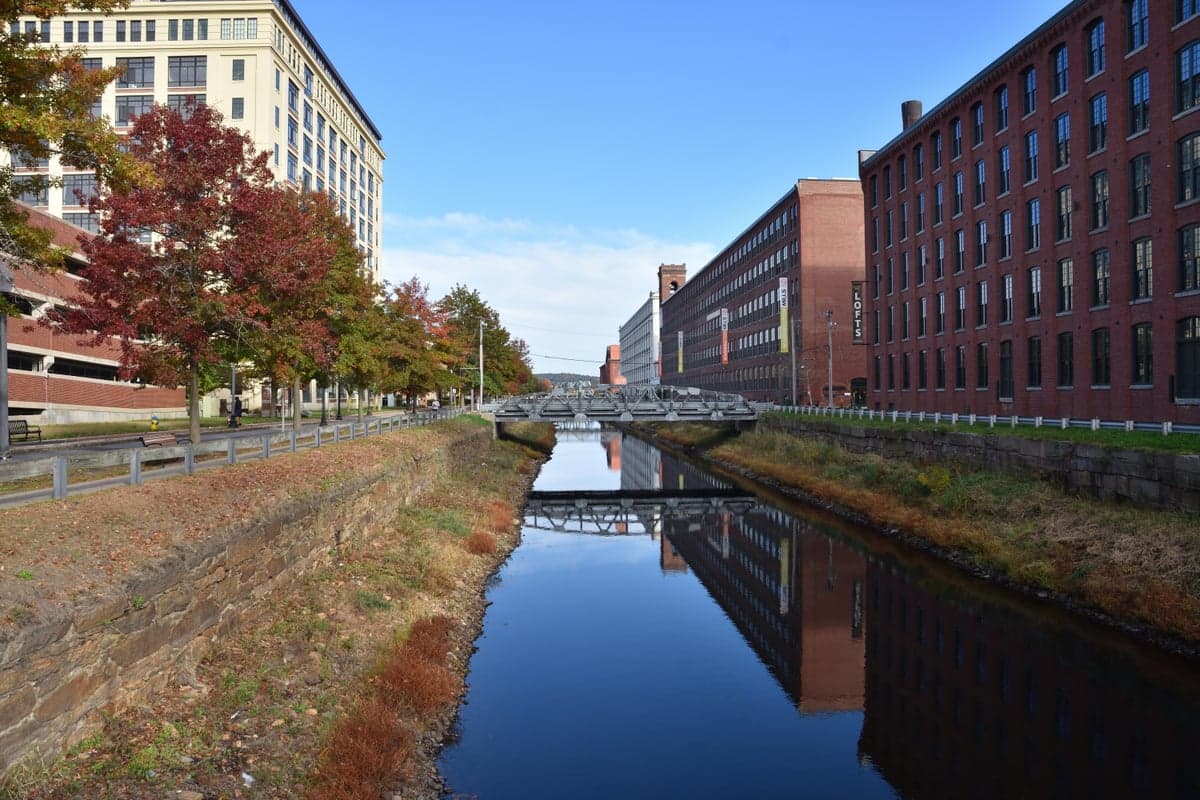
Photo: Wikipedia
Strategic Assessment of Lawrence, MA
Multiple tactical vulnerabilities. Population density, target proximity, or disaster risk are likely compounding. A retreat property and exit planning is required.
What does the Strategic Assessment tell us?
Our Strategic Assessment grades tactical survivability of an area. Major population centers, military targets, fallout zones, natural disasters, and border exposure all drive risk — lower exposure means a more defensible position in a crisis.
This is heavily inspired by Joel Skousen's Strategic Relocation book. Highly recommended you checkout the book ($)What does this tell us?
Our Strategic Assessment grades tactical survivability of an area. Major population centers, military targets, fallout zones, natural disasters, and border exposure all drive risk — lower exposure means a more defensible position in a crisis.
This is heavily inspired by Joel Skousen's Strategic Relocation book. Highly recommended you checkout the book ($)Strategic Pillars

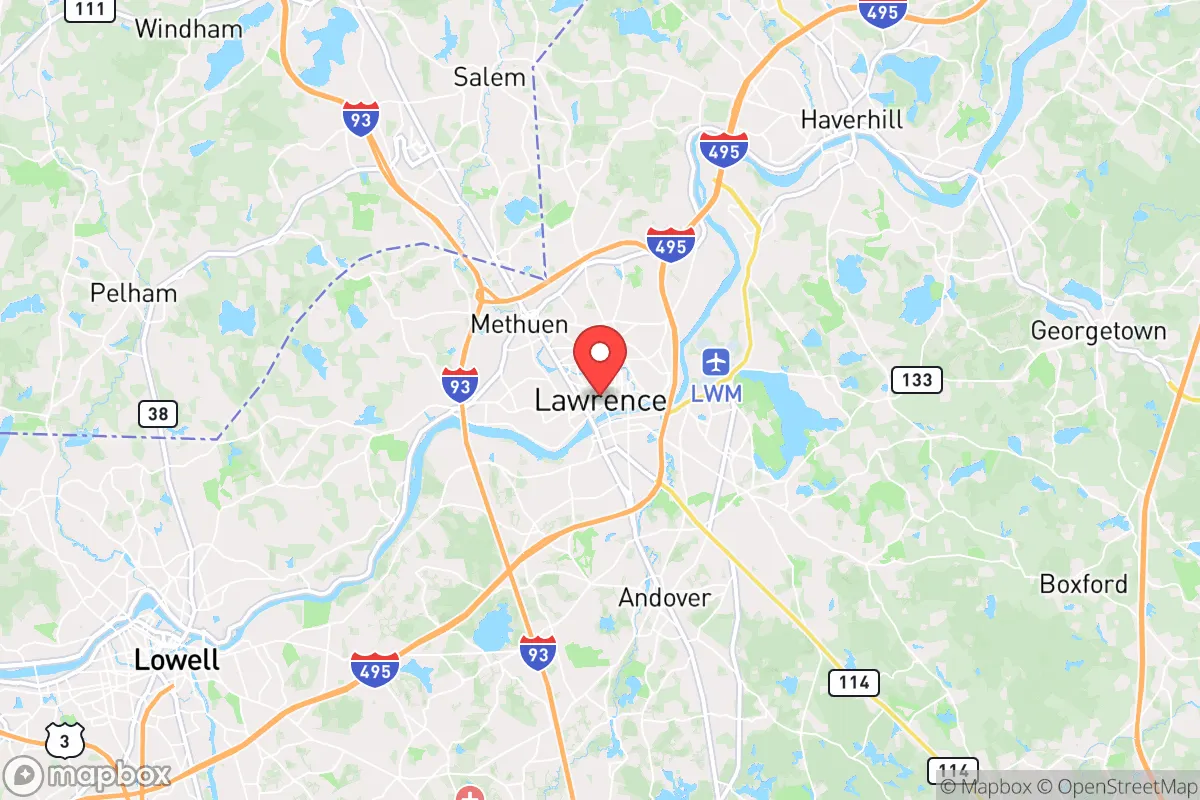
Key Distances
Regional Safe Places
Below is our recommended "safe zones" in Massachusetts and the surrounding area based on our strategic heuristics. For most people, it's unrealistic to live in a “safe zone” full-time due to work, family or other personal reasons. They tend to be more rural. However, many of these areas are perfect for second homes and retreat properties that double as a vacation home or even a short-term rental.
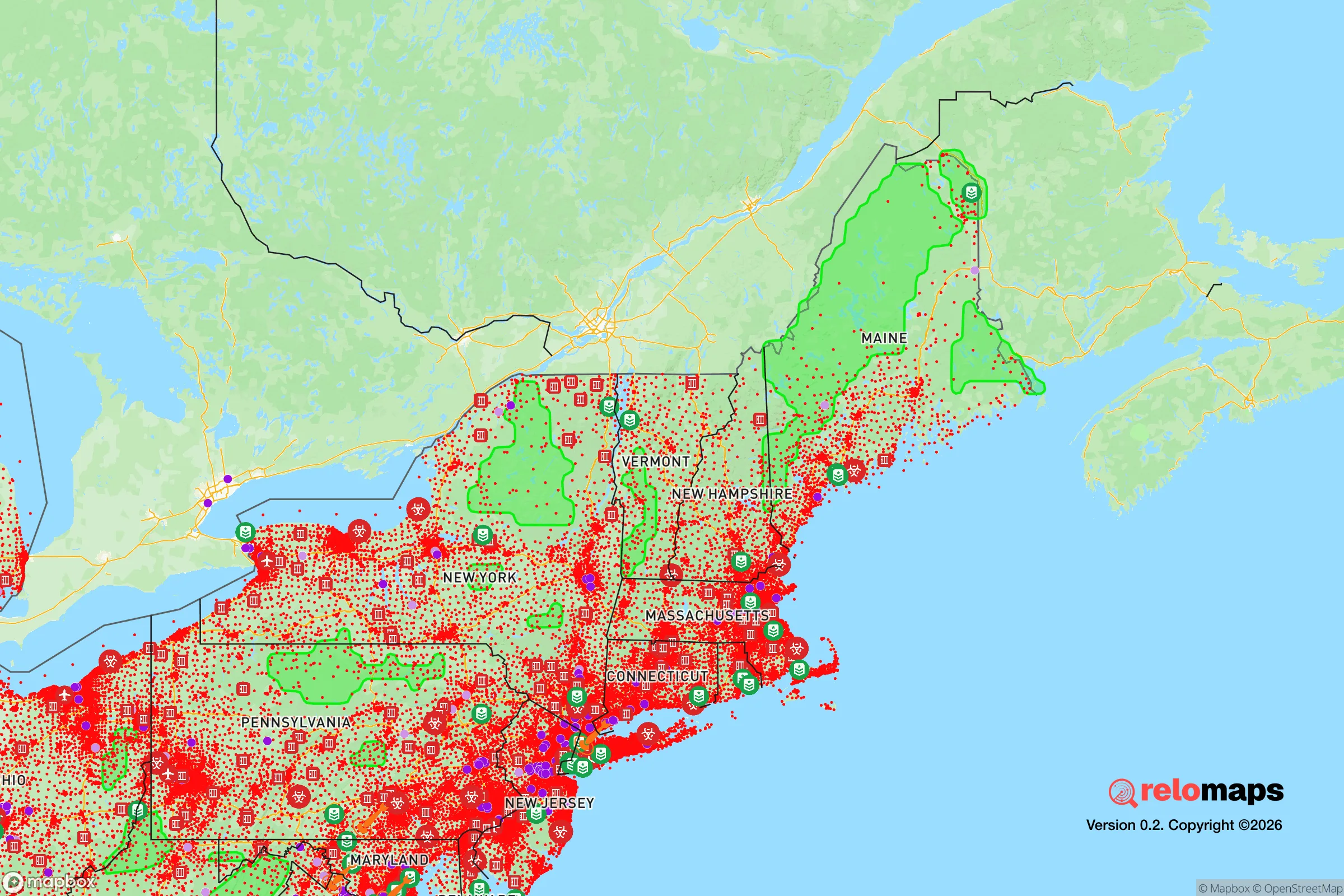
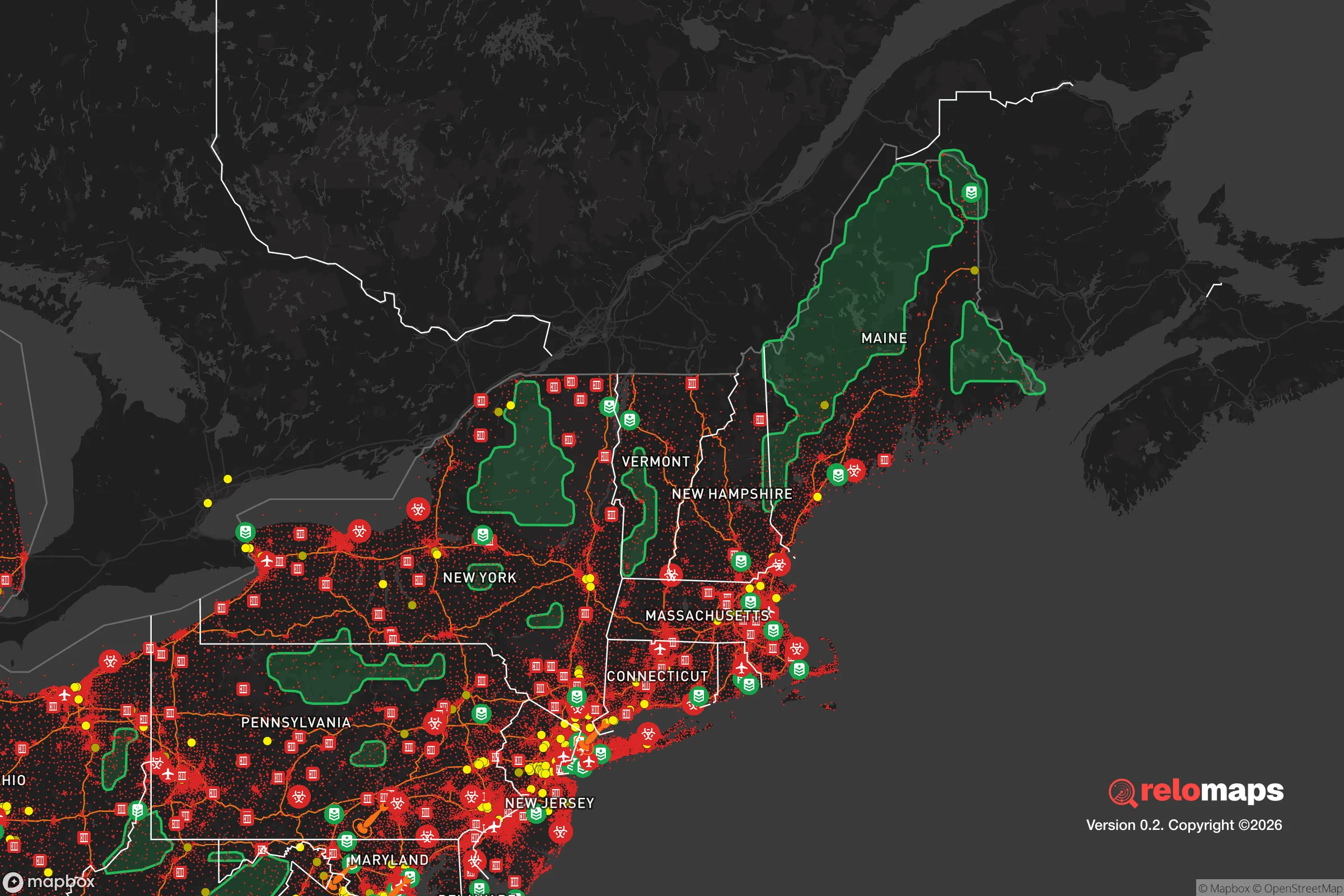


Important Note: For informational purposes only. This does not mean nothing bad ever happens in the green zones. Please use common sense. This is based on public data and modeled with AI. We tried to take a conservative approach but mistakes happen. We update this regularly as new information becomes available.
Solar Generator Recommendations
Backup power matters more here than in safer locations. We've picked three solar generators across budgets and capacity tiers — start with the budget unit if you only need a few essentials, or step up if you want to run a fridge and HVAC for days at a time.

Jackery Portable Power Station Explorer 300
Budget OptionPower on the Go: Weighing only 11 lbs, it's convenient to set up and store with book-sized foldable solar panels

BLUETTI Portable Power Station AC180
Designed for both indoor and outdoor scenarios, AC180 is highly capable as it has a robost capacity and continuous output power.

EF ECOFLOW DELTA Pro Ultra Power Station
Upgraded PickEcoFlow DELTA Pro Ultra is a whole-home energy system designed to grow with your family. Integrated with the Smart Home Panel 2, it scales to meet your evolving energy needs — keeping your home powered, intelligent, and secure through every stage of life.
We earn a commission, at no additional cost to you.
Strategic Assessment Analysis
Lawrence, Massachusetts, sits in a precarious strategic position that demands a clear-eyed assessment for anyone serious about long-term preparedness. While its location along the Merrimack River offers some natural advantages, the city’s proximity to Boston and its dense, aging infrastructure create significant vulnerabilities for those prioritizing resilience against civic unrest, mass casualty events, and systemic collapse. For a conservative-leaning relocator—whether a single individual or a parent—the calculus here is not about comfort but about survival odds in a deteriorating national landscape.
Geographic position and natural advantages for long-term survival
Lawrence’s primary strategic asset is the Merrimack River, a reliable water source that could sustain a household or small community if municipal systems fail. The river’s flow is substantial enough to support basic hydropower or filtration, though it requires treatment for safe consumption. The city sits within the Merrimack Valley, a region with decent agricultural soil and a growing network of small farms in nearby towns like Methuen and Andover. For a prepper, this means potential for local food sourcing if supply chains collapse. However, the terrain is mostly flat and urbanized, offering little natural defensibility—no hills, forests, or chokepoints to control movement. The area’s proximity to the Atlantic (about 25 miles) provides access to maritime resources, but also exposes the region to hurricane storm surges and sea-level rise risks, which could compound a disaster scenario. Winter storms are a regular hazard, with nor’easters capable of knocking out power for days—a test of any off-grid setup.
Risks, exposures, and proximity to fallout-relevant landmarks
The biggest red flag for Lawrence is its direct adjacency to Boston’s metropolitan sprawl. In a mass casualty event—whether from a terrorist attack, civil unrest, or a biological incident—Lawrence would be in the immediate fallout zone of a population center with over 4.5 million people. The city lies just 30 miles north of Boston, and major highways like I-93 and I-495 run through or near it, making it a likely evacuation corridor and a target for looting or refugee flows. Lawrence is also within 15 miles of the Seabrook Nuclear Power Plant in New Hampshire, a facility that, while operational, represents a catastrophic risk if compromised by an attack or natural disaster. A plume from Seabrook would cover Lawrence in hours, and the city’s evacuation routes are limited to a few congested bridges over the Merrimack. Additionally, the area hosts multiple chemical storage facilities along the river and rail lines, including a major propane terminal in nearby Tewksbury. In a grid-down scenario, these become toxic liabilities. The city’s dense, older housing stock—much of it triple-deckers—offers poor shelter from fallout or airborne contaminants, and the lack of basements in many units is a critical shortfall for a prepper.
Practical resilience for a relocator: food, water, energy, and defensibility
For a single individual or family looking to hunker down, Lawrence presents a mixed bag. Water is the strongest point: the Merrimack River is a year-round source, but it requires robust filtration (e.g., Berkey or Sawyer systems) due to industrial runoff and sewage overflows common in older cities. Municipal water treatment plants are vulnerable to cyberattacks or physical sabotage, so a backup well or rainwater catchment is advisable—though most residential lots are too small for effective collection. Food security is weak. Lawrence is a food desert in many neighborhoods, with limited grocery stores and heavy reliance on convenience stores. Stockpiling is essential, but storage space is tight in apartments or small homes. Community gardens exist but are not scalable for a family’s long-term needs. Energy resilience is poor. The grid is aging and prone to outages, and natural gas lines are widespread but could be shut off during a crisis. Solar panels are feasible on flat roofs, but many buildings are shaded by taller structures. Generators are a must, but fuel storage is a fire hazard in dense neighborhoods. Defensibility is the weakest link. Lawrence’s street grid is open and interconnected, with few natural barriers. The city’s population density (over 10,000 per square mile) means neighbors are close, and in a breakdown, you cannot control who moves through your area. The best option for a prepper is to secure a property on the outskirts—near the river but away from main roads—and harden it with reinforced doors, window bars, and a clear line of sight. Even then, the city’s gang activity and property crime rates (among the highest in Massachusetts) mean that a visible stockpile could attract unwanted attention during normal times, let alone a crisis.
The overall strategic picture for Lawrence is one of high risk with limited upside. Its water access and proximity to farmland are genuine advantages, but they are outweighed by the city’s vulnerability to Boston’s collapse, its exposure to nuclear and chemical hazards, and its lack of defensible terrain. For a conservative relocator serious about preparedness, Lawrence is best viewed as a temporary staging point—a place to build skills and network with like-minded individuals in the Merrimack Valley while planning a move to a more resilient rural location like the Berkshires or northern New Hampshire. If you must live here, prioritize a home with a basement, a water filtration system, and a vehicle capable of navigating clogged evacuation routes. But do not mistake Lawrence for a long-term survival haven; it is a city that will burn first when the system fails.

* Values derived from national, state, county, city and local statistics and may differ in a specific area. Last updated: 2026-04-19T08:07:48.000Z
Narrative content on this page is AI-generated and may contain mistakes. Verify any details that matter before acting on them.
ReloMaps may earn a commission from affiliate links at no extra cost to you.

