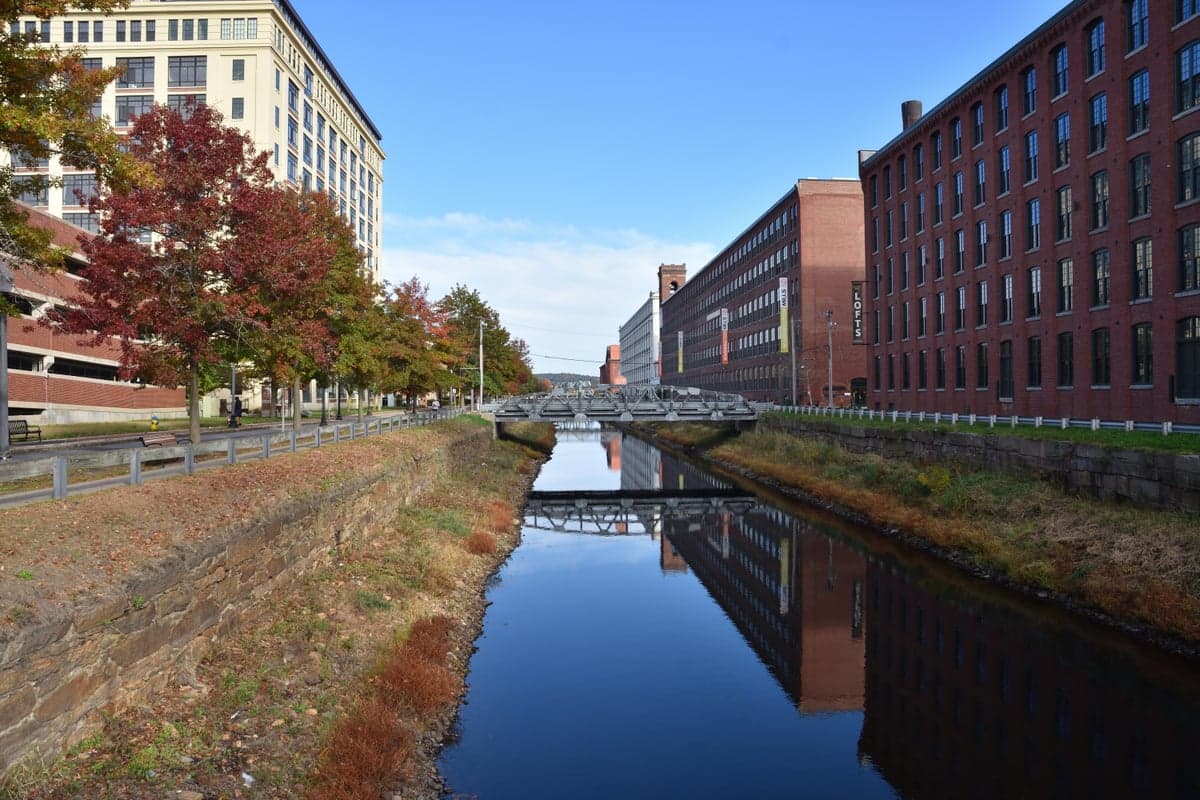
Photo: Wikipedia
Political ClimatePolitical Climate in Lawrence, MA
District shown is the primary district for this city’s centroid. Cities may span multiple districts.
Local Political AnalysisPolitical Analysis of Lawrence, MA
Lawrence, Massachusetts, is a place where the political climate has shifted dramatically over the past few decades, and not in a direction that sits well with anyone who values personal freedom and limited government. The city is a deep blue stronghold, with a Cook PVI of D+11, meaning it votes about 11 points more Democratic than the national average. This isn't just a statistic; it's a lived reality where progressive policies have taken root, and the old, more independent spirit of the Merrimack Valley has been largely replaced by a top-down, government-knows-best attitude. If you're looking for a place where your rights to make your own choices are respected, Lawrence is a tough sell these days.
How it compares
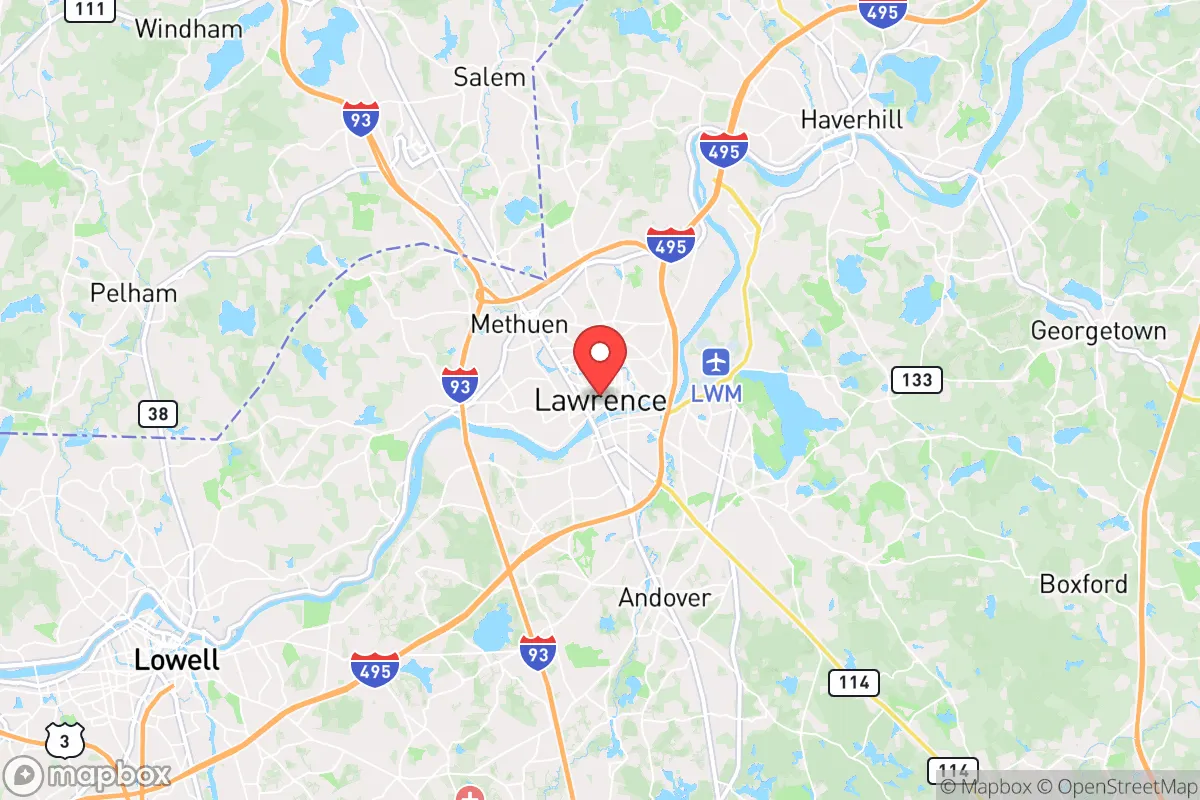
To really understand Lawrence, you have to look at the towns around it. Drive ten minutes north to Methuen, and you'll find a much more balanced political scene, with plenty of folks who still believe in fiscal responsibility and keeping the government out of your business. Head west to Andover, and while it's not a conservative stronghold, it's a far cry from Lawrence's one-party rule. The contrast is stark: Lawrence is a dense, urban core where the machine politics of the Democratic Party are deeply entrenched, while the surrounding suburbs still have a semblance of political diversity. This isn't just about voting patterns; it's about the culture. In Lawrence, the local government is quick to impose new regulations, from business licensing hurdles to zoning restrictions that make it hard to start a small operation. The surrounding towns, while not perfect, at least have a fighting chance for a more laissez-faire approach.
What this means for residents
For the average person living here, the political climate translates directly into daily hassles and a feeling that your voice doesn't matter. Property taxes are high, and they keep climbing to fund programs that many residents didn't ask for. There's a constant push for more public spending, more government programs, and more oversight into how you live your life. The school system, for example, is a major point of contention. Instead of focusing on core academics and giving parents more choice, the local leadership has doubled down on progressive curricula and administrative bloat. If you value the right to send your kids to a school that aligns with your values, or if you want to run a business without a mountain of red tape, Lawrence is a place where you'll feel the weight of government overreach every single day. The long-term trend is concerning: as the city becomes more reliant on state and federal aid, the local government's appetite for controlling your choices only grows.
One of the biggest cultural distinctions here is the near-total absence of any meaningful political opposition. In a healthy community, you have debates, you have pushback, and you have a balance of power. In Lawrence, it's a one-party show, and that breeds a kind of complacency and arrogance in local leadership. You see it in the way they handle public meetings, the way they push through zoning changes, and the way they treat anyone who dares to question the progressive orthodoxy. The city's identity is increasingly tied to a brand of activism that prioritizes group identity over individual rights. If you're a person who believes in the Second Amendment, in keeping your own money, or in making your own healthcare decisions, you'll find yourself swimming against a very strong, very blue current. The future looks like more of the same, with a continued drift toward a more regulated, less free environment. It's a shame, because the city has a rich history and hardworking people, but the political class is steering it in a direction that leaves little room for the kind of personal liberty that used to define this country.

State Political ClimatePolitical Climate in Massachusetts
State Political AnalysisPolitical Environment in the State
Massachusetts has long been one of the most reliably Democratic states in the nation, with a partisan lean that has only deepened over the past two decades. In the 2024 presidential election, Kamala Harris carried the state by roughly 25 points, a margin that has held steady since 2016. The dominant coalition is a blend of urban progressives in Boston and its inner suburbs, combined with well-educated, affluent professionals in the Route 128 corridor. However, this blue veneer masks a more complex reality: the state’s western and central regions, along with parts of the South Shore and Cape Cod, have shifted rightward, creating a sharper urban-rural divide than at any point in recent memory. For a conservative considering relocation, the state offers a mix of world-class institutions and a policy environment that increasingly feels like a laboratory for progressive governance.
Urban vs. rural divide
The political map of Massachusetts is a tale of two worlds. The Boston metro area, including cities like Cambridge, Somerville, and Newton, is the engine of the state’s Democratic dominance. These communities vote 80-90% Democratic and drive the state’s policy agenda. In contrast, the western part of the state—places like Pittsfield, North Adams, and the Berkshires—has a more mixed political history, but even there, the Democratic lean is strong, though with a more moderate, blue-collar flavor. The real conservative strongholds are in the central and southeastern parts of the state. Worcester County, particularly towns like Holden, Paxton, and Rutland, has become a Republican-leaning area, with many precincts voting +10 to +20 points for Trump in 2024. Similarly, the South Shore towns of Plymouth, Marshfield, and Hanover have shifted right, driven by a mix of working-class families and former Bostonians seeking lower taxes and more space. The Cape Cod region, especially Barnstable and Yarmouth, has also seen a rightward drift among older, more fiscally conservative retirees. The divide is stark: drive 30 minutes west of Boston, and you’ll find a political landscape that feels like a different state.
Policy environment
Massachusetts’ policy environment is a double-edged sword for conservatives. On the plus side, the state has a relatively low property tax rate compared to national averages—around 1.1% of assessed value—but that’s offset by some of the highest income and sales taxes in the country. The state income tax is a flat 5%, and the sales tax is 6.25%, with no exemptions for groceries or clothing. The regulatory posture is heavy: the state has a strict rent control framework in Boston, a near-total ban on new fossil fuel infrastructure, and a recently passed “Millionaire’s Tax” (Amendment 1) that adds a 4% surcharge on income over $1 million. Education policy is dominated by the state’s powerful teachers’ unions, with school choice limited to charter schools and inter-district transfers. Healthcare is heavily regulated, with the state’s own health insurance mandate predating the ACA. Election laws are among the most liberal in the country: no-excuse mail-in voting, same-day registration, and automatic voter registration are all in place. For a conservative, the policy environment feels like a slow but steady expansion of government into daily life, with little room for local opt-outs.
Trajectory & freedom
Over the past five years, Massachusetts has become less free by almost any measure of personal liberty. The most visible flashpoint is gun rights: the state passed the Massachusetts Gun Safety Act of 2024, which bans the sale of most semi-automatic rifles, limits magazine capacity to 10 rounds, and requires a state license to purchase ammunition. This law goes further than any other state’s restrictions outside of California and New York. On parental rights, the state’s 2022 “Parental Rights in Education” bill was defeated, and instead, the state passed a law requiring schools to adopt policies that affirm a student’s gender identity without parental notification. Medical autonomy has also been curtailed: the state’s 2020 “Right to Repair” law was a win for consumers, but it was overshadowed by a 2023 law that mandates COVID-19 vaccines for all healthcare workers, with no religious exemption. Property rights are under pressure from the state’s “Housing Choice” law, which allows the state to override local zoning to force higher-density development in towns that haven’t met housing production targets. The trajectory is clear: the state is moving toward a model where individual choice is increasingly subordinated to collective goals, with little room for dissent.
Civil unrest & political movements
Massachusetts has a long history of political activism, but the recent decade has seen a sharpening of tensions. The 2020 George Floyd protests in Boston were among the largest in the country, with sustained demonstrations that led to the removal of a statue of Christopher Columbus and the renaming of several schools. The state’s sanctuary city policies are a major flashpoint: Boston, Cambridge, Somerville, and Springfield all have laws that limit cooperation with federal immigration enforcement, and the state legislature has repeatedly blocked efforts to require local police to notify ICE. On the right, the Massachusetts Fiscal Alliance and the Massachusetts Republican Party have organized around tax and spending issues, but they remain a minority voice. The 2022 election integrity controversy over the state’s no-excuse mail-in voting system led to a lawsuit from the state GOP, but it was dismissed. More recently, the 2024 “Parents’ Bill of Rights” movement has gained traction in towns like Wrentham and Franklin, where school board meetings have become heated over curriculum transparency and library books. The overall atmosphere is one of a dominant progressive consensus, with conservative voices feeling increasingly marginalized and often retreating to private life or moving out of state.
Projection
Looking ahead five to ten years, Massachusetts is likely to become more progressive, not less. Demographic trends are working against conservatives: the state’s population is aging, with a net outflow of young families to lower-cost states like New Hampshire, Texas, and Florida. The in-migration is primarily from international immigrants and young professionals drawn to Boston’s tech and biotech sectors, both of which lean heavily Democratic. The state’s 2025-2030 housing plan aims to build 200,000 new units, mostly in the Boston metro area, which will further concentrate the progressive vote. The Republican Party in Massachusetts is in a state of decline, with no statewide elected officials and a shrinking base in the legislature. The most likely scenario is that the state continues to pass laws that expand government control over housing, healthcare, and education, while individual freedoms—especially gun rights and parental rights—continue to erode. For a conservative moving in now, the expectation should be that the political environment will become less hospitable over time, with the state’s policies increasingly resembling those of California or New York.
For a conservative considering a move to Massachusetts, the bottom line is this: you’ll find excellent schools, world-class healthcare, and a beautiful natural landscape, but you’ll also be living in a state where your political voice is a minority, and where the government is actively expanding its reach into your personal life. If you’re willing to pay high taxes, accept strict gun laws, and navigate a school system that prioritizes progressive values over parental input, you can make it work. But if you value personal freedom, low taxes, and a government that stays out of your way, you’ll likely find yourself looking at the border—and wondering if New Hampshire or Rhode Island might be a better fit. The state is a beautiful place to live, but it’s not a place where conservative values are welcome, and that’s unlikely to change anytime soon.
* Values derived from national, state, county, city and local statistics and may differ in a specific area. Last updated: 2026-04-19T08:07:48.000Z
Narrative content on this page is AI-generated and may contain mistakes. Verify any details that matter before acting on them.
ReloMaps may earn a commission from affiliate links at no extra cost to you.

