Photo: Wikipedia
Personal Sovereignty in Lawrence, MA
Viable for self-reliance. Generally workable, though some barriers may limit total independence.
What does Personal Sovereignty tell us?
Personal Sovereignty measures your capacity for self-reliance and independence with minimal government friction. Higher scores mean fewer barriers between you and the way you want to live... but it assumes you have the space you need and good neighbors.
What does this tell us?
Personal Sovereignty measures your capacity for self-reliance and independence with minimal government friction. Higher scores mean fewer barriers between you and the way you want to live... but it assumes you have the space you need and good neighbors.
State Policy
Energy independence: Importer (5% of energy produced in-state)
Personal Liberty
Homesteading

Personal Liberty Analysis
Lawrence, Massachusetts, presents a challenging environment for personal sovereignty, where the dense urban setting and deep-blue state governance create significant friction for those prioritizing autonomy, self-reliance, and minimal government interference. While the city offers lower property costs than much of Greater Boston, residents must navigate a thicket of state-level mandates on everything from firearms to medical choices, with local enforcement often amplifying those restrictions. For the survivalist or prepper, Lawrence is less a sanctuary and more a strategic outpost—one that demands careful legal navigation and a clear-eyed understanding of where your freedoms end and the Commonwealth's authority begins.
Tax burden and regulatory posture in Lawrence
Massachusetts is a high-tax, high-regulation state, and Lawrence sits squarely within that reality. The state income tax is a flat 5.0% on all earned income, with no deductions for federal taxes paid, and the sales tax is 6.25% on most goods. Property taxes in Lawrence are moderate by state standards—around $14.50 per $1,000 of assessed value—but the city's lower home values mean the effective burden is still noticeable. More concerning for the sovereignty-minded is the regulatory climate: Massachusetts has some of the strictest environmental, building, and business licensing codes in the Northeast. Starting a home-based business, for example, requires navigating zoning variances and state-level permits that can take months. The state also imposes a paid family and medical leave tax (0.75% of wages) and a short-term capital gains tax of 12%, both of which reduce the financial autonomy of residents. For preppers, the cumulative effect is a system that taxes heavily and regulates deeply, leaving less margin for independent action or savings.
Self-defense and gun law specifics in Lawrence
Massachusetts is one of the most restrictive states in the country for gun owners, and Lawrence residents must comply fully. The state requires a License to Carry (LTC) for any handgun possession, which involves a background check, fingerprinting, a firearms safety course, and a fee of around $100. Local police chiefs have significant discretion in issuing LTCs, and in Lawrence, the process is known to be slow and sometimes inconsistent. Open carry is effectively banned, and the state has a strict "may issue" policy for concealed carry, meaning the chief can deny a license without cause. Magazine capacity is capped at 10 rounds, and the state maintains a roster of approved handguns that excludes many popular models. For self-defense in the home, a shotgun or rifle is easier to acquire (no LTC needed for long guns), but the state's red flag law allows for temporary seizure of firearms based on a complaint, with no criminal charge required. Stand-your-ground laws do not exist; Massachusetts imposes a duty to retreat if safely possible. For the prepper, this means self-defense planning must account for legal hurdles that could leave you disarmed or prosecuted for defending your property.
Self-reliance and homesteading viability in Lawrence
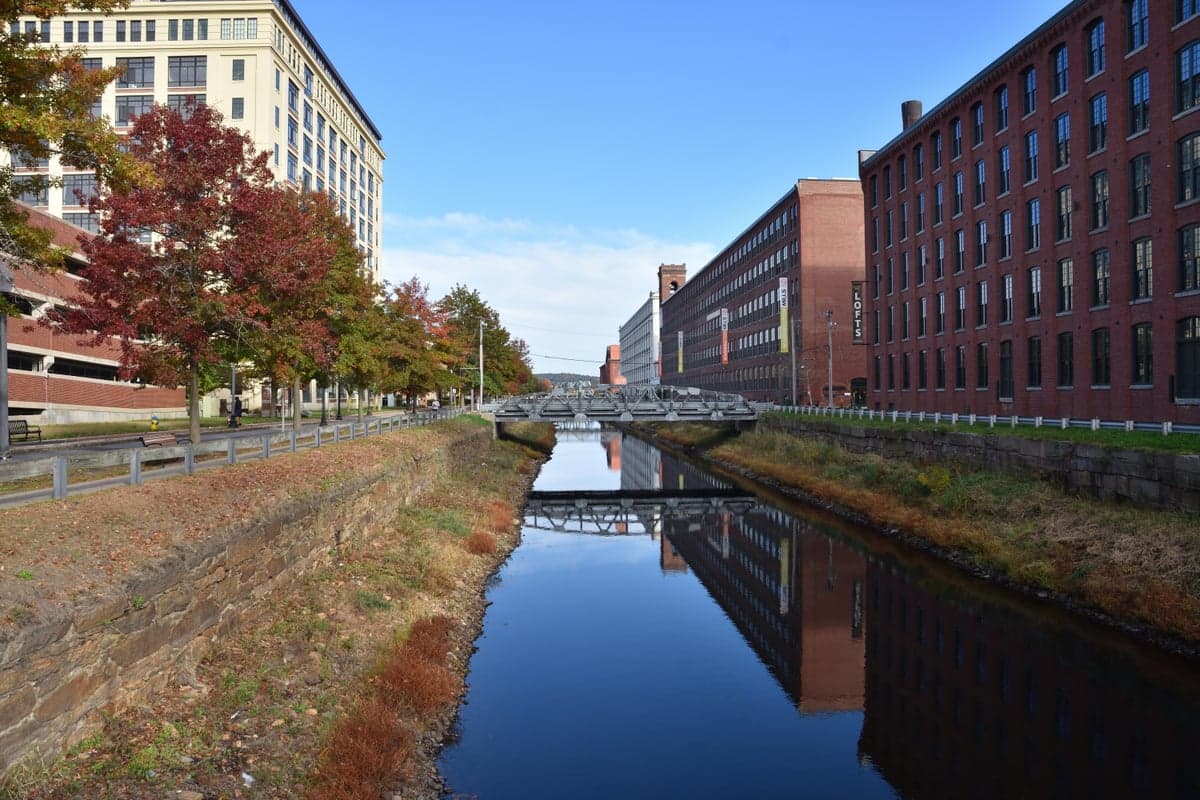
Lawrence is a dense, post-industrial city of about 90,000 people in roughly 7 square miles, so traditional homesteading is not viable. Typical residential lot sizes are 0.05 to 0.15 acres, often with no backyard to speak of. Zoning is primarily residential multi-family, with strict limits on keeping livestock—chickens are generally prohibited, and any animal husbandry requires a special permit that is rarely granted. Off-grid living is essentially impossible: the city requires connection to municipal water and sewer, and solar panels must be grid-tied with utility approval. Rainwater collection is legal but limited to 250 gallons per property without a permit. For the self-reliant individual, the focus shifts to urban prepping: stockpiling supplies, building community networks, and securing a defensible living space. The Merrimack River provides a water source in a crisis, but purification would be mandatory. Community gardens exist but are small and waitlisted. The best strategy here is to treat Lawrence as a base for earning income while maintaining a secondary, more rural property for actual homesteading—a common pattern among preppers in the Northeast.
Personal liberties in Lawrence: parental rights, medical autonomy, speech, and property
Massachusetts law heavily constrains personal liberties in ways that matter to conservative-leaning residents. Parental rights are under pressure: the state mandates that schools cannot notify parents if a child changes their gender identity or pronouns without the child's consent, a policy that directly conflicts with parental authority. Medical autonomy is limited by the state's vaccine mandates for school attendance and healthcare workers, and by the fact that Massachusetts has some of the strictest informed consent laws for medical procedures, including a mandatory waiting period for abortions. Free speech is generally protected, but the state's anti-SLAPP law can be used to silence critics of development or government actions, and local noise ordinances are enforced aggressively. Property rights are constrained by the state's Chapter 40B law, which allows developers to override local zoning for affordable housing projects, and by the city's own rent control history (though currently banned statewide, it remains a political possibility). For the prepper, the biggest concern is the state's emergency powers: during the COVID-19 pandemic, the governor imposed sweeping mandates—mask orders, business closures, travel restrictions—with little legislative oversight. That precedent remains on the books, meaning future crises could see similar overreach.
Overall, personal sovereignty in Lawrence is significantly lower than in most of the United States, ranking near the bottom among New England cities for individual autonomy. The combination of high taxes, strict gun laws, limited homesteading potential, and aggressive state mandates on medical and parental choices creates an environment where the prepper or survivalist must operate defensively. Compared to a place like New Hampshire—just 30 minutes north, with no income tax, constitutional carry, and strong parental rights—Lawrence feels like a different country. For those committed to staying, the strategy is clear: minimize legal exposure, build local networks, and maintain a low profile. For those seeking true sovereignty, Lawrence is a stepping stone, not a destination.

* Values derived from national, state, county, city and local statistics and may differ in a specific area. Last updated: 2026-04-19T08:07:48.000Z
Narrative content on this page is AI-generated and may contain mistakes. Verify any details that matter before acting on them.
ReloMaps may earn a commission from affiliate links at no extra cost to you.

