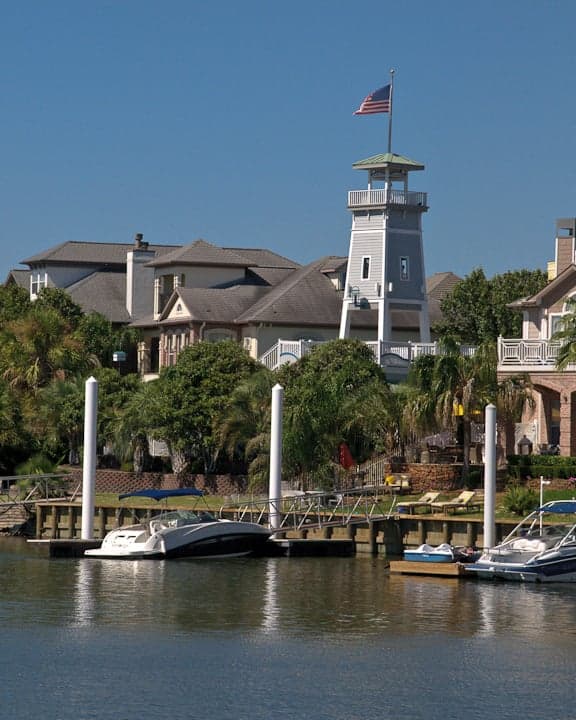
Photo: Wikipedia
Strategic Assessment of League City, TX
Multiple tactical vulnerabilities. Population density, target proximity, or disaster risk are likely compounding. A retreat property and exit planning is required.
What does the Strategic Assessment tell us?
Our Strategic Assessment grades tactical survivability of an area. Major population centers, military targets, fallout zones, natural disasters, and border exposure all drive risk — lower exposure means a more defensible position in a crisis.
This is heavily inspired by Joel Skousen's Strategic Relocation book. Highly recommended you checkout the book ($)What does this tell us?
Our Strategic Assessment grades tactical survivability of an area. Major population centers, military targets, fallout zones, natural disasters, and border exposure all drive risk — lower exposure means a more defensible position in a crisis.
This is heavily inspired by Joel Skousen's Strategic Relocation book. Highly recommended you checkout the book ($)Strategic Pillars

Key Distances
Regional Safe Places
Below is our recommended "safe zones" in Texas and the surrounding area based on our strategic heuristics. For most people, it's unrealistic to live in a “safe zone” full-time due to work, family or other personal reasons. They tend to be more rural. However, many of these areas are perfect for second homes and retreat properties that double as a vacation home or even a short-term rental.

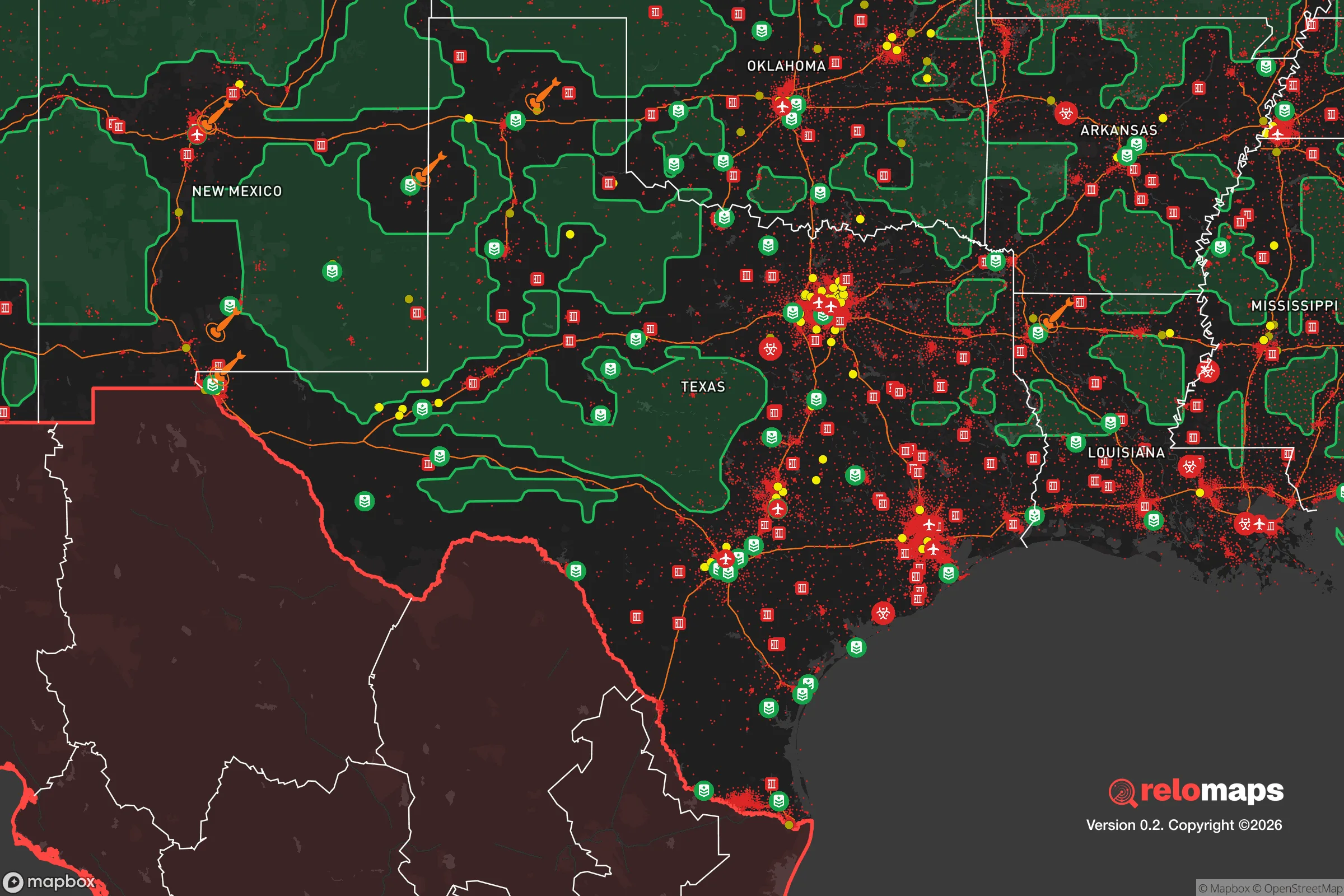


Important Note: For informational purposes only. This does not mean nothing bad ever happens in the green zones. Please use common sense. This is based on public data and modeled with AI. We tried to take a conservative approach but mistakes happen. We update this regularly as new information becomes available.
Solar Generator Recommendations
Backup power matters more here than in safer locations. We've picked three solar generators across budgets and capacity tiers — start with the budget unit if you only need a few essentials, or step up if you want to run a fridge and HVAC for days at a time.

Jackery Portable Power Station Explorer 300
Budget OptionPower on the Go: Weighing only 11 lbs, it's convenient to set up and store with book-sized foldable solar panels

BLUETTI Portable Power Station AC180
Designed for both indoor and outdoor scenarios, AC180 is highly capable as it has a robost capacity and continuous output power.

EF ECOFLOW DELTA Pro Ultra Power Station
Upgraded PickEcoFlow DELTA Pro Ultra is a whole-home energy system designed to grow with your family. Integrated with the Smart Home Panel 2, it scales to meet your evolving energy needs — keeping your home powered, intelligent, and secure through every stage of life.
We earn a commission, at no additional cost to you.
Strategic Assessment Analysis
League City, Texas, offers a surprisingly resilient relocation option for those prioritizing strategic positioning in an uncertain future, provided you understand its trade-offs. Situated on the southwestern edge of Galveston Bay, this city of roughly 115,000 residents benefits from proximity to Houston’s economic engine while maintaining enough distance to avoid the worst of a major urban collapse. Its location along Interstate 45 and State Highway 96 provides multiple egress routes, and the presence of NASA’s Johnson Space Center adds a layer of institutional stability that few other suburbs can claim. For a conservative-minded individual or family looking to balance access to resources with a defensible home base, League City deserves a serious look—but only with eyes wide open to its vulnerabilities.
Geographic position and natural advantages for long-term stability
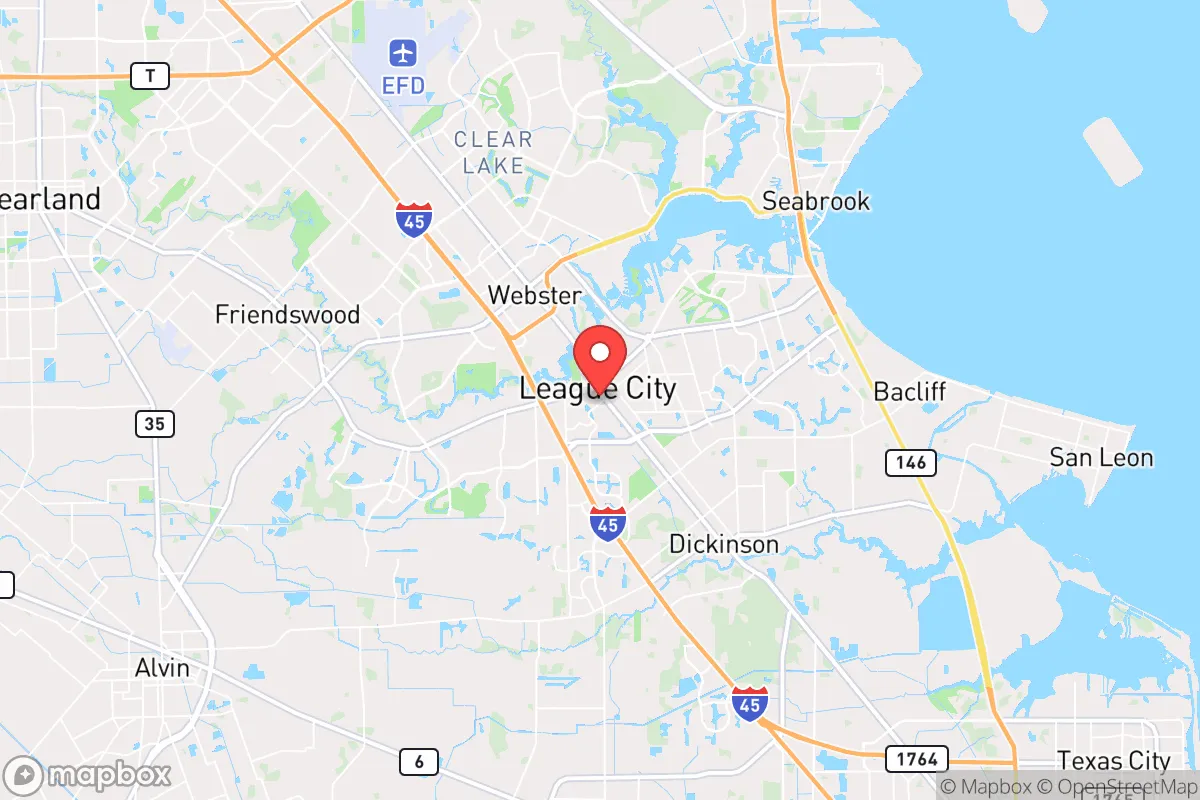
League City sits on the Gulf Coastal Plain, roughly 25 miles southeast of downtown Houston and 10 miles inland from the Gulf of Mexico. This inland buffer is critical: it places the city outside the immediate storm-surge zone that devastates coastal communities like Galveston or Texas City, while still offering relatively flat, buildable terrain. The area’s natural drainage, via Clear Creek and Dickinson Bayou, provides some flood mitigation, though it’s far from perfect. The climate is humid subtropical, meaning year-round growing seasons for those inclined toward food self-sufficiency—you can cultivate vegetables nearly ten months out of the year, and the region’s long history of rice and cattle farming proves the soil’s agricultural potential. The proximity to the Gulf also means abundant seafood and fishing opportunities, a practical advantage if supply chains falter. For a prepper, the key takeaway is that League City sits on a relatively stable geological platform (no earthquakes, minimal sinkhole risk) and has access to surface water, even if that water requires treatment. The city’s position along major freight corridors—including rail lines and the Houston Ship Channel—means it’s a logistical node, which could be a double-edged sword: beneficial for resupply in normal times, but a target during disruptions.
Risks, exposures, and proximity to fallout-relevant landmarks
Let’s be blunt: League City’s biggest strategic weakness is its proximity to Houston and the petrochemical complex along the Houston Ship Channel. That corridor, stretching from Baytown to Texas City, is one of the largest concentrations of refineries and chemical plants in the world. A major industrial accident, terrorist attack, or cascading grid failure could release toxic plumes or trigger explosions that would affect League City depending on wind direction. The Johnson Space Center, while a source of high-tech jobs, is also a potential target for state-level adversaries—its presence could draw unwanted attention during a conflict. Additionally, the city lies within the 100-mile evacuation zone for the South Texas Nuclear Generating Station near Bay City, about 90 miles southwest. While a meltdown is low-probability, the evacuation plans for this region are notoriously chaotic, as Hurricane Rita demonstrated in 2005. On the civic unrest front, League City’s demographics—predominantly white, conservative-leaning, with a median household income around $100,000—suggest a lower likelihood of urban-style riots, but the city is not isolated. I-45 is a direct artery into Houston, meaning that if the city collapses into disorder, refugees and looters could flow south. The 2020 protests in Houston did not spill into League City, but the risk is real. Flooding from hurricanes remains the most probable acute threat: Harvey (2017) dropped over 40 inches of rain in some areas, and while League City fared better than nearby Friendswood or Dickinson, many homes in the Clear Creek watershed flooded. Buy a flood map and check FEMA’s 100-year floodplain before signing anything.
Practical resilience for a relocator: food, water, energy, and defensibility
For a family or individual serious about self-reliance, League City offers a mixed bag. The municipal water supply comes from surface water (Clear Lake and the Trinity River via the Coastal Water Authority), which is vulnerable to contamination during floods or industrial spills. A well is not a realistic option for most suburban lots due to groundwater salinity and permitting hurdles, so plan on storing at least two weeks of water per person—more if you have the space. The electrical grid is part of the ERCOT system, which has proven brittle during winter storms (see 2021’s Uri). League City lost power for days during that event, and homes without gas heat or backup generators suffered. Solar panels with battery storage are increasingly common and practical here, given the 200+ sunny days per year. Natural gas is widely available, so a dual-fuel generator is a solid investment. Food resilience is more promising: the city has multiple farmers’ markets, and the surrounding county (Galveston County) has active agricultural operations, including cattle, poultry, and row crops. You can also hunt feral hogs and deer in nearby public lands like the Armand Bayou Nature Center or the Sam Houston National Forest (about an hour north). Defensibility is the weak point. League City is a typical suburban sprawl—grid-like streets, cul-de-sacs, and limited choke points. A determined group could easily bypass a single roadblock via multiple side streets. The best defensive posture is to live on a larger lot near the periphery (e.g., near the Bayou or the county line) where you have fewer neighbors and more natural barriers. The city’s police force is well-funded and responsive, but during a widespread event, they’ll be stretched thin. Build relationships with neighbors now—mutual aid networks are more valuable than any piece of gear.
Overall, League City is a viable strategic relocation target for those who accept its coastal risks and urban proximity as manageable trade-offs. It’s not a remote bug-out location—it’s a suburban base with strong economic fundamentals, decent infrastructure, and a population that largely shares conservative values of self-reliance and community. The key is to harden your specific property against flood and power loss, stockpile supplies for at least 30 days, and develop a plan for evacuation or shelter-in-place depending on the threat. If you’re looking for a place where you can work a good job, raise a family, and still have a fighting chance when things go sideways, League City deserves a spot on your short list. Just don’t mistake it for a fortress—it’s a forward operating base, and you’ll need to stay sharp.

* Values derived from national, state, county, city and local statistics and may differ in a specific area. Last updated: 2026-05-03T20:33:08.000Z
Narrative content on this page is AI-generated and may contain mistakes. Verify any details that matter before acting on them.
ReloMaps may earn a commission from affiliate links at no extra cost to you.

