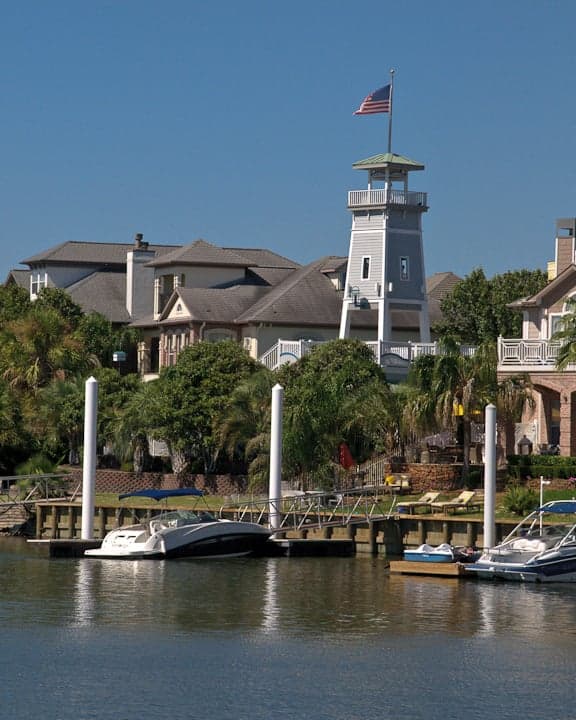
Photo: Wikipedia
Political ClimatePolitical Climate in League City, TX
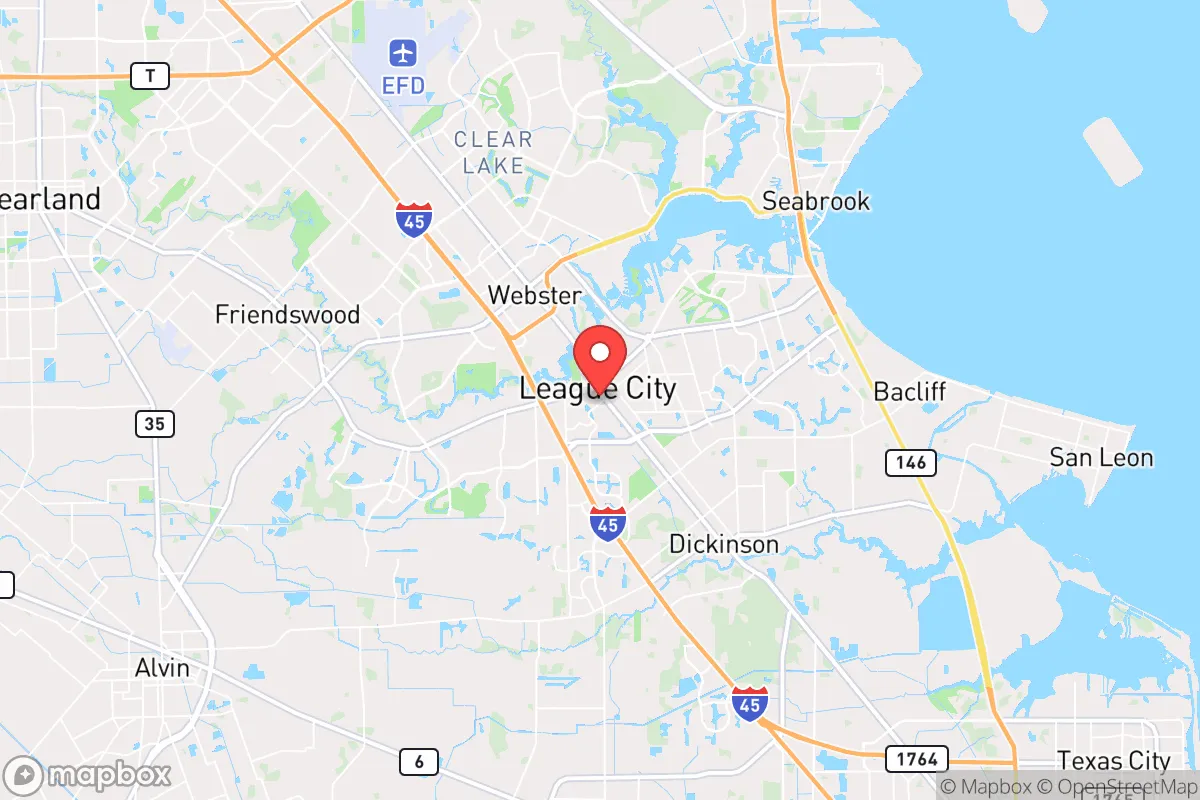
District shown is the primary district for this city’s centroid. Cities may span multiple districts.
Local Political AnalysisPolitical Analysis of League City, TX
League City leans solidly conservative, with a Cook PVI of R+17 that puts it among the most reliably Republican suburbs in the Houston metro. That number isn't just a statistic—it reflects a community that has consistently voted for limited government, lower taxes, and a hands-off approach to personal freedoms. The political trajectory here has been stable for decades, though there are subtle shifts worth watching as the city grows and attracts newcomers from more progressive areas like Harris County.
How it compares
Drive 15 minutes north into Clear Lake or parts of Houston proper, and you'll hit precincts that lean blue or purple—places where local governments are more willing to impose mask mandates, restrict property rights, or raise taxes for pet projects. League City, by contrast, sits in Galveston County, which has trended redder over the past decade. Neighboring Texas City and La Marque are more mixed politically, but League City's voter base remains firmly conservative. The contrast is stark: while Houston City Council debates rent control and sanctuary policies, League City's council focuses on keeping roads paved, police funded, and zoning light. That's the kind of governance that respects individual choice over bureaucratic control.
What this means for residents
For someone who values personal freedom, this political climate is a breath of fresh air. You won't see city officials meddling in how you run your business, what you do with your property, or how you educate your kids. Property taxes are a concern everywhere in Texas, but League City's local leadership has historically pushed back against runaway spending. The school board leans conservative too, which means less ideological curriculum battles and more focus on academics. If you're worried about government overreach—whether it's vaccine mandates, zoning restrictions, or surveillance programs—this is a place where those ideas get a skeptical reception at the ballot box. The long-term concern is growth: as more people move in from blue areas, there's always a risk that progressive activism follows. But so far, the local culture has absorbed newcomers without flipping the political script.
What daily life is like for families
Politically, daily life here feels normal in the best sense. Neighbors don't argue about politics at the grocery store; the local Facebook groups are more about lost dogs and traffic than heated debates. The city's conservative lean means that Second Amendment rights are respected, religious freedom is a given, and you're not going to see the kind of performative activism that dominates coastal cities. That said, there's a growing tension as developers push for higher-density housing and more commercial zoning—some residents worry this could invite the same kind of overreach they fled from in Harris County. For now, though, League City remains a place where you can live your life without the government looking over your shoulder. If that changes, you'll see it at the polls first.

State Political ClimatePolitical Climate in Texas
State Political AnalysisPolitical Environment in the State
Texas has been a reliably Republican state for decades, with the GOP holding every statewide office and both legislative chambers, but the margin has been tightening. In 2024, Donald Trump won the state by roughly 9 points, down from 11 points in 2020 and 16 points in 2016, driven by explosive growth in the blue-leaning suburbs of Austin, Dallas, Houston, and San Antonio. The dominant coalition remains a mix of rural conservatives, suburban moderates, and a growing Hispanic electorate that still leans right but is increasingly contested. Over the last 10-20 years, the state has shifted from a deep-red lock to a lean-red battleground, though the legislature and courts remain firmly conservative.
Urban vs. rural divide
The political map of Texas is a tale of two landscapes. The vast rural and exurban areas—places like Lubbock, Amarillo, and the Permian Basin—vote Republican by 30-50 points. Meanwhile, the major urban cores are solidly Democratic: El Paso (Beto O’Rourke’s home base) votes blue by 30+ points, Austin is a deep-blue island, and Houston’s Harris County flipped blue in 2018 and hasn’t looked back. The real action is in the suburbs: Collin County (north of Dallas) went from +30 R in 2012 to +10 R in 2024, while Fort Bend County (southwest of Houston) flipped blue entirely. These suburban shifts are driven by an influx of out-of-state professionals and younger families who bring more moderate-to-liberal views on social issues, even as they appreciate Texas’s low taxes and business climate.
Policy environment
Texas’s policy environment is a study in contrasts. On the plus side for conservatives: no state income tax, a right-to-work law, and a regulatory climate that ranks among the most business-friendly in the nation. The 2023 legislative session passed SB 14, banning gender-transition procedures for minors, and HB 2127, the “Death Star” bill that preempts local ordinances on everything from labor to agriculture—a major win for property rights and uniformity. On the education front, the state expanded school choice via HB 3 in 2023, creating education savings accounts for special-needs students, though a universal voucher bill failed. Property taxes remain high, but the 2023 session cut them by $18 billion through compression and a homestead exemption increase. Election integrity saw SB 1 (2021) tighten voter ID rules and ban drive-through voting, which critics call suppression but supporters say restores trust. Healthcare is a mixed bag: Texas has not expanded Medicaid, keeping costs lower for taxpayers, but rural hospitals struggle.
Trajectory & freedom
On balance, Texas is becoming more free in many areas, but with some worrying trends. The 2021 permitless carry law (HB 1927) expanded gun rights significantly—any law-abiding adult can now carry a handgun without a license. Parental rights were strengthened with HB 900 (2023), requiring library vendors to rate books for sexual content, and SB 14 protecting minors from irreversible medical procedures. Property rights got a boost from SB 2038 (2023), limiting eminent domain for private toll roads. However, the state’s heavy reliance on property taxes—which have risen faster than inflation—feels like a creeping infringement on economic freedom. And the 2023 HB 2127 preemption bill, while good for uniformity, also stripped local control on issues like tree preservation and plastic bag bans, which some see as a net loss of local liberty. The biggest red flag for freedom-minded residents is the growing influence of corporate-backed “smart city” initiatives in Austin and Dallas, which push surveillance and zoning restrictions that feel more like government overreach than community planning.
Civil unrest & political movements
Texas has seen its share of political flashpoints. The 2020-2021 period saw massive Black Lives Matter protests in Austin, Houston, and Dallas, with some turning violent and leading to property damage. In response, the legislature passed HB 9 (2021), increasing penalties for rioting and blocking defunding police—a move that calmed things down. Immigration remains the hottest button: Governor Abbott’s Operation Lone Star has bused over 100,000 migrants to sanctuary cities, while the state’s SB 4 (2023) makes illegal entry a state crime, currently tied up in court. The “Texas secession” movement, led by the Texas Nationalist Movement, is mostly a fringe online phenomenon, but it reflects deep distrust of federal overreach. Election integrity remains a live issue: the 2020 election saw lawsuits over Harris County’s drive-through voting, and the 2022 primaries had scattered machine glitches. A new resident in San Antonio or El Paso will see border patrol checkpoints and hear constant debate over immigration enforcement.
Projection
Over the next 5-10 years, Texas will likely remain Republican-controlled but with a shrinking margin. The state is adding 1,000+ people per day, mostly from California and the Northeast, and these newcomers tend to be more moderate or liberal on social issues. The suburbs of Dallas and Houston will continue to trend blue, while rural areas and the Rio Grande Valley (which shifted right in 2024) may hold the line. The legislature will likely pass a universal school choice bill and further restrict abortion (already banned after 6 weeks via SB 8), but may face pressure to expand Medicaid as rural hospitals close. The biggest wildcard is the Hispanic vote: if Republicans keep winning it (as they did in 2024 with 55% of Hispanic men), the state stays red. If not, Texas could be a swing state by 2032. For a new resident, expect the culture to remain conservative in most places, but with growing pockets of progressive influence in the cities—and a constant battle over property taxes and local control.
Bottom line for a new resident: Texas offers a low-tax, business-friendly environment with strong gun rights and parental control over education, but you’ll pay for it with high property taxes and a growing urban-liberal presence in the major metros. If you’re looking for a place where your personal freedoms are respected and government stays out of your life, the suburbs of Fort Worth, San Antonio, or the Hill Country are your best bets. Avoid Austin and El Paso if you want to avoid progressive policies and high costs. The state is still a net positive for freedom, but you’ll need to stay engaged to keep it that way.
* Values derived from national, state, county, city and local statistics and may differ in a specific area. Last updated: 2026-05-03T20:33:08.000Z
Narrative content on this page is AI-generated and may contain mistakes. Verify any details that matter before acting on them.
ReloMaps may earn a commission from affiliate links at no extra cost to you.

