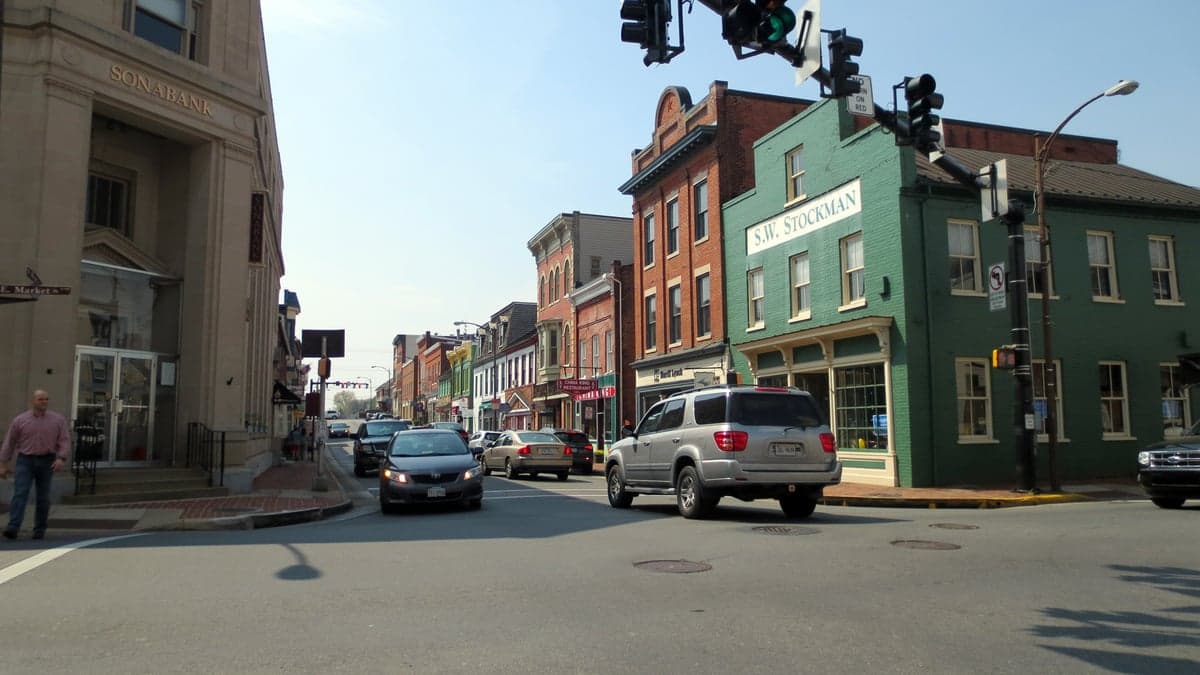


Photo: Wikipedia
Quality of Life in Leesburg, VA
A high quality of life with strong walkability, manageable living costs, healthy neighborhood signals, and solid amenity access.
What does Quality of Life tell us?
Quality of Life blends cost of living, nearby amenities, socioeconomic signals, and neighborhood character. City-level scores represent the whole municipality; individual neighborhoods can differ.
What does this tell us?
Quality of Life blends cost of living, nearby amenities, socioeconomic signals, and neighborhood character. City-level scores represent the whole municipality; individual neighborhoods can differ.
Cost of Living
90% above national average
The Real Cost of Living in Leesburg, VA for 2026
| Tier | Individual | Family (4) |
|---|---|---|
| Survival | $32k | $59k |
| Comfortable | $120k | $176k |
| Luxury | $211k+ | $328k+ |
| Elite (Top 5%) | $249k+ | $385k+ |
80%
The Area Signal
A metric tracking the socioeconomic signals of the area.
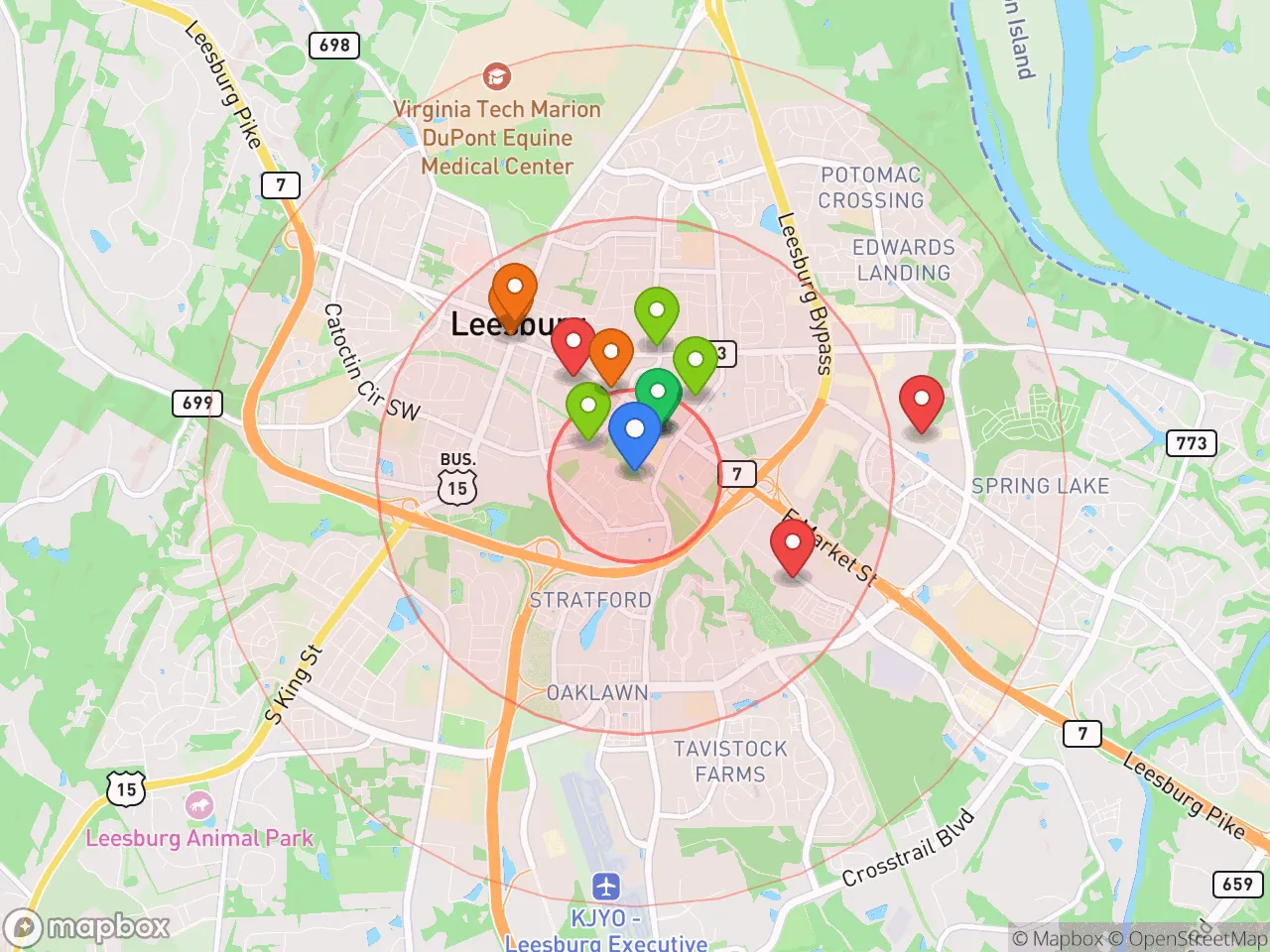
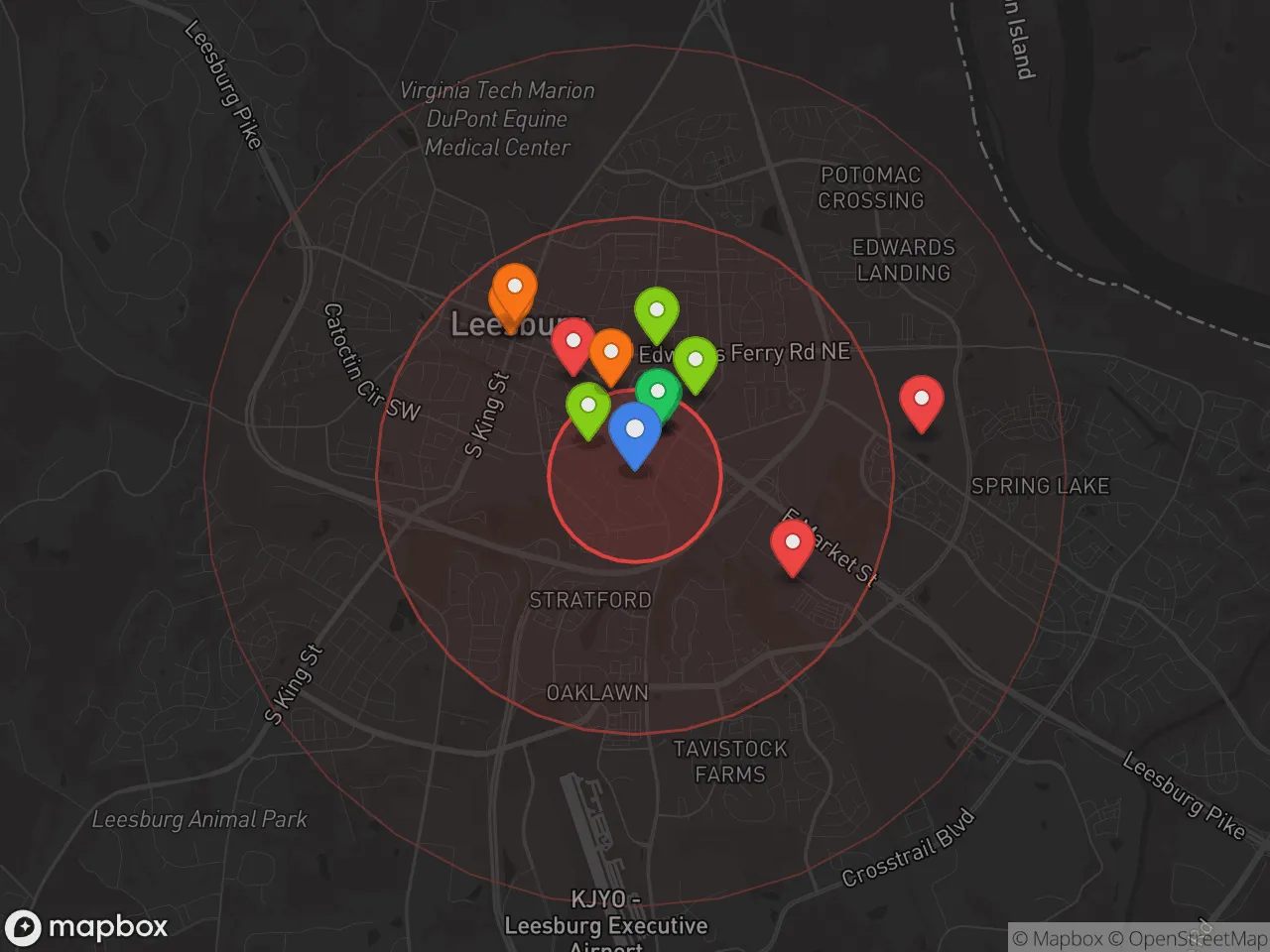
Hobbies
Explore the areaGroceries
10 within 10 miles
Gas
20 within 10 miles
Hospital
13 within 20 miles
Airport
IAD — Washington Dulles International
Post Office
USPS — Leesburg, VA
Critical Amenities
Quality-of-Life Analysis
Leesburg, Virginia, anchors a quality of life defined by affluence, family-oriented stability, and deep-rooted historic charm, drawing professionals and executives who work in the Washington, D.C. corridor but prefer a slower, more spacious suburban rhythm. With a cost of living index of 190—nearly double the national average—the town is home to a population that skews toward higher-income households, many of whom are employed in federal contracting, technology, and government sectors. The median household income comfortably exceeds the national figure, supporting a lifestyle centered on top-tier schools, preserved green spaces, and a walkable downtown that feels more like a colonial-era market town than a bedroom community.
Cost of living, housing, and how Leesburg compares to nearby suburbs
Leesburg’s cost of living is steep, driven primarily by housing that commands a premium over neighboring Loudoun County towns like Ashburn and Sterling. The median home value sits at $617,700, significantly above the national median of roughly $350,000, while the median rent of $1,980 per month places it among the pricier rental markets in Northern Virginia. For context, Ashburn’s median home value hovers around $600,000, and Sterling’s is closer to $530,000, making Leesburg slightly more expensive than its immediate neighbors but still more affordable than Arlington or McLean, where median values exceed $800,000. The average commute of 27 minutes—shorter than the 35-minute regional average—reflects Leesburg’s position as a western Loudoun hub, where many residents work locally at employers like the Loudoun County government, Inova Health System, or the growing data-center corridor along Route 15. Property taxes in Loudoun County are moderate for the region, at roughly 1.1% of assessed value, which helps offset some of the housing sticker shock for buyers coming from higher-tax jurisdictions like Fairfax County.
What daily life is like: amenities, schools, and community rhythm
Daily life in Leesburg revolves around a blend of historic downtown activity and modern suburban convenience. The town’s public schools, part of Loudoun County Public Schools, are consistently ranked among Virginia’s best—Loudoun Valley High School and Tuscarora High School both earn GreatSchools ratings of 8 or higher—and draw families who prioritize academic outcomes. The downtown area, anchored by the 1758 courthouse and King Street’s brick sidewalks, hosts a farmers market every Saturday from April through December, along with seasonal events like the Leesburg Flower & Garden Festival and the Fourth of July fireworks at Ida Lee Park. For everyday errands, residents rely on the Village at Leesburg, a large outdoor shopping center with Wegmans, Target, and a multiplex cinema. Outdoor recreation is abundant: the 200-acre Banshee Reeks Nature Preserve offers hiking trails, while the Washington & Old Dominion Trail runs directly through town, connecting cyclists and runners to Purcellville and Arlington. The community rhythm is notably quieter than in eastern Loudoun—evening traffic on Market Street dissipates after 7 p.m., and weekend mornings see families walking to brunch at Lightfoot Restaurant or the Leesburg Public House.
Leesburg is best suited for professionals and families who can absorb its high housing costs in exchange for strong schools, a historic downtown, and a commute that stays under 30 minutes for many local jobs. Empty nesters downsizing from larger D.C.-area homes also find the walkable core and lower-maintenance townhouses appealing, while remote workers with flexible schedules appreciate the town’s slower pace compared to Ashburn’s tech-heavy sprawl. Those seeking nightlife, dense urban amenities, or a lower cost of entry will find Leesburg a stretch—but for buyers who prioritize school quality, community events, and a preserved sense of place, it remains one of Northern Virginia’s most desirable small towns.

Crime in Leesburg, VA
Generally safer than 74% of comparable U.S. locations.
Violent CrimeViolent Crime Analysis
Property CrimeProperty Crime Analysis
Crime Analysis
Leesburg, Virginia, presents a mixed safety profile for prospective residents. The town’s violent crime rate of 237.1 incidents per 100,000 residents is notably lower than the national average, but its property crime rate of 1,556.2 per 100,000 sits slightly above the national benchmark. As a growing suburb within the Washington, D.C. metropolitan area, Leesburg benefits from the economic advantages of proximity to the capital while also contending with the region’s broader crime trends and progressive criminal justice policies that can influence local enforcement and prosecution outcomes.
Crime in context
When compared to state and national figures, Leesburg’s violent crime rate is a clear positive. The national violent crime rate in 2023 was approximately 380 per 100,000, meaning Leesburg’s rate is about 38% lower. Virginia’s statewide violent crime rate hovers around 200 per 100,000, placing Leesburg slightly above the state average but still within a safe range for a town of its size. Property crime, however, is a more pressing concern. The national property crime rate is roughly 1,950 per 100,000, so Leesburg’s figure is below that, but it exceeds the Virginia state average of about 1,200 per 100,000. This suggests that theft, burglary, and vehicle-related crimes are more common here than in many other parts of the state, a pattern often seen in affluent suburbs with higher concentrations of retail and unattended vehicles.
What residents experience
Daily life in Leesburg for most residents is characterized by a general sense of security, particularly in well-established neighborhoods and during daylight hours. The town’s low violent crime rate means that random acts of violence are rare. However, residents regularly encounter property crimes, including package thefts from porches, bicycle thefts, and occasional vehicle break-ins, especially in parking lots near the Leesburg Premium Outlets and downtown commercial areas. The influence of progressive criminal justice policies in Loudoun County and the broader Northern Virginia region is a factor that residents should weigh. Prosecutorial leniency and diversion programs, while intended to reduce incarceration, can result in repeat property offenders cycling back into the community more quickly, undermining the deterrent effect of the justice system. This dynamic means that while the risk of violent victimization is low, the risk of non-violent property crime is elevated and persistent, as offenders face fewer consequences for these offenses.
Neighborhood-level variation in Leesburg is significant. Areas east of the Leesburg Bypass (Route 15), particularly around the historic downtown core and older apartment complexes, tend to report higher rates of property crime. In contrast, newer subdivisions west of the bypass, such as those in the Lansdowne area, generally experience lower crime rates due to better lighting, private security patrols, and more vigilant homeowners’ associations. Prospective residents should examine crime maps for specific blocks near commercial corridors and consider that the town’s overall safety is heavily influenced by the effectiveness of local law enforcement in counteracting the region’s lenient judicial environment.
* Values derived from national, state, county, city and local statistics and may differ in a specific area. Last updated: 2026-05-01T15:31:00.000Z
Narrative content on this page is AI-generated and may contain mistakes. Verify any details that matter before acting on them.
ReloMaps may earn a commission from affiliate links at no extra cost to you.

