Photo: Wikipedia
Demographics of Leominster, MA
Affluence Level in Leominster, MA
A middle-class area roughly in line with national averages across income, home values, education, and employment.
People of Leominster, MA
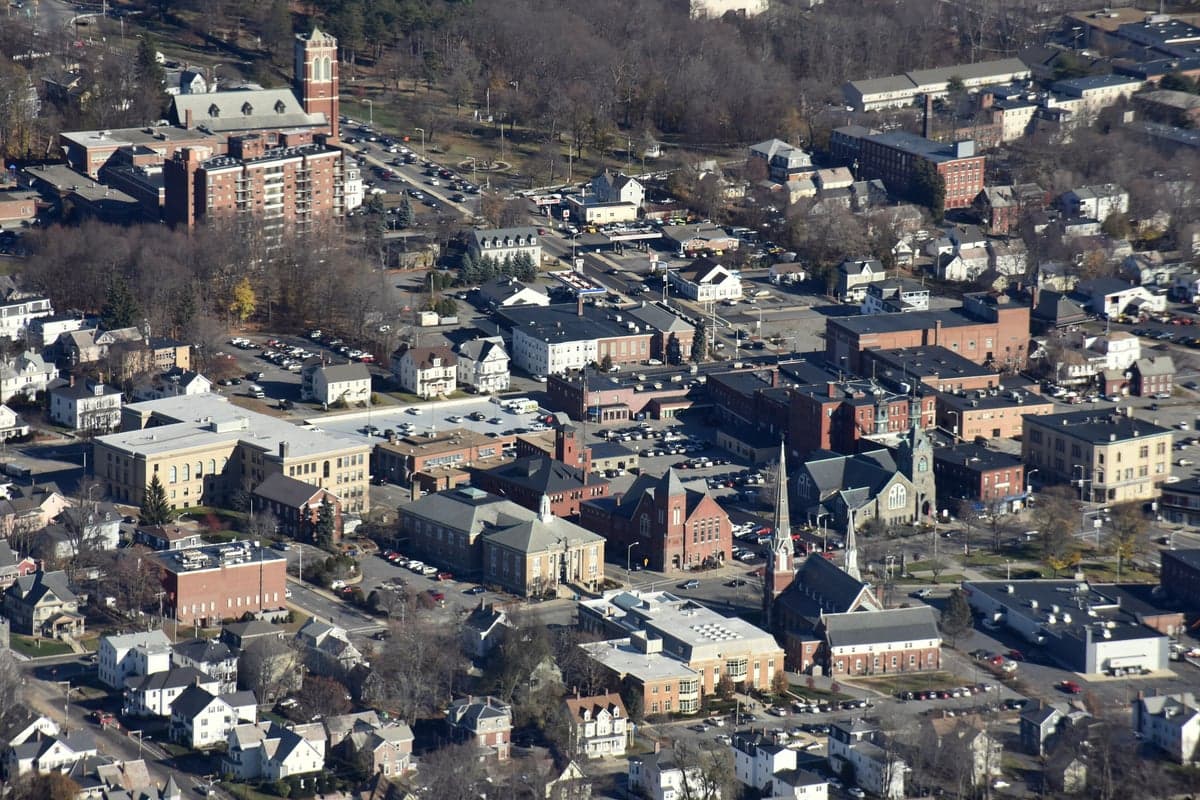
The people of Leominster, Massachusetts today number 43,697, forming a densely settled, historically industrial city with a distinctly working-class character that still shapes its identity. The population is 68.3% white, 17.1% Hispanic, 4.9% Black, 2.6% East and Southeast Asian, and 0.5% Indian (subcontinent), with 6.1% foreign-born and 32.3% holding a college degree. Known as the "Pioneer Plastics City," Leominster retains a pragmatic, family-oriented feel where old mill neighborhoods sit alongside newer subdivisions, and the city's ethnic enclaves remain geographically distinct rather than fully blended.
How the city was settled and grew
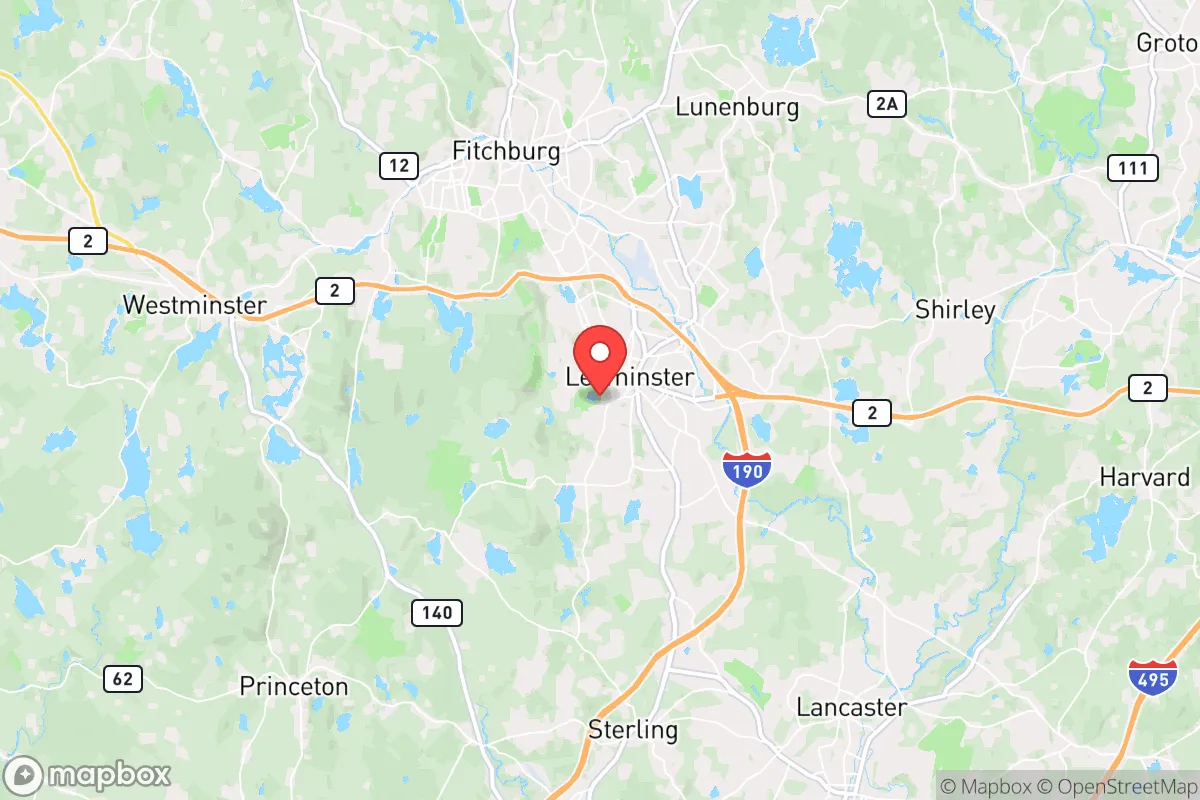
Leominster was incorporated in 1740, settled by English colonists drawn to the fertile Nashua River valley and the water power it offered. The original population was almost entirely of British Protestant stock, farming the flatlands and building the first mills along the river. By the early 19th century, the city became a center for comb manufacturing—using local animal horn and later celluloid—which attracted skilled artisans from England and Ireland. The Irish arrived in large numbers during the 1840s and 1850s, fleeing the Great Famine and settling in the French Hill neighborhood, where they built St. Cecilia's parish and worked in the comb shops and foundries. A second major wave came from French Canada between 1870 and 1910, with Quebecois families moving south for mill jobs and establishing the French Hill and Lancaster Mills districts, where French was spoken on the streets well into the 20th century. Italian immigrants followed in the 1890s–1910s, clustering in the "Pleasant Street" area near the factories, and Polish families arrived after 1900, settling around the "East Side" near the Polish American Club. By 1920, Leominster was a polyglot mill city of roughly 20,000, with distinct ethnic parishes and social clubs reinforcing neighborhood boundaries.
Modern era (post-1965)
The 1965 Hart-Cellar Act opened immigration from Asia and Latin America, but Leominster's foreign-born share remained modest at 6.1% in 2024, reflecting the city's inland Massachusetts location and its aging industrial base. The most significant post-1965 shift has been the growth of the Hispanic population, now 17.1%, driven primarily by Puerto Rican migration starting in the 1980s and more recently by Dominican and Central American families. Hispanic residents have concentrated in the South Leominster neighborhoods around Mechanic Street and the Pleasant Street corridor, where older triple-deckers and multi-family homes offer affordable entry points. The East and Southeast Asian population (2.6%) is smaller but visible, with Vietnamese and Cambodian families arriving as refugees in the 1980s and settling in the French Hill area, where they took over former French-owned homes and opened small markets. The Indian subcontinent population (0.5%) is a recent, professional cohort drawn to tech and healthcare jobs in the broader Worcester-Boston corridor, living in newer subdivisions like the "West Side" near I-190 rather than in older ethnic neighborhoods. Domestic in-migration has been dominated by younger families from the Boston metro area seeking lower housing costs, and by retirees from central Massachusetts downsizing into the North Leominster condo developments. The white population has declined from over 90% in 1980 to 68.3% today, but the city remains less diverse than nearby Fitchburg or Worcester, with ethnic enclaves persisting rather than fully integrating.
The future
Leominster's population is projected to grow slowly, reaching roughly 45,000–46,000 by 2035, driven by continued Hispanic in-migration and the spillover of Boston-area commuters seeking affordable single-family homes. The Hispanic share is likely to rise toward 22–25% over the next decade, with the South Leominster and Pleasant Street areas becoming more solidly Latino, while the white population continues to age in place in French Hill and North Leominster. The East and Southeast Asian community is plateauing, with younger generations moving to Worcester or Boston for better job opportunities, and the Indian population remains too small to form a distinct enclave. The city is not homogenizing; rather, it is tribalizing into more defined geographic zones—older white ethnic neighborhoods, newer Hispanic corridors, and commuter subdivisions—with limited cross-group mixing in schools and civic life. The foreign-born share is unlikely to exceed 8–9% given the city's modest job growth and lack of a major immigrant-employing industry.
For a conservative-leaning individual or family moving in now, Leominster offers a stable, middle-class environment where neighborhoods still carry distinct ethnic and historical identities, but where the overall character is becoming more Hispanic and more commuter-oriented. The city is not a melting pot but a patchwork of enclaves, and newcomers should expect to choose a neighborhood that matches their lifestyle—whether that is the older, walkable streets of French Hill, the suburban quiet of North Leominster, or the more affordable, diverse South Leominster corridor. The population is aging slowly, but the city's affordability relative to Boston ensures a steady inflow of younger families, keeping the demographic mix in gradual flux rather than rapid transformation.

* Values derived from national, state, county, city and local statistics and may differ in a specific area. Last updated: 2026-05-01T02:53:02.000Z
Narrative content on this page is AI-generated and may contain mistakes. Verify any details that matter before acting on them.
ReloMaps may earn a commission from affiliate links at no extra cost to you.

