Photo: Wikipedia
Political ClimatePolitical Climate in Leominster, MA
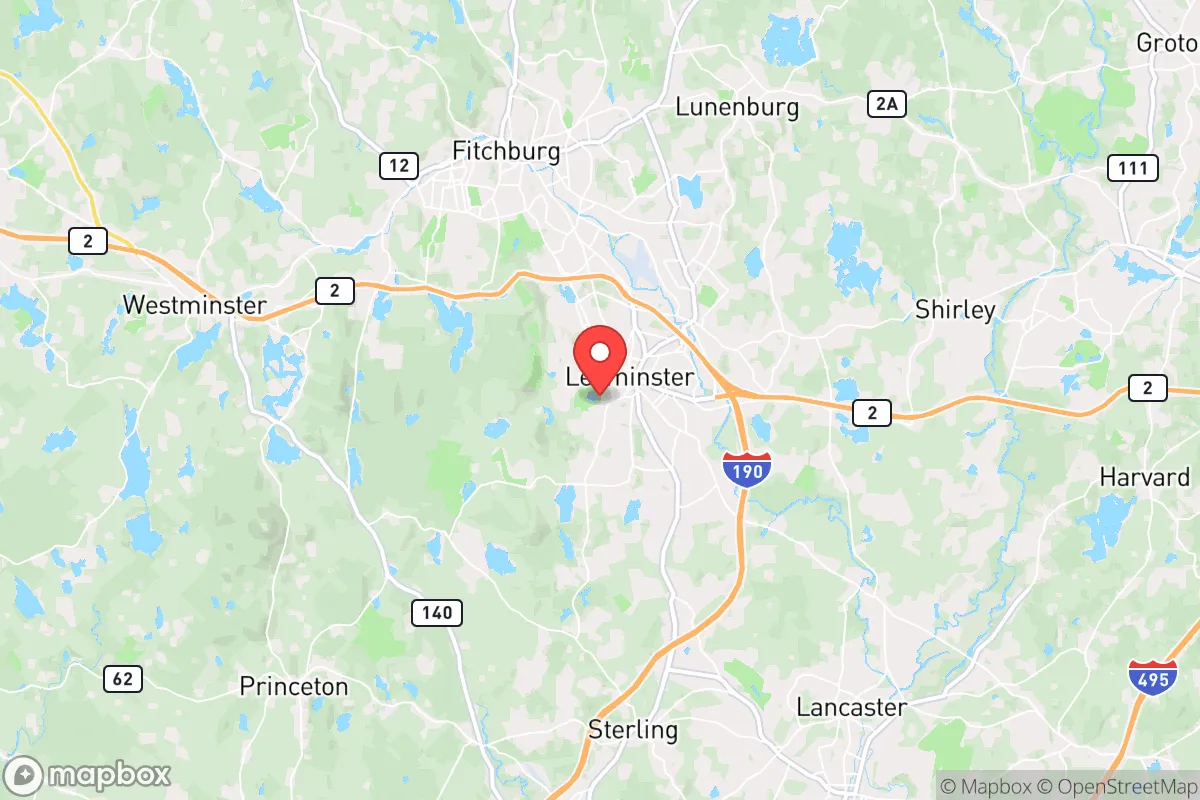
District shown is the primary district for this city’s centroid. Cities may span multiple districts.
Local Political AnalysisPolitical Analysis of Leominster, MA
Leominster, Massachusetts, has a Cook Partisan Voting Index of D+13, meaning it leans heavily Democratic compared to the national average, and that shift has been pretty steady over the last decade. I remember when this town was a lot more balanced—you’d see just as many "Don’t Tread on Me" flags as campaign signs for local Democrats. Now, the city council and school board are almost entirely controlled by progressive voices, and the voting patterns reflect a real change in who’s showing up to the polls. It’s not like you’re living in Cambridge or Somerville, but the trajectory is clear: Leominster is moving further left every cycle, and that’s something to keep an eye on if you value personal freedoms and limited government.
How it compares
If you drive ten minutes west to Fitchburg, you’ll find a similar D+ lean, but it’s a bit more working-class and less reliably progressive on local issues—there’s still a strong union and old-school Democrat presence that isn’t as keen on the social agenda. Head north to Lunenburg or Townsend, and you’re in solidly Republican territory, where property taxes are lower and the school boards are more focused on parental rights than DEI initiatives. Leominster sits right in the middle of that contrast, and it’s become a bit of a battleground for state-level policies. The state legislature in Boston has been pushing things like the Massachusetts Parentage Act and gun control expansions that preempt local control, and Leominster’s reps usually vote in lockstep with that agenda. That’s a far cry from the town I grew up in, where local leaders would push back against Beacon Hill overreach.
What this means for residents
For folks who value personal freedoms—whether it’s the right to keep and bear arms, opt out of vaccine mandates, or choose your own school—Leominster’s political climate is becoming less accommodating. The city council has passed zoning changes that favor high-density development and sanctuary city policies that limit cooperation with federal immigration enforcement, which some residents see as a direct challenge to local safety and autonomy. The school committee has also moved toward critical race theory-aligned curriculum and gender identity policies that override parental notification, which is a big red flag for anyone who believes parents should have the final say. Property taxes are creeping up to fund these initiatives, and there’s less appetite for fiscal restraint at the municipal level.
On the cultural side, Leominster still has a strong sense of community—you’ll see folks at the Italian-American clubs and the annual Johnny Appleseed Festival—but the political divide is real. If you’re a conservative or libertarian-leaning resident, you’ll find yourself increasingly out of step with the local government’s direction. The long-term trend suggests more state-level mandates and less local flexibility, so it’s worth paying attention to who’s running for city council and school committee. If you’re thinking of moving here, I’d recommend looking at the town’s recent votes on things like tax overrides and school policies to see if the trajectory matches your values. It’s not a lost cause yet, but the window for pushing back is closing fast.

State Political ClimatePolitical Climate in Massachusetts
State Political AnalysisPolitical Environment in the State
Massachusetts has long been one of the most reliably Democratic states in the nation, with a partisan lean that has only deepened over the past two decades. In 2024, Kamala Harris carried the state by roughly 25 points, a margin that has held steady since 2016, when Hillary Clinton won by 27 points. The state’s political DNA is shaped by a dominant progressive coalition centered in Greater Boston, but the real story is the accelerating shift leftward: in 2000, Al Gore won by 18 points; by 2020, Joe Biden’s margin had swelled to 33 points. For a conservative considering relocation, the headline is clear: the state’s political center of gravity has moved decisively away from traditional values, and the trend shows no sign of reversing.
Urban vs. rural divide
The political map of Massachusetts is a stark tale of two worlds. The Boston metro area—including Cambridge, Somerville, and Brookline—is the engine of the state’s progressive dominance, routinely delivering 80-90% Democratic margins. These communities are dense, highly educated, and culturally aligned with national progressive movements. The western part of the state tells a different story. Worcester County and the Berkshires have pockets of conservative-leaning voters, but even there, the Democratic advantage is solid. The true conservative redoubts are the small towns of Plymouth County (like Middleborough and Carver) and the Cape Cod region, where Trump improved his margins in 2020 and 2024. Fall River and New Bedford, once blue-collar Democratic strongholds, have shown signs of shifting rightward on cultural issues, but they remain safely blue in statewide races. The rural-urban divide is real, but the urban population is so dominant that rural conservatism has almost no statewide influence.
Policy environment
Massachusetts’ policy environment is a textbook example of progressive governance. The state has a flat income tax rate of 5%, but in 2022 voters approved a “millionaire’s tax” (Question 1) that adds a 4% surcharge on income over $1 million, pushing the top rate to 9%. Property taxes are high, averaging 1.2% of home value, and the state’s regulatory posture is among the most aggressive in the country. Education policy is dominated by the Massachusetts Comprehensive Assessment System (MCAS), but the state has moved toward eliminating the high school graduation requirement tied to it, a shift that alarms parents who value accountability. Healthcare is heavily regulated under Chapter 58, which mandates near-universal coverage and imposes employer penalties. Election laws are among the most liberal: no-excuse mail-in voting, same-day registration, and automatic voter registration are all law. For a conservative, the cumulative effect is a state that taxes heavily, regulates intrusively, and prioritizes government solutions over individual choice.
Trajectory & freedom
Over the past five years, Massachusetts has moved decisively in the direction of expanding government control at the expense of personal liberty. The 2020 police reform law (Chapter 253) created a new oversight commission with broad subpoena power, but also included a ban on facial recognition technology for most law enforcement—a trade-off that frustrates both sides. On gun rights, the state already had some of the strictest laws in the nation, but in 2024 the legislature passed H.4885, which bans “ghost guns,” expands the “red flag” law to allow family members to petition for removal, and requires serial numbers on all firearms. The state also has a sanctuary state policy (the 2017 “Safe Communities Act”), which limits local law enforcement cooperation with federal immigration authorities. On parental rights, the state’s Chapter 76 explicitly protects LGBTQ+ curriculum in schools, and the Department of Elementary and Secondary Education has issued guidance that effectively mandates transgender-inclusive policies, including allowing students to use preferred names and pronouns without parental consent. For a conservative, the trajectory is unmistakable: the state is becoming less free, not more, with each legislative session.
Civil unrest & political movements
Massachusetts has a long history of organized activism, but the flashpoints have intensified since 2020. The Black Lives Matter protests in Boston were large and sustained, leading to the removal of a statue of Christopher Columbus in the North End and the renaming of several schools. On the right, the Massachusetts Fiscal Alliance and local Second Amendment sanctuaries (like in Granby and Palmer) have pushed back against state gun laws, but with limited success. Immigration politics are a constant source of tension: the state’s Right to Shelter Law (Chapter 23B) guarantees emergency housing to all families, including undocumented immigrants, leading to a surge in shelter costs and a 2024 crisis that saw the state capping the number of families it would house. Election integrity controversies have been muted compared to other states, but the 2020 switch to universal mail-in voting drew criticism from conservatives who argued it weakened ballot security. The most visible flashpoint for a new resident would be the Boston Common protests, which are frequent and often draw counter-protests, creating a palpable sense of political division in the city.
Projection
Looking ahead five to ten years, Massachusetts is likely to become even more progressive. The state’s population is aging, but in-migration from other states is heavily skewed toward young, college-educated professionals who align with the dominant political culture. The Boston metro area is growing, while rural areas like the Berkshires and Cape Cod are stagnating or declining. The state’s millionaire’s tax has already prompted some high-net-worth individuals to leave, but the overall demographic trend favors the left. Expect further expansions of government control: a push for single-payer healthcare (already a legislative priority), tighter rent control (currently blocked by a 1994 law but under active challenge), and more aggressive climate mandates like the Net Zero by 2050 roadmap. For a conservative moving in now, the state you’ll see in 2035 will be more regulated, more taxed, and more culturally aligned with progressive values than it is today.
For a conservative considering a move to Massachusetts, the bottom line is this: you will be a political minority in a state that is actively moving away from your values. The tax burden is high and rising, the regulatory environment is hostile to gun ownership and parental rights, and the cultural climate in the Boston metro area can feel alienating. If you’re looking for a place where your vote matters and your way of life is respected, Massachusetts is not that place. However, if you’re willing to live in a small town like Middleborough or Carver, you can find like-minded neighbors and a slower pace—but you’ll still pay state taxes and abide by state laws that you likely oppose. It’s a trade-off that only a small number of conservatives are willing to make.
* Values derived from national, state, county, city and local statistics and may differ in a specific area. Last updated: 2026-05-01T02:53:02.000Z
Narrative content on this page is AI-generated and may contain mistakes. Verify any details that matter before acting on them.
ReloMaps may earn a commission from affiliate links at no extra cost to you.

