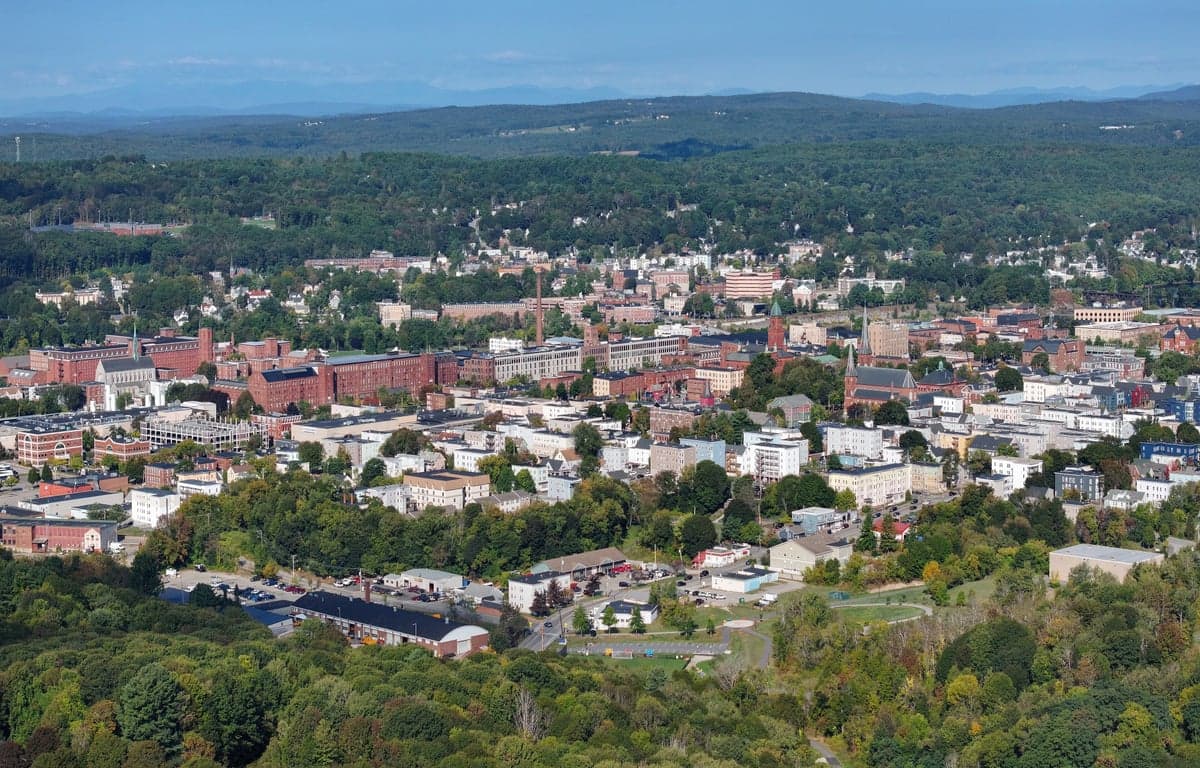
Photo: Wikipedia
Personal Sovereignty in Lewiston, ME
Viable for self-reliance. Generally workable, though some barriers may limit total independence.
What does Personal Sovereignty tell us?
Personal Sovereignty measures your capacity for self-reliance and independence with minimal government friction. Higher scores mean fewer barriers between you and the way you want to live... but it assumes you have the space you need and good neighbors.
What does this tell us?
Personal Sovereignty measures your capacity for self-reliance and independence with minimal government friction. Higher scores mean fewer barriers between you and the way you want to live... but it assumes you have the space you need and good neighbors.
State Policy
Energy independence: Importer (30% of energy produced in-state)
Personal Liberty
Homesteading

Personal Liberty Analysis
Lewiston, Maine, presents a mixed bag for those prioritizing personal sovereignty, offering a lower cost of living and a more hands-off regulatory environment than much of New England, but operating under a state government in Augusta that has increasingly flexed its muscle on individual choices. The city itself, a former mill hub with a working-class backbone, provides a degree of anonymity and a live-and-let-live attitude that can be appealing, but the overarching legal framework of Maine is trending in a direction that demands careful scrutiny from anyone serious about self-reliance and minimal government interference. For the strategic relocator, Lewiston is less a fortress of liberty and more a tactical position with both defensive strengths and vulnerabilities.
Tax burden and regulatory posture: How Maine's fiscal and business climate affects your autonomy
Maine’s tax burden is among the highest in the nation, and that reality directly impacts your ability to keep what you earn and build true independence. The state levies a progressive income tax with a top marginal rate of 7.15%, and property taxes in Lewiston are substantial, with a mill rate hovering around 20.00, meaning a $200,000 home carries an annual tax bill of roughly $4,000. This is a significant drain on resources that could otherwise be directed toward land, supplies, or savings. On the regulatory front, Maine is not a right-to-work state, and its business climate is burdened by extensive permitting and environmental regulations, particularly around land use and construction. While Lewiston itself is more permissive than coastal enclaves like Portland, the state’s overall posture is one of active management, not laissez-faire. For the prepper or survivalist, this means every acre you buy and every structure you build will likely involve a conversation with a town planner, and your income will be taxed at a rate that funds programs you may not support.
Self-defense and gun law specifics: What the Second Amendment landscape looks like in Lewiston
Maine has historically been a shall-issue state for concealed carry permits, and the state constitution explicitly protects the right to keep and bear arms. However, recent legislative shifts are a major red flag. In 2023, following a mass shooting in Lewiston itself, the state passed a 72-hour waiting period for firearm purchases and expanded background checks to private sales. This is a direct erosion of a previously strong gun rights environment. As of 2026, Maine does not have a permit-to-purchase law for long guns, and open carry is legal without a permit. A concealed carry permit is still shall-issue for residents, but the political winds are blowing toward further restrictions. For the self-defense-minded individual, Lewiston is no longer the safe harbor it once was. You can still own and carry, but the legal landscape is shifting, and the state government has demonstrated a willingness to act quickly in response to tragedy. If you are serious about maintaining a full-spectrum defensive capability, you must factor in the possibility of more restrictive laws in the near future.
Self-reliance and homesteading viability: Lot sizes, zoning, and off-grid feasibility in the area
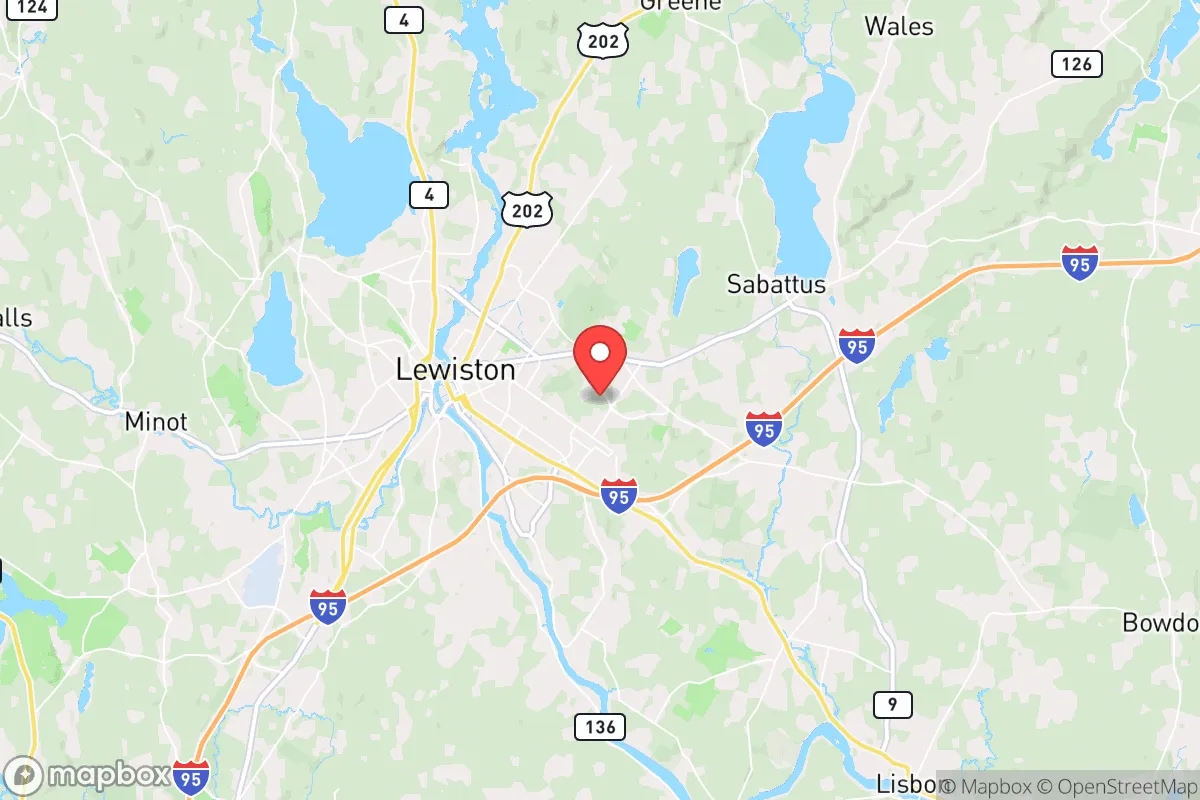
Within Lewiston’s city limits, true homesteading is a challenge. The city is dense, with small lots averaging 0.1 to 0.25 acres in the core neighborhoods, and zoning is typical of an urban municipality, with restrictions on livestock, accessory structures, and commercial activity on residential property. For serious self-reliance—think chickens, a large garden, rainwater collection, or a workshop—you will need to look outside the city. The surrounding towns of Lisbon, Greene, and Leeds offer significantly more flexibility, with 1- to 5-acre parcels common and far looser zoning. Off-grid feasibility is moderate: Maine has no state-level ban on rainwater harvesting, and solar panels are permitted, but connecting to the grid is often required for new construction. Septic systems and well water are standard outside city limits, which is a plus for independence. The growing season is short (roughly 140 days), and the soil is rocky, so food production requires serious effort. For the prepper, the Lewiston area is a base of operations, not a self-sufficient homestead. The real potential lies in buying land 15-30 minutes out, where you can operate with far less oversight.
Personal liberties: Parental rights, medical autonomy, speech, and property protections
Maine’s record on parental rights is concerning. The state has a strong track record of intervening in family decisions, with a Department of Health and Human Services that is known for a low threshold for investigation. Vaccine mandates for school attendance were a flashpoint, and while some have been relaxed, the state retains broad authority over public health orders. Medical autonomy is limited: Maine expanded Medicaid under the ACA and has a state-run health insurance marketplace, and it has not been friendly to alternative medical practitioners or those seeking to opt out of standard care. Free speech is protected under the First Amendment, but Maine has hate speech statutes that can be used to prosecute certain types of expression, and the state has shown a willingness to regulate online speech in the name of combating misinformation. Property rights are generally respected, but the state’s environmental regulations, particularly around wetlands and shoreland zoning, can severely restrict what you can do with your land. Eminent domain is a concern, especially for large infrastructure projects. For the individualist, these are not deal-breakers, but they are constant friction points. You are not free to simply do as you please; you operate within a framework that assumes the state has a say in your medical, educational, and property decisions.
Overall, personal sovereignty in Lewiston is a matter of degrees. You are far better off here than in Massachusetts or New York, where taxes are higher and gun laws are far more restrictive. The cost of living is lower, and the culture is more independent-minded. But Maine is not Texas, Montana, or Idaho. The state government is active, taxes are high, and recent events have accelerated a trend toward more control, not less. For the strategic relocator, Lewiston offers a foothold in a region that still has some frontier character, but you must be prepared to fight for your freedoms at the ballot box and in the town hall. If you are looking for a place where you can truly be left alone, you may need to push further north or west. If you are willing to engage in the constant defense of your liberties, Lewiston can be a workable, if imperfect, base.

* Values derived from national, state, county, city and local statistics and may differ in a specific area. Last updated: 2026-05-01T18:10:10.000Z
Narrative content on this page is AI-generated and may contain mistakes. Verify any details that matter before acting on them.
ReloMaps may earn a commission from affiliate links at no extra cost to you.

