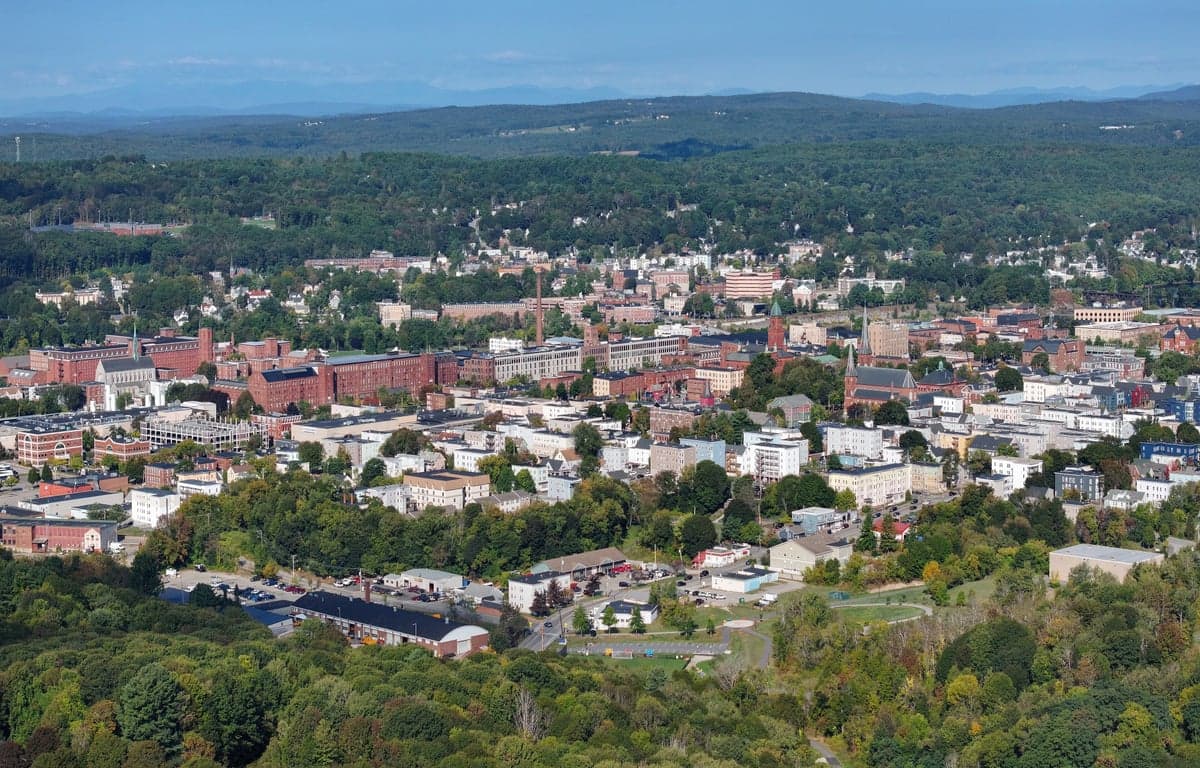
Photo: Wikipedia
Strategic Assessment of Lewiston, ME
Multiple tactical vulnerabilities. Population density, target proximity, or disaster risk are likely compounding. A retreat property and exit planning is required.
What does the Strategic Assessment tell us?
Our Strategic Assessment grades tactical survivability of an area. Major population centers, military targets, fallout zones, natural disasters, and border exposure all drive risk — lower exposure means a more defensible position in a crisis.
This is heavily inspired by Joel Skousen's Strategic Relocation book. Highly recommended you checkout the book ($)What does this tell us?
Our Strategic Assessment grades tactical survivability of an area. Major population centers, military targets, fallout zones, natural disasters, and border exposure all drive risk — lower exposure means a more defensible position in a crisis.
This is heavily inspired by Joel Skousen's Strategic Relocation book. Highly recommended you checkout the book ($)Strategic Pillars

Key Distances
Regional Safe Places
Below is our recommended "safe zones" in Maine and the surrounding area based on our strategic heuristics. For most people, it's unrealistic to live in a “safe zone” full-time due to work, family or other personal reasons. They tend to be more rural. However, many of these areas are perfect for second homes and retreat properties that double as a vacation home or even a short-term rental.
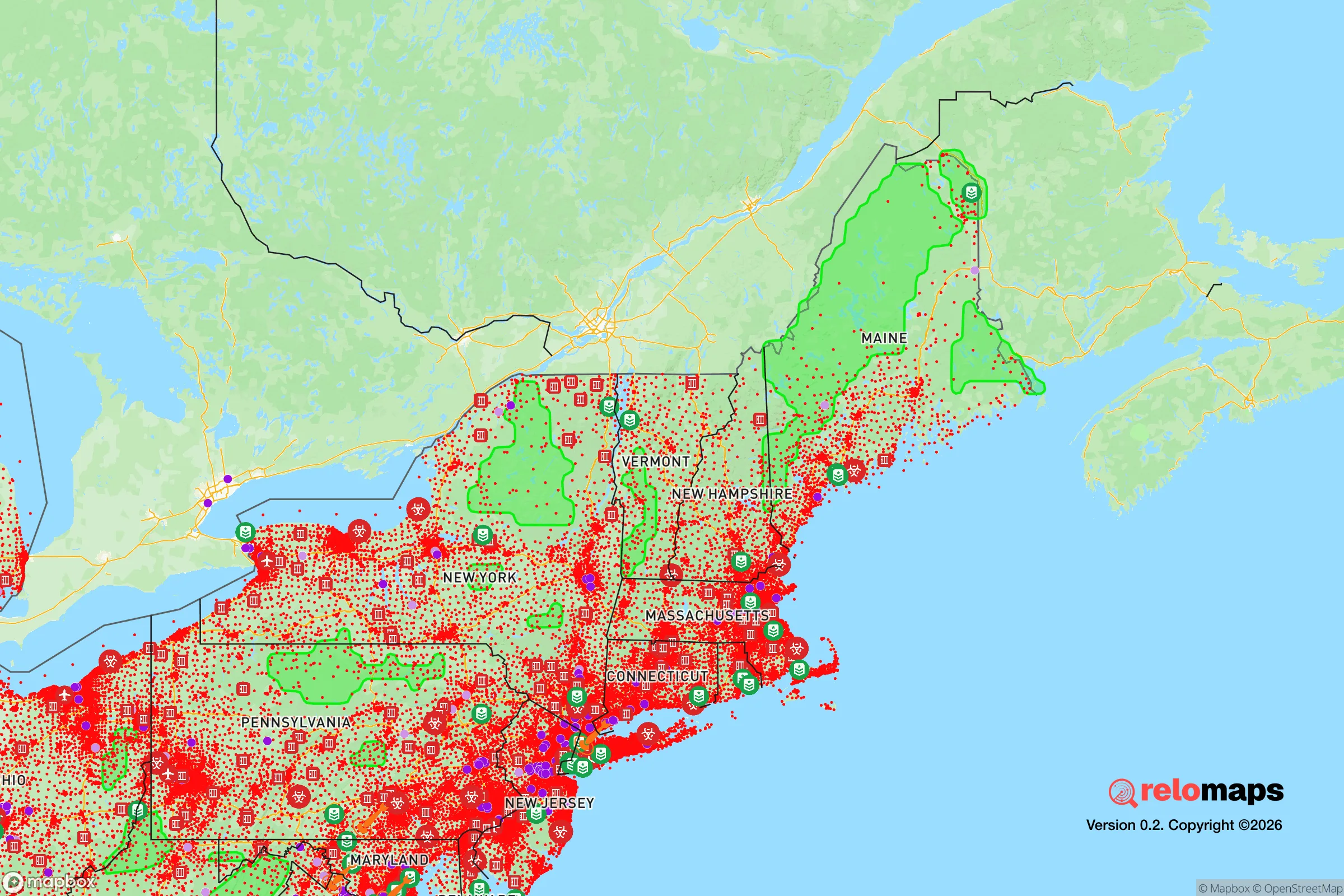
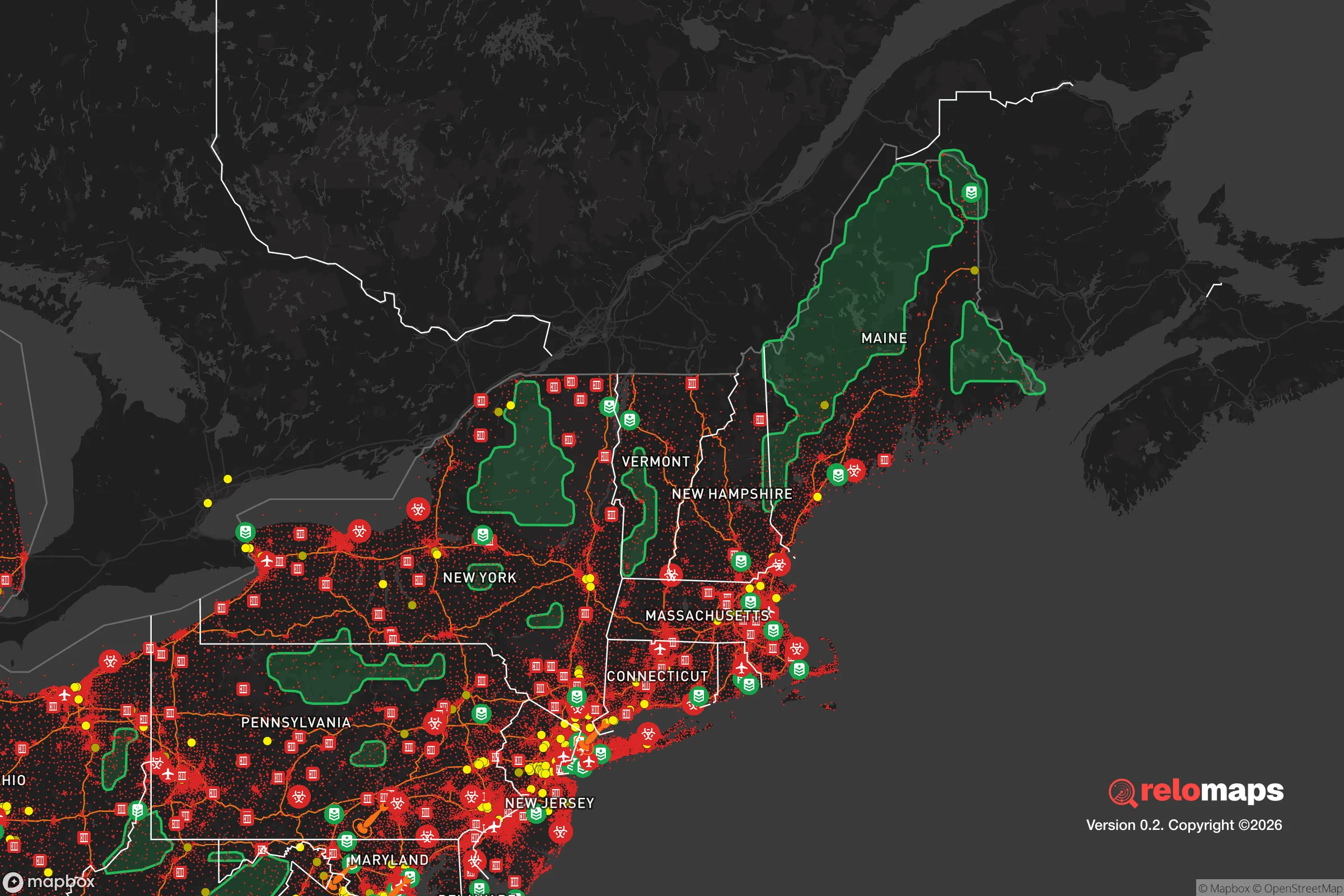


Important Note: For informational purposes only. This does not mean nothing bad ever happens in the green zones. Please use common sense. This is based on public data and modeled with AI. We tried to take a conservative approach but mistakes happen. We update this regularly as new information becomes available.
Solar Generator Recommendations
Backup power matters more here than in safer locations. We've picked three solar generators across budgets and capacity tiers — start with the budget unit if you only need a few essentials, or step up if you want to run a fridge and HVAC for days at a time.

Jackery Portable Power Station Explorer 300
Budget OptionPower on the Go: Weighing only 11 lbs, it's convenient to set up and store with book-sized foldable solar panels

BLUETTI Portable Power Station AC180
Designed for both indoor and outdoor scenarios, AC180 is highly capable as it has a robost capacity and continuous output power.

EF ECOFLOW DELTA Pro Ultra Power Station
Upgraded PickEcoFlow DELTA Pro Ultra is a whole-home energy system designed to grow with your family. Integrated with the Smart Home Panel 2, it scales to meet your evolving energy needs — keeping your home powered, intelligent, and secure through every stage of life.
We earn a commission, at no additional cost to you.
Strategic Assessment Analysis
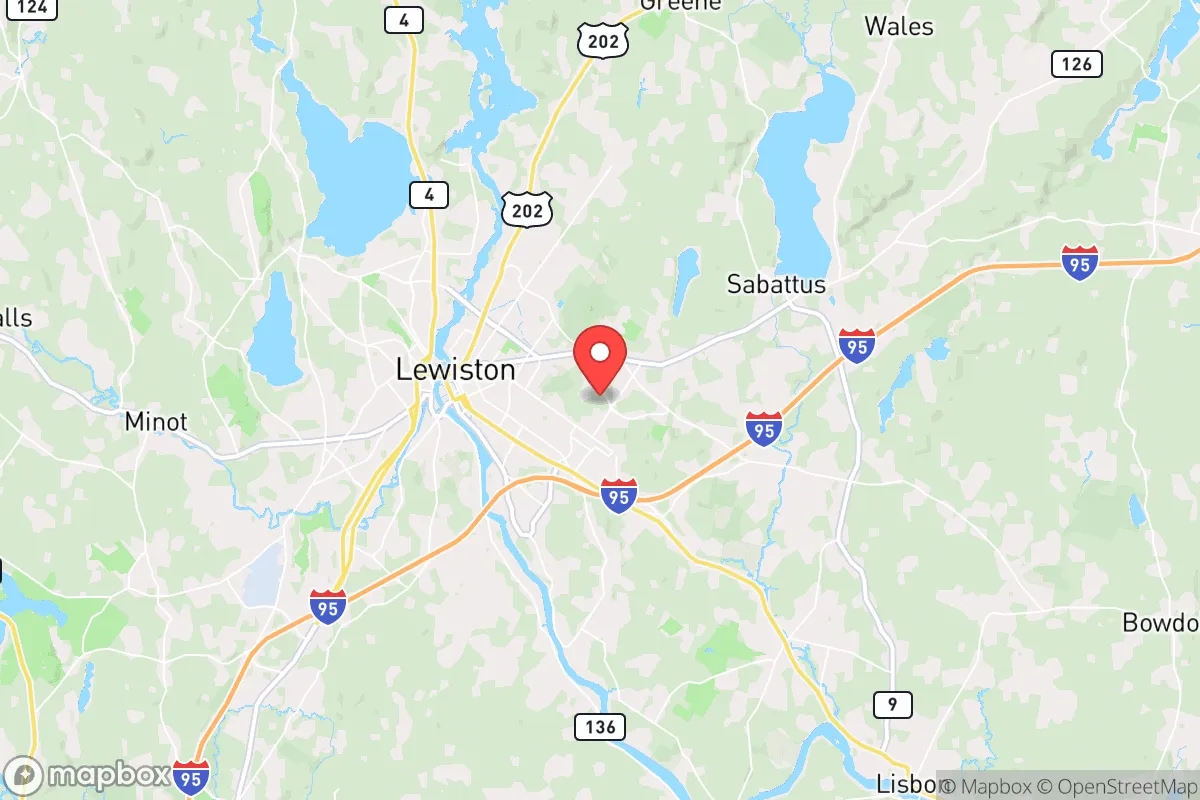
Lewiston, Maine, presents a complex strategic picture for the conservative prepper or survivalist: it offers genuine resilience advantages in its location and resource access, but carries significant risks due to its proximity to major population centers and critical infrastructure. The city sits roughly 35 miles north of Portland and about 140 miles from Boston, placing it within a dangerous radius for fallout from a major event targeting those hubs. However, its position along the Androscoggin River, its access to working forests, and its distance from the most densely packed corridors of the Northeast Corridor give it a real, if conditional, strategic value for those willing to accept trade-offs.
Geographic position and natural advantages for long-term survival
Lewiston's primary strategic asset is its location within a region that still possesses genuine natural resources and a lower population density than most of the Eastern Seaboard. The city sits at the falls of the Androscoggin River, a major tributary of the Kennebec, providing a reliable surface water source that is less likely to be immediately compromised than groundwater in more industrial areas. The surrounding terrain is a mix of rolling hills, mixed hardwood and softwood forests, and agricultural land in the Androscoggin Valley. This offers multiple advantages: ample firewood for heating, decent hunting for deer and small game, and potential for small-scale agriculture. The climate is cold and snowy, which is a double-edged sword—it stresses unprepared populations but also naturally limits the movement of people and vectors during winter months. The area is far from the seismic risks of the West and the hurricane-prone coastlines of the Gulf, though it does get Nor'easters. For a relocator, the key is that the land itself can support life without constant resupply from a fragile supply chain, which is a major plus.
Risks, exposures, and proximity to fallout-relevant landmarks
The most serious downside for Lewiston is its proximity to multiple high-value targets that would be primary objectives in any major conflict or terrorist campaign. Portland is a major port and transportation hub, and Boston is a global city with financial, military, and government targets. A nuclear detonation or large-scale conventional attack on either would produce fallout that could easily reach Lewiston within hours, depending on wind patterns. The city itself is not a primary target, but it sits within the "danger zone" of secondary effects. Additionally, the Maine Yankee nuclear power plant site in Wiscasset, about 40 miles away, is a decommissioned facility but still stores spent nuclear fuel. A catastrophic event there—or a deliberate attack—would render a large swath of mid-coast Maine uninhabitable for generations. Lewiston is also within a few hours' drive of the Portsmouth Naval Shipyard (Kittery, ME), a critical submarine repair facility that is a high-value military target. For a prepper, the calculus is clear: you are close enough to be affected by the collapse of these systems, but far enough that you might survive the initial blast if you are not in the immediate blast zone. The real risk is the mass evacuation and refugee flow that would follow any major event in Boston or Portland, which would overwhelm local resources.
Practical resilience for a relocator: food, water, energy, and defensibility
For a single individual or family with a prepper mindset, Lewiston offers a mixed bag of practical resilience factors. Water is abundant from the Androscoggin, but it requires treatment—boiling or filtration—as the river carries industrial and agricultural runoff. The city's municipal water system is vulnerable to power loss and contamination, so a well on private property or a reliable rainwater catchment system is essential. Food security is moderate: there are local farms and farmers' markets, but the growing season is short (roughly May to September). Stockpiling is wise, as the local grocery supply chain is thin compared to Portland or Boston. Energy resilience is a challenge. The grid in Maine is prone to outages from ice storms and wind, and Lewiston is no exception. Solar is viable but limited in winter due to short days and heavy cloud cover; a backup generator with a large fuel store is almost mandatory. Wood heat is the most reliable option, and the surrounding forests provide a sustainable fuel source if you have the land and equipment. Defensibility is average. Lewiston is a city of about 37,000 people, with a mix of dense urban blocks and suburban sprawl. A rural property outside the city limits, on a dead-end road with good sightlines, would be far more defensible than an in-town residence. The local population is generally self-reliant and rural-minded, which is a cultural advantage, but the city itself has experienced social tensions and crime, particularly in the downtown area. For a relocator, the smart play is to buy land outside the city—within a 15- to 30-minute drive—where you can have a well, a septic system, a woodlot, and a defensible perimeter.
The overall strategic picture for Lewiston is one of conditional viability. It is not a fortress, nor is it a wasteland. It is a place where a prepared individual or family can carve out a relatively secure existence if they are willing to accept the risks of being within the fallout shadow of Portland and Boston, and if they invest heavily in off-grid infrastructure. The region's natural resources—water, wood, and land—are real and accessible, which is more than can be said for most of the Northeast. The cultural and political climate in rural Maine is more aligned with conservative values of self-reliance and local control than the coastal cities, which is a significant soft factor. Lewiston's best strategic use is as a base of operations—a place to stockpile, train, and build community—rather than a final redoubt. If the worst happens, you will need to be prepared to hunker down for weeks or months, and to potentially relocate further north or inland if the fallout or refugee flows become unmanageable. For the conservative prepper who wants to be near resources but not in the blast zone, Lewiston is a serious option—but only if you go in with eyes wide open about the trade-offs.

* Values derived from national, state, county, city and local statistics and may differ in a specific area. Last updated: 2026-05-01T18:10:10.000Z
Narrative content on this page is AI-generated and may contain mistakes. Verify any details that matter before acting on them.
ReloMaps may earn a commission from affiliate links at no extra cost to you.

