Photo: Wikipedia
Political ClimatePolitical Climate in Lewiston, ME
District shown is the primary district for this city’s centroid. Cities may span multiple districts.
Local Political AnalysisPolitical Analysis of Lewiston, ME
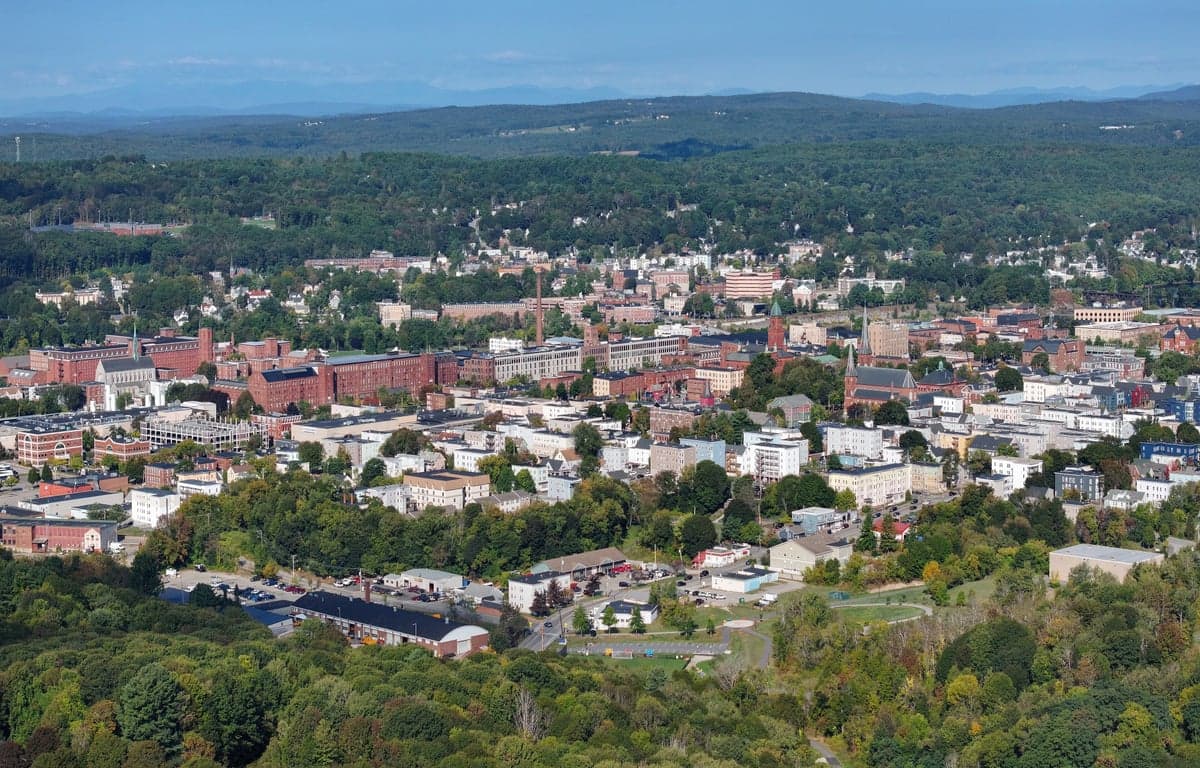
Lewiston, Maine, has long been a working-class town with a blue-collar, independent streak, but its political climate is shifting in ways that should give anyone who values personal freedom pause. The Cook PVI rating of R+4 tells you the district leans Republican on paper, but that number doesn't capture the cultural and policy battles happening on the ground. In the past, Lewiston was reliably conservative—folks here believed in minding your own business, keeping taxes low, and not having the government tell you how to live your life. Today, you're seeing more progressive influence creeping in, especially from the state level and from newcomers who don't share that old-school live-and-let-live attitude.
How it compares
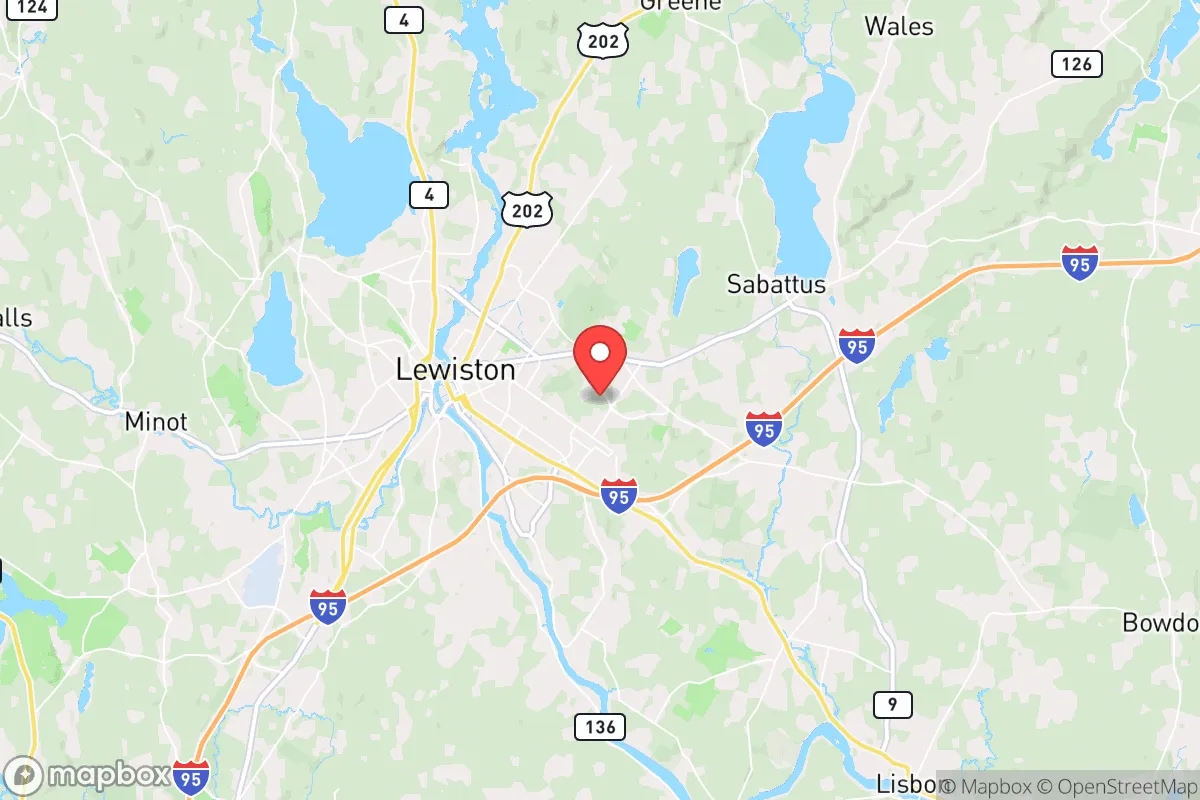
If you drive 35 miles south to Portland, you'll find a completely different world—one where progressive policies on housing, taxes, and public spending are the norm. Portland's city council has pushed rent control, higher property taxes, and zoning changes that prioritize dense development over single-family homes. Lewiston, by contrast, has historically resisted that kind of top-down planning. But the pressure is mounting. Surrounding towns like Auburn, just across the river, are more mixed politically, with some rural pockets holding onto conservative values while the city itself leans slightly left. The real contrast is with smaller communities like Lisbon or Sabattus, where you'll still find folks who believe the government's job is to stay out of your wallet and your backyard. Lewiston sits right in the middle—still conservative at its core, but increasingly influenced by the progressive tide coming from the coast.
What this means for residents
For someone who values personal freedoms, the biggest concern is how much the state government is willing to override local control. Maine's recent push for stricter gun laws, higher minimum wages, and expanded welfare programs has direct consequences for Lewiston residents. You're seeing property taxes creep up to fund state mandates, and there's a growing sense that your voice at the local level doesn't matter as much when Augusta calls the shots. The school board and city council have also seen more progressive candidates winning seats, which means debates over curriculum, public spending, and land use are getting more heated. If you're a long-time resident who remembers when Lewiston was a place where you could buy a house on a mill worker's salary and raise a family without the government breathing down your neck, these changes feel like a slow erosion of what made this town work.
Culturally, Lewiston still has a strong sense of community—you'll find plenty of folks who wave the American flag and believe in self-reliance. But the influx of Somali immigrants over the past two decades has reshaped the city's demographics and, with it, some of its political priorities. While many residents have welcomed the diversity, there's also a quiet frustration that local leaders have been too quick to embrace state-funded social programs and housing initiatives that strain the city's budget. The long-term trajectory depends on whether Lewiston can hold onto its independent, conservative roots or if it will follow Portland's path toward more government intervention. For now, it's a battleground—and if you're someone who values your rights and your wallet, it's worth keeping a close eye on who's running for office.

State Political ClimatePolitical Climate in Maine
State Political AnalysisPolitical Environment in the State
Maine has long been known as a politically independent state, but over the past two decades, it has shifted from a moderate, live-and-let-live place to a reliably blue state at the presidential level, voting for Democrats in every election since 1992 except 2000. The state’s two electoral votes went to Joe Biden by a 9-point margin in 2020, and while it still elects centrist Republican governors like Paul LePage (2011–2019) and occasionally splits its congressional delegation, the legislature has been under Democratic control for most of the last decade. The real story, though, is the growing urban-rural chasm: the coastal and southern counties are pulling the state left, while the vast interior and northern timberlands are becoming more conservative and frustrated with one-party rule from Augusta.
Urban vs. rural divide
The political map of Maine is essentially a tale of two regions. The southern coast, anchored by Portland and its suburbs like South Portland, Scarborough, and Falmouth, is the engine of the state’s Democratic majority. Cumberland County, home to Portland, gave Biden 65% of the vote in 2020, and its growth is driving the statewide leftward trend. Just inland, Lewiston and Auburn are more working-class and have been trending redder, but they’re still outvoted by the coastal bloc. Meanwhile, the vast Second Congressional District—which covers the northern and eastern 80% of the state—is a different world. Bangor, the largest city up north, is a purple island in a sea of red; the surrounding Penobscot County voted for Trump in 2020, and rural counties like Aroostook (the potato-growing region bordering Canada) and Washington (the Downeast coast) are deeply conservative. The 2020 election saw the Second District split its electoral vote, with Trump carrying it by 7 points, while the First District went to Biden by 23. That 30-point gap between the two districts is one of the largest in the nation and is only widening as young professionals and remote workers flood Portland while the rural north depopulates.
Policy environment
Maine’s state-level policy has taken a sharp progressive turn in recent years, which is a major concern for conservative newcomers. The income tax is a flat 5.8% on most income, but the top marginal rate hits 7.15% above roughly $60,000—high for a state with no sales tax to offset it. Property taxes are among the highest in the nation, especially in rural towns where the tax base is thin. The regulatory climate is heavy: Maine has some of the strictest environmental rules in New England, including a 2021 law banning large-scale solar farms on farmland and a 2024 mandate for heat pump installation in new homes. Education policy is dominated by the teachers’ union, and the state has adopted “Maine Learning Results” standards that many conservatives view as ideologically driven. On election law, Maine was the first state to adopt ranked-choice voting statewide in 2018, which has been criticized for diluting the impact of straight-ticket voting and making it harder for third-party or conservative candidates to break through. The state also has same-day voter registration and no voter ID law, which raises integrity concerns among those who prioritize election security.
Trajectory & freedom
On the freedom front, Maine has been moving in a concerning direction over the past five years. The most visible flashpoint is gun rights: in 2023, after the Lewiston mass shooting, the legislature passed a 72-hour waiting period for firearm purchases and expanded background checks to private sales, despite strong opposition from rural counties where gun ownership is a way of life. The state also banned “ghost guns” and raised the minimum age to purchase a firearm to 21. On parental rights, Maine’s 2021 law allowing minors to access gender-affirming care without parental consent—and the 2023 expansion to shield out-of-state families from prosecution—has made it a destination for what many conservatives view as government overreach into family decisions. Medical autonomy took a hit with the 2020 vaccine mandate for healthcare workers, which was only partially rolled back in 2024. Property rights are under pressure from the state’s aggressive land-use regulations, including the 2021 “Plastic Bag Reduction” law that effectively banned single-use bags, and the 2024 “Right to Repair” law for farm equipment that, while popular, added compliance costs. On the plus side, Maine has no state income tax on Social Security benefits and offers a property tax “circuit breaker” for seniors, which helps retirees—but the overall trend is toward more regulation, not less.
Civil unrest & political movements
Maine is not a hotbed of street protests, but the political temperature has risen. The 2020 Black Lives Matter protests in Portland were large and occasionally turned destructive, with statues toppled and businesses damaged. The 2023 Lewiston shooting sparked a renewed push for gun control, with dueling rallies at the State House. On the right, the “Maine Second Amendment Society” has been active, organizing at county fairs and town halls, and the “Maine Republican Party” has seen a grassroots takeover by more populist, Trump-aligned activists. The “Maine Woods” region has a long history of secessionist sentiment—the “State of Maine” itself was a compromise in 1820—and there’s a small but vocal “Northern Maine” secession movement that wants to split off the Second District into a separate state, citing cultural and political alienation from Portland. Immigration politics are less heated than in border states, but the 2024 influx of asylum seekers to Portland—straining the city’s shelter system—has created friction. Election integrity remains a flashpoint: the 2020 election saw no major fraud cases, but the ranked-choice voting system has been criticized for confusing voters and producing results that don’t reflect first-choice preferences.
Projection
Looking ahead five to ten years, the trajectory is clear: Maine will continue to become more Democratic and more progressive at the state level, driven by in-migration to the southern coast and out-migration from the rural north. The Portland metro area is growing at about 1% per year, mostly from out-of-state transplants who bring blue-state voting habits. The Second District will remain a Republican stronghold, but its population is shrinking, so its electoral weight will diminish. A conservative newcomer moving to, say, Bangor or Presque Isle will find a like-minded community but will be increasingly governed by a legislature that doesn’t represent their values. The 2026 gubernatorial race could be a bellwether: if a moderate Republican wins, the state may hold the line on some issues, but the long-term demographic math favors the left. Expect more gun restrictions, more environmental mandates, and more education centralization. The one wild card is the state’s aging population—Maine has the oldest median age in the nation—which could shift priorities toward property tax relief and healthcare, issues where conservatives can find common ground with independents.
For a conservative considering a move to Maine, the bottom line is this: if you’re looking for a place where your vote will count and your values will be reflected in state policy, stick to the rural north—Caribou, Houlton, or Machias—where the local culture still prizes self-reliance and limited government. If you’re drawn to the coast for jobs or lifestyle, be prepared to live under a progressive state government that will likely expand its reach into your daily life. The state’s natural beauty and low crime rates are real draws, but the political freedom index is declining. Do your homework on local ordinances—some towns like Portland have rent control and plastic bag bans—and factor in the high property taxes when budgeting. Maine is still a place where you can own land, hunt, and keep to yourself, but the state government is increasingly hostile to those traditions.
* Values derived from national, state, county, city and local statistics and may differ in a specific area. Last updated: 2026-05-01T18:10:10.000Z
Narrative content on this page is AI-generated and may contain mistakes. Verify any details that matter before acting on them.
ReloMaps may earn a commission from affiliate links at no extra cost to you.

