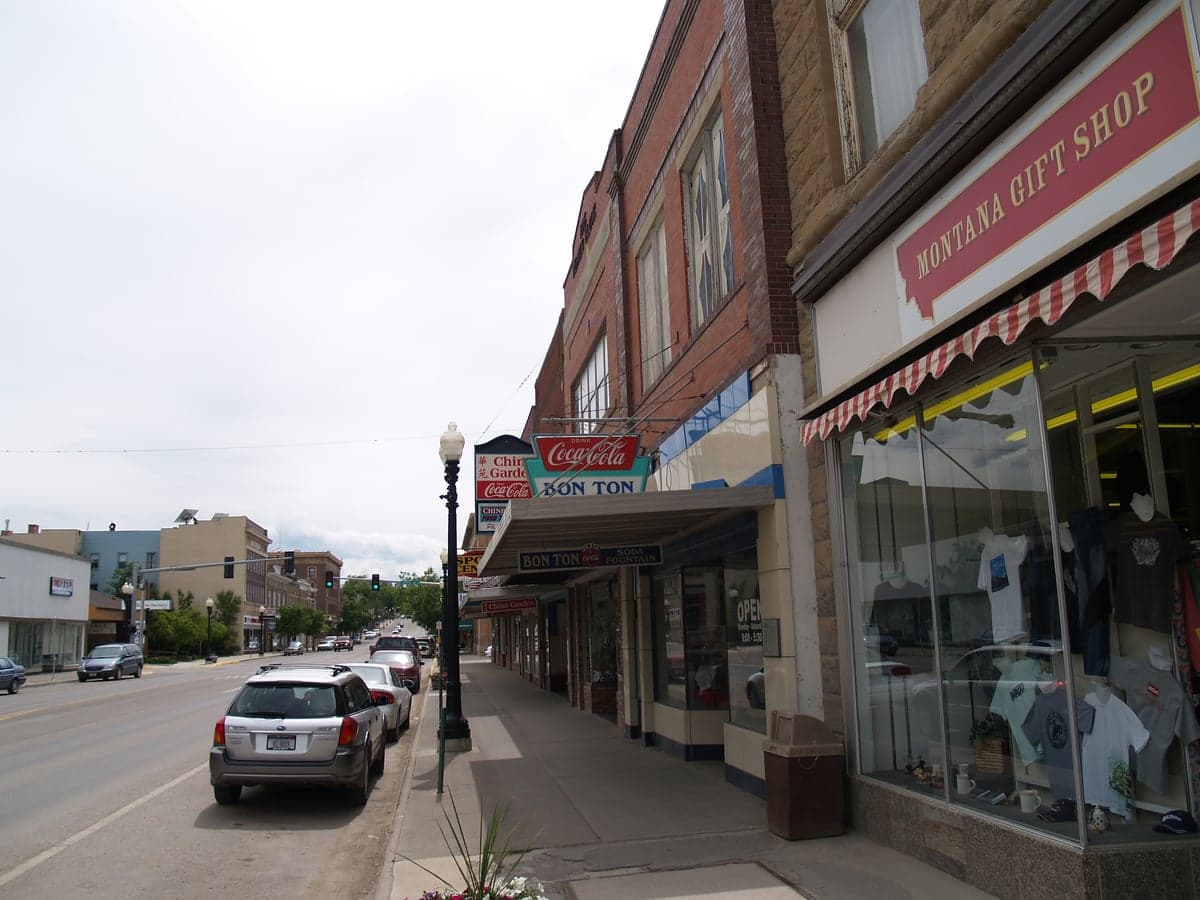
Photo: Wikipedia
Political ClimatePolitical Climate in Lewistown, MT
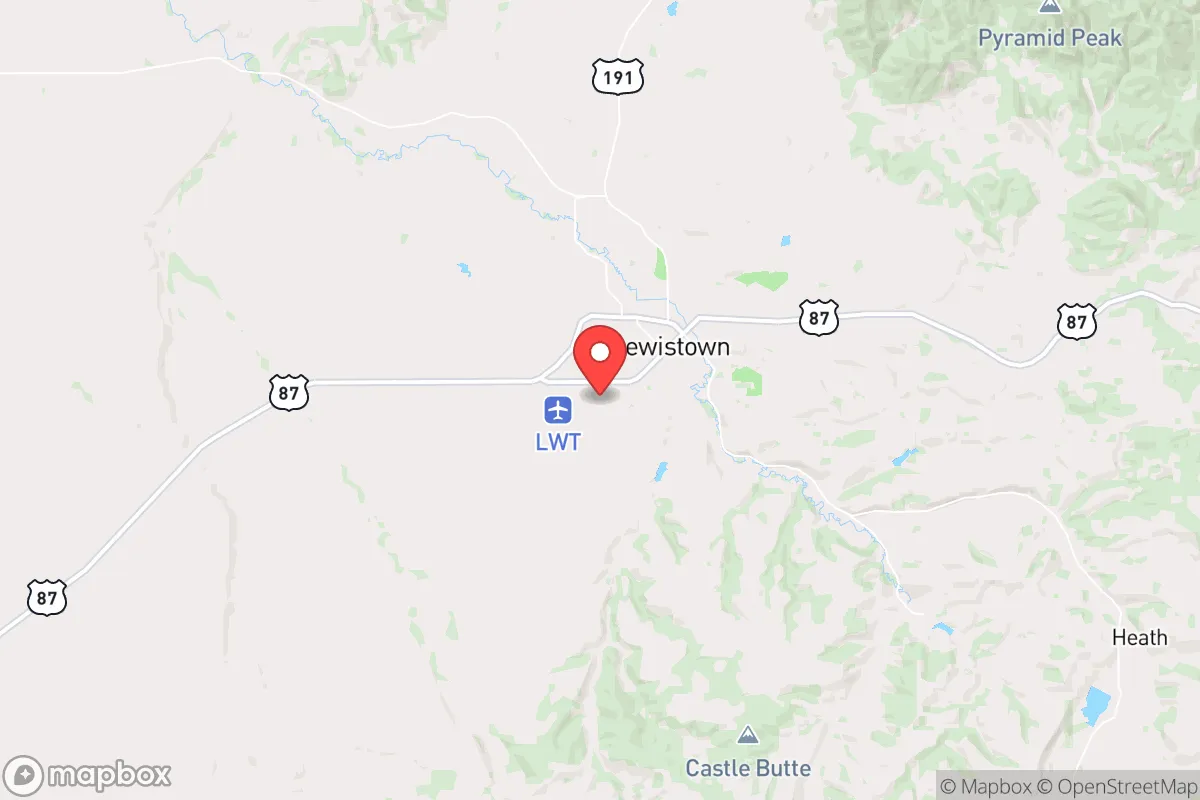
District shown is the primary district for this city’s centroid. Cities may span multiple districts.
Local Political AnalysisPolitical Analysis of Lewistown, MT
Lewistown, Montana, is about as solidly conservative as a town gets in this state, and that's not changing anytime soon. With a Cook PVI of R+15, this place votes red by a wider margin than most of the country, and it's been that way for as long as I can remember. The political lean here isn't just about party registration—it's a deep-seated belief in personal responsibility, limited government, and the right to live your life without a bunch of bureaucrats telling you how to do it. That said, you can feel the winds shifting a bit, especially as folks from places like Bozeman and Missoula start trickling in, bringing their progressive ideas with them. It's not a flood yet, but it's enough to make you pay attention.
How it compares
Compared to the rest of Montana, Lewistown is a conservative stronghold. Drive an hour west to Great Falls, and you'll find a more mixed bag—still red overall, but with a noticeable blue streak, especially in the city limits. Head south to Billings, and it's a similar story: conservative in the suburbs, but the downtown core and college areas lean left. But Lewistown? It's surrounded by ranchland and small towns like Winifred and Grass Range that are even more conservative. The real contrast is with Bozeman and Missoula, which have gone full-on progressive in the last decade. Those places are now ground zero for government overreach—think strict zoning, high taxes, and policies that prioritize bike lanes over working families. Lewistown, thank God, hasn't fallen for that. We still value the Second Amendment, we don't have a bunch of pointless regulations on small businesses, and people here understand that freedom means being left alone to make your own choices.
What this means for residents
For folks living here, the political climate means a lot of day-to-day freedoms that are disappearing elsewhere. You won't find a bunch of mask mandates or vaccine passports being pushed at the local grocery store. The county commission and city council are full of people who actually believe in the Constitution, not just in paying it lip service. Property taxes are reasonable, and there's no talk of implementing a local income tax or some other nonsense. But here's the thing—you can't get complacent. I've seen how these progressive ideas creep in. It starts with a "well-meaning" proposal at a town hall meeting, then suddenly you've got a new ordinance that restricts what you can do on your own land. The key is staying involved, showing up to those meetings, and reminding the newcomers that this isn't Bozeman. We don't want their bike lanes, their density bonuses, or their "equity" committees. We want to be left alone.
One thing that sets Lewistown apart culturally is the strong sense of self-reliance. People here don't look to the government for handouts or solutions. If your neighbor's barn burns down, you help rebuild it. If the school needs new books, the community raises the money. That's the Montana way, and it's still alive and well here. The biggest threat I see on the horizon is the influx of out-of-staters who don't understand that. They come in with their California or New York attitudes, wanting to change everything to match what they left behind. So far, we've held the line, but it takes constant vigilance. If you're thinking about moving here, just know that this isn't a place for big-government types. It's a place for people who want to live free, work hard, and keep the government out of their business. And that's exactly how it should stay.

State Political ClimatePolitical Climate in Montana
State Political AnalysisPolitical Environment in the State
Montana has long been a reliably Republican state at the presidential level, voting for the GOP candidate in every election since 1996, but its political identity is far more complex than a simple red-state label. The dominant coalition is a mix of libertarian-leaning ranchers, conservative small-town residents, and a growing number of out-of-state transplants, many of whom are fleeing progressive policies elsewhere. Over the past 10-20 years, the state has shifted rightward on cultural issues while maintaining a fierce independence that often puts it at odds with both national parties, though recent in-migration from places like California and Washington is beginning to test that balance.
Urban vs. rural divide
The political map of Montana is a textbook study in urban-rural polarization. The state’s largest population center, Billings, leans Republican but is increasingly competitive, with Yellowstone County voting +15 for Trump in 2020, down from +24 in 2016. Missoula and Bozeman are the progressive anchors—Missoula County went +22 for Biden in 2020, while Gallatin County (Bozeman) flipped from red to blue for the first time since 1992, driven by an influx of tech workers and university faculty. In contrast, the rural eastern plains—places like Miles City, Glendive, and Wolf Point—vote 70-80% Republican, with some precincts hitting 90%. The Flathead Valley around Kalispell and Whitefish is a microcosm: Kalispell is deeply conservative, while Whitefish has become a liberal enclave for wealthy out-of-staters, creating a local political tension that mirrors the national divide.
Policy environment
Montana’s policy environment is a mixed bag for conservatives. On the plus side, there is no state sales tax, and the income tax was flattened to a single rate of 5.9% in 2021 under the Montana Taxpayer Relief Act, a genuine win for fiscal conservatives. Property taxes, however, are relatively high and have been a flashpoint, especially as home values surge. The state has a Republican supermajority in the legislature and a GOP governor, Greg Gianforte, who signed a suite of conservative bills in 2023, including a parental rights in education law that requires schools to notify parents of curriculum changes and prohibits instruction on sexual orientation in K-3. On the concerning side, Montana has a state-run health insurance exchange that expanded Medicaid under the ACA in 2015, and while the program was reauthorized in 2023 with work requirements, it remains a point of contention among limited-government advocates. Election laws are solid: voter ID is required, same-day registration is allowed but with proof of residency, and the state has no mail-in voting unless requested—a system that has held up well in terms of integrity.
Trajectory & freedom
Montana’s trajectory on personal freedom is a tug-of-war between its libertarian roots and the new progressive influence. On the positive side, the state passed Constitutional Carry in 2021, allowing permitless concealed carry for residents 18 and older—a major win for gun rights. The Montana Land Use Planning Act of 2023 pushed back against federal overreach by asserting state authority over public lands, a move that resonates deeply with ranchers and hunters. However, there are red flags. In 2023, the legislature passed a ban on TikTok on government devices, which, while popular, sets a precedent for state-level tech regulation that some libertarians find troubling. More concerning is the Montana Environmental Policy Act (MEPA) reform in 2021, which streamlined permitting for energy projects but also gave the state more power to block local land-use decisions—a double-edged sword for property rights. The biggest freedom fight right now is over medical freedom: in 2023, the state banned COVID-19 vaccine mandates for employment and school attendance, but a ballot initiative to enshrine medical choice in the state constitution failed in 2022 after heavy opposition from the medical establishment. The trend is toward more personal liberty, but the fight is far from over.
Civil unrest & political movements
Montana has seen its share of political flashpoints, though they tend to be more organized than chaotic. The Yellowstone County Republican Party has been a hotbed of internal strife between establishment conservatives and the more populist, anti-establishment wing, with several precinct committees being taken over by activists aligned with the Montana Freedom Caucus. In 2021, a protest in Helena against COVID-19 mandates drew thousands, and the state capitol grounds have become a regular site for dueling rallies on issues like abortion and gun rights. Immigration politics are less visible here than in border states, but the Montana Border Security Act of 2023, which allows local law enforcement to cooperate with federal immigration authorities, passed with bipartisan support. There is no sanctuary city movement of note—Missoula considered it in 2017 but backed down after public backlash. Election integrity has been a major theme: the Montana Election Integrity Act of 2021 tightened absentee ballot rules and banned ballot harvesting, and while no major fraud was found, the law passed with strong rural support. The most visible movement is the Yellowstone Club effect—wealthy out-of-staters buying up land and driving up prices, which has fueled a populist backlash against "Californication" that crosses party lines.
Projection
Over the next 5-10 years, Montana is likely to become more politically polarized, not less. The in-migration wave, which added over 50,000 new residents between 2020 and 2024, is disproportionately coming from blue states and settling in Bozeman, Missoula, and the Flathead Valley, gradually shifting those areas leftward. Meanwhile, the rural eastern counties are losing population and doubling down on conservative politics. The state’s six electoral votes will remain safely Republican for the foreseeable future, but the state legislature could become more competitive by 2030 as the Bozeman-Missoula corridor grows. The biggest wildcard is the public lands debate: as more people move here for outdoor recreation, the tension between conservation and resource extraction will intensify, and the federal government’s role will be a constant flashpoint. A new resident moving in now should expect to see more ballot initiatives on property taxes, education funding, and medical freedom, and should be prepared for a state that is still fundamentally conservative but increasingly divided along geographic and cultural lines.
For a conservative-leaning individual or family considering a move, Montana offers a strong foundation of gun rights, low taxes, and a culture of self-reliance, but it is not immune to the national trends that are reshaping red states. The key is to choose your location carefully: Billings and Kalispell offer a more stable conservative environment, while Bozeman and Missoula are rapidly becoming progressive strongholds. The bottom line is that Montana is still a place where your voice matters at the local level, but you’ll need to stay engaged to keep it that way.
* Values derived from national, state, county, city and local statistics and may differ in a specific area. Last updated: 2026-10-10T16:28:00.000Z
Narrative content on this page is AI-generated and may contain mistakes. Verify any details that matter before acting on them.
ReloMaps may earn a commission from affiliate links at no extra cost to you.

