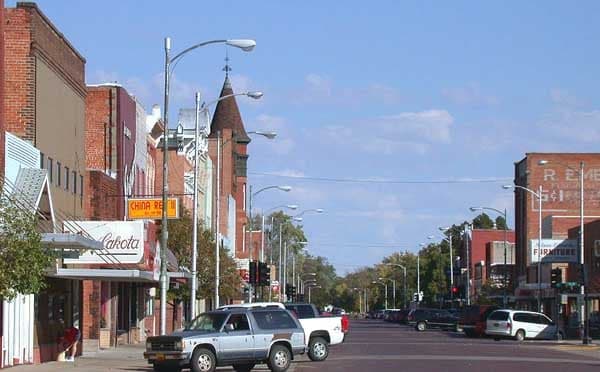
Photo: Wikipedia
Political ClimatePolitical Climate in Lexington, NE
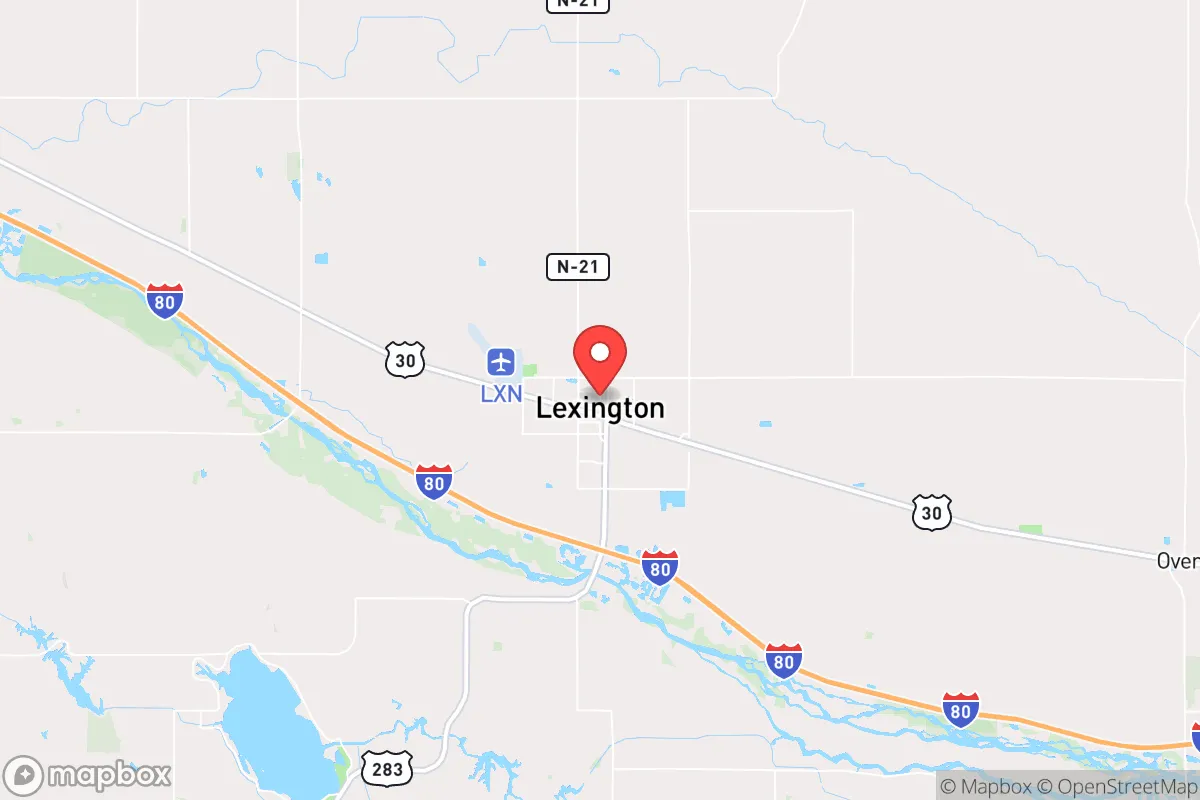
District shown is the primary district for this city’s centroid. Cities may span multiple districts.
Local Political AnalysisPolitical Analysis of Lexington, NE
Lexington, Nebraska, sits deep in conservative territory, with a Cook PVI of R+27 that puts it among the most reliably Republican small cities in the state. That number isn't just a statistic—it reflects a community where traditional values, limited government, and personal responsibility are still the default. For decades, this area has voted overwhelmingly for conservative candidates, and while you'll find a few independent streaks, the political lean here hasn't budged much. If anything, the surrounding rural counties have only gotten redder over the last few cycles, while Lexington itself has held steady.
How it compares
Drive an hour east to Kearney, and you'll notice a slightly more moderate vibe—Buffalo County still leans Republican, but the university influence and larger population bring a bit more political variety. Head west to North Platte, and you're back in solidly conservative country, but with a more libertarian edge on land-use and water rights issues. The real contrast is south toward Holdrege or north toward Broken Bow, where the politics are even more traditional and less influenced by the small manufacturing base Lexington has. What sets Lexington apart is its growing Hispanic population—around 50% of the city now—which has shifted some local dynamics, but not the overall voting pattern. Most of that community leans conservative on economic and family issues, even if they don't always show up at the polls. The R+27 rating tells you the core hasn't cracked.
What this means for residents
For folks living here, the political climate means you're not constantly fighting government overreach in your daily life. Property taxes are a perennial gripe—Nebraska's system is no joke—but local officials generally keep regulations light. You won't see the kind of zoning battles or business mandates that plague bigger cities. The school board and city council races are usually low-key, with candidates who talk about fiscal responsibility and local control rather than national culture wars. That said, there's a quiet concern among longtime residents about creeping progressive influence from state-level initiatives or federal funding strings. The push for diversity, equity, and inclusion programs in schools, for example, has raised eyebrows—people here prefer a merit-based approach and don't want ideological training replacing solid academics. So far, Lexington has resisted those trends, but it's something to watch.
On cultural and policy distinctions, Lexington is a place where the Second Amendment is still a given, not a debate. You can carry openly without getting sideways looks, and the local gun shops do steady business. The city also has a strong agricultural backbone—feedlots, corn, and soybeans dominate the economy—so land-use policies are practical, not ideological. There's a live-and-let-live attitude, but with a clear line: don't mess with personal freedoms or property rights. If you're looking for a place where government stays out of your business and your neighbors share your values, Lexington fits the bill. Just don't expect it to change anytime soon—the R+27 rating is earned, not accidental.

State Political ClimatePolitical Climate in Nebraska
State Political AnalysisPolitical Environment in the State
Nebraska is a reliably red state in presidential elections, having voted Republican in every cycle since 1968, but its political landscape is far more nuanced than that headline suggests. The state’s dominant coalition is a mix of rural conservatives, agricultural interests, and a growing suburban base, though a persistent progressive stronghold in the Omaha metro area (Douglas County) and a moderate streak in Lincoln (Lancaster County) keep things from being a total lockstep. Over the last 10-20 years, the rural-urban divide has widened dramatically, with the eastern I-80 corridor becoming a political battleground while the rest of the state has hardened its conservative identity. For a conservative-leaning individual or family looking to relocate, Nebraska offers a generally friendly policy environment, but there are real warning signs in the state’s largest cities that demand attention.
Urban vs. rural divide
The political map of Nebraska is a textbook case of geographic polarization. The vast, sparsely populated western and central regions—places like Scottsbluff, North Platte, and Kearney—vote overwhelmingly Republican, often by margins of 70% or more. These areas are the backbone of the state’s conservative identity, driven by agricultural economics, strong gun culture, and traditional social values. In contrast, the eastern urban corridor tells a different story. Omaha (Douglas County) has become a Democratic stronghold, with the city’s 2nd Congressional District famously splitting Nebraska’s electoral votes in 2020 and 2024. Lincoln (Lancaster County) leans left but is more moderate, often swinging between parties depending on the race. The real flashpoint is the suburban ring around Omaha—places like Papillion, La Vista, and Gretna in Sarpy County. These areas are growing fast and have historically been Republican, but they’ve shown signs of softening as younger, more diverse families move in. If you’re looking for a reliably conservative community, you’re better off in the smaller towns or the western half of the state, not the eastern suburbs.
Policy environment
Nebraska’s state-level policy is generally favorable for conservatives, but it’s not without its frustrations. The state has no income tax on Social Security benefits and a flat individual income tax rate that was cut to 5.84% in 2024, with a scheduled reduction to 3.99% by 2027. Property taxes, however, are a persistent pain point—among the highest in the region relative to home values, which has sparked ongoing legislative battles. The regulatory posture is light, with no state-level occupational licensing for many trades and a right-to-work law on the books. Education policy is a mixed bag: school choice advocates won a major victory in 2023 with the passage of LB 753, which created a dollar-for-dollar tax credit for donations to scholarship-granting organizations, effectively a private school voucher program. But the state also maintains a strong public school system, and efforts to ban critical race theory or restrict library content have been inconsistent. Healthcare is largely free-market, with no state-run exchange and limited Medicaid expansion (though it was adopted in 2020). Election laws are solid: voter ID is required (passed in 2021), and Nebraska has no-excuse absentee voting, which conservatives have criticized as a vulnerability. Overall, the policy environment is good but not great—property taxes and the lingering influence of the Omaha-Lincoln progressive bloc are the main concerns.
Trajectory & freedom
On balance, Nebraska is becoming more free for conservatives, but the trend is fragile and uneven. The most significant recent expansion of liberty came in 2023 with the passage of LB 77, which eliminated the requirement for a permit to carry a concealed handgun. Constitutional carry is now the law of the land, a major win for Second Amendment advocates. Parental rights saw a boost with LB 1080 in 2024, which requires schools to notify parents of any curriculum involving sexuality or gender identity and allows them to opt their children out. Medical freedom took a hit, though: the state’s 2020 ballot initiative legalizing medical marijuana was struck down by the courts, and a 2024 attempt to re-legalize it failed due to procedural issues. On taxation, the income tax cuts are real, but property tax relief has been piecemeal and insufficient. The biggest red flag is the growing influence of Omaha’s progressive city council, which has pushed for sanctuary city policies and defunding police rhetoric, though neither has become law. The state legislature remains Republican-supermajority, but the urban-rural split means that any statewide freedom expansion is constantly under threat from the eastern corridor’s activism.
Civil unrest & political movements
Nebraska has not seen the kind of widespread civil unrest that has plagued coastal states, but there have been notable flashpoints. The 2020 George Floyd protests in Omaha turned violent, with looting and arson in the downtown area, leading to a heavy police response and a lasting distrust between law enforcement and some community groups. Since then, organized activist movements have been relatively quiet, but the left-leaning group Nebraskans for Peace remains active in Lincoln, pushing for progressive policies on immigration and criminal justice reform. Immigration politics are a hot-button issue, particularly in the meatpacking towns of Grand Island and Lexington, where large Hispanic populations have led to tensions over sanctuary policies. In 2023, the state legislature passed LB 535, which bans sanctuary cities and requires local law enforcement to cooperate with federal immigration authorities—a clear win for rule-of-law conservatives. Election integrity controversies have been minimal, though some conservatives remain skeptical of the state’s no-excuse absentee voting system. Overall, the political climate is stable, but the cultural divide between Omaha/Lincoln and the rest of the state is palpable and growing.
Projection
Over the next 5-10 years, Nebraska is likely to become more politically divided, not less. The demographic trends are clear: the Omaha metro area is growing faster than the rest of the state, driven by young professionals and immigrants, which will continue to shift Douglas and Sarpy counties leftward. Meanwhile, rural counties are losing population, which could dilute their political influence over time. The state’s 2nd Congressional District will remain a toss-up, and if Democrats ever flip the governorship or the legislature, expect a rapid push for progressive policies like expanded Medicaid, higher taxes, and stricter gun laws. However, the Republican supermajority in the legislature is likely to hold for at least another decade, meaning that conservative priorities like school choice, tax cuts, and Second Amendment rights will continue to advance. The wildcard is property tax reform—if the legislature can’t deliver meaningful relief, it could spark a populist backlash that reshapes the political landscape. For someone moving in now, expect a state that remains broadly conservative but with a growing progressive enclave in the east that will demand constant vigilance.
For a conservative individual or family, Nebraska offers a solid foundation: low income taxes, constitutional carry, school choice, and a generally pro-business environment. But the warning signs are real—property taxes are high, the Omaha metro is drifting left, and the state’s political future hinges on whether the rural-urban divide can be managed. If you’re looking for a place where your values are the norm and your freedoms are protected, stick to the smaller towns and western counties. If you’re drawn to the job opportunities in Omaha or Lincoln, be prepared for a political fight that’s only going to intensify.
* Values derived from national, state, county, city and local statistics and may differ in a specific area. Last updated: 2026-05-03T20:30:32.000Z
Narrative content on this page is AI-generated and may contain mistakes. Verify any details that matter before acting on them.
ReloMaps may earn a commission from affiliate links at no extra cost to you.

