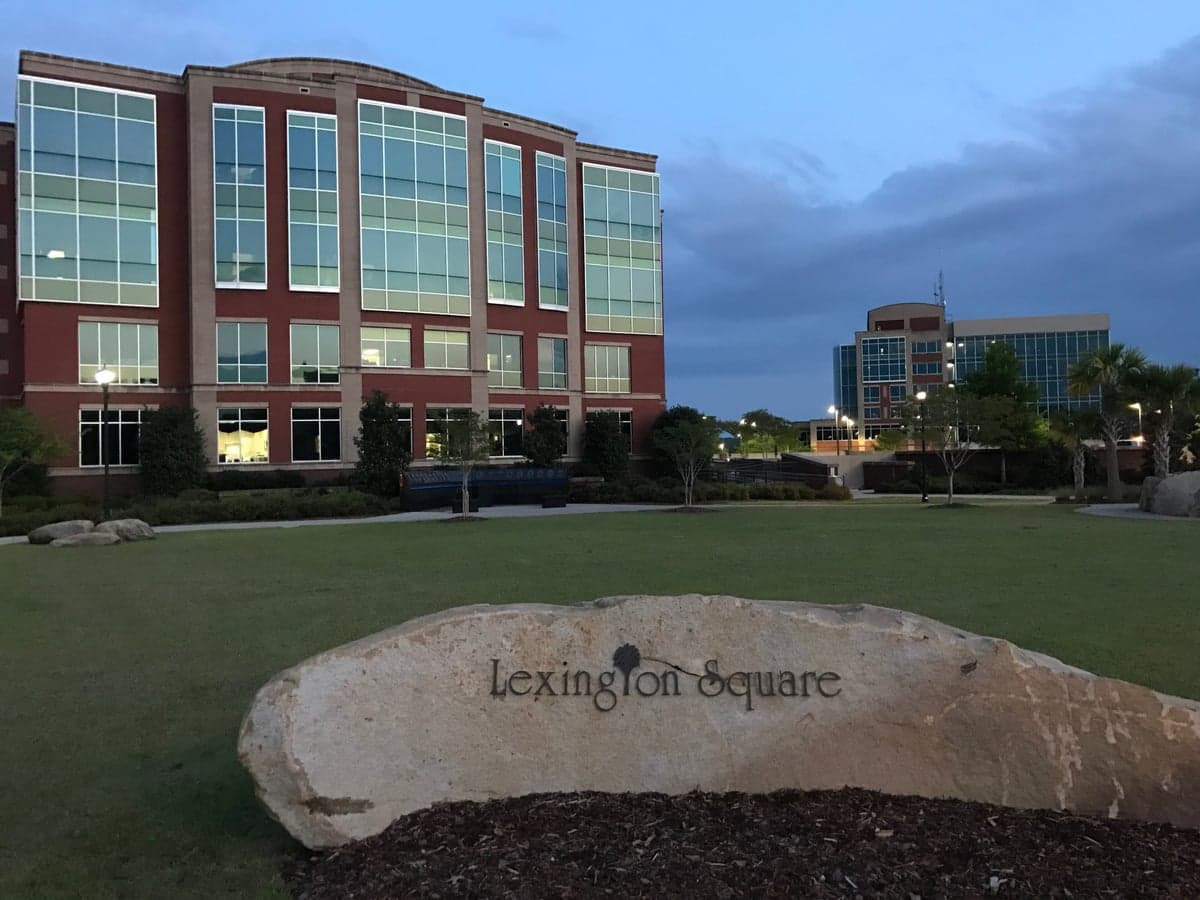
Photo: Wikipedia
Personal Sovereignty in Lexington, SC
Viable for self-reliance. Generally workable, though some barriers may limit total independence.
What does Personal Sovereignty tell us?
Personal Sovereignty measures your capacity for self-reliance and independence with minimal government friction. Higher scores mean fewer barriers between you and the way you want to live... but it assumes you have the space you need and good neighbors.
What does this tell us?
Personal Sovereignty measures your capacity for self-reliance and independence with minimal government friction. Higher scores mean fewer barriers between you and the way you want to live... but it assumes you have the space you need and good neighbors.
State Policy
Energy independence: Importer (25% of energy produced in-state)
Personal Liberty
Homesteading

Personal Liberty Analysis
Lexington, South Carolina, offers a notably high degree of personal sovereignty relative to many other parts of the country, particularly for those who prioritize minimal government interference in daily life, self-defense, and family autonomy. The town sits within a state that has consistently pushed back against federal overreach, maintaining a legal and cultural environment where individual choice—from how you raise your children to how you secure your property—is the default, not the exception. For the prepper or survivalist-minded individual, Lexington provides a strategic balance: proximity to the economic and medical resources of Columbia (roughly 15 minutes east) without the regulatory chokehold and cultural drift of a major metro area. The local ethos leans heavily on self-reliance, and the legal framework largely supports that mindset, though there are specific zoning and HOA considerations to navigate for those seeking maximum autonomy.
Tax burden and regulatory posture: How much does the state leave in your pocket?
South Carolina’s tax structure is a clear net positive for personal sovereignty, as lower tax burdens directly translate to more resources under your control and less government leverage over your decisions. The state income tax is a flat 3% as of 2026, down from previous years, and Lexington County’s property tax rates are among the most favorable in the region. The effective property tax rate hovers around 0.55% of assessed value, meaning a $350,000 home carries roughly $1,925 annually in property taxes—far below the national average. There is no state-level tax on Social Security benefits, and military pensions are fully exempt, which matters for retirees or those planning a long-term independent lifestyle. The regulatory posture at the state level is deliberately light: there are no state-specific OSHA plans beyond federal compliance, no state-level gun registration, and no general business licensing requirements for most sole proprietorships. This means starting a side hustle—say, a small-scale food preservation operation or a handyman service—requires minimal bureaucratic friction. However, be aware that Lexington town itself has some municipal codes regarding noise, outdoor storage, and signage that can feel restrictive if you’re accustomed to rural county rules. The overall takeaway: the state and county governments largely stay out of your wallet and your way, which is a foundational pillar of personal sovereignty here.
Self-defense and gun law specifics: What are your rights to keep and bear arms?
South Carolina is a strong Second Amendment state, and Lexington reflects that culture deeply. The state operates under a constitutional carry law (permitless carry) for anyone 18 or older who can legally possess a firearm, effective since 2024. This means no permit, no training requirement, and no government permission slip is needed to carry a concealed handgun in most public spaces. For those who want reciprocity with other states, a standard CWP (Concealed Weapons Permit) is still available and recognized in over 30 states. There is no state-level registry for firearms, no waiting periods for long guns, and no magazine capacity restrictions. Stand-your-ground laws are fully in effect—you have no duty to retreat before using deadly force if you are lawfully present and reasonably believe it is necessary to prevent death or great bodily harm. Castle doctrine protections extend to your home, vehicle, and place of business. The practical reality in Lexington: gun ownership is normalized, not stigmatized. You’ll see “Guns Welcome” signs on many local businesses, and the sheriff’s office is known for being pro-2A in its enforcement priorities. For the prepper, this means your defensive capabilities are legally unencumbered, and you can train, store, and carry without worrying about a shifting political landscape at the local level. The only notable restriction: firearms are prohibited in certain government buildings and schools, but that’s standard nationwide.
Self-reliance and homesteading viability: Lot sizes, zoning, and off-grid feasibility
Lexington offers a mixed bag for those seeking true self-reliance. Within the town limits and suburban subdivisions, lot sizes are typically 0.25 to 0.5 acres, and HOAs often restrict livestock, large gardens, and external structures like sheds or greenhouses without approval. If you want to raise chickens, keep goats, or install a rainwater catchment system, you need to look outside the town’s jurisdiction—specifically in the unincorporated areas of Lexington County. There, you can find lots ranging from 1 to 10 acres at reasonable prices (around $15,000–$30,000 per acre as of 2026). Zoning in the county is generally permissive for agricultural use, including small-scale livestock, beekeeping, and vegetable production for personal consumption. Off-grid feasibility is moderate: the county does not require connection to municipal water or sewer if you have a well and septic system, and solar panel installation is allowed without special permits for systems under 20 kW. However, there is no explicit “right to dry” law for clotheslines, and some subdivisions ban them. The biggest hurdle for the serious prepper is that burn bans and outdoor burning regulations are enforced during dry months, which can complicate waste management or cooking without grid power. Also, while the state has no building codes for structures under 200 square feet (like a tiny house or workshop), the county does require permits for any habitable dwelling. For a true homesteading setup, aim for property in the Gilbert or Pelion areas (west of Lexington), where zoning is looser and neighbors are farther apart.
Personal liberties: Parental rights, medical autonomy, speech, and property
On parental rights, South Carolina has been a battleground, but the trend is favorable for sovereignty-minded families. The state passed a Parents’ Bill of Rights in 2023, which codifies that parents have the fundamental right to direct the upbringing, education, and health care of their minor children. This includes the right to opt out of any school curriculum or activity without penalty, and schools must obtain parental consent before administering any medical or mental health services. In practice, Lexington School District One—the primary public school system—has been responsive to parental concerns, with school board meetings often dominated by discussions of curriculum transparency and library content. Medical autonomy is less robust: South Carolina has not expanded Medicaid under the ACA, which keeps the state’s healthcare system more market-driven, but there are no state-level mandates for vaccines beyond federal school requirements, and religious exemptions are available. The state also has a Right to Try law for terminally ill patients to access experimental treatments without FDA interference. On speech and property, protections are strong. There is no state-level hate speech law that criminalizes political or religious expression, and property rights are defended by the state’s strict eminent domain laws—private property cannot be taken for economic development purposes (a direct response to the Kelo v. New London case). The only real friction point is that Lexington’s local government has occasionally used nuisance ordinances to target properties with tall grass, unregistered vehicles, or “excessive” outdoor storage, which can clash with a prepper’s desire to stockpile supplies or maintain a low-profile workshop. Knowing your HOA covenants or county zoning code before buying is essential.
Overall, Lexington offers a level of personal sovereignty that is significantly higher than what you’ll find in the Northeast, West Coast, or even much of the Midwest. The combination of constitutional carry, low taxes, strong parental rights, and a culture of self-reliance makes it a viable base for those who want to live with minimal government interference while still having access to modern infrastructure. The trade-offs are real: you’ll need to navigate HOA restrictions if you buy in a subdivision, and the county’s nuisance codes can feel like a leash if you’re used to total rural freedom. But compared to the regulatory creep seen in states like Colorado, Oregon, or Virginia, Lexington stands out as a place where the default answer from government is “yes” rather than “maybe” or “no.” For the strategic relocation researcher advising a conservative, survivalist-minded client, this area earns a solid recommendation—provided they choose their specific lot and neighborhood with care.

* Values derived from national, state, county, city and local statistics and may differ in a specific area. Last updated: 2026-04-29T17:51:16.000Z
Narrative content on this page is AI-generated and may contain mistakes. Verify any details that matter before acting on them.
ReloMaps may earn a commission from affiliate links at no extra cost to you.

