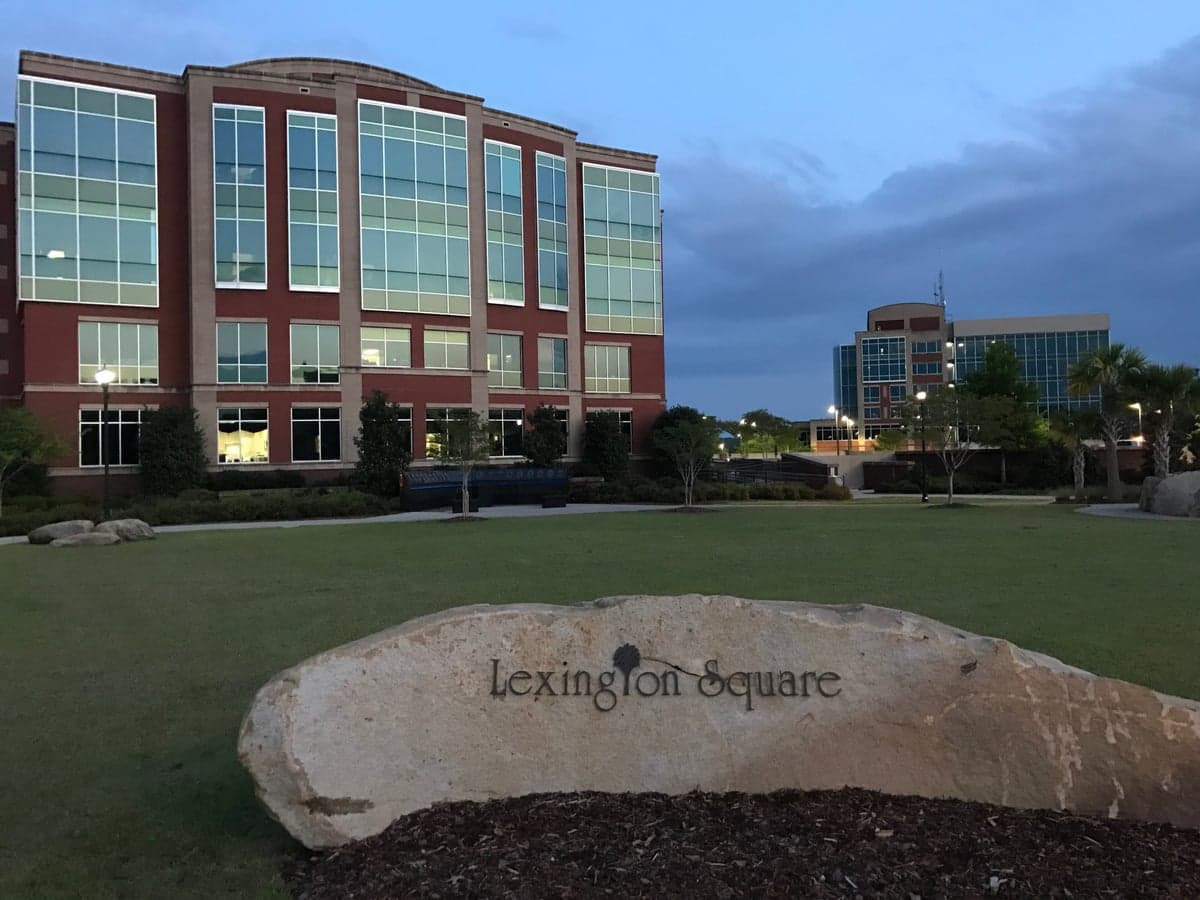
Photo: Wikipedia
Political ClimatePolitical Climate in Lexington, SC
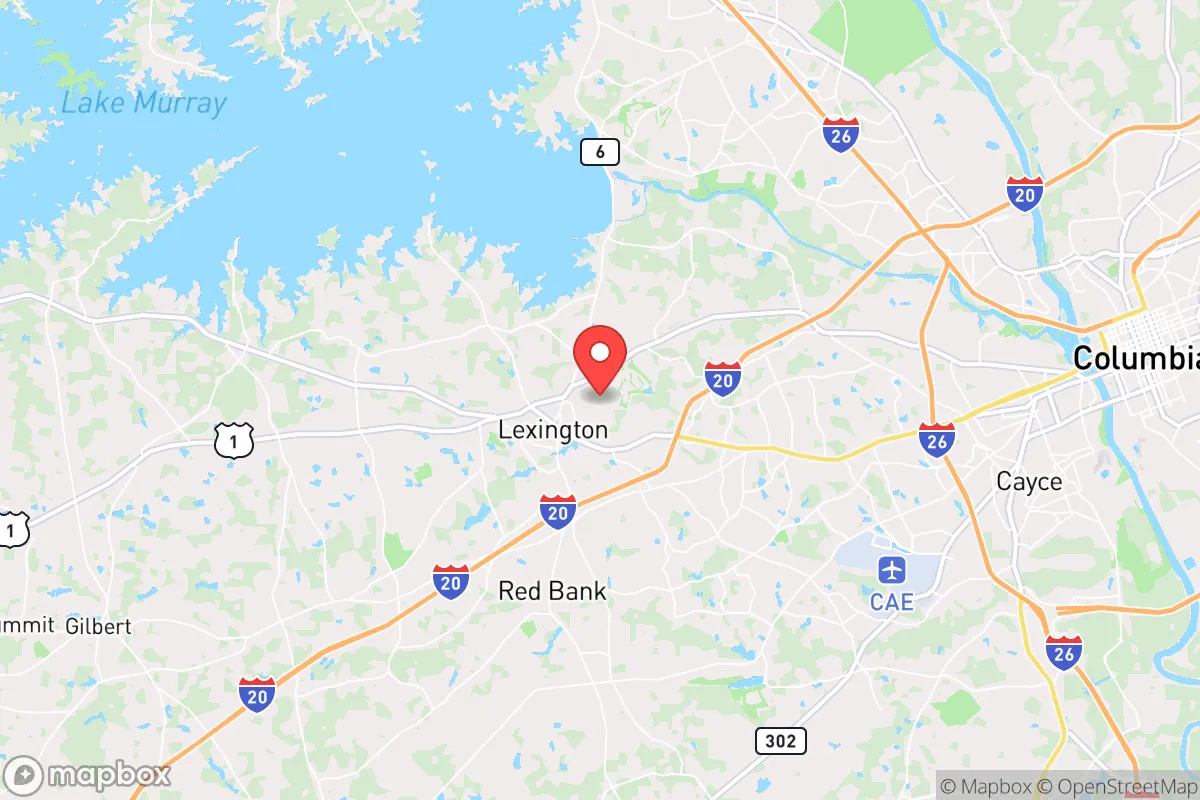
District shown is the primary district for this city’s centroid. Cities may span multiple districts.
Local Political AnalysisPolitical Analysis of Lexington, SC
Lexington, South Carolina, has long been a solidly conservative stronghold, and that hasn’t changed much even as the rest of the country shifts around it. With a Cook PVI of R+7, this area leans reliably Republican in most elections, and you can feel it in the local culture and policy decisions. But like anywhere, there are subtle shifts happening, and if you’ve been here a while, you notice the small cracks in the foundation—some good, some a little concerning.
How it compares
Compared to nearby Columbia, which is a deep blue island in a red sea, Lexington feels like a different world entirely. Drive 20 minutes east, and you’re in a city where progressive policies on taxes, zoning, and public spending are the norm. Here in Lexington, the county council and school board have historically pushed back against that kind of government overreach, keeping property taxes relatively low and resisting mandates that feel like they’re coming from a distant bureaucracy. Towns like Irmo and Chapin share a similar conservative bent, but Lexington proper is the anchor—it’s where the political energy is. That said, you can see some of the same trends creeping in: a few more yard signs for moderate Democrats each cycle, and a growing push for “equity” initiatives in the schools that make you wonder if the old guard is losing its grip.
What this means for residents
For folks who value personal freedoms and limited government, Lexington is still a pretty good place to be. The local government generally stays out of your business—no heavy-handed lockdowns or overreaching health mandates like you’d see in more progressive areas. Property rights are respected, and there’s a strong sense that your home and your choices are yours to make. But the warning signs are there: the school board has seen some heated debates over curriculum and library books, and there’s a growing faction that wants to bring in more “diversity, equity, and inclusion” programming. If that trend continues, you might see more government intrusion into what your kids learn and how local businesses operate. For now, though, most residents still feel like their vote counts and their voice matters—something that’s getting harder to say in other parts of the state.
Culturally, Lexington is still a place where people wave from their trucks and neighbors look out for each other, but the politics are starting to feel a little less like a sure thing. The long-term trajectory depends on who shows up to the local meetings and primaries. If you’re the kind of person who wants to keep government small and personal freedoms intact, this is still a solid bet—but you’ll want to keep an eye on the school board elections and county council races. They’re the real battlegrounds now, and the outcome will decide whether Lexington stays the conservative haven it’s always been or starts drifting toward the kind of overreach you see in bigger cities.

State Political ClimatePolitical Climate in South Carolina
State Political AnalysisPolitical Environment in the State
South Carolina has long been a reliably red state, with a solid Republican lean that has only deepened over the past two decades. The GOP holds supermajorities in both chambers of the state legislature, and the state has voted Republican in every presidential election since 1980, with margins widening from about 7 points in 2000 to over 17 points in 2024. The dominant coalition is a mix of traditional conservatives, evangelical Christians, and a growing number of transplants from the Northeast and Midwest seeking lower taxes and a slower pace of life. However, the political landscape is not monolithic — the Lowcountry and the Upstate are increasingly distinct, and the state's trajectory is being shaped by a tug-of-war between rural traditionalists and suburban growth corridors.
Urban vs. rural divide
The political map of South Carolina is defined by a sharp urban-rural split. The state's two major metros — Charleston and Greenville — are both Republican-leaning, but in very different ways. Charleston County, anchored by the city of Charleston itself, has become a purple-to-blue enclave, with Democrats winning local races and the county flipping to Biden in 2020 by about 10 points. The surrounding suburbs like Mount Pleasant and Summerville are more competitive, with a mix of fiscally conservative but socially moderate voters. Meanwhile, the Upstate powerhouse of Greenville County remains deeply red, driven by a booming economy and a strong evangelical base, though the city of Greenville itself is trending leftward. The rural counties — think Bamberg, Allendale, and McCormick — are overwhelmingly Republican, with margins often exceeding 40 points. The Pee Dee region, including Florence and Myrtle Beach, is reliably red but with pockets of Democratic strength in majority-minority areas. The real political action is in the fast-growing suburbs of Lexington and York counties, where transplants from blue states are shifting the balance — sometimes toward the GOP, sometimes toward more libertarian-leaning candidates.
Policy environment
South Carolina's policy environment is broadly conservative, with a strong emphasis on low taxes and limited government. The state has a flat income tax rate of 6.2%, which is being phased down to 6.0% by 2026, and no state property tax on vehicles or business inventory. Sales tax is capped at 6% statewide, with local options adding up to 2%. The regulatory posture is business-friendly, with a right-to-work law and a tort reform system that caps non-economic damages in medical malpractice cases at $350,000. Education policy is a mixed bag: the state has a robust school choice program, including the Education Scholarship Trust Fund (vouchers for low-income families), but public schools remain underfunded and test scores lag behind national averages. Healthcare is dominated by the state's refusal to expand Medicaid under the ACA, leaving a coverage gap for about 200,000 low-income adults. Election laws are among the most secure in the South: voter ID is required, early voting is limited to two weeks, and absentee voting requires an excuse. The state legislature recently passed a ban on ballot drop boxes and tightened rules for third-party voter registration drives. On social issues, South Carolina has a six-week abortion ban (the "Fetal Heartbeat Act") and a constitutional amendment defining marriage as between a man and a woman (though unenforceable after Obergefell).
Trajectory & freedom
South Carolina is trending more free in several key areas, but with some concerning backsliding. On the positive side, the state passed constitutional carry (permitless concealed carry) in 2024, joining the majority of states that recognize the right to bear arms without government permission. Parental rights were strengthened with the "Parents' Bill of Rights" (2023), which requires schools to notify parents of any changes in a child's mental, emotional, or physical health and prohibits instruction on sexual orientation or gender identity in K-5 classrooms. Property rights were bolstered by a 2023 law limiting the use of eminent domain for private economic development. On the downside, the state's medical marijuana bill has stalled repeatedly, leaving patients with few legal options. The state also expanded its sales tax base to include some services in 2024, a move that libertarians view as a step toward broader taxation. The biggest freedom concern is the state's COVID-era emergency powers, which were not significantly reformed after the pandemic — meaning the governor still has broad authority to shut down businesses and mandate restrictions without legislative approval. That's a red flag for anyone who values personal autonomy.
Civil unrest & political movements
South Carolina has seen relatively little civil unrest compared to other states, but there are active political movements on both sides. The Confederate flag debate was the defining flashpoint of the 2010s, culminating in the flag's removal from the Statehouse grounds in 2015 after the Charleston church shooting. That decision still rankles many rural conservatives, while urban progressives continue to push for removal of statues and monuments. The Black Lives Matter protests in 2020 were largely peaceful in Charleston and Columbia, but they exposed deep racial divides in policing and economic opportunity. On the right, the Moms for Liberty movement has been highly active in school board races, particularly in Lexington and Greenville counties, pushing for curriculum transparency and parental oversight. Immigration politics are relatively muted, as South Carolina has a small foreign-born population (about 5%), but there is a growing debate over the state's role in housing migrants bused from Texas. The state has no sanctuary cities, and a 2024 law requires all law enforcement to cooperate with federal immigration authorities. Election integrity remains a hot-button issue: the 2020 election was certified without major controversy, but the state GOP has pushed for stricter voter roll maintenance and a ban on private funding of election administration. A new resident would notice that political conversations are more civil than in neighboring states, but the underlying tensions are real.
Projection
Over the next 5-10 years, South Carolina is likely to become more Republican at the state level, but with a growing libertarian and populist wing that could challenge the establishment. The key demographic driver is in-migration: the state is adding about 100,000 new residents per year, mostly from New York, New Jersey, and California. These transplants tend to be fiscally conservative but socially moderate, and they are clustering in the suburbs of Charleston, Greenville, and Myrtle Beach. This could push the state toward a more "live and let live" conservatism, with less emphasis on social issues and more on tax cuts and deregulation. However, the rural counties are losing population, which could eventually dilute their political power. The biggest wildcard is the education system: if school choice expands significantly, it could accelerate the trend toward homeschooling and private schooling, further fragmenting the political culture. On the freedom front, expect continued battles over medical marijuana, occupational licensing reform, and property rights. The state is unlikely to pass a state-level Religious Freedom Restoration Act (RFRA) anytime soon, but the courts are generally friendly to religious liberty claims. For someone moving in now, the bottom line is this: South Carolina will remain a safe haven for conservatives, but the flavor of that conservatism is evolving — less "traditional values" and more "leave me alone."
For a new resident, the practical takeaway is that South Carolina offers a low-tax, business-friendly environment with strong gun rights and parental control over education. The political climate is stable and predictable, with no major threats to personal freedom on the horizon — provided you stay out of the urban cores, where progressive influence is growing. The state's biggest risk is complacency: the GOP supermajority can lead to cronyism and backroom deals, so staying engaged in local politics is essential. If you value a place where your vote counts, your business can thrive, and your family can live without government overreach, South Carolina is a solid bet. Just keep an eye on the suburbs — that's where the future of the state is being written.
* Values derived from national, state, county, city and local statistics and may differ in a specific area. Last updated: 2026-04-29T17:51:16.000Z
Narrative content on this page is AI-generated and may contain mistakes. Verify any details that matter before acting on them.
ReloMaps may earn a commission from affiliate links at no extra cost to you.

