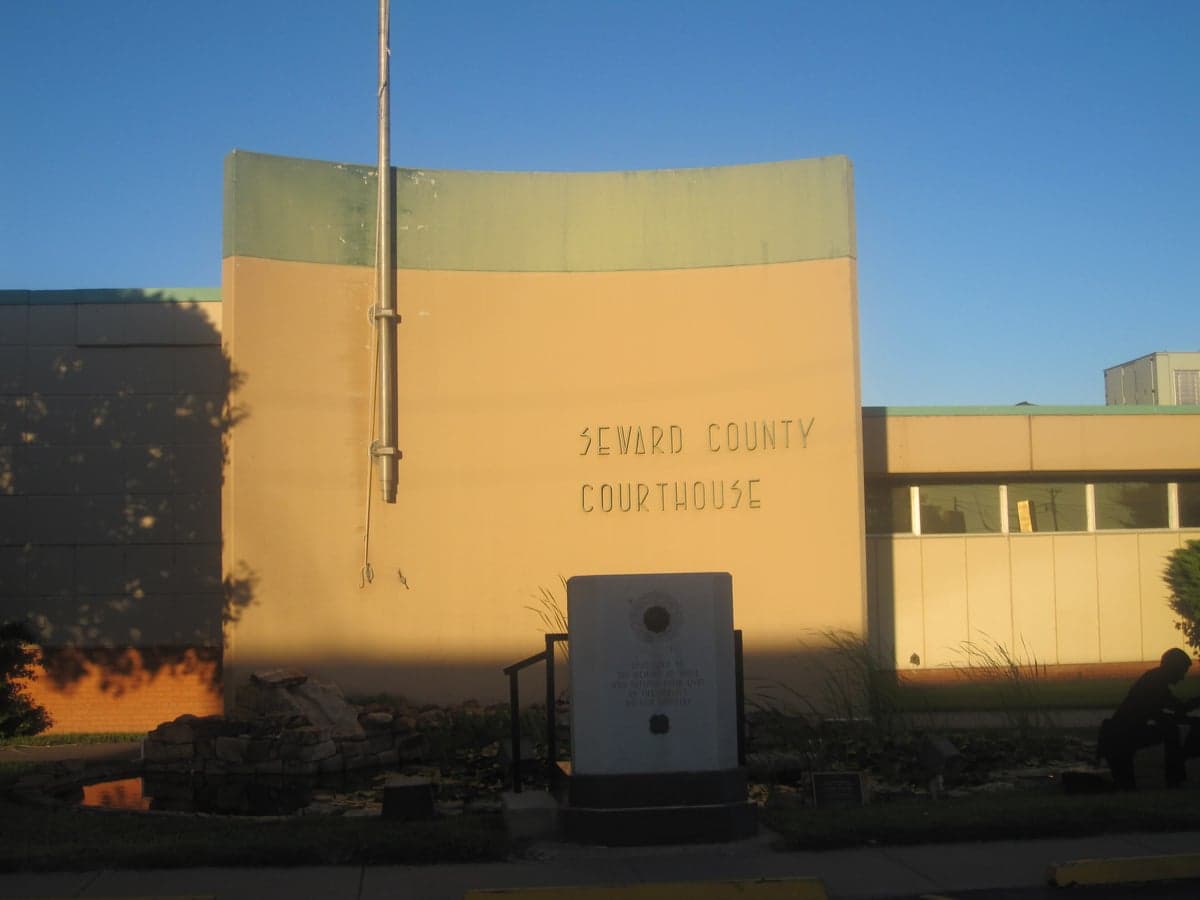
Photo: Wikipedia
Political ClimatePolitical Climate in Liberal, KS
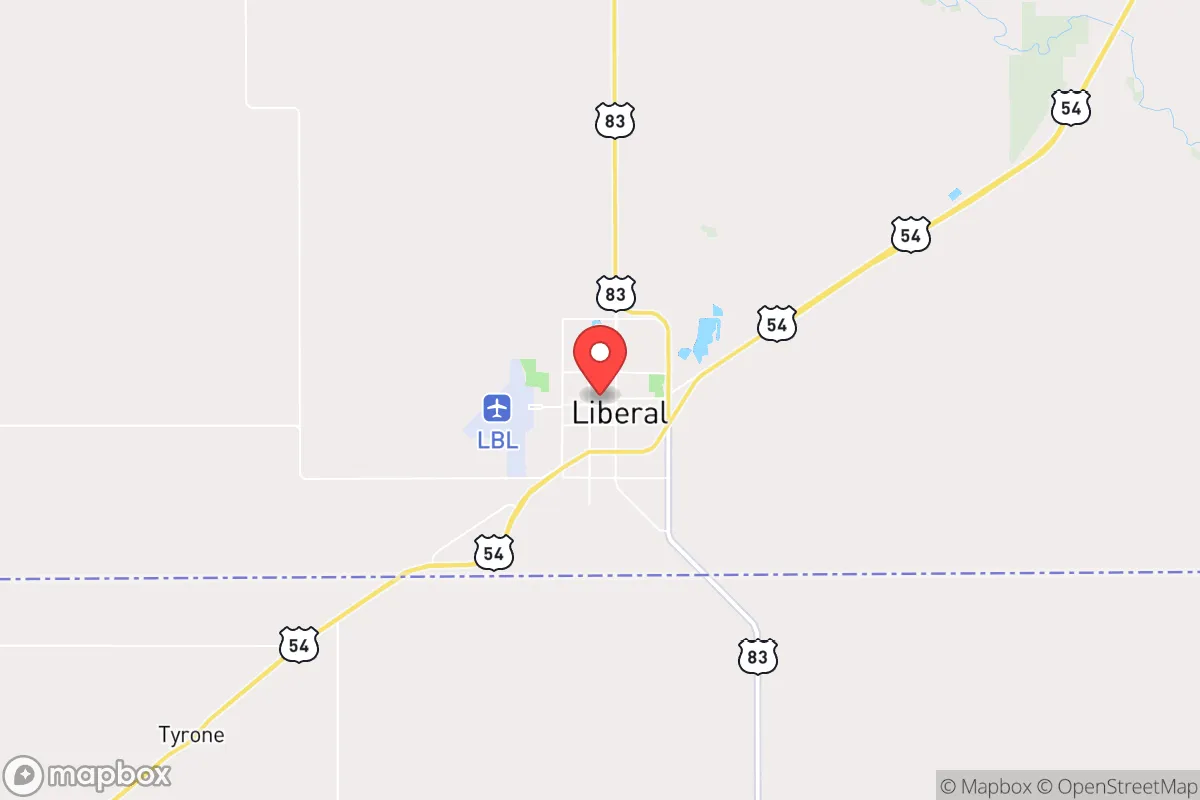
District shown is the primary district for this city’s centroid. Cities may span multiple districts.
Local Political AnalysisPolitical Analysis of Liberal, KS
Liberal, Kansas, sits smack in the middle of one of the most reliably conservative corners of the country, with a Cook PVI of R+16 that tells you pretty much everything you need to know about the local voting habits. This isn't a place that flips on a dime; it's a community where folks have long believed in small government, personal responsibility, and keeping the federal government out of their backyards. The political lean here is deeply rooted in agricultural and energy-sector values, and while the town itself has seen some demographic shifts over the years, the overall trajectory remains solidly red, with most local elections decided in the Republican primary.
How it compares
When you look at the surrounding area, Liberal's conservative bent is par for the course, but it's worth noting how it stacks up against other places in southwest Kansas. Compared to a place like Dodge City, which is also deeply red but has a more pronounced libertarian streak on local business regulations, Liberal tends to be a bit more traditional and church-oriented in its politics. Head east to somewhere like Garden City, and you'll find a similar political landscape, though Garden City's larger population brings a slightly more diverse set of economic interests that can sometimes soften the hard edges of the party line. The real contrast comes when you look at the college towns like Lawrence or Manhattan, or even the Kansas City suburbs, where progressive ideas have taken a much stronger hold. Here in Liberal, those shifts feel like a world away, and most folks are happy to keep it that way.
What this means for residents
For the people who live here, the political climate translates into a pretty straightforward daily life. You don't see a lot of government overreach in things like local business ordinances or property rights, and there's a general expectation that the county commission and city council will keep their hands off your personal freedoms. The tax burden is relatively low compared to state averages, and there's a strong cultural resistance to any new regulations that might feel like they're coming from Topeka or Washington. That said, there's a growing concern among long-time residents about the slow creep of progressive ideology into the school system and local government, especially around issues of curriculum and land use. People are watching closely, and there's a sense that if you don't stay engaged, you might wake up one day with rules that don't reflect the values that built this town.
One of the biggest cultural distinctions here is the strong emphasis on local control and the Second Amendment. You won't find many restrictive gun laws in Liberal, and the local sheriff's office is known for taking a practical, common-sense approach to enforcement. There's also a deep-seated wariness of any federal mandates, especially around energy and environmental regulations that could impact the area's agriculture and oil production. The community has a "live and let live" attitude, but that comes with a clear expectation that you respect the traditional values that hold the place together. If you're looking for a place where the government stays out of your business and your neighbors look out for each other, Liberal is still that kind of town—but you'd better keep an eye on the school board meetings if you want it to stay that way.

State Political ClimatePolitical Climate in Kansas
State Political AnalysisPolitical Environment in the State
Kansas has long been a reliably Republican state at the federal level, but its political climate is far more nuanced than a simple red-state label suggests. Over the past 10-20 years, the state has shifted from a moderate, pragmatic conservative stronghold to a more ideologically divided battleground, with a growing urban-rural split and a powerful, grassroots conservative movement that has reshaped the state legislature and policy landscape. While the state still leans Republican by about 10-15 points in most statewide races, the margin has narrowed in recent cycles, driven by suburban shifts and a resurgent Democratic coalition centered in the Kansas City metro area.
Urban vs. rural divide
The political map of Kansas is a textbook example of the urban-rural divide. The state’s two major population centers—Johnson County (suburban Kansas City) and Wyandotte County (Kansas City, KS)—are the Democratic strongholds. Johnson County, once a reliably Republican suburban bastion, has been trending blue for a decade, driven by an influx of college-educated professionals and a growing minority population. In 2020, Joe Biden won Johnson County by nearly 10 points, a stark contrast to the county’s 20-point Republican margins in the 2000s. Meanwhile, Wyandotte County is a deep-blue urban core, consistently delivering 70%+ Democratic votes. On the flip side, rural and small-town Kansas is overwhelmingly Republican. Counties like Sherman (Goodland), Hodgeman, and Greeley routinely vote 80-90% Republican. The state’s second-largest city, Wichita (Sedgwick County), is a bellwether—it leans Republican but has become more competitive, with the city itself trending left while the surrounding suburbs and exurbs remain solidly red. The Manhattan area (Riley County), home to Kansas State University, is a notable purple pocket, often swinging between parties depending on the candidate and turnout.
Policy environment
Kansas’s policy environment is a mixed bag for conservatives. On the positive side, the state has a flat income tax rate of 5.7% (as of 2026), a low corporate tax rate, and no estate tax. Property taxes are relatively moderate, though they vary by county. The state’s regulatory posture is generally business-friendly, with right-to-work laws and limited occupational licensing burdens. Education policy is a major flashpoint. The state has seen a long-running battle over school funding, with the Kansas Supreme Court repeatedly ordering the legislature to increase spending. This has led to tension between conservative lawmakers who favor school choice and local control, and the judiciary, which has mandated higher funding levels. In 2024, the legislature passed a significant expansion of the state’s tax-credit scholarship program for private schools, a win for school choice advocates. Healthcare policy is similarly contentious. Kansas has not expanded Medicaid under the Affordable Care Act, a position that remains popular among conservatives but has created a coverage gap for low-income adults. Election laws have been tightened in recent years, with voter ID requirements, proof of citizenship for voter registration, and restrictions on mail-in ballot drop boxes—all moves that conservatives argue protect election integrity. The state also has a constitutional amendment affirming that there is no right to abortion, passed by a wide margin in 2022.
Trajectory & freedom
On the freedom front, Kansas has been a mixed bag, but the trajectory is generally positive for conservatives. The state has seen a significant expansion of gun rights. In 2021, the legislature passed a permitless carry law, allowing any law-abiding adult to carry a concealed firearm without a permit. This was a major victory for Second Amendment advocates. Parental rights have also been strengthened. In 2023, the legislature passed the "Parents’ Bill of Rights," which requires schools to notify parents about curriculum changes and allows them to opt their children out of certain materials. Medical autonomy has seen a setback, however. The state’s strict abortion ban, triggered by the 2022 Supreme Court decision, has been a point of contention, with some conservatives arguing it goes too far in restricting medical freedom. Property rights are generally strong, with limited eminent domain abuse and a robust system of property tax appeals. Taxation remains a key freedom issue. The state’s flat income tax is a positive, but the overall tax burden is still higher than some neighboring states like Texas or Oklahoma. The most concerning trend for conservatives is the growing influence of the judiciary, which has repeatedly overruled the legislature on school funding and other issues. This has led to calls for judicial reform, including merit selection and term limits for state judges.
Civil unrest & political movements
Kansas has not seen the level of civil unrest seen in larger states, but there have been notable flashpoints. The most significant was the 2022 abortion referendum, which saw massive turnout and intense activism on both sides. The "Value Them Both" coalition, which successfully passed the anti-abortion amendment, was a well-organized grassroots effort. On the left, the "Kansas Abortion Access Fund" and other groups have been active, but their influence is limited. Immigration politics are relatively quiet in Kansas, though there have been local controversies over sanctuary city policies. In 2024, the legislature passed a bill prohibiting any city or county from adopting sanctuary policies, a move that was widely supported by conservatives. Election integrity has been a major issue. The 2020 election saw allegations of irregularities in some counties, though no widespread fraud was proven. The state’s new election laws have been praised by conservatives as a model for other states. There have been no significant secession or nullification movements in Kansas, though there is a strong strain of "Kansas First" sentiment among rural conservatives who feel ignored by the urban-dominated legislature. The most visible flashpoint for a new resident would likely be the ongoing debate over transgender policies, particularly in schools and sports. The state has passed a law banning transgender athletes from competing in girls’ sports, a move that has drawn both strong support and strong opposition.
Projection
Over the next 5-10 years, Kansas is likely to become more politically polarized. The urban-rural divide will continue to widen, with Johnson County and Wyandotte County becoming increasingly Democratic, while rural areas become even more Republican. The state’s population growth is concentrated in the Kansas City suburbs, which will continue to shift the state’s political center of gravity. This could lead to more competitive statewide races, particularly for governor and the U.S. Senate. However, the state legislature is likely to remain firmly in Republican hands due to gerrymandering and the concentration of Democratic voters in a few urban districts. The biggest wildcard is the judiciary. If the Kansas Supreme Court continues to strike down conservative legislation, there will be increasing pressure for judicial reform, possibly including a constitutional amendment to change how judges are selected. On the freedom front, expect continued expansion of school choice, further restrictions on abortion, and possibly a push for a constitutional carry law (already passed). The state’s tax burden may be reduced further, particularly if the economy remains strong. For a new resident, the most important takeaway is that Kansas is a state where conservative values still hold sway, but the political landscape is shifting. If you’re moving to Johnson County, you’ll find a more moderate, suburban environment. If you’re moving to rural Kansas, you’ll find a deeply conservative, community-oriented culture. Either way, the state offers a relatively low cost of living, a business-friendly environment, and a strong sense of local control.
Bottom line for a new resident: Kansas is a good bet for conservatives who value low taxes, gun rights, and local control, but be aware that the political climate is becoming more contested, especially in the suburbs. If you’re looking for a state where your vote will have maximum impact, rural Kansas is your best bet. If you’re looking for a more diverse, dynamic environment, the Kansas City suburbs offer a mix of conservative and moderate influences. Just keep an eye on the courts—they’re the wildcard that could shape the state’s future.
* Values derived from national, state, county, city and local statistics and may differ in a specific area. Last updated: 2026-04-30T08:23:47.000Z
Narrative content on this page is AI-generated and may contain mistakes. Verify any details that matter before acting on them.
ReloMaps may earn a commission from affiliate links at no extra cost to you.

