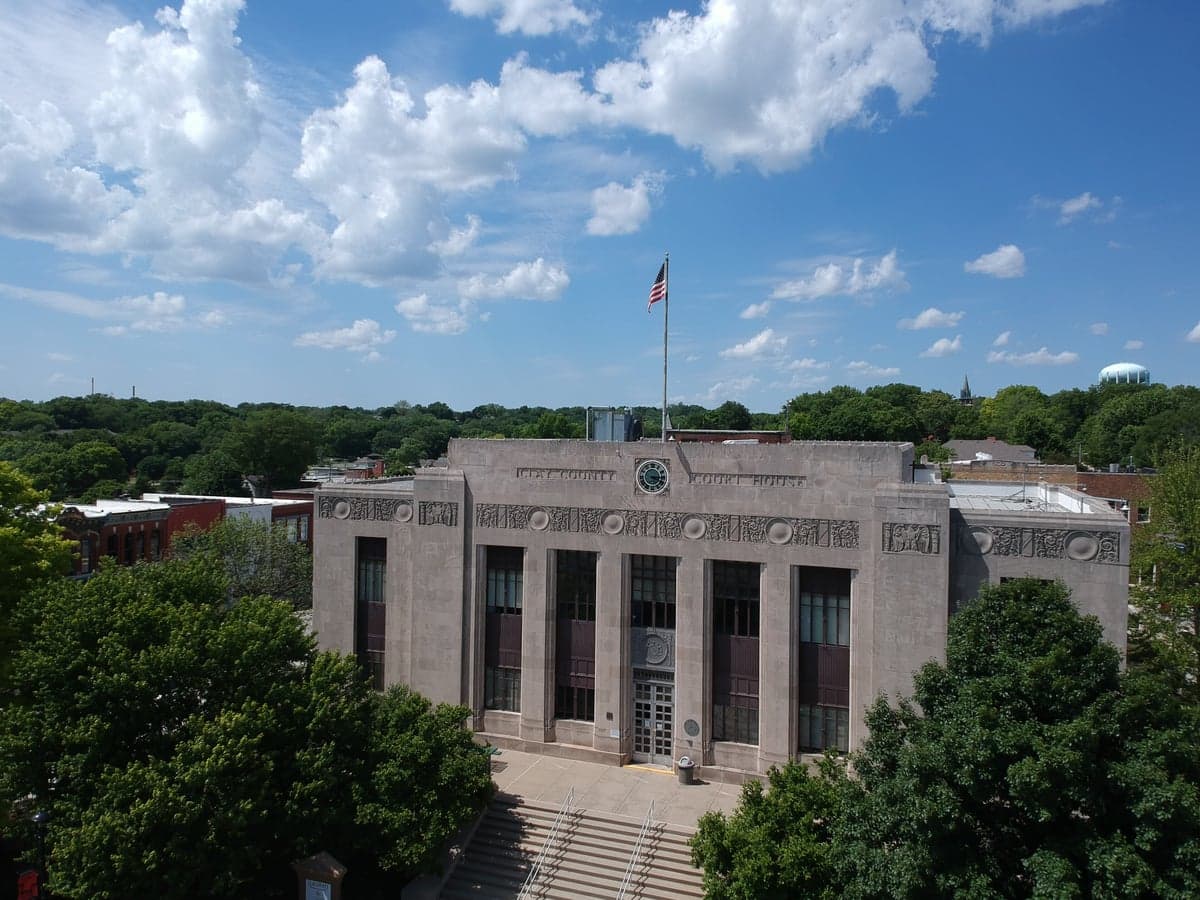
Photo: Wikipedia
Political ClimatePolitical Climate in Liberty, MO
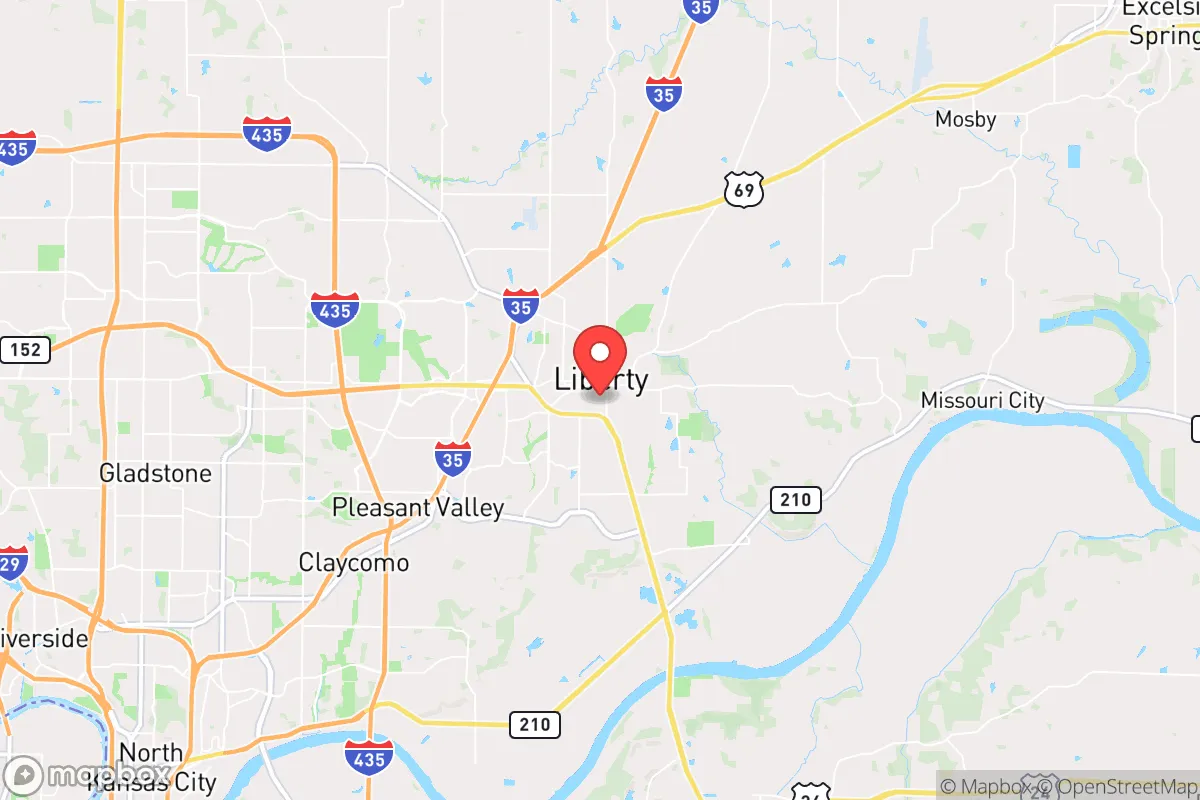
District shown is the primary district for this city’s centroid. Cities may span multiple districts.
Local Political AnalysisPolitical Analysis of Liberty, MO
Liberty, Missouri, sits deep in conservative country, and that’s not changing anytime soon. The area’s Cook PVI of R+19 tells you the real story—this isn’t a purple suburb; it’s a place where Republican candidates routinely win by double digits, and the local culture reflects that. But if you’ve been here a while, you’ve noticed the edges starting to fray. The old-school, live-and-let-live conservatism that defined Liberty for decades is bumping up against the same national pressures that are reshaping every corner of the country. It’s still a solid red stronghold, but the question is whether it stays that way or starts drifting toward the kind of progressive overreach we see in places like Kansas City proper, just 15 minutes south.
How it compares
Drive ten miles south into Kansas City, and you’re in a different world—politically, culturally, and in terms of how much government you have to deal with. Liberty’s R+19 rating is a stark contrast to Jackson County, which leans Democratic and has seen a steady march of progressive policies on everything from zoning to public health mandates. Even nearby Clay County, where Liberty sits, has pockets of blue creeping in around the edges, especially in the more suburban parts closer to the city line. But Liberty itself? It’s still the kind of place where the local school board meetings get heated over curriculum transparency, not diversity quotas, and where the county commission isn’t looking to impose new gun restrictions or business mandates. Compared to the chaos in places like St. Louis County or Johnson County, Kansas, Liberty feels like a refuge—for now.
What this means for residents
For the people who live here, the political climate translates into a pretty straightforward deal: you get a lot of freedom to run your life, your business, and your family the way you see fit. Property taxes are reasonable, the local government isn’t breathing down your neck with overreaching health orders or housing regulations, and the schools still focus on academics over activism. But there’s a growing unease. The same national trends that have turned school boards into battlegrounds and turned local elections into proxy wars for national issues are starting to show up here. You see it in the push for more “equity” initiatives in the school district, in the occasional zoning fight that tries to cram higher-density housing into established neighborhoods, and in the quiet but persistent pressure from county-level bureaucrats to align with state-level mandates that feel more like control than common sense. The long-time residents I talk to are watching this closely—they know that once the camel’s nose is under the tent, it’s hard to push it back out.
One thing that still sets Liberty apart is its cultural backbone. The town has a strong sense of local identity—it’s not just a bedroom community for Kansas City. The historic square, the annual festivals, the independent churches and civic groups—they all reinforce a kind of self-reliance that’s hard to manufacture. You won’t find the kind of aggressive, top-down social engineering you see in bigger cities. But the warning signs are there. If the progressive wave that’s already swallowed Kansas City and is lapping at the edges of Clay County ever fully hits Liberty, it won’t be a sudden revolution—it’ll be a slow, bureaucratic grind of new rules, new fees, and new “inclusivity” mandates that chip away at the freedom that makes this place worth living in. For now, Liberty is still a place where you can breathe easy. But keep your eyes open.

State Political ClimatePolitical Climate in Missouri
State Political AnalysisPolitical Environment in the State
Missouri has long been considered a bellwether state, but over the past 20 years it has shifted from a classic purple battleground to a solidly red, conservative stronghold. The state voted for Donald Trump by 15 points in 2020 and by an even wider margin in 2024, driven by a powerful coalition of rural voters, exurban families, and working-class communities that have grown increasingly skeptical of federal overreach. The transformation is most visible in the collapse of the old "Missouri Compromise" — the state’s historic tendency to elect centrist Democrats locally while backing Republicans nationally — which has been replaced by a unified conservative majority that controls every lever of state government.
Urban vs. rural divide
The political map of Missouri is starkly divided between its two major metros and the vast, red countryside. St. Louis City and County remain deep blue, with the city itself voting over 80% Democratic in recent cycles, while Kansas City is similarly progressive, anchored by its Jackson County base. These two urban islands account for roughly 30% of the state’s vote, but they are increasingly isolated. The real story is the suburban and exurban shift: St. Charles County, just west of St. Louis, has gone from a swing area to a Republican stronghold, voting +25 points for Trump in 2024. Greene County (Springfield) and Christian County (south of Springfield) are among the most reliably conservative counties in the nation, with Christian County delivering a +50 point margin for the GOP. The rural Bootheel region — including Dunklin County and Pemiscot County — has flipped hard red as the old Democratic "Delta" tradition evaporated. The only notable exception is Boone County (Columbia), home to the University of Missouri, which votes blue but is surrounded by deep-red counties like Callaway and Boone’s own rural precincts.
Policy environment
Missouri’s policy environment is among the most conservative in the Midwest, with a strong emphasis on low taxes and limited government. The state has a flat income tax rate of 4.8% (down from 5.4% in 2022) and is on a glide path to eliminate the income tax entirely, with automatic triggers that cut the rate further as revenue grows. Property taxes are among the lowest in the nation, averaging just 0.8% of home value. The state is a "right-to-work" state (though the law was repealed by ballot measure in 2018, the legislature has since passed a new version), and it has no state-level minimum wage above the federal floor. On education, Missouri has a robust school choice landscape: the MOScholars program provides tax-credit scholarships for private school tuition, and charter schools are expanding in St. Louis and Kansas City. The state also passed a "Parents’ Bill of Rights" in 2023, requiring schools to notify parents of any changes to a child’s health or well-being. On healthcare, Missouri did not expand Medicaid until 2021 (via ballot initiative), and the legislature has resisted further expansion. Election laws have been tightened: voter ID is required, and the state purged inactive voters from rolls in 2024. The Second Amendment is broadly protected, with permitless carry in effect since 2017 and no red-flag law.
Trajectory & freedom
Missouri is moving decisively in the direction of expanded personal liberty, particularly on gun rights, parental rights, and tax freedom. The 2024 legislative session saw the passage of HB 1707, which prohibits the enforcement of any federal gun control measure that violates the Second Amendment — a direct challenge to federal overreach. The state also passed SB 89, which bans gender transition procedures for minors and protects medical professionals who refuse to perform them. On education, HB 253 expanded the MOScholars program to cover more families and increased the cap on tax-credit scholarships. The state has also resisted federal vaccine mandates, with the legislature passing a law in 2022 that allows employees to opt out of employer vaccine requirements for any reason. However, there are concerning trends: the state’s Clean Missouri initiative (passed in 2018) imposed strict campaign finance limits and lobbying restrictions, which some conservatives see as a government overreach into political speech. The legislature has since rolled back parts of it, but the tension remains. On the whole, Missouri is becoming freer, but the fight over local control versus state preemption — especially in St. Louis and Kansas City — is ongoing.
Civil unrest & political movements
Missouri has a history of visible political flashpoints. The Ferguson unrest in 2014 was a national watershed, and the St. Louis region continues to see periodic protests over policing and racial justice. In 2020, Kansas City experienced significant property damage during BLM protests, and the city’s progressive leadership has clashed with the state over defunding police proposals. On the right, the Missouri Freedom Caucus has become a powerful force in the state legislature, pushing for stricter immigration enforcement and opposing any form of sanctuary city policy. In 2023, the legislature passed a law banning any local government from adopting "sanctuary" policies for undocumented immigrants, with penalties for noncompliance. The Missouri State Highway Patrol has been deployed to St. Louis multiple times to quell unrest, and the state’s attorney general, Andrew Bailey, has aggressively sued St. Louis and Kansas City over their gun control ordinances. Election integrity remains a hot-button issue: the 2020 election saw a lawsuit over St. Louis County’s handling of mail-in ballots, and the state has since banned private funding of election administration. A new resident would notice the strong presence of Missouri Stands with Israel and Missouri Right to Life in local politics, as well as a growing "constitutional sheriff" movement in rural counties.
Projection
Over the next 5-10 years, Missouri is likely to become even more conservative, driven by two key trends: in-migration from blue states and the continued exodus of progressive-leaning residents from St. Louis and Kansas City to the suburbs or out of state entirely. The Ozarks region, including Branson and Springfield, is seeing rapid population growth from retirees and remote workers fleeing high-tax states like California and Illinois. This influx is reinforcing the state’s conservative bent. The state’s income tax is on track to be eliminated by 2030, which will further accelerate in-migration. However, there are risks: the state’s aging population and low birth rate could strain rural school districts, and the urban-rural divide may widen as St. Louis and Kansas City continue to lose population. The legislature is likely to pass further restrictions on local control, including preempting St. Louis’s minimum wage and paid leave ordinances. A new resident should expect a state that is increasingly assertive in defending its sovereignty against federal mandates, but also one where local political battles — especially in the cities — remain intense and visible.
For a conservative family or individual considering relocation, Missouri offers a compelling package: low taxes, strong gun rights, school choice, and a legislature that actively pushes back against federal overreach. The practical takeaway is that you’ll find a welcoming environment in the suburbs and rural areas, but you should be prepared for the cultural and political friction if you choose to live in St. Louis or Kansas City. The state is on a clear trajectory toward greater freedom, but it’s not without its fights — and those fights are part of what makes Missouri a place where your vote and your voice still matter.
* Values derived from national, state, county, city and local statistics and may differ in a specific area. Last updated: 2026-04-30T02:22:09.000Z
Narrative content on this page is AI-generated and may contain mistakes. Verify any details that matter before acting on them.
ReloMaps may earn a commission from affiliate links at no extra cost to you.

