Photo: Wikipedia
Strategic Assessment of Lima, OH
Meaningful friction. Expect exposure to either population pressure, blast zones, or natural disaster risk. Consider buying a retreat property.
What does the Strategic Assessment tell us?
Our Strategic Assessment grades tactical survivability of an area. Major population centers, military targets, fallout zones, natural disasters, and border exposure all drive risk — lower exposure means a more defensible position in a crisis.
This is heavily inspired by Joel Skousen's Strategic Relocation book. Highly recommended you checkout the book ($)What does this tell us?
Our Strategic Assessment grades tactical survivability of an area. Major population centers, military targets, fallout zones, natural disasters, and border exposure all drive risk — lower exposure means a more defensible position in a crisis.
This is heavily inspired by Joel Skousen's Strategic Relocation book. Highly recommended you checkout the book ($)Strategic Pillars

Key Distances
Regional Safe Places
Below is our recommended "safe zones" in Ohio and the surrounding area based on our strategic heuristics. For most people, it's unrealistic to live in a “safe zone” full-time due to work, family or other personal reasons. They tend to be more rural. However, many of these areas are perfect for second homes and retreat properties that double as a vacation home or even a short-term rental.

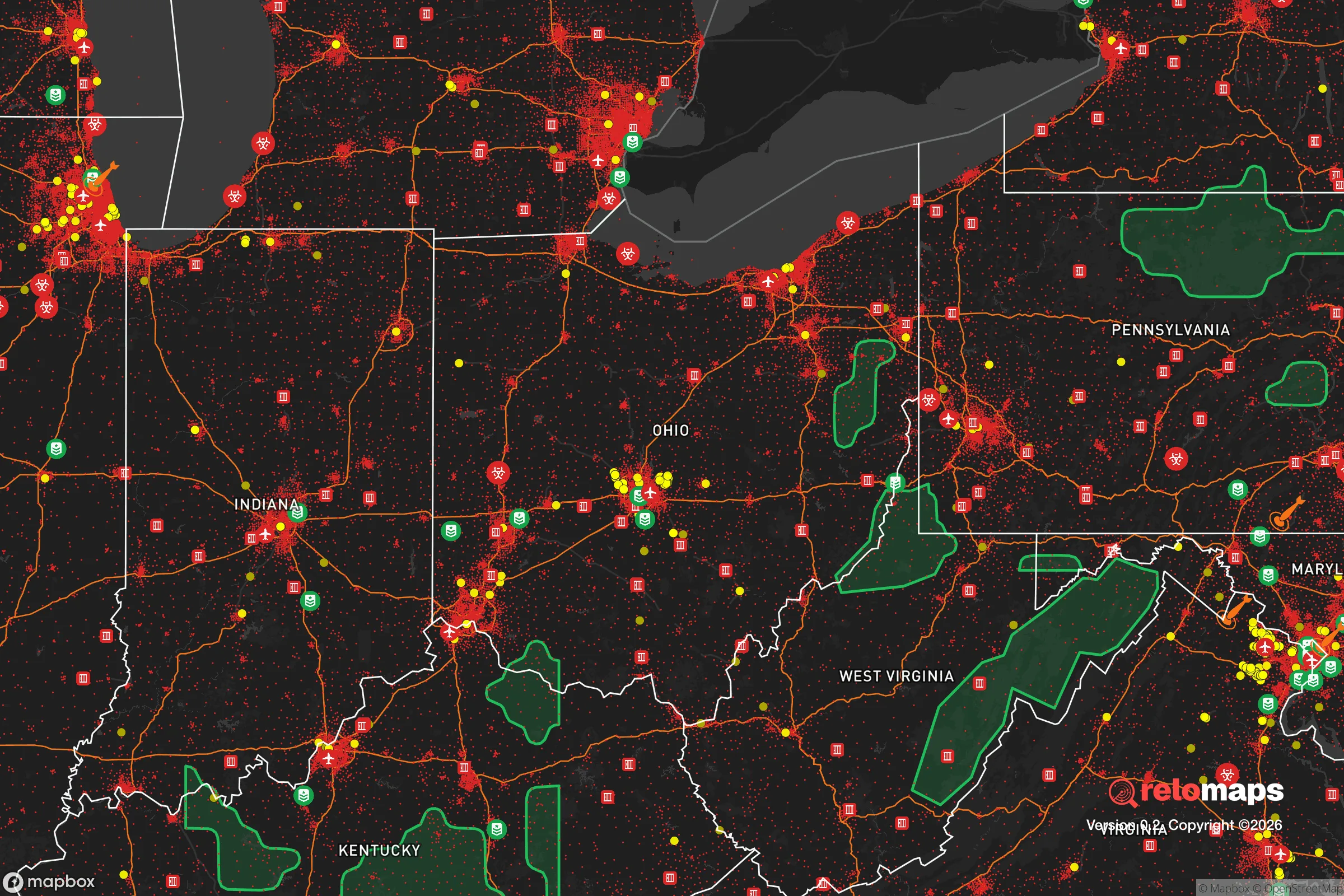


Important Note: For informational purposes only. This does not mean nothing bad ever happens in the green zones. Please use common sense. This is based on public data and modeled with AI. We tried to take a conservative approach but mistakes happen. We update this regularly as new information becomes available.
Solar Generator Recommendations
Backup power matters more here than in safer locations. We've picked three solar generators across budgets and capacity tiers — start with the budget unit if you only need a few essentials, or step up if you want to run a fridge and HVAC for days at a time.

Jackery Portable Power Station Explorer 300
Budget OptionPower on the Go: Weighing only 11 lbs, it's convenient to set up and store with book-sized foldable solar panels

BLUETTI Portable Power Station AC180
Designed for both indoor and outdoor scenarios, AC180 is highly capable as it has a robost capacity and continuous output power.

EF ECOFLOW DELTA Pro Ultra Power Station
Upgraded PickEcoFlow DELTA Pro Ultra is a whole-home energy system designed to grow with your family. Integrated with the Smart Home Panel 2, it scales to meet your evolving energy needs — keeping your home powered, intelligent, and secure through every stage of life.
We earn a commission, at no additional cost to you.
Strategic Assessment Analysis
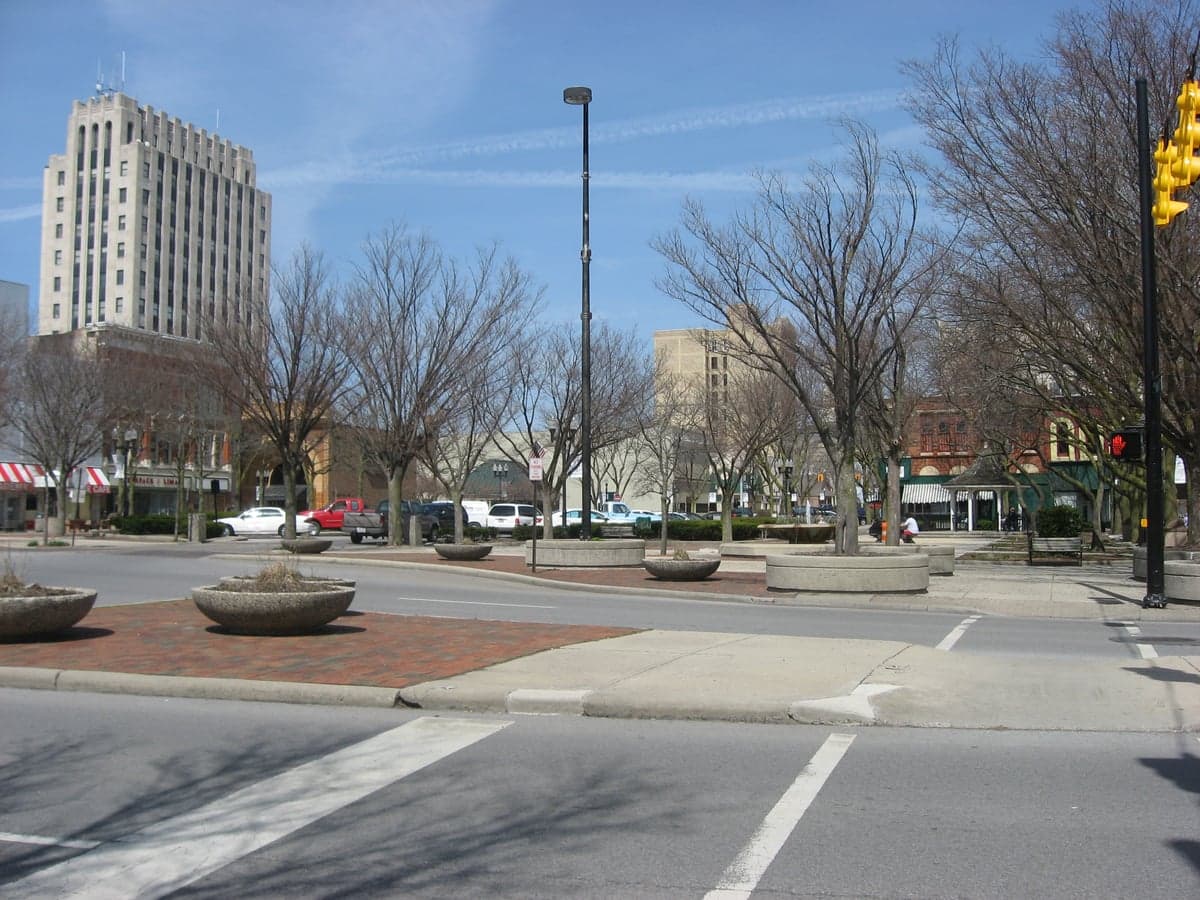
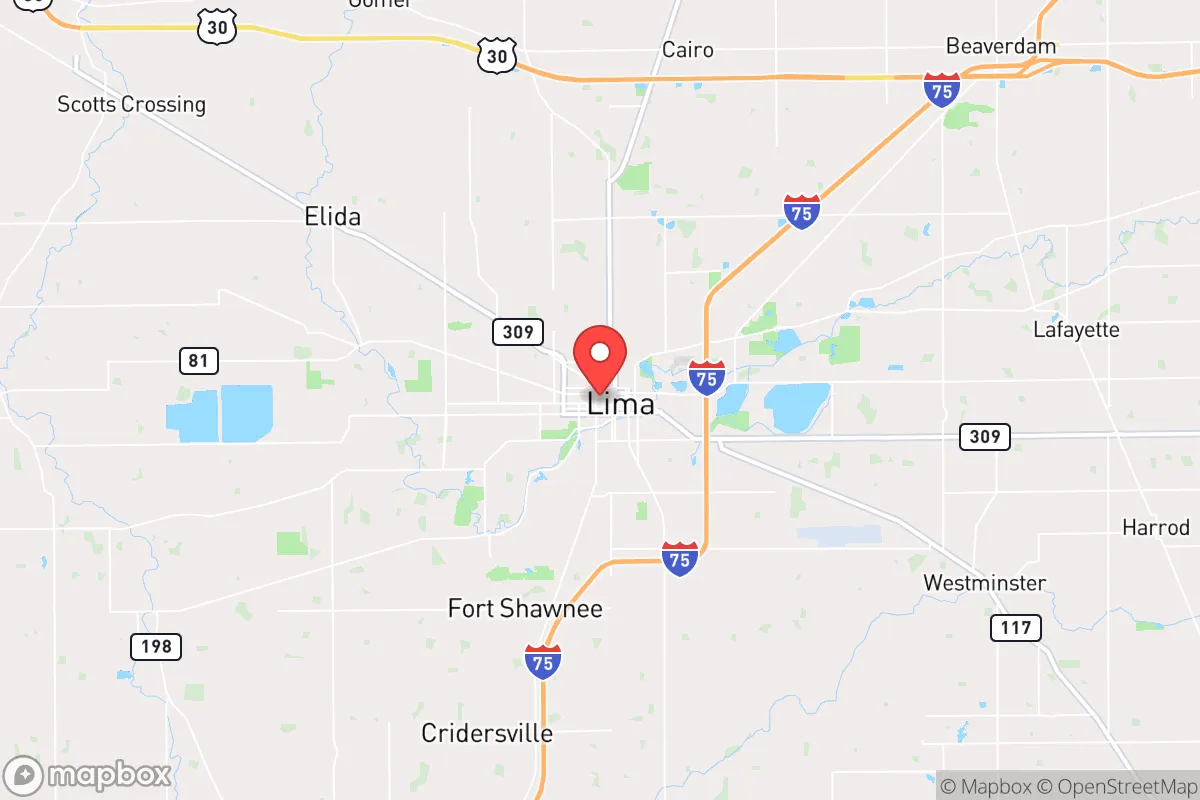
Lima, Ohio, often flies under the radar, but for a relocator with a survivalist or prepper mindset, this northwest Ohio city offers a surprisingly solid mix of industrial resilience and geographic buffer. Situated roughly 75 miles south of Toledo and 85 miles north of Dayton, Lima sits in a sweet spot—close enough to major logistics hubs for supply access, yet far enough from the immediate blast radius of a major metropolitan collapse. The city’s historical identity as a refinery and rail town gives it a working-class backbone that’s less susceptible to the fragility of tech-dependent economies, making it a viable anchor for a long-term strategic relocation.
Geographic position and natural advantages for long-term security
Lima’s location in Allen County places it on the western edge of Ohio’s glaciated plains, offering flat, fertile land that is a genuine asset for food production. The area sits atop the Lima-Indiana oil and gas trend, a geological formation that has historically supported local energy extraction. The nearby Auglaize and Ottawa rivers provide surface water sources, though the region’s primary aquifer—the buried valley aquifer system—is a more reliable, deep groundwater reserve for well drilling. The climate is temperate continental, with cold winters and humid summers, but the growing season (roughly 160 days) is long enough for staple crops like corn, beans, and squash. For a prepper, this means the land can support subsistence agriculture without the extreme weather risks of the Plains or the wildfire threats of the West. The flat terrain also simplifies defensive perimeters and line-of-sight observation, a practical consideration for rural or exurban properties within a 15- to 20-mile radius of the city center.
Risks, exposures, and proximity to fallout-relevant landmarks
The most significant risk for Lima is its industrial infrastructure. The city is home to the Lima Refinery (a Husky Energy facility, now under Cenovus), which processes roughly 155,000 barrels of crude oil per day. While this is a strategic asset for fuel security, it also makes Lima a potential target for civil unrest or sabotage. A refinery incident—whether from accident or attack—could produce a toxic plume or a localized fire hazard, though prevailing winds from the west typically push emissions away from the city center. Additionally, Lima is within 50 miles of the Davis-Besse Nuclear Power Station (near Oak Harbor, Ohio), a single-unit pressurized water reactor that has had historical safety concerns. A worst-case scenario at Davis-Besse could put Lima in a downwind fallout zone, though the distance provides a meaningful buffer for evacuation or shelter-in-place planning. On the positive side, Lima is not near any major military bases, nuclear weapons storage sites, or high-value government targets that would draw a first-strike scenario. The nearest major population centers—Columbus (85 miles southeast) and Fort Wayne, Indiana (50 miles west)—are large enough to experience cascading failures in a crisis, but Lima’s relative isolation means it would likely become a refuge rather than a flashpoint.
Practical resilience for a relocator: food, water, energy, and defensibility
For a relocator focused on practical self-sufficiency, Lima offers several concrete advantages. Water security is strong: the city’s municipal water comes from the Ottawa River and groundwater wells, but rural properties can tap into the buried valley aquifer at depths of 50 to 150 feet, with yields sufficient for a household and small-scale irrigation. Energy resilience is bolstered by the local refinery and a robust natural gas distribution network; propane and heating oil are widely available, and the flat terrain makes solar panel installation straightforward. The region’s agricultural base means local food production is viable—Allen County has dozens of small farms, farmers’ markets, and a strong Amish and Mennonite presence in neighboring counties (e.g., Hardin and Putnam), which provides a decentralized food network less reliant on industrial supply chains. For defensibility, the area’s rural outskirts offer properties with good sightlines, limited ingress points, and a culture of firearm ownership that aligns with a prepper mindset. The local economy is anchored by manufacturing (Ford Lima Engine Plant, Procter & Gamble, and various automotive suppliers), which means skilled trades and mechanical knowledge are common—valuable assets for a community that needs to repair and maintain infrastructure post-collapse. However, the city itself has a higher crime rate than the national average (particularly property crime), so a relocator should prioritize properties in the surrounding townships—like Bath, Shawnee, or American townships—where population density drops and neighborly watchfulness increases.
The overall strategic picture for Lima is one of moderate risk with high practical reward. It’s not a bug-out paradise—there’s no mountain redoubt, no remote island, no fortress geography. But for a relocator who wants to stay connected to the Midwest’s industrial and agricultural heartland while avoiding the direct fallout of coastal or urban collapse, Lima holds its ground. The refinery is a double-edged sword, but the local energy independence it enables is rare. The proximity to nuclear infrastructure is a concern, but the distance is enough to buy time. The flat land, the aquifer, the working-class culture, and the distance from major targets make it a defensible, sustainable choice for someone who thinks in decades, not days. If you’re looking for a place to dig in, build a network, and ride out the turbulence of a fractured nation, Lima deserves a serious look—just keep your bug-out bag packed and your eye on the wind direction.

* Values derived from national, state, county, city and local statistics and may differ in a specific area. Last updated: 2026-04-21T18:47:16.000Z
Narrative content on this page is AI-generated and may contain mistakes. Verify any details that matter before acting on them.
ReloMaps may earn a commission from affiliate links at no extra cost to you.

