Political ClimatePolitical Climate in Linganore-Bartonsville, MD
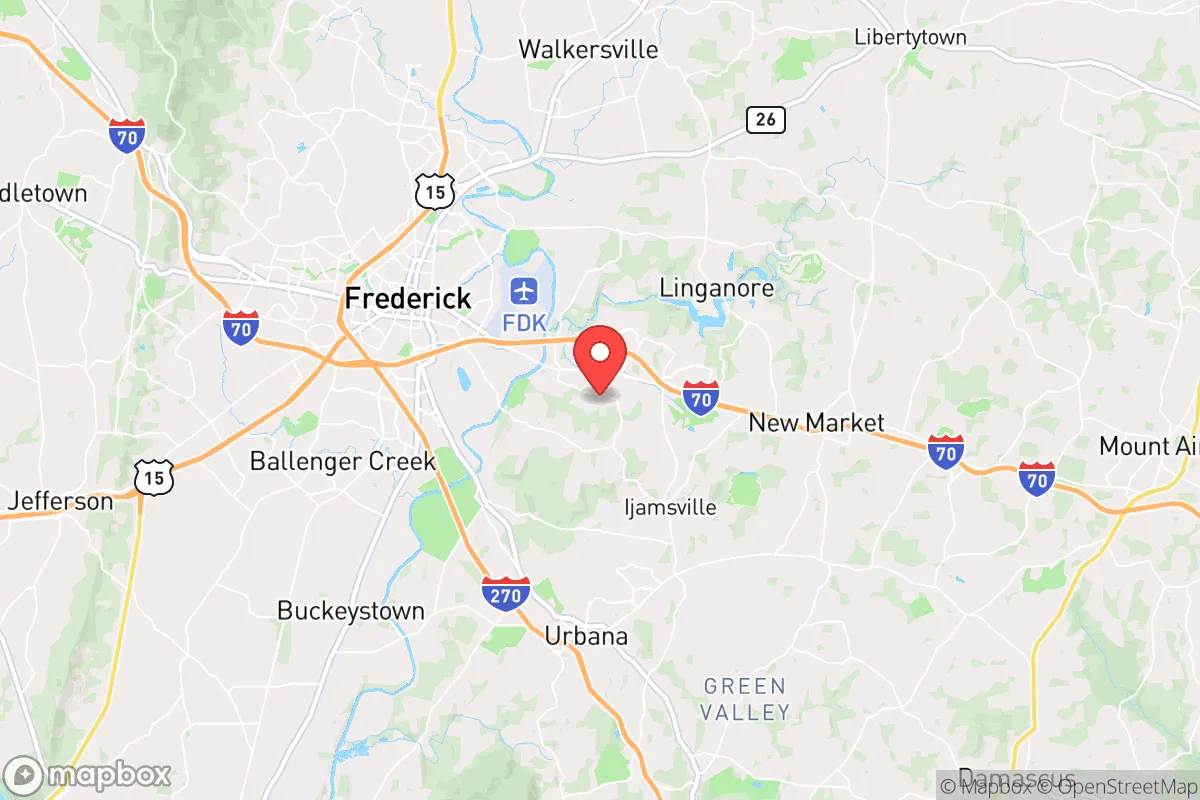
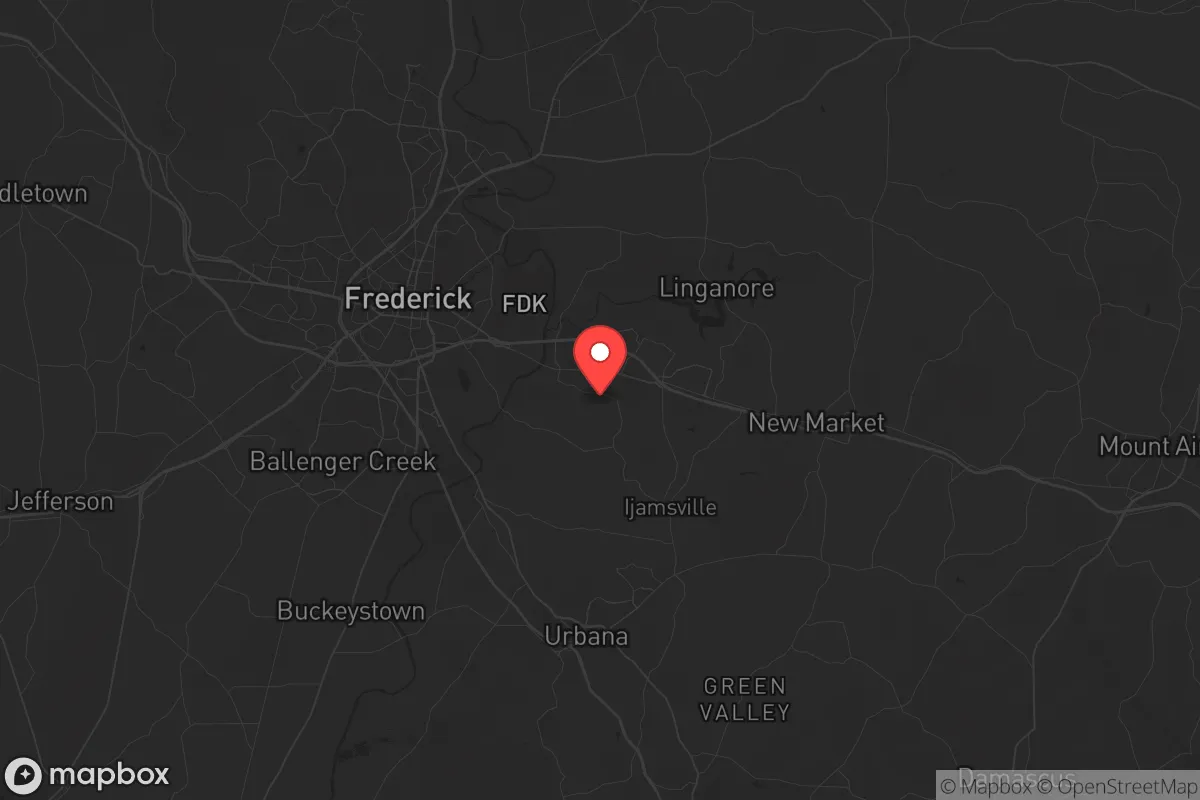
District shown is the primary district for this city’s centroid. Cities may span multiple districts.
Local Political AnalysisPolitical Analysis of Linganore-Bartonsville, MD
Linganore-Bartonsville sits in a political sweet spot that’s noticeably more purple than the rest of Maryland. While the state as a whole leans heavily Democratic with a Cook PVI of D+17, this Frederick County community clocks in at D+3 — meaning it’s only slightly more Democratic than the national average. That gap of 14 points is the biggest story here: you’re looking at a place where neither party can take victory for granted, and where local elections often hinge on a few hundred votes rather than a countywide landslide.
How it compares
Drive 15 minutes east to Mount Airy or 20 minutes south to Damascus, and you’ll find communities that tilt even more conservative — some precincts there have gone Republican by double digits in recent cycles. Head west toward Frederick city, though, and the political temperature flips hard: Frederick proper is a solidly blue college town with a D+20 lean. Linganore-Bartonsville sits right in the middle of that spectrum. In the 2024 presidential race, Frederick County as a whole voted for the Democratic candidate by about 8 points, but Linganore-Bartonsville’s precincts were within 2-3 points of a split. That’s a far cry from the statewide margin, where Democrats won by nearly 20 points. The area’s trajectory has been slowly trending leftward over the past decade, mirroring national suburban shifts, but it’s happening at a crawl — not a sprint. New housing developments along Bartonsville Road are bringing in younger families from the D.C. metro area, which nudges the numbers blue, but longtime residents and agricultural landowners keep the balance from tipping too far.
What this means for residents
For conservative residents, living in a D+3 area means your vote actually carries weight in local races — school board, county council, and sheriff elections are genuinely competitive here, unlike in deep-blue Montgomery County or deep-red Garrett County. You’ll find plenty of neighbors flying Gadsden flags and attending Frederick County Republican Club meetings, and the local GOP still holds sway on zoning and development issues. For liberal residents, the community is welcoming but not a bubble — you’ll have to engage with differing viewpoints at the grocery store or PTA meeting, which many find refreshing compared to the echo chambers of closer-in suburbs. The practical upshot is that policy tends to land in the middle: Frederick County’s government has kept property tax rates moderate (around 1.06% of assessed value) while still funding public schools at above-state-average levels. Gun laws follow state statute, but enforcement is less aggressive than in Baltimore or Montgomery counties. Social issues like land use and school curriculum get debated vigorously at town halls, but outcomes usually reflect compromise rather than a party-line stamp.
Culturally, Linganore-Bartonsville feels more like a Mid-Atlantic crossroads than a partisan stronghold. The annual Linganore Wine Festival draws crowds from both sides of the aisle, and the local volunteer fire department’s fundraisers are as likely to feature a Democratic county commissioner shaking hands next to a Republican state delegate. That’s the real distinction from the rest of Maryland: here, politics is still something you do with your neighbors, not just something you watch on cable news. If the state’s D+17 lean represents a settled consensus, Linganore-Bartonsville’s D+3 is a living negotiation — and that makes it a genuinely interesting place to live, regardless of your party registration.

State Political ClimatePolitical Climate in Maryland
State Political AnalysisPolitical Environment in the State
Maryland is one of the most reliably Democratic states in the nation, with a Cook Partisan Voting Index of D+17, meaning it votes about 17 points more Democratic than the country as a whole. The state hasn't voted for a Republican presidential candidate since George H.W. Bush in 1988, and Democrats hold a 2-to-1 voter registration advantage. Over the past 20 years, the Democratic lean has actually deepened, driven by explosive growth in the Washington, D.C., suburbs and the Baltimore metro area, while rural and exurban areas have swung hard to the right, creating a stark internal political divide.
Urban vs. rural divide
The political map of Maryland is a tale of two states. The entire Democratic majority is concentrated in the Washington, D.C., suburbs — Montgomery County and Prince George's County alone cast about 40% of the state's Democratic votes. These counties are among the most educated and affluent in the country, with large populations of federal employees, contractors, and professionals who lean heavily left. Baltimore City and its inner suburbs (Baltimore County, Howard County) add another massive blue bloc. Meanwhile, the Eastern Shore, Western Maryland, and the rural southern counties (like St. Mary's and Calvert) vote Republican by wide margins. Garrett County in the far west, for example, voted +44 for Trump in 2024. The divide is so sharp that you can drive 30 minutes from downtown Baltimore to Harford County and go from a +40 Democratic precinct to a +30 Republican one. The key swing counties that decide statewide races are Anne Arundel County (home to Annapolis) and Frederick County — both have trended blue in recent cycles as D.C. commuters push outward, but they still have strong Republican bases.
Policy environment
Maryland's policy environment is solidly progressive, with high taxes and heavy regulation. The state has a progressive income tax structure with rates from 2% to 5.75%, and local counties add their own "piggyback" tax, pushing combined rates over 9% in Baltimore City and Montgomery County. Property taxes are also high, especially in the D.C. suburbs. The state has a strict regulatory posture on business, with a complex permitting process and strong environmental regulations, particularly around the Chesapeake Bay. Education policy is dominated by the Blueprint for Maryland's Future, a massive 10-year, $38 billion plan that dramatically increases school funding, expands pre-K, and raises teacher salaries — but has also sparked controversy over its cost and implementation. Healthcare is heavily regulated, with a state-run insurance exchange and strict oversight of hospital rates. Election laws are among the most liberal in the country: no-excuse mail-in voting, same-day registration, automatic voter registration, and early voting starting two weeks before Election Day. The state also has a strong public records law, though it's often criticized for slow response times.
Recent policy direction
Maryland's recent legislative sessions have pushed the state further left on nearly every front. On gun and self-defense law, the state passed some of the nation's strictest laws: a ban on "ghost guns" (2022), a ban on carrying firearms in "sensitive places" like hospitals and parks (2023), and a requirement for a state police-issued permit to purchase a handgun. The state also has a red flag law and a ban on assault weapons. On parental and education rights, the state has moved in the opposite direction of many red states: it passed a law requiring all public schools to teach LGBTQ-inclusive curriculum (2020), and in 2023 it banned book bans in school libraries. On speech and privacy, Maryland passed one of the nation's strongest digital privacy laws (the Maryland Online Data Privacy Act, 2024), but also expanded surveillance with a law requiring police to obtain warrants for cell-site simulators (2022). On medical and bodily autonomy, the state has become a safe haven: it passed a law protecting abortion providers and patients from out-of-state lawsuits (2023), expanded Medicaid coverage for gender-affirming care, and legalized recreational marijuana (2023). On property rights, the state has strong eminent domain protections but also imposes strict rent control in Montgomery County and Baltimore City. On taxation, the trend is upward: the state raised the corporate income tax to 8.25% in 2023 and is considering a wealth tax on capital gains. On voting and ballot access, the state continues to expand access, with automatic voter registration at the DMV and pre-registration for 16-year-olds.
Civil unrest & political movements
Maryland has a history of political activism that ranges from the streets to the statehouse. The 2015 Baltimore protests after the death of Freddie Gray were a national flashpoint, leading to a state of emergency and National Guard deployment. Since then, the Black Lives Matter movement has remained active, particularly in Baltimore and Prince George's County. On the right, the Maryland Republican Party has become more populist and Trump-aligned, with grassroots groups like the Maryland Federation of Republican Women and local "Moms for Liberty" chapters pushing back on school policies. Immigration politics are a major flashpoint: Maryland has a sanctuary state law (2019) that limits local police cooperation with ICE, and several counties (including Montgomery and Prince George's) have explicitly declared themselves sanctuaries. This has led to tensions with the more conservative Eastern Shore and Western Maryland, where local governments have passed resolutions opposing the policy. Election integrity has been a recurring issue: after the 2020 election, Republican candidates in several counties challenged mail-in ballot procedures, and the state's automatic voter registration system has been criticized by conservatives for potential errors. The most visible political flashpoint in recent years has been the debate over the Blueprint for Maryland's Future — it's been the subject of intense lobbying, lawsuits, and a failed attempt to repeal it via ballot referendum.
Projection
Over the next 5-10 years, Maryland's Democratic lean is likely to deepen, not moderate. The D.C. suburbs continue to grow faster than the rest of the state, and the in-migration from other blue states (particularly California and New York) is reinforcing the existing political culture. The rural and exurban areas will continue to vote Republican, but their share of the electorate is shrinking. The key wildcard is Frederick County, which is growing rapidly and could become a permanent swing county — or tip solidly blue as more D.C. commuters move there. The state's fiscal trajectory is concerning: the Blueprint for Maryland's Future is projected to create a structural deficit of $2-3 billion by 2030, which will likely force either major tax increases or cuts to other programs. The state's pension system is also underfunded. For a new resident, the practical reality is that Maryland will remain a high-tax, high-regulation, progressive state for the foreseeable future. The political culture is professional and bureaucratic, not populist — the state's Democratic establishment is more aligned with Joe Biden than Bernie Sanders. Conservative residents will find themselves in a permanent minority, but with strong local representation in the rural counties and some influence in the state legislature through the Republican minority.
For a conservative relocator, the bottom line is this: Maryland offers excellent schools, strong infrastructure, and proximity to D.C. jobs, but you will pay high taxes and live under laws that are often at odds with your values. You'll have more political influence if you live in a county like Carroll or Harford, where local government is more conservative, but statewide elections will always be a lost cause. For a liberal relocator, Maryland is a comfortable fit — the policies align with your views, and the state's progressive infrastructure is well-established. The biggest practical concern for either side is the cost: housing in the D.C. suburbs is among the most expensive in the country, and the tax burden is heavy. If you're moving to Maryland, come for the job or the schools, not the politics — and be prepared for the price tag.
* Values derived from national, state, county, city and local statistics and may differ in a specific area. Last updated: 2026-08-26T18:49:14.000Z
Narrative content on this page is AI-generated and may contain mistakes. Verify any details that matter before acting on them.
ReloMaps may earn a commission from affiliate links at no extra cost to you.

